

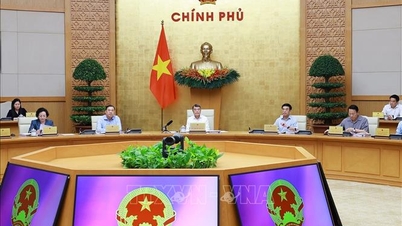
The meeting was held in person at the Gia Lai Provincial Military Command and connected online with localities affected by the storm, including Thua Thien Hue, Da Nang, Quang Ngai, and Dak Lak. Quick reports from the localities indicated that Typhoon No. 13 was causing strong gusts of wind and prolonged heavy rain in many areas. Some localities reported fallen trees, localized power outages, and landslides in mountainous regions. Many transportation routes were temporarily cut off due to flooding.
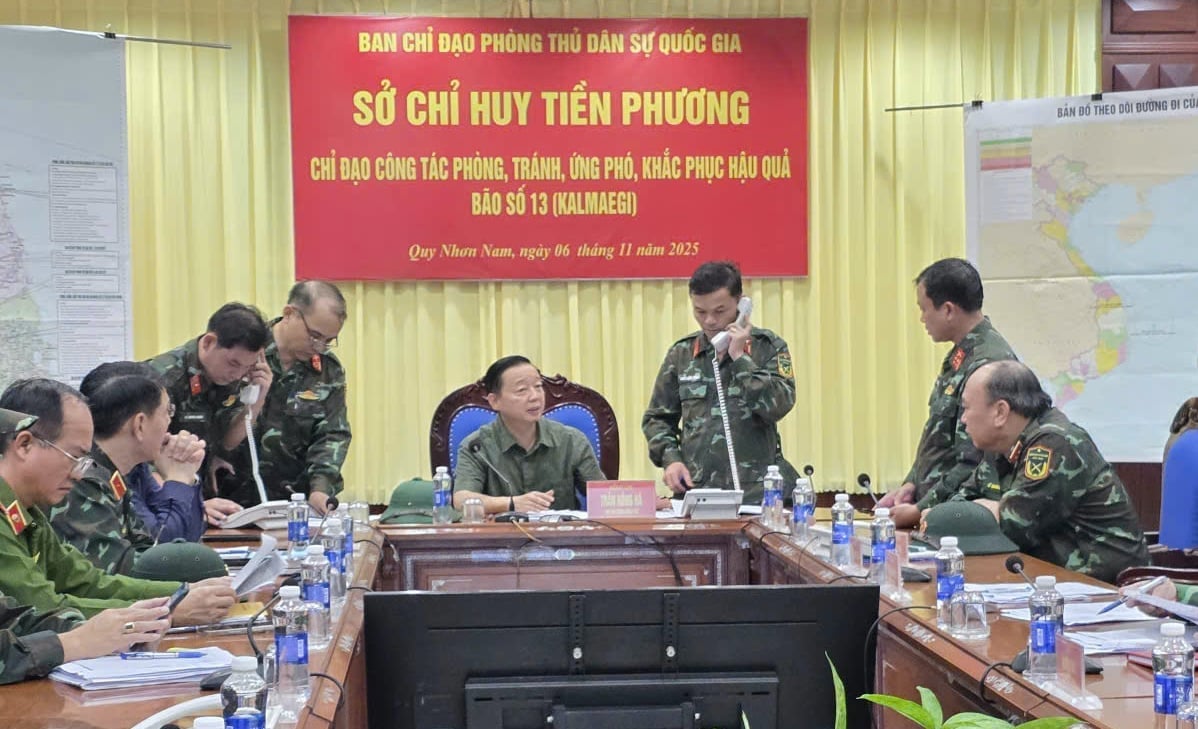
Deputy Prime Minister Tran Hong Ha chaired the meeting, which was held in person at the Gia Lai Provincial Military Command and connected online with provinces directly affected by the storm, including Thua Thien Hue, Da Nang , Quang Ngai, Gia Lai, and Dak Lak. Photo: Tuan Anh.
In Gia Lai province, a forward command post has been established, mobilizing nearly 8,800 officers, soldiers, police, and militia members to be on duty at critical points. The Provincial Military Command alone has mobilized over 7,700 personnel, 92 motorized vehicles, and 5 unmanned aerial vehicles (UAVs) to monitor the situation.
The province has activated a Level 5 response scenario for 16 communes and wards, and a Level 4 response scenario for 42 communes and wards in the eastern region. Maritime safety measures have been implemented rigorously. By 5:00 AM on November 6th, all 286 fishing vessels with 1,602 fishermen from the province had left the dangerous zone and anchored safely. The Provincial People's Committee issued a ban on maritime activities from 5:00 PM on November 5th until further notice.
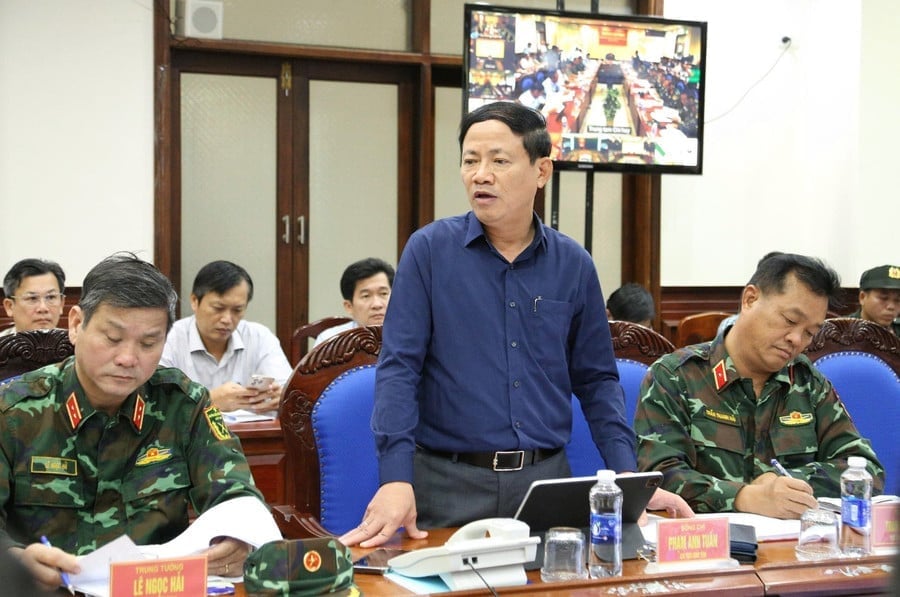
Reporting at the meeting, Chairman of the Provincial People's Committee Pham Anh Tuan said that to proactively respond to Typhoon No. 13 and the subsequent floods, the Provincial People's Committee has activated a level 5 typhoon response plan for 16 communes and wards, and a level 4 plan for the remaining 42 communes and wards in the eastern part of the province... Photo: HP.
Speaking at the meeting, Deputy Prime Minister Tran Hong Ha stated that Typhoon No. 13 was an extremely unusual storm, moving rapidly and affecting a wide area. Local authorities must place disaster prevention and control efforts in a more urgent and serious state, and absolutely must not be complacent.
"The highest priority is protecting people's lives. All response plans must be substantive, not merely 형식적인 (formalistic), and all forces must be ready for the worst-case scenario," Deputy Prime Minister Tran Hong Ha emphasized.
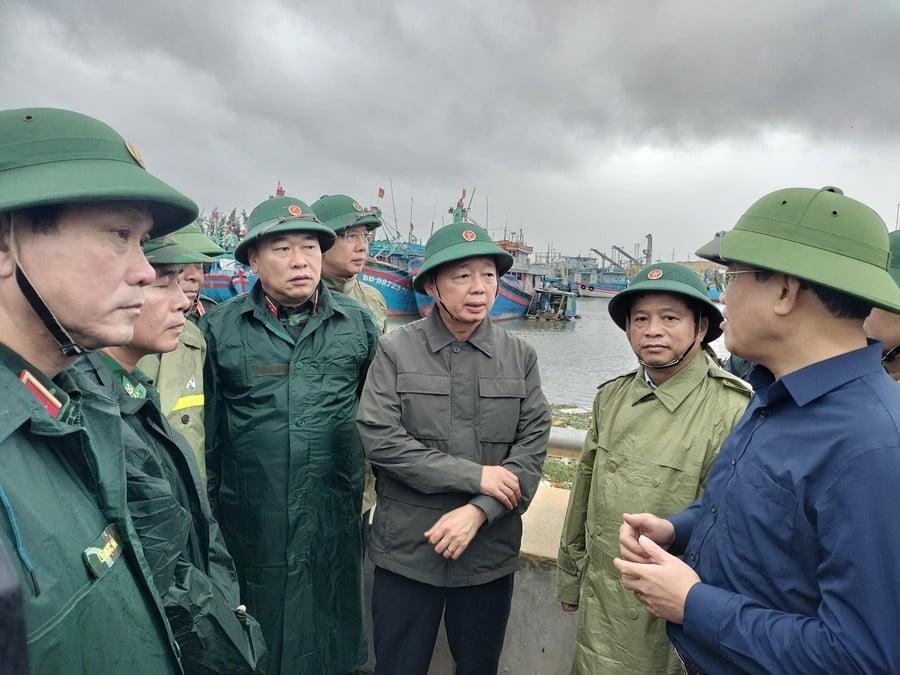
At noon on November 6th, Deputy Prime Minister Tran Hong Ha, along with a delegation from the central government, inspected the response efforts to Typhoon No. 13 at the Quy Nhon fishing port's boat anchorage area. Photo: HP.
The Deputy Prime Minister requested that provinces strengthen and allocate forces, vehicles, and equipment to critical areas, ready for rescue operations, ensuring absolute safety for the people and the forces on duty. Localities need to develop detailed scenarios for each risk area, strictly implement the "four on-the-spot" principle, and maintain a 24/7 duty roster.
"From 6 PM on November 6th to approximately 8 AM on November 7th is an exceptionally dangerous period, which can be considered a state of 'martial law'. Only those with assigned duties are allowed to be on the streets. Forces on duty must remain in their positions and not leave their shifts," the Deputy Prime Minister instructed.
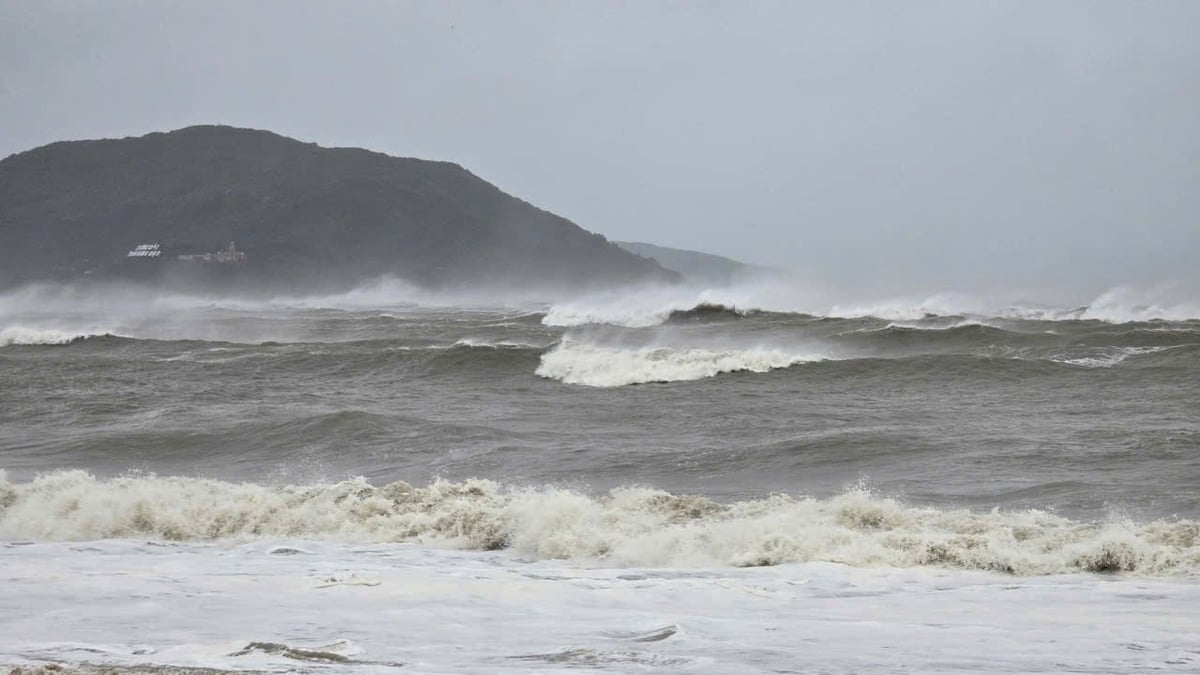
On the afternoon of November 6th, in the coastal area of Quy Nhon ward, the waves near the shore rose high, accompanied by strong winds. Photo: Tuan Anh.
The Deputy Prime Minister also requested continued monitoring and guidance of boats and ships to ensure safe shelter, preventing people from remaining in fish cages, watchtowers, or aquaculture areas when the storm hits; and that irrigation and hydroelectric reservoirs regulate water levels appropriately to ensure downstream safety.
At the same time, medical facilities must be fully prepared with equipment, medicines, and emergency response personnel; information, electricity, and telecommunications systems must maintain stable operation to support the directives.
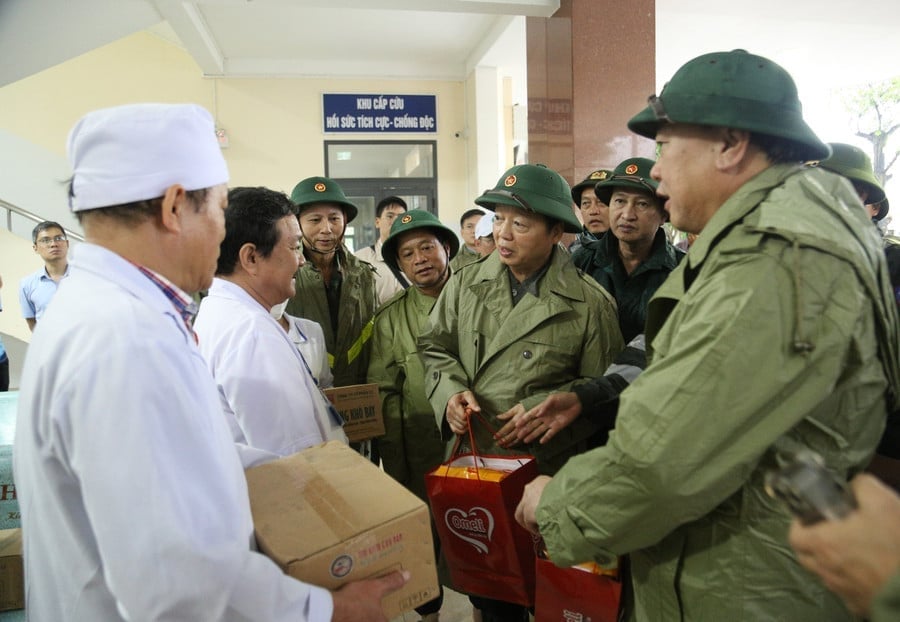
Deputy Prime Minister Tran Hong Ha presents storm relief supplies to the hospital and financial assistance to patients receiving treatment at the Quy Nhon Tuberculosis and Lung Disease Hospital. Photo: Hong Phuc.
Later that evening, Deputy Prime Minister Tran Hong Ha inspected several vulnerable areas in Quy Nhon Bac and Quy Nhon Dong wards before Typhoon No. 13 made landfall.
Specifically, at the coast of the former Nhon Hai commune (now part of Quy Nhon Dong ward), the Deputy Prime Minister requested local authorities to thoroughly review the areas where residents have been evacuated, ensuring that absolutely no one returns home during the storm's landfall.
The departments involved in disaster prevention and search and rescue work in the ward are on standby and strictly implementing the directives on storm response issued by the central and provincial authorities.
Source: https://nongnghiepmoitruong.vn/dat-cong-tac-phong-chong-bao-trong-tinh-trang-khan-cap-hon-nua-d782784.html























![[Video] Sunset at Lap An Lagoon – Where the sun sets over the fishing nets](https://vphoto.vietnam.vn/thumb/340x192/vietnam/resource/IMAGE/2026/05/31/1780192137701_beach-landscape-sea-water-nature-grass-745871-pxhere-com.jpeg)






![[Image] A brilliant symphony and explosive power in the skies of Da Nang.](https://vphoto.vietnam.vn/thumb/1200x675/vietnam/resource/IMAGE/2026/05/31/1780196945787_anh-man-hinh-2026-05-31-luc-10-08-51.png)


























































Comment (0)