

Clearly define the scope of regulation to avoid turning the magazine into a newspaper.
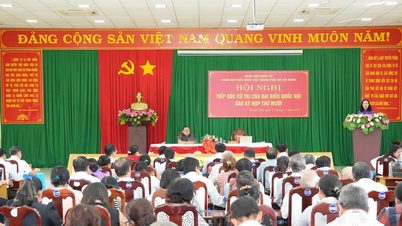
Expressing agreement with many of the opinions raised, including the view that careful consideration is needed regarding the regulation of scientific journals, delegate Hoang Minh Hieu (Nghe An) argued that the operation of scientific journals is already regulated in the Law on Science, Technology and Innovation. Meanwhile, according to the Law on the Promulgation of Legal Normative Documents, a law should not re-regulate content already clearly regulated in another law, in order to ensure consistency and avoid overlap in the legal system.
.jpg)
According to the delegates, the management mechanism for scientific journals has many unique characteristics compared to journalism in general. Currently, according to the draft regulations, most people working at scientific journals are not issued journalist cards; their financial mechanisms are also unique, for example, the collection of fees for peer review and publication of research works through a peer review process – a specific form in the scientific field. Applying the provisions of the Press Law to this type of publication may not be entirely appropriate.
Based on international experience, most countries do not include scientific journals within the scope of general press law but have separate management mechanisms. The delegate suggested that the drafting committee should carefully consider whether or not to include scientific journals within the scope of the Press Law to ensure consistency, conformity with practice, and international norms.
Regarding the distinction between newspapers and magazines to combat the "journalization of magazines," delegates assessed this as an important issue that the Government has initially recognized quite clearly. The draft law has proposed many solutions to tighten the management of magazine activities, such as limiting the establishment of representative offices and redefining the concept of "magazine." However, further clarification of the two basic criteria for distinguishing between these two types of publications is still needed.
Regarding regularity, in many countries, magazines are only allowed to be published at a minimum frequency (e.g., every 7 days or more) to prevent them from functioning like newspapers, publishing daily news. This regulation is worth considering to ensure a clear distinction between the two types of publications.
Regarding content, the draft currently states that magazines publish information according to their mission and purpose, reflecting the activities of their managing agency. However, this regulation is insufficient to clearly distinguish between the two types because newspapers must also adhere to their mission and purpose, while many agencies and organizations currently publish information about their activities on electronic portals. Without strict regulations, it will be difficult to differentiate between newspapers, magazines, and electronic portals, causing difficulties in management.
Improving economic mechanisms to ensure the healthy development of the press.
Referring to the issue of the economics of journalism, delegate Hoang Minh Hieu emphasized that this is a key issue, directly linked to the sustainable development of the media system.
.jpg)
Currently, the payment mechanism for journalistic work is primarily based on views or website visits. This method can lead journalists to prioritize short, trend-following articles, while in-depth, high-quality articles receive less attention. This directly impacts the quality of journalistic content... In addition, economic difficulties can also lead to negative behaviors in professional activities; therefore, the draft law needs to have substantive solutions to support the healthy development of journalism.
According to the delegates, the State currently provides about 0.5% of its budget to the press – an average level compared to international standards – but the support is still scattered. It is necessary to study a mechanism for allocating the budget in a focused and targeted manner, prioritizing media outlets that fulfill political tasks, serve remote areas, or produce high-quality products with significant social value.
In addition, tax policies also need to be reviewed and supplemented. According to the delegates, some countries apply tax incentives for media organizations operating on a subscription model, especially digital subscriptions for online newspapers, to encourage the development of quality content and reduce dependence on advertising. This is an area that needs to be studied to align with the trend of digital transformation in the media sector.
Regarding copyright issues, the draft law mentions the sharing of journalistic content on social media platforms, but only at the principle level. Representatives suggested more specific regulations on the revenue-sharing obligations of platforms when using journalistic content. Citing Canada's experience, representatives noted that Canadian law requires platforms with over 2 million users and using journalistic content commercially to have a revenue-sharing mechanism with the media organization. This is a valuable lesson to consider in the process of finalizing the draft law.
Expressing agreement with the regulation allowing media outlets to collaborate to increase revenue, delegates argued that it should be accompanied by a strict monitoring mechanism to prevent distorted collaborations leading to the "privatization" of journalistic activities. Along with that, attention should be paid to reducing legal compliance costs for media outlets. Some new regulations in the draft, such as requiring media outlets to connect with and be responsible for the information they post on social media, could increase administrative procedures and implementation costs, while the law on social media reporting already has general regulations for all entities. Therefore, only truly necessary content should be regulated, avoiding duplication and difficulties in implementation.
According to delegate Hoang Minh Hieu, the draft Law on Journalism (amended) is an important step towards perfecting the legal framework for the professional, humane, and modern development of journalism. However, further research and refinement are needed regarding the scope of regulation, classification of types, economic mechanisms, and support policies to ensure feasibility and suitability to the rapidly developing reality of Vietnamese journalism today.
Source: https://daibieunhandan.vn/dbqh-hoang-minh-hieu-nghe-an-can-tao-dieu-kien-cho-co-quan-bao-chi-phat-trien-ben-vung-10392571.html

![[Photo] Prime Minister Pham Minh Chinh receives Lao Minister of Education and Sports Thongsalith Mangnormek](/_next/image?url=https%3A%2F%2Fvphoto.vietnam.vn%2Fthumb%2F1200x675%2Fvietnam%2Fresource%2FIMAGE%2F2025%2F12%2F16%2F1765876834721_dsc-7519-jpg.webp&w=3840&q=75)
![[Photo] Prime Minister Pham Minh Chinh receives the Governor of Tochigi Province (Japan)](/_next/image?url=https%3A%2F%2Fvphoto.vietnam.vn%2Fthumb%2F1200x675%2Fvietnam%2Fresource%2FIMAGE%2F2025%2F12%2F16%2F1765892133176_dsc-8082-6425-jpg.webp&w=3840&q=75)

![[Live] 2025 Community Action Awards Gala](/_next/image?url=https%3A%2F%2Fvphoto.vietnam.vn%2Fthumb%2F1200x675%2Fvietnam%2Fresource%2FIMAGE%2F2025%2F12%2F16%2F1765899631650_ndo_tr_z7334013144784-9f9fe10a6d63584c85aff40f2957c250-jpg.webp&w=3840&q=75)
![[Image] Leaked images ahead of the 2025 Community Action Awards gala.](/_next/image?url=https%3A%2F%2Fvphoto.vietnam.vn%2Fthumb%2F1200x675%2Fvietnam%2Fresource%2FIMAGE%2F2025%2F12%2F16%2F1765882828720_ndo_br_thiet-ke-chua-co-ten-45-png.webp&w=3840&q=75)
























































Comment (0)