

Mr. Pham Minh Hai, Head of the Economic Department of Bac Tien Hung commune (Hung Yen province), said: “The commune has identified disease prevention as a top priority. We are implementing a comprehensive approach, from reinforcing livestock shelters against the cold and disinfecting to managing transportation and slaughtering. People are given detailed instructions to proactively protect their livestock right from the source.”
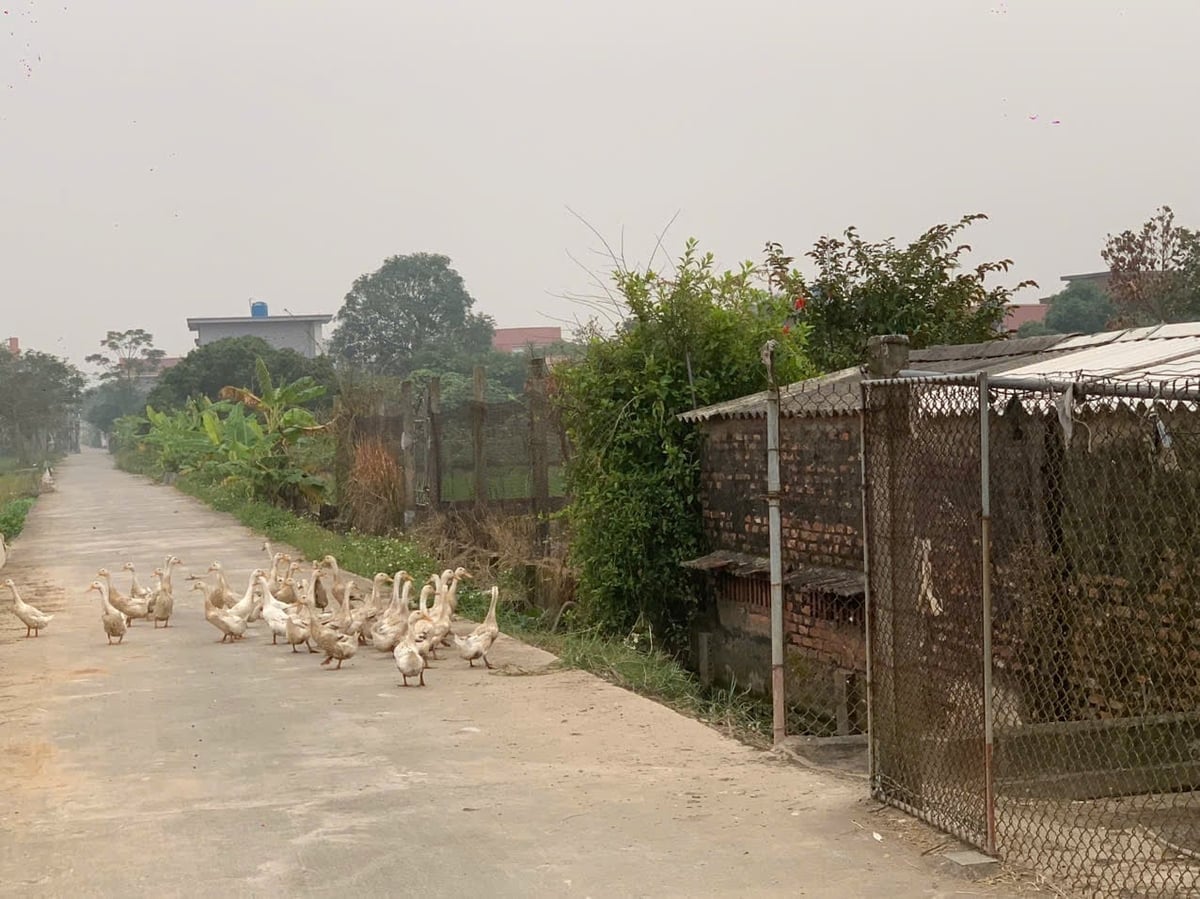
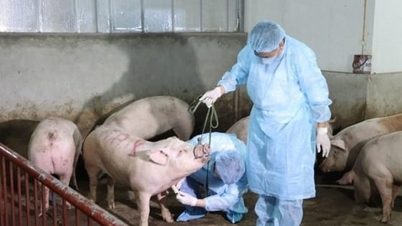
In reality, small-scale livestock farming interspersed within residential areas remains common, leading to difficulties in controlling veterinary hygiene. Photo: Mai Dan.
According to Mr. Hai, the "multi-layered fence" model is implemented in most farms and many small-scale livestock breeders. The first layer consists of airtight, dry barns covered with tarpaulins or plastic sheeting during severe cold days, ensuring a stable temperature for the animals. The second layer involves regular cleaning and disinfection, especially in the feeding area, transport vehicles, and access routes to the barns.
The third layer is epidemiological control, strictly prohibiting the slaughter of suspected sick pigs and the trading of products of unknown origin; households are trained on how to recognize early symptoms of African Swine Fever and Streptococcus suis in pigs. When there are unusual signs, people must immediately report to the local veterinary service. "We require all slaughterhouses to immediately cease operations if there is any suspicion of disease, absolutely preventing the spread of pathogens into the community," Mr. Hai emphasized.
In reality, small-scale livestock farming interspersed within residential areas remains common, leading to difficulties in controlling veterinary hygiene. Therefore, Bac Tien Hung commune focuses on disseminating information through loudspeakers, village Zalo groups, neighborhood meetings, and directly at the livestock farms.
People are advised to absolutely avoid eating raw blood dishes, avoid contact with sick pigs if they have open wounds, and always wear gloves when handling raw meat – an important measure to prevent streptococcal infection from spreading to humans.
Mr. Hai said that the commune regularly coordinates with the Agricultural Technical Station and specialized units of Hung Yen province to provide training on vaccination, advise on food stockpiling, increase feed rations, and give livestock warm water to drink during periods of severe cold.
Mr. Nguyen Van Nghi, a long-time pig farmer in Duyen Giang village, shared: “Before, I was very careless; I only covered the pigsty temporarily when it was cold, and hygiene wasn't regular. After the training courses, I understood that just one sick pig could wipe out the entire herd. Now, my family disinfects the pigsty every week, covers it completely when the temperature drops below 12 degrees Celsius, and supplements the animals with vitamins and warm water. Thanks to this, the pig herd has developed stably for the past two years without any outbreaks.”
Mr. Nghi added that warnings about the risk of streptococcal infection have completely changed his family's habits: "My family has completely stopped making blood pudding, always uses gloves when handling raw pork, and washes our hands with soap. By strictly adhering to these practices, we reduce risks for ourselves and the whole village."
Thanks to the early intervention of the authorities and the consensus of the people, Bac Tien Hung commune is gradually building a safe livestock farming area, minimizing losses in the context of unpredictable weather patterns. Mr. Pham Minh Hai affirmed: "If people adhere to the correct techniques and biosafety principles, we can completely control diseases, protect livelihoods, and move towards sustainable production."
Source: https://nongnghiepmoitruong.vn/dung-hang-rao-sinh-hoc-nhieu-lop-bao-ve-dan-vat-nuoi-d789507.html

![[Live] 2025 Community Action Awards Gala](/_next/image?url=https%3A%2F%2Fvphoto.vietnam.vn%2Fthumb%2F1200x675%2Fvietnam%2Fresource%2FIMAGE%2F2025%2F12%2F16%2F1765899631650_ndo_tr_z7334013144784-9f9fe10a6d63584c85aff40f2957c250-jpg.webp&w=3840&q=75)
![[Photo] Prime Minister Pham Minh Chinh receives Lao Minister of Education and Sports Thongsalith Mangnormek](/_next/image?url=https%3A%2F%2Fvphoto.vietnam.vn%2Fthumb%2F1200x675%2Fvietnam%2Fresource%2FIMAGE%2F2025%2F12%2F16%2F1765876834721_dsc-7519-jpg.webp&w=3840&q=75)
![[Photo] Prime Minister Pham Minh Chinh receives the Governor of Tochigi Province (Japan)](/_next/image?url=https%3A%2F%2Fvphoto.vietnam.vn%2Fthumb%2F1200x675%2Fvietnam%2Fresource%2FIMAGE%2F2025%2F12%2F16%2F1765892133176_dsc-8082-6425-jpg.webp&w=3840&q=75)
![[Image] Leaked images ahead of the 2025 Community Action Awards gala.](/_next/image?url=https%3A%2F%2Fvphoto.vietnam.vn%2Fthumb%2F1200x675%2Fvietnam%2Fresource%2FIMAGE%2F2025%2F12%2F16%2F1765882828720_ndo_br_thiet-ke-chua-co-ten-45-png.webp&w=3840&q=75)







































































Comment (0)