

Mr. Nguyen Dinh The, Vice Chairman of the People's Committee of Dai Hue Commune, Nghe An Province, said that after the two-level government officially came into operation from July 1, 2025, Dai Hue Commune was established on the basis of merging three communes: Nam Anh, Nam Xuan and Nam Linh. After the merger, the commune has a natural area of 36.11 km², a population of more than 24,000 people - becoming one of the communes with the largest population in the province.

Mr. Nguyen Dinh The, Vice Chairman of the People's Committee of Dai Hue Commune, Nghe An Province, said that each official must concurrently take on many different fields, including fields requiring deep expertise such as land, basic construction, animal husbandry and veterinary medicine. Photo: Duy Hoc .
According to Mr. The, with a large population, state management in the area faces many difficulties, while the current staff is still lacking compared to practical requirements.
After the two-level government model came into operation, in addition to the tasks that were previously under the authority of the commune level, most of the tasks of the old district government were decentralized to the commune, causing the workload to increase significantly. Meanwhile, the commune now has only two specialized departments: the Economic Department and the Social and Cultural Department, instead of more than 10 departments and offices as before. Therefore, each cadre must concurrently take on many different fields, including fields that require deep expertise such as land, basic construction, animal husbandry and veterinary medicine.
Another difficulty is that previously, the commune-level authorities had part-time veterinary staff who were contracted to support disease management and livestock farming in the area. However, according to the policy of implementing Decree 154/2025/ND-CP on streamlining the payroll, this force has retired. Therefore, currently, all disease management and vaccination work in the commune is mainly performed by officers and specialists of the Economic Department, while the force is thin and has limited expertise, so it faces many difficulties.
Despite many difficulties, the locality still makes great efforts in disease prevention and control in livestock farming. Immediately after the two-level government officially came into operation on July 1, 2025, just one day later, on July 2, 2025, the first outbreak appeared in the commune. Upon receiving information from the people, the Commune People's Committee immediately coordinated with the Agricultural Service Center to take samples for testing, the results were positive for African swine fever.
In the context of the new government apparatus operating, the commune promptly issued a decision to declare the epidemic, established steering committees, destruction teams, and disinfection teams to contain and limit the spread of the epidemic. Due to limited initial funding, the locality proposed and received support from the province for chemicals to serve the disinfection work, contributing to controlling the epidemic in the area.
However, the implementation of epidemic prevention and control work also encountered many difficulties. First of all, the Economic Department's staff is currently lacking, while having to directly participate in all stages from monitoring, destruction to technical guidance, so the organization of epidemic prevention encountered many obstacles. In the process of performing tasks, human resources have not been supplemented in time to meet practical requirements.
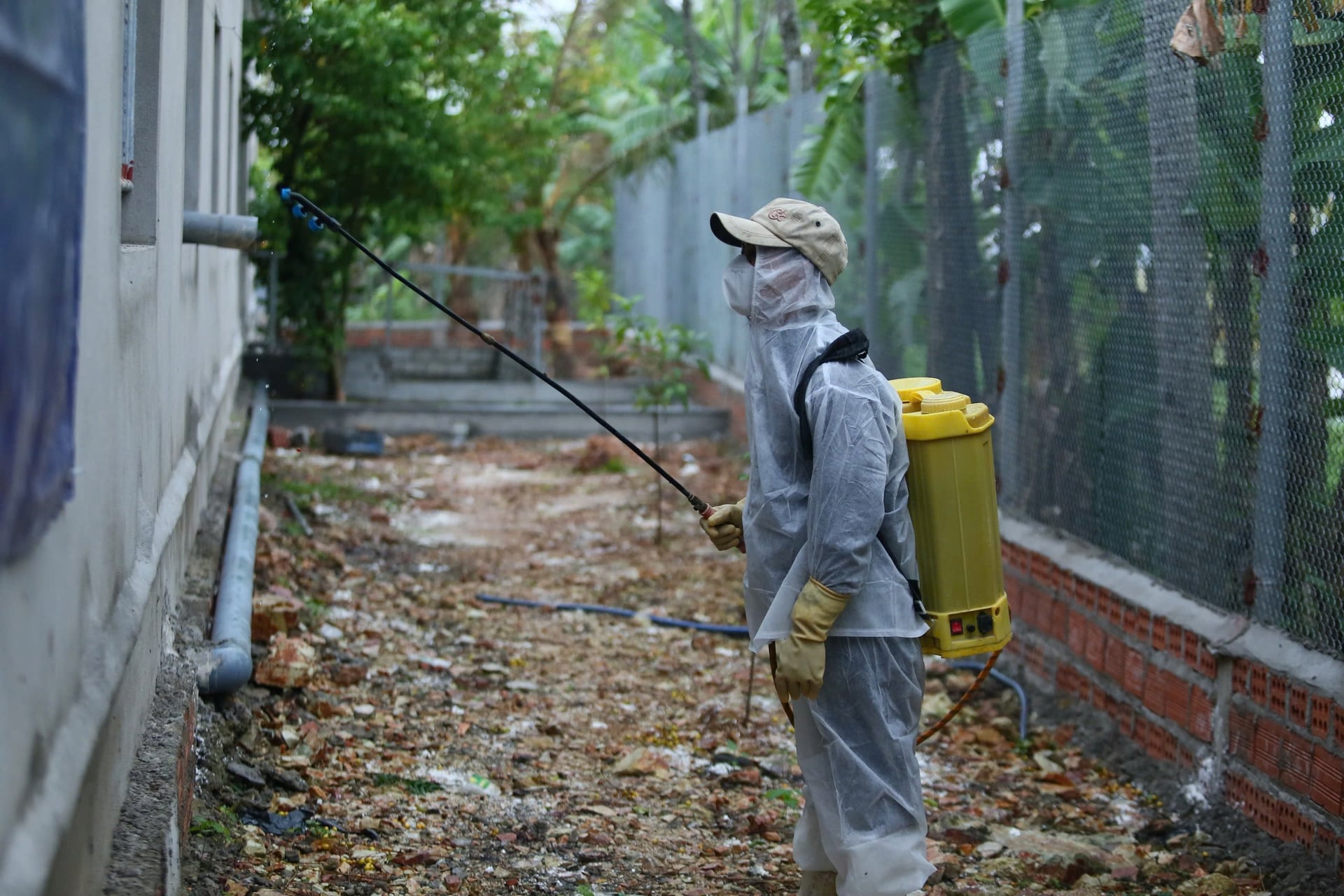
Despite many difficulties, the locality is still making great efforts in disease prevention and control in livestock farming. Photo: Hong Tham .
In addition, the rate of small-scale livestock farming in the commune currently accounts for over 60%, making disease management even more difficult. People still mainly raise livestock according to habit, not strictly following disease control and biosecurity procedures, so the risk of disease spread is very difficult to control.
In addition, due to a lack of staff, the completion of documents and procedures to ensure support for people affected by the epidemic has not been timely.
In the coming time, the locality hopes that the province will pay attention to supplementing sufficient human resources, and at the same time soon establish a Public Service Center to regulate and increase human resources from units such as agricultural service centers, cultural centers, land use rights registration offices, etc., thereby providing some support to commune-level officials in performing professional tasks and field work.
Early attention to adding personnel with veterinary expertise is considered the "key" to helping Dai Hue commune in particular, and Nghe An province in general, proactively control epidemics, protect livestock and stabilize people's livelihoods.
Source: https://nongnghiepmoitruong.vn/khoang-trong-nhan-luc-thu-y-co-so-d787551.html

![[Photo] Cat Ba - Green island paradise](/_next/image?url=https%3A%2F%2Fvphoto.vietnam.vn%2Fthumb%2F1200x675%2Fvietnam%2Fresource%2FIMAGE%2F2025%2F12%2F04%2F1764821844074_ndo_br_1-dcbthienduongxanh638-jpg.webp&w=3840&q=75)









![Varieties Revolution: [Part 2] Tissue-cultured bananas overcome challenges](https://vphoto.vietnam.vn/thumb/402x226/vietnam/resource/IMAGE/2025/12/04/1764821852127_3654-102650723_2939528996132898_3129898509587505636_n-1-nongnghiep-113643.jpeg)







![Tue Tinh gets rich from the fields: [Article 3] Chili plants take root to reduce poverty](https://vphoto.vietnam.vn/thumb/402x226/vietnam/resource/IMAGE/2025/12/02/1764640627872_img_5015-221526_666-085700.jpeg)
























![[VIMC 40 days of lightning speed] Hai Phong Port determined to break through, reaching the target of 2 million TEUs by 2025](https://vphoto.vietnam.vn/thumb/402x226/vietnam/resource/IMAGE/2025/12/04/1764816441820_chp_4-12-25.jpeg)

















































Comment (0)