

In the Draft Political Report of the 13th Party Central Committee at the 14th Party Congress, environmental protection and climate change response are considered one of the important pillars in the country's development strategy for the new period.
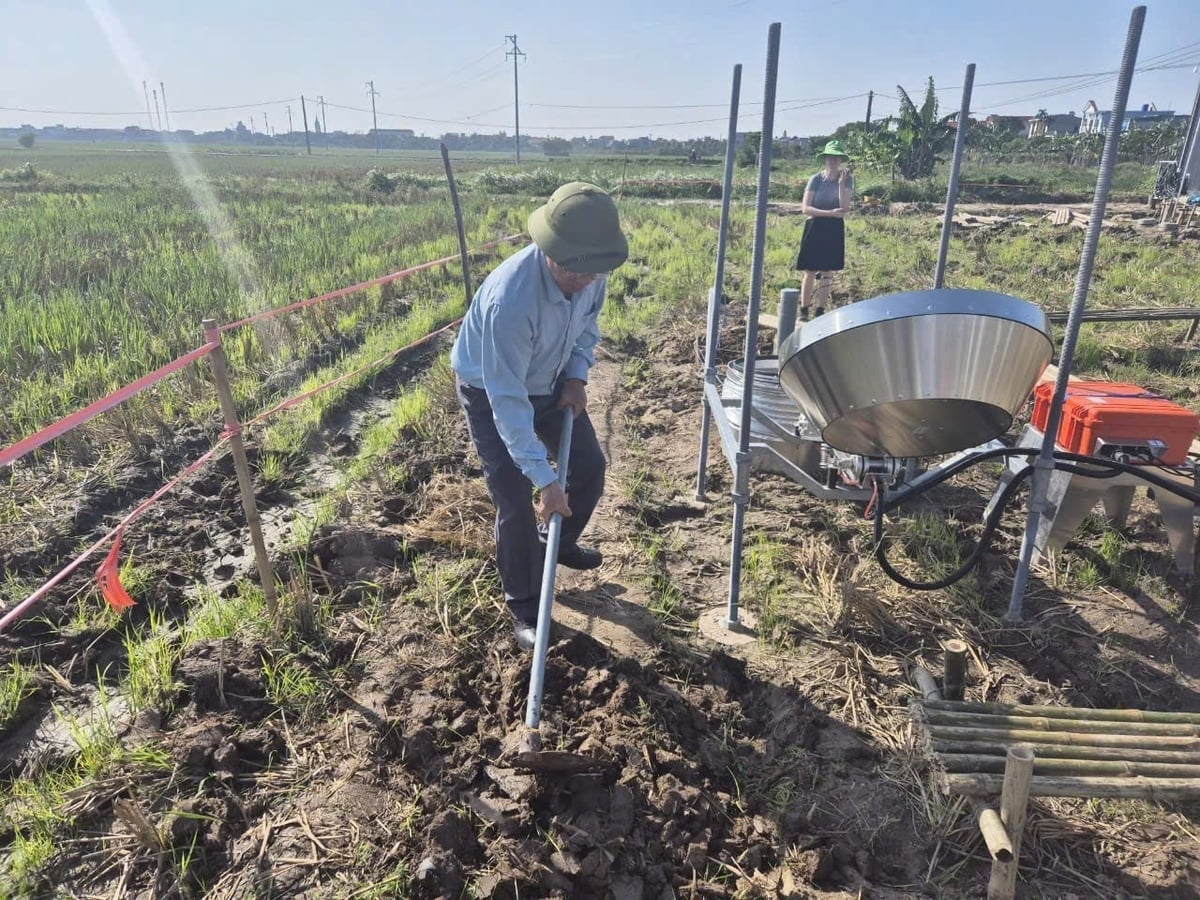
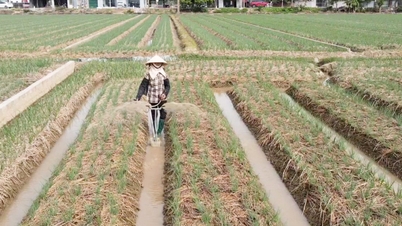
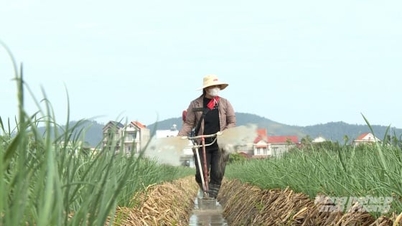
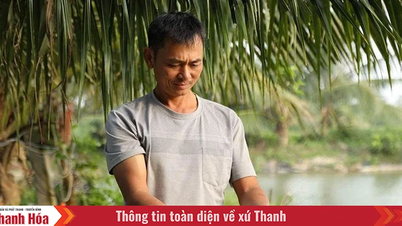
At Phu Luong Agricultural Service Cooperative, emission-reducing farming measures have been applied since 2017. Photo: Phuong Linh.
The draft clearly defines the main development goals and targets for the 5-year period 2026 - 2030, notably the target of reducing greenhouse gas emissions by 8-9% compared to the business-as-usual scenario. This is an important step in implementing Vietnam's commitment to bring net emissions to zero by 2050.
Along with that, the content in Part IX - Managing and effectively using resources, protecting the environment, proactively adapting to climate change emphasizes the requirement to perfect institutions, enhance capacity for monitoring and protecting the environment; promote green transformation, circular economy ; and at the same time ensure harmony between economic development and minimizing environmental impacts.
These orientations create a foundation for localities, industries, businesses and communities to participate more deeply in the emission reduction roadmap, especially in high-emission sectors such as agriculture, industry and transport.
Setting clear targets for the 2026-2030 period shows Vietnam's determination in the process of transitioning to a sustainable development model, adapting to climate change, and at the same time preparing conditions to effectively participate in the carbon market - an inevitable trend globally.
Regarding the above Draft, Mr. Nguyen Trong Thanh, Director of Phu Luong Agricultural Service Cooperative (Bac Tien Hung commune, Hung Yen province) said that emphasizing the goal of reducing greenhouse gas emissions in the Draft is a positive sign, reflecting the great interest of the Party and State in developing green agriculture and low-carbon economy.
According to Mr. Thanh, agriculture currently emits about 116 million tons of CO₂, accounting for more than 25% of the country's total emissions, of which rice and livestock are the two largest sources of emissions. "To successfully implement the commitment to bring net emissions to zero by 2050, the low-carbon rice production model is not only a trend but has become a mandatory requirement," he emphasized.
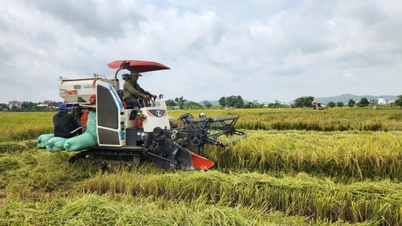
At Phu Luong Agricultural Service Cooperative, emission-reducing farming measures have been applied since 2017, such as reasonable water regulation, reducing the amount of chemical fertilizers, using high-quality seeds, applying mechanization and moving towards digitalizing the farming process. The cooperative is aiming to expand the production area to qualify for carbon credit sales - a direction that helps increase production value while creating motivation for farmers to stick with green agriculture for the long term.
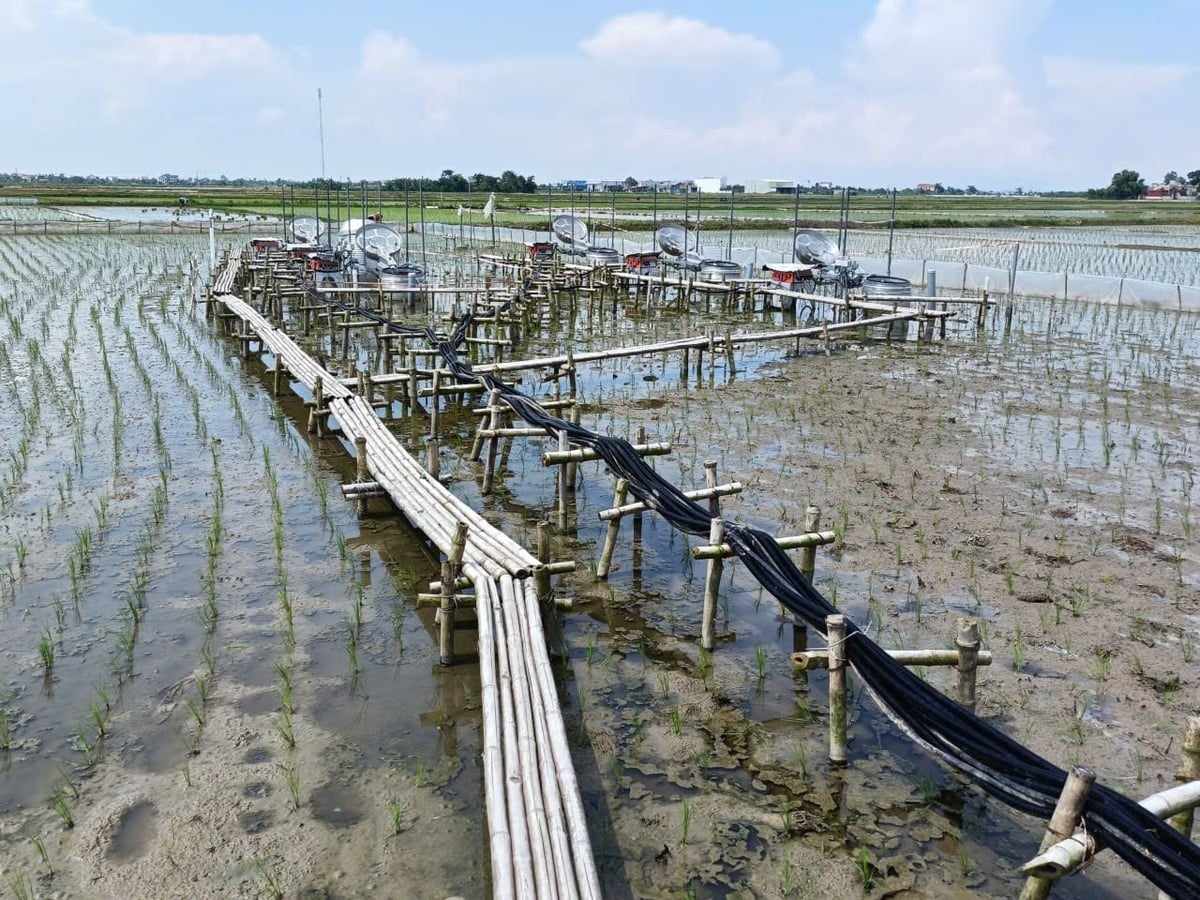
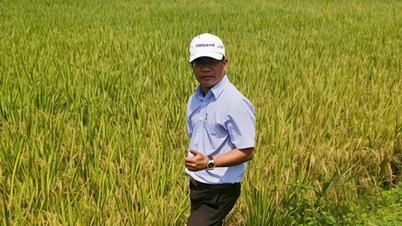
Phu Luong Agricultural Service Cooperative is aiming to expand its production area to qualify for carbon credit sales - a move that will help increase production value while also motivating farmers to stick with green agriculture long-term. Photo: Mai Dan.
From that reality, the Director of Phu Luong Agricultural Service Cooperative recommended that the authorities need to increase propaganda, open training courses, and share experiences on carbon credits for businesses and farmers.
At the same time, build a transparent and independent emission monitoring - counting - verification (MRV) system at the national level, ensuring consistency among ministries, branches and large emission-emitting enterprises.
And most importantly, in Part IX of the Draft, the content should be added: "Building a policy mechanism to implement carbon credits for people in key rice-growing areas, areas with protective forests, and upstream forests".
According to Mr. Thanh, when carbon credits are converted into economic value and people directly benefit, they will have more motivation to apply environmentally friendly farming methods, protect forests and natural resources. This is also a way to mobilize broad community participation, a decisive factor in the country's emission reduction roadmap.
Source: https://nongnghiepmoitruong.vn/goi-mo-chinh-sach-tin-chi-cac-bon-tu-thuc-tien-nong-nghiep-d787709.html
![[Photo] Cat Ba - Green island paradise](/_next/image?url=https%3A%2F%2Fvphoto.vietnam.vn%2Fthumb%2F1200x675%2Fvietnam%2Fresource%2FIMAGE%2F2025%2F12%2F04%2F1764821844074_ndo_br_1-dcbthienduongxanh638-jpg.webp&w=3840&q=75)







![Varieties Revolution: [Part 2] Tissue-cultured bananas overcome challenges](https://vphoto.vietnam.vn/thumb/402x226/vietnam/resource/IMAGE/2025/12/04/1764821852127_3654-102650723_2939528996132898_3129898509587505636_n-1-nongnghiep-113643.jpeg)





![Tue Tinh gets rich from the fields: [Article 3] Chili plants take root to reduce poverty](https://vphoto.vietnam.vn/thumb/402x226/vietnam/resource/IMAGE/2025/12/02/1764640627872_img_5015-221526_666-085700.jpeg)



















![[VIMC 40 days of lightning speed] Da Nang Port: Unity - Lightning speed - Breakthrough to the finish line](https://vphoto.vietnam.vn/thumb/402x226/vietnam/resource/IMAGE/2025/12/04/1764833540882_cdn_4-12-25.jpeg)



































Comment (0)