

Looking back at soil health and old farming thinking
Growing up in a rural area with a tradition of growing onions and garlic in Nam An Phu commune ( Hai Phong city), Ms. Nguyen Thi Thanh Nhan, Vice Chairman of the People's Committee of Nam An Phu commune, is always proud of the tradition of diligence of the local people. Onions and garlic are not only a source of livelihood but have also become a source of wealth for many households. However, behind the bumper crops are increasingly obvious problems.
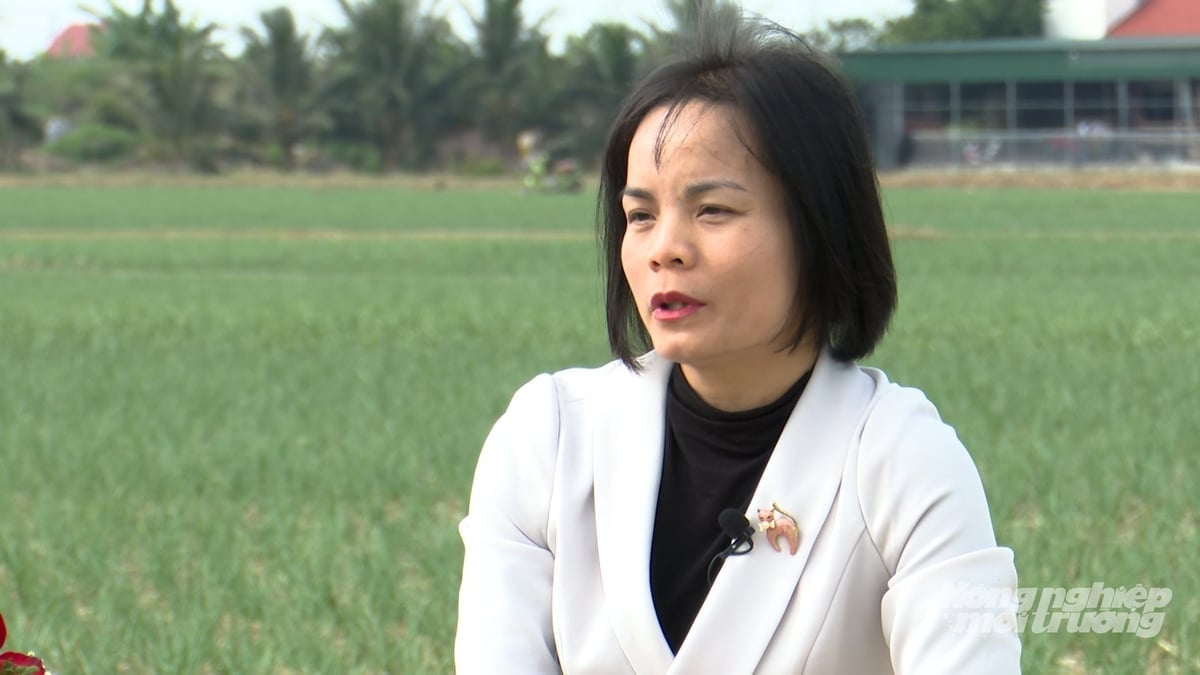
Ms. Nguyen Thi Thanh Nhan, Vice Chairwoman of Nam An Phu Commune People's Committee (Hai Phong City). Photo: Quang Dung.
According to Ms. Nhan, for a long time, farmers have tended to overuse chemical fertilizers and single fertilizers because they are easy to apply and effective quickly. However, this habit has made the soil increasingly "tired", fertility has decreased, and the micro-organism system has become unbalanced. "Using too much inorganic fertilizer makes the soil hard, plants are susceptible to diseases, and farmers have to use more pesticides," Ms. Nhan shared.
Not only that, the problem of output for onion and garlic products also makes local authorities very worried. Although Nam An Phu onions and garlic are popular in the domestic market, they are still mainly sold through traders, have no brand and have not built a sustainable chain. "We want our hometown products not only to be sold domestically but also to reach export standards," said Ms. Nhan.
From these concerns, Nam An Phu commune proactively worked with the Department of Agriculture and Environment of Hai Phong City. At the same time, they searched for capable businesses to accompany farmers. After a while, opportunities opened up when businesses agreed to support the pilot model, provide materials and send technical staff to the fields to guide farmers.
“At first, many households were worried about the new process: reducing chemical fertilizers, increasing organic fertilizers, keeping a production diary… Because people were used to the old way of doing things, when they heard about the change in process, many people were afraid of losing their crops. At that time, the government had to stand up to commit, mobilize and create trust for the people,” said Ms. Nguyen Thi Thanh Nhan.
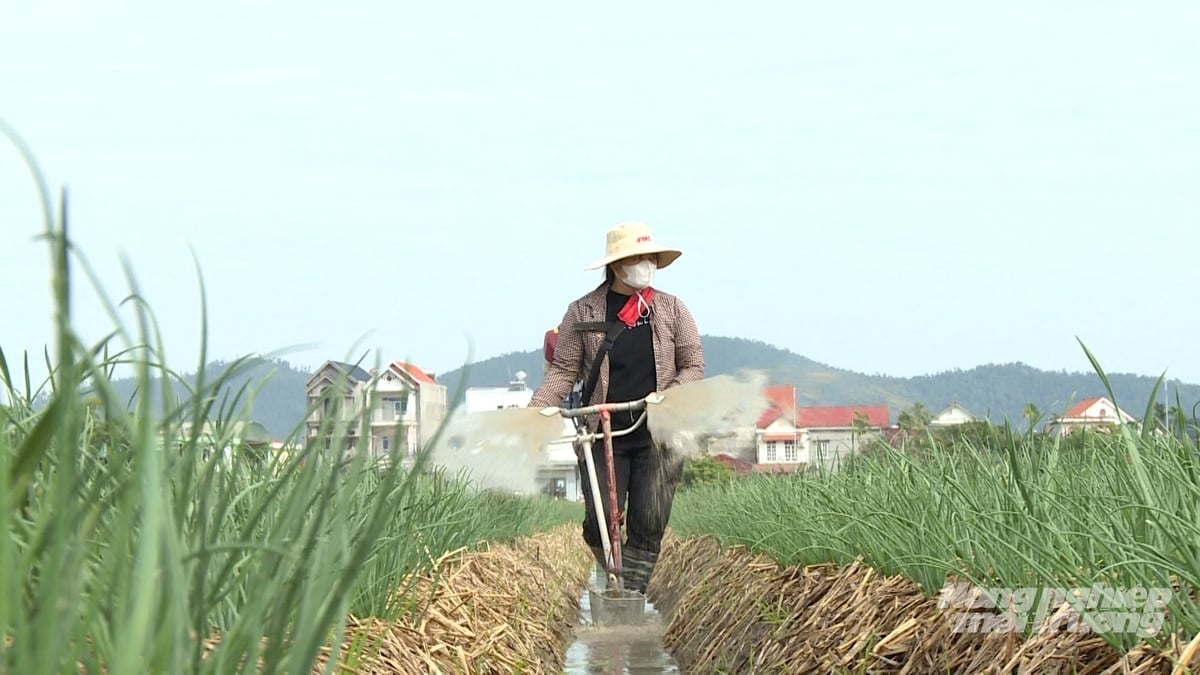
Farmers strictly follow the instructions, do not arbitrarily add fertilizers or pesticides not listed, ensuring that they do not affect soil health. Photo: Quang Dung.
The government acts as a bridge
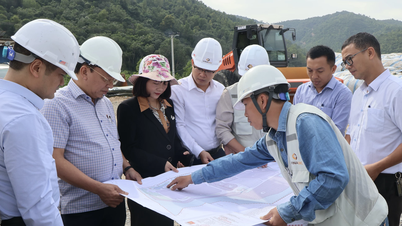
As soon as the policy was approved by the Department of Agriculture and Environment, Nam An Phu commune and the enterprise started implementing the model. The first step was to test soil samples to determine nutritional status, chemical residues, etc., and then develop a suitable cultivation process for each plot of land in the locality.
The company provides all materials according to the new process, and also sends technical staff to be on duty in the field. Farmers only need to follow the instructions, not arbitrarily adding fertilizers or pesticides not listed. "When seeing healthier plants, more beautiful roots, and looser soil, people gradually believe in and are excited about the model," Ms. Nhan shared.
After a while, the initial results were quite obvious: costs did not increase, productivity remained stable, onion quality was better, pest and disease rates decreased... In addition, qualified product samples will be sent for testing to serve brand building. "The highest goal is still to standardize quality, meet export standards so that Nam An Phu garlic can gradually be present in demanding markets," Ms. Nhan shared.
According to Ms. Nhan, sustainable agricultural development must be based on three pillars: improving soil health, standardizing according to VietGAP and GlobalGAP processes, and building a close chain of links between the government, businesses, and farmers. When there is enough acreage and output that meets standards, the opportunity to connect with export businesses will be more open.
"The local government must be a bridge, listen to farmers, and understand market demands to lead change. People in our commune are very good at business. If properly supported and approached with advanced processes, I believe Nam An Phu garlic will go further," said Ms. Nhan.
Source: https://nongnghiepmoitruong.vn/quan-ly-suc-khoe-cay-trong-de-hanh-toi-hai-phong-vuon-thi-truong-lon-d304620.html
















![Tue Tinh gets rich from the fields: [Article 3] Chili plants take root to reduce poverty](https://vphoto.vietnam.vn/thumb/402x226/vietnam/resource/IMAGE/2025/12/02/1764640627872_img_5015-221526_666-085700.jpeg)
![[Photo] Parade to celebrate the 50th anniversary of Laos' National Day](/_next/image?url=https%3A%2F%2Fvphoto.vietnam.vn%2Fthumb%2F1200x675%2Fvietnam%2Fresource%2FIMAGE%2F2025%2F12%2F02%2F1764691918289_ndo_br_0-jpg.webp&w=3840&q=75)
![[Photo] Worshiping the Tuyet Son statue - a nearly 400-year-old treasure at Keo Pagoda](/_next/image?url=https%3A%2F%2Fvphoto.vietnam.vn%2Fthumb%2F1200x675%2Fvietnam%2Fresource%2FIMAGE%2F2025%2F12%2F02%2F1764679323086_ndo_br_tempimageomw0hi-4884-jpg.webp&w=3840&q=75)




























































Comment (0)