

Facing the challenge
Once considered a “poverty alleviation tree” that has helped thousands of farming households change their lives, tissue culture bananas have helped Dong Nai rise to become the “banana capital” of the country. However, after a period of “hot” development, the banana industry is facing many challenges: diseases, market fluctuations, uncontrolled seed quality and the risk of oversupply. In that context, the participation of the State and enterprises is opening a new direction, helping Dong Nai bananas return to the orbit of sustainable development.
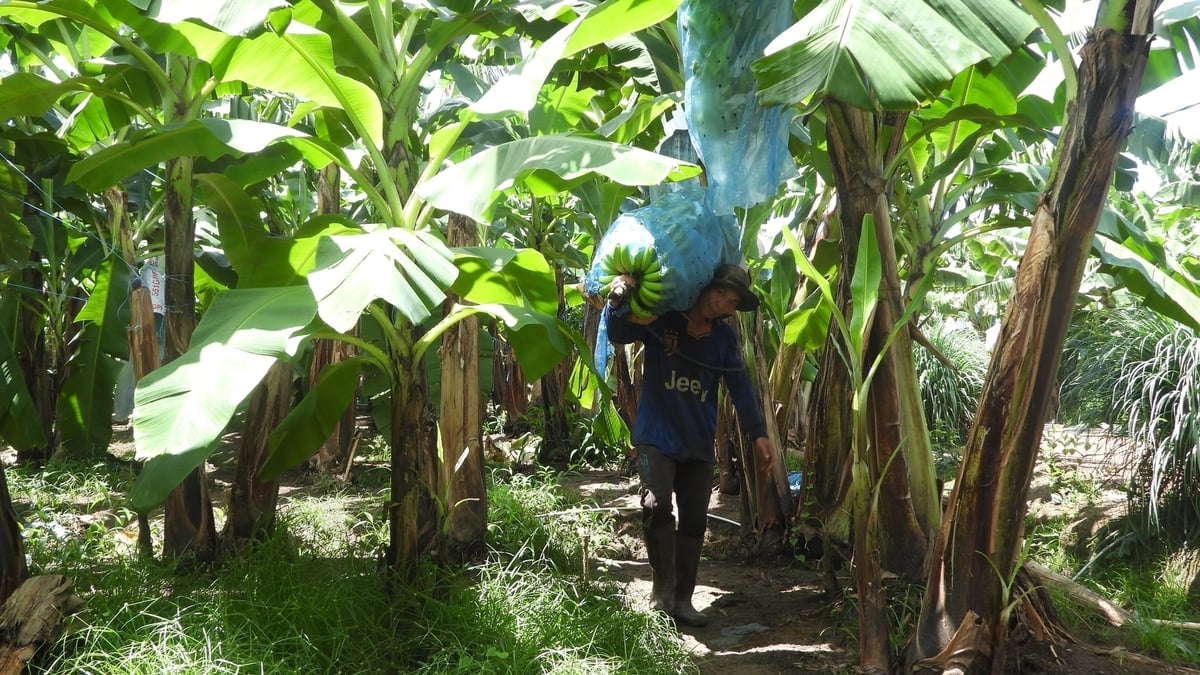
Tissue-cultured bananas used to be a high-income crop for farmers in Dong Nai. Photo: Tran Trung.
Dong Nai currently has nearly 20,000 hectares of bananas, leading the country in banana export acreage, especially tissue culture bananas. This is the perennial crop with the fastest expansion rate in recent years, reflecting the strong trend of farmers switching from coffee, pepper, cashew, and other low-yield crops to bananas.
The main reason for the boom in tissue culture banana acreage is the high price of official export to China. Along with that, the formation of specialized areas, investment in water-saving irrigation systems, and bunch packaging to meet export standards have made banana trees the "trump card" of farmers in many localities such as Trang Bom and Thong Nhat.
In many hilly and rocky areas where coffee and cashews were previously grown, they have now been replaced by straight tissue culture banana farms, measuring dozens of hectares. Many households earn profits of 250-500 million VND/ha/year, after deducting expenses. Bananas have become the hope to help farmers escape poverty and become rich.
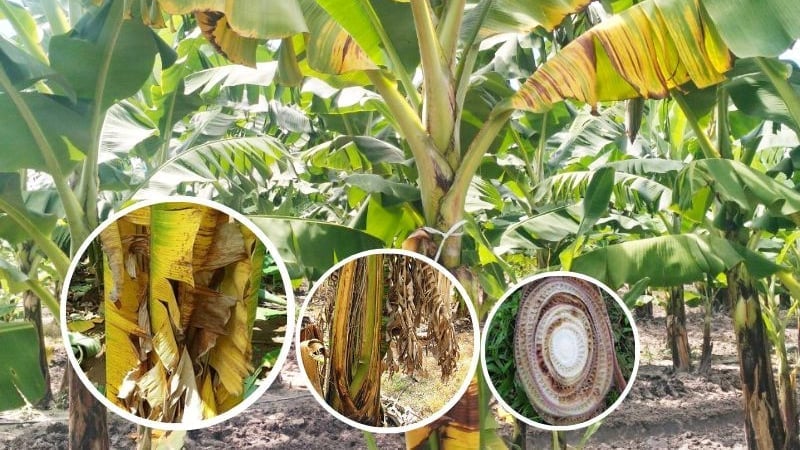
Panama disease (Panama wilt), a disease that can spread rapidly through soil, water, roots, stems or farming tools, has caused a crisis in the global banana industry. Photo: Contributor.
However, rapid development also has consequences. Many households grow bananas following trends, without full access to technical, market and disease information. The lack of synchronous chain linkages makes production prone to "good harvest, low price". When the export market encounters problems, bananas are congested, prices fall dramatically, and farmers suffer.
More dangerously, Panama disease - a "global pandemic" on banana trees is lurking in the growing area. The disease spreads quickly through soil, water, roots and farming tools. Once it enters, there is almost no cure. Many countries in the world have had to close their entire banana growing areas because of Panama. For Dong Nai, if disease-free varieties and strict farming processes are not controlled, the risk of damage will not only be hundreds of billions of dong but also the loss of long-term competitive advantage.
Farmers move from "growing by feeling" to "farming with information"
Unlike in the past, farmers no longer rely on luck. Information has become an “input” as important as fertilizer or seeds. Markets, diseases, and farming techniques can all determine the profits and losses of banana growers.
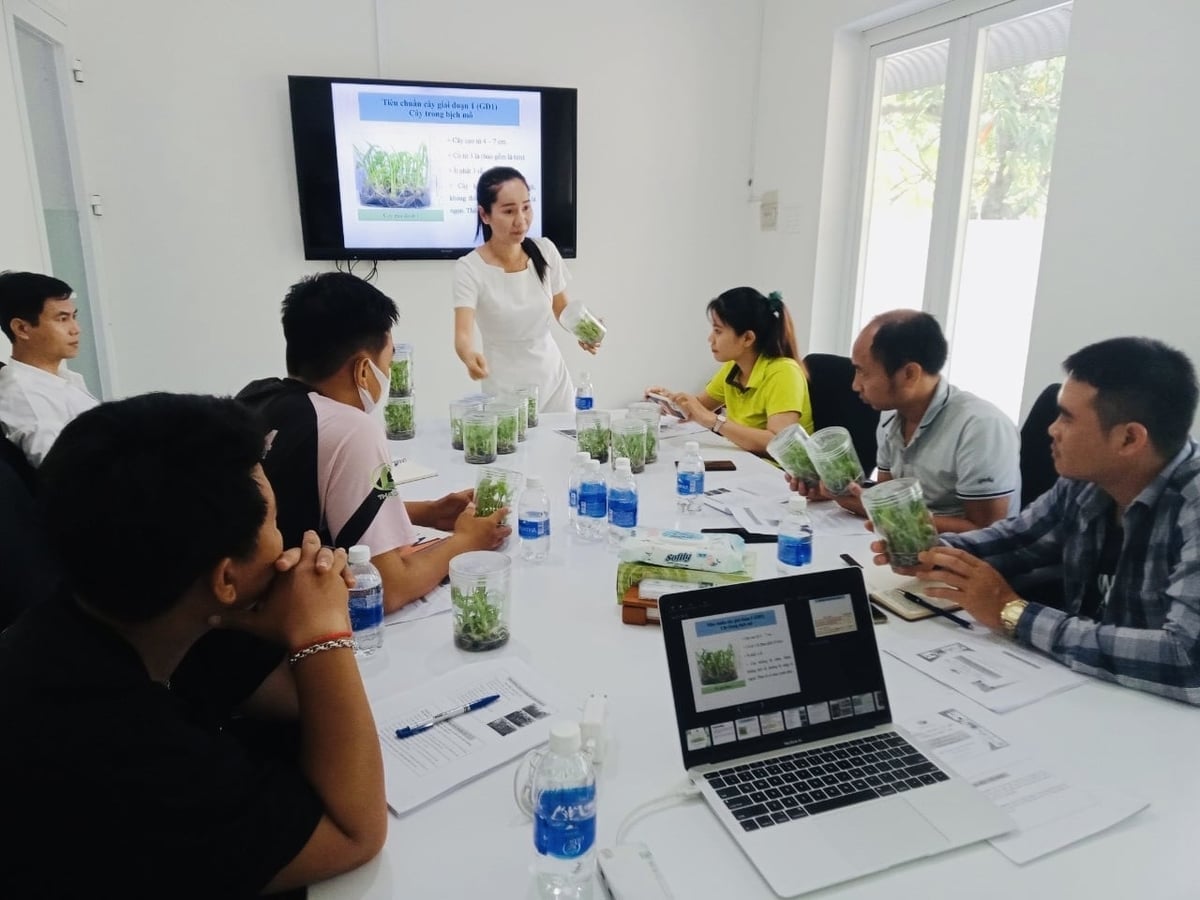
Many farmers in Dong Nai have learned how to monitor export market prices, understand shipping schedules, and technical standards for cultivation. Photo: Tran Trung.
Many farmers in Dong Nai have learned how to monitor export market prices, shipping schedules, and technical standards through smartphones, Zalo groups, Facebook, farmer associations, and cooperatives. With just a few clicks, information on purchasing prices, disease warnings, weather, fertilization techniques, and disease prevention are updated instantly.
Thanks to this, farmers no longer grow bananas based on “rumors”, but gradually make decisions based on real data. When the Chinese market tightened, many households promptly reduced acreage expansion, switched to quality care or found domestic outlets. When there was a disease warning, farmers proactively cordoned off and disinfected, preventing the spread of pathogens. Farmers gradually changed their mindset: growing bananas is not just about growing trees, but about risk management.
Join hands to protect the "rich tree"
To protect people's livelihoods, Dong Nai Biotechnology Application Center has cooperated with U&I Agriculture Joint Stock Company to sign a cooperation agreement to transfer technology of UNI 126 banana variety - a variety that is resistant to Panama disease.
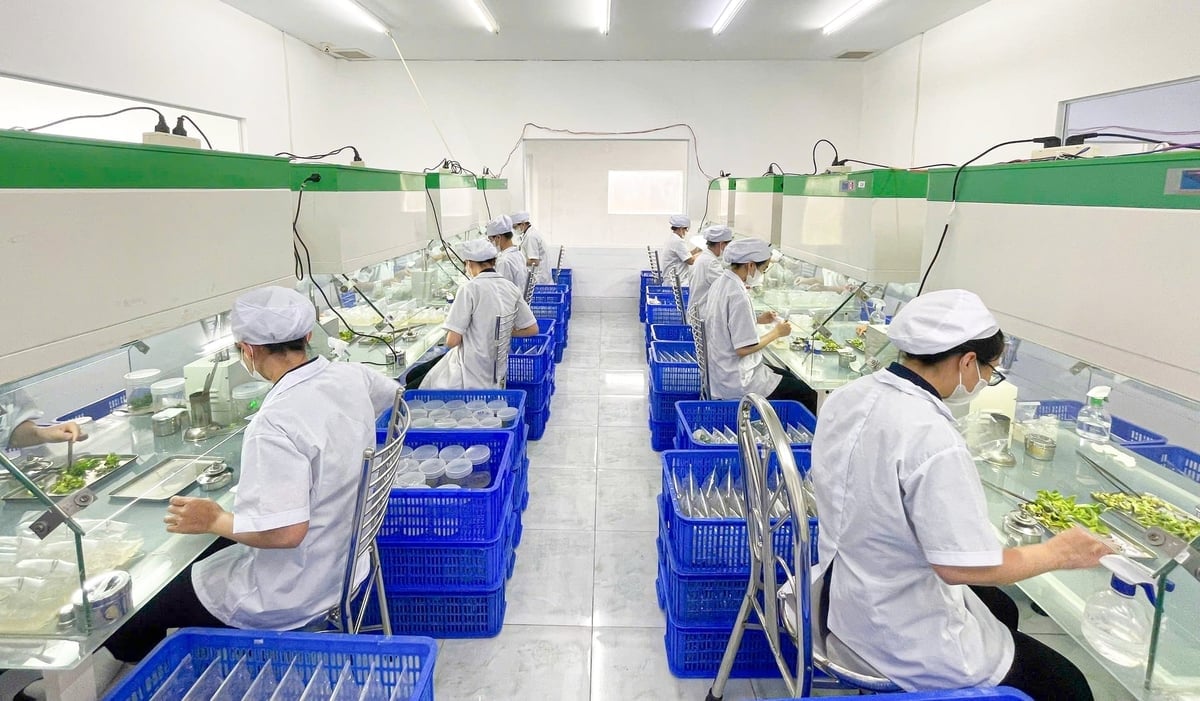
Research and selection of banana variety UNI 126 at Vietnam Seedling Biotechnology Joint Stock Company. Photo: Contributor.
According to Ms. To Thi Nha Tram, Director of Vietnam Seedling Biotechnology Joint Stock Company (under U&I), the UNI 126 banana variety has been deployed in Phu Giao commune (Ho Chi Minh City) with an area of over 400 hectares and has given positive results. The tree grows well, is resistant to Panama disease and has high productivity.
The UNI 126 banana model currently brings in profits of 500 - 600 million VND/ha. More importantly, the output is stable and does not depend on a single market. Enterprises proactively sign contracts, guarantee consumption, provide technical guidance and supervise the growing area.
"As long as people have land, are determined and follow the technical process, they can absolutely get rich from high-tech banana trees," said Ms. Tram.
With Dong Nai Biotechnology Application Center, cooperation does not stop at providing seeds but also building model gardens, providing technical training, and guiding production diary recording, a mandatory factor if one wants to trace the origin and export officially.
Mr. Phan Tran Thien Ly, Deputy Director of Dong Nai Biotechnology Application Center affirmed: Cooperating with U&I helps the Center fulfill its political mission: providing disease-free seeds, clear origin, high technology for farmers and businesses.
Not only does the Center provide technical support, it also acts as a bridge of information between the government, businesses, and farmers. New policies, export standards, and target markets are promptly communicated to growing areas. As a result, farmers are no longer “blind” to market fluctuations.
When businesses need standard raw material areas, the Center acts as a connection. When farmers are at risk of disease, the Center is the first place to receive information to support handling.
Maintaining the title of “banana capital” is no longer a race for area, but a race for quality, technology and market. Dong Nai is facing a crossroads: either continue to develop spontaneously, or step up to high-tech agriculture. The solution is clear: planning growing areas; strictly managing varieties; early warning of diseases; diversifying markets; supporting farmers in accessing information. When banana trees do not rely only on land, but on knowledge and technology, that is the sustainable path.
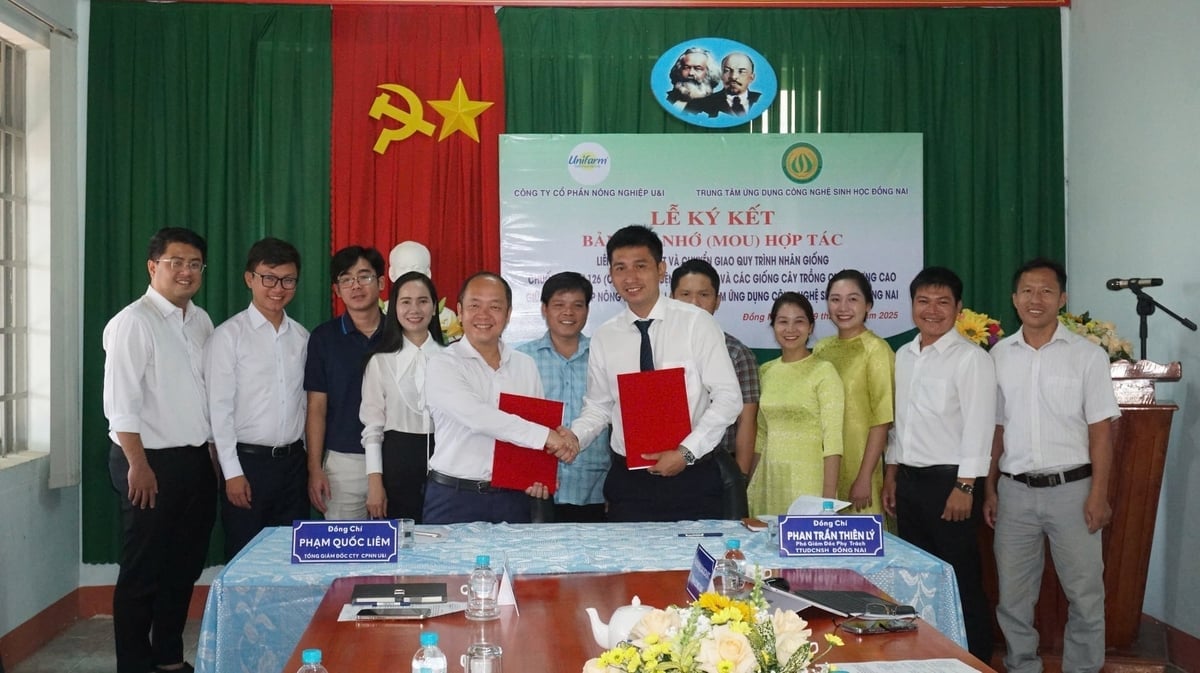
Dong Nai Biotechnology Application Center has signed a cooperation agreement on production and transfer of UNI 126 tissue culture banana propagation process with U&I Agriculture Joint Stock Company. Photo: Tran Trung.
“Bananas are not just crops, but the livelihood of thousands of households. To protect farmers, we must protect their information, varieties and output,” Mr. Phan Tran Thien Ly emphasized.
Source: https://nongnghiepmoitruong.vn/cach-mang-giong-bai-2-chuoi-cay-mo-vuot-thach-thuc-d787328.html


![[Photo] Cat Ba - Green island paradise](/_next/image?url=https%3A%2F%2Fvphoto.vietnam.vn%2Fthumb%2F1200x675%2Fvietnam%2Fresource%2FIMAGE%2F2025%2F12%2F04%2F1764821844074_ndo_br_1-dcbthienduongxanh638-jpg.webp&w=3840&q=75)










![Tue Tinh gets rich from the fields: [Article 3] Chili plants take root to reduce poverty](https://vphoto.vietnam.vn/thumb/402x226/vietnam/resource/IMAGE/2025/12/02/1764640627872_img_5015-221526_666-085700.jpeg)















![[VIMC 40 days of lightning speed] Hai Phong Port determined to break through, reaching the target of 2 million TEUs by 2025](https://vphoto.vietnam.vn/thumb/402x226/vietnam/resource/IMAGE/2025/12/04/1764816441820_chp_4-12-25.jpeg)



































Comment (0)