

The resolution on a number of specific and outstanding mechanisms and policies to create breakthroughs in the development of education and training was passed by the National Assembly on December 10th and will take effect from January 1st, 2026.
According to the Ministry of Education and Training, the Government had previously incorporated feedback and revised the draft to improve the mechanism for recruiting, utilizing, and managing human resources, and to clearly decentralize authority.
According to the new regulations, the Director of the Department of Education and Training is responsible for recruiting and appointing personnel for public educational institutions in the province; and also decides on the transfer, reassignment, secondment, appointment, or change of job position for cases within their authority or involving two or more communes.
The Chairman of the People's Committee at the commune level has the authority to transfer, reassign, second, appoint, dismiss, and change job positions for personnel working at public educational institutions under the commune's management.
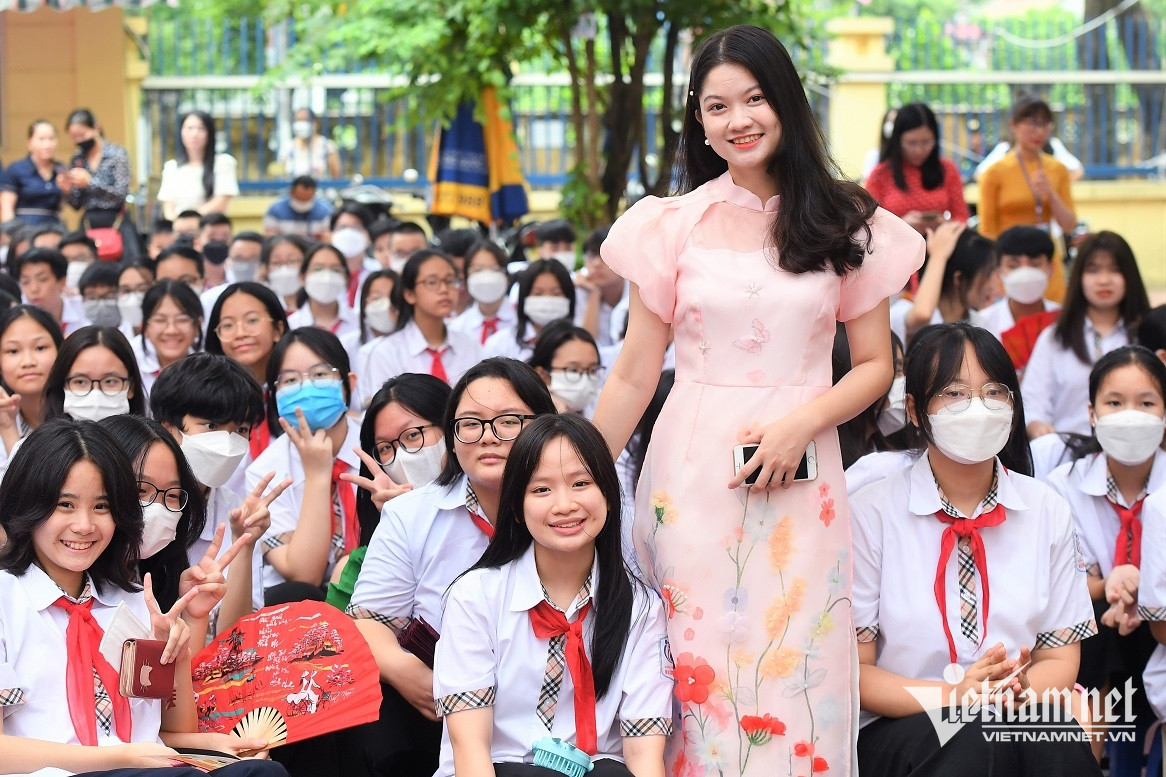
Previously, some suggested that teacher recruitment should be entrusted to schools because they are the ones who know "what they lack and what they need" and are primarily responsible for the quality of education and student performance. As for the deployment, assignment, transfer, secondment, appointment, or reassignment of teachers when necessary, this should be handled by the Department of Education and Training or the commune/ward, depending on the level.
The Ministry of Education and Training believes that, given the shortage of commune-level civil servants in charge of education and training, and the lack of experience in state management of education among many, decentralizing the recruitment, acceptance, assignment, secondment, and transfer of teachers and staff in educational institutions within the province to the Provincial Department of Education and Training is appropriate given the existing conditions and capabilities of the Department.
According to the Ministry of Education and Training, assigning the responsibility to the Department of Education and Training will help reduce intermediaries, standardize recruitment quality, save costs, and increase opportunities for applicants; it will also contribute to overcoming the shortage and surplus of teachers and staff and ensure the structure of the workforce according to educational level and subject.
Speaking to VietNamNet reporters, the principal of a junior high school in Hanoi said that having the Director of the Department of Education and Training responsible for recruiting and accepting personnel in public educational institutions in the province will help make the recruitment process more aligned with reality; deeper involvement in the process will help schools find people with excellent expertise, teaching styles, and who are suitable for the current reform requirements.
"Increasing the proactive role and responsibility of the recruiting agency, the Department of Education and Training, will streamline and make the process more flexible, reducing the overlap between agencies that existed before," this person said.
According to this person, the Department of Education and Training is a specialized agency, so it can design recruitment criteria that are specific to its field. For example, the recruitment target could be teachers with experience teaching ethnic minorities, integrated teaching, or teaching in specialized or bilingual schools, etc.
The resolution also adds a mechanism for autonomy for vocational and higher education institutions in determining job positions, recruiting, and contracting with foreign experts and scientists (PhDs) and Vietnamese citizens residing abroad. These institutions are also entitled to grant work permit exemptions for up to 3 years to experts invited to teach and conduct research.
Regarding remuneration, the resolution stipulates the implementation of preferential professional allowances according to a roadmap, with a minimum of 70% for teachers and a minimum of 30% for staff. Teachers working in particularly difficult areas, ethnic minority regions, border areas, and islands will receive a 100% allowance.
The resolution also allows vocational and higher education institutions to independently decide on additional income for their employees from legitimate non-budgetary revenue sources that the institution is permitted to retain.
Source: https://vietnamnet.vn/giam-doc-so-gd-dt-chiu-trach-nhiem-tuyen-dung-giao-vien-la-phu-hop-thuc-tien-2471215.html
![[Photo] Two flights successfully landed and took off at Long Thanh Airport.](/_next/image?url=https%3A%2F%2Fvphoto.vietnam.vn%2Fthumb%2F1200x675%2Fvietnam%2Fresource%2FIMAGE%2F2025%2F12%2F15%2F1765808718882_ndo_br_img-8897-resize-5807-jpg.webp&w=3840&q=75)















































































Comment (0)