

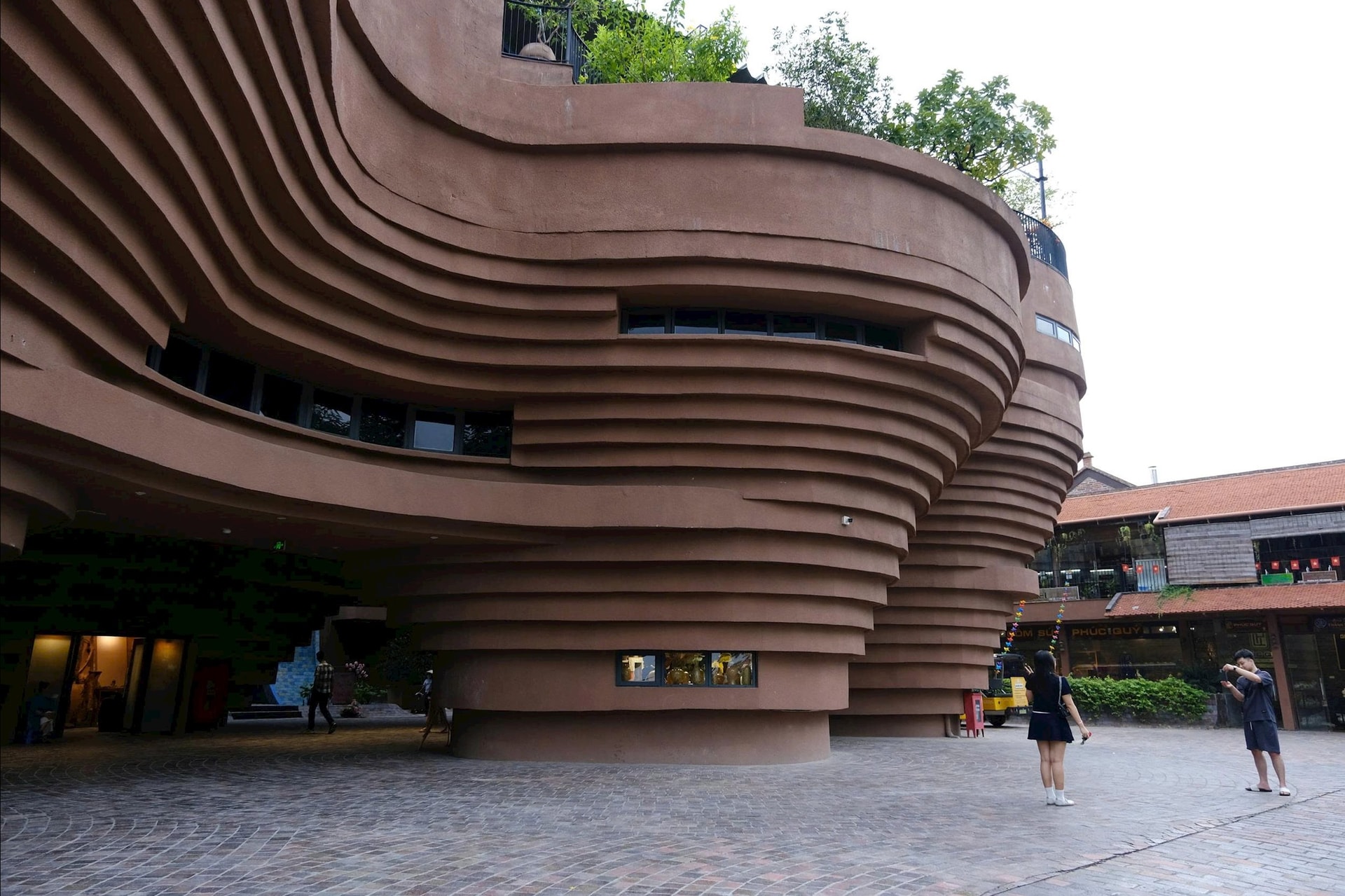
Stopping at the Center for the Quintessence of Vietnamese Craft Villages – a structure resembling a giant potter's wheel in the heart of the craft village – we stepped into a space where earth, water, fire, and human hands continue the story of pottery making. The first sensation wasn't one of grandeur, but of touch, from the scent of the earth and the warmth of the kiln to the golden light reflecting on the displayed products. Here, everything seemed to move more slowly, as if time itself wanted to leisurely observe the cycles of a craft that has existed for hundreds of years.
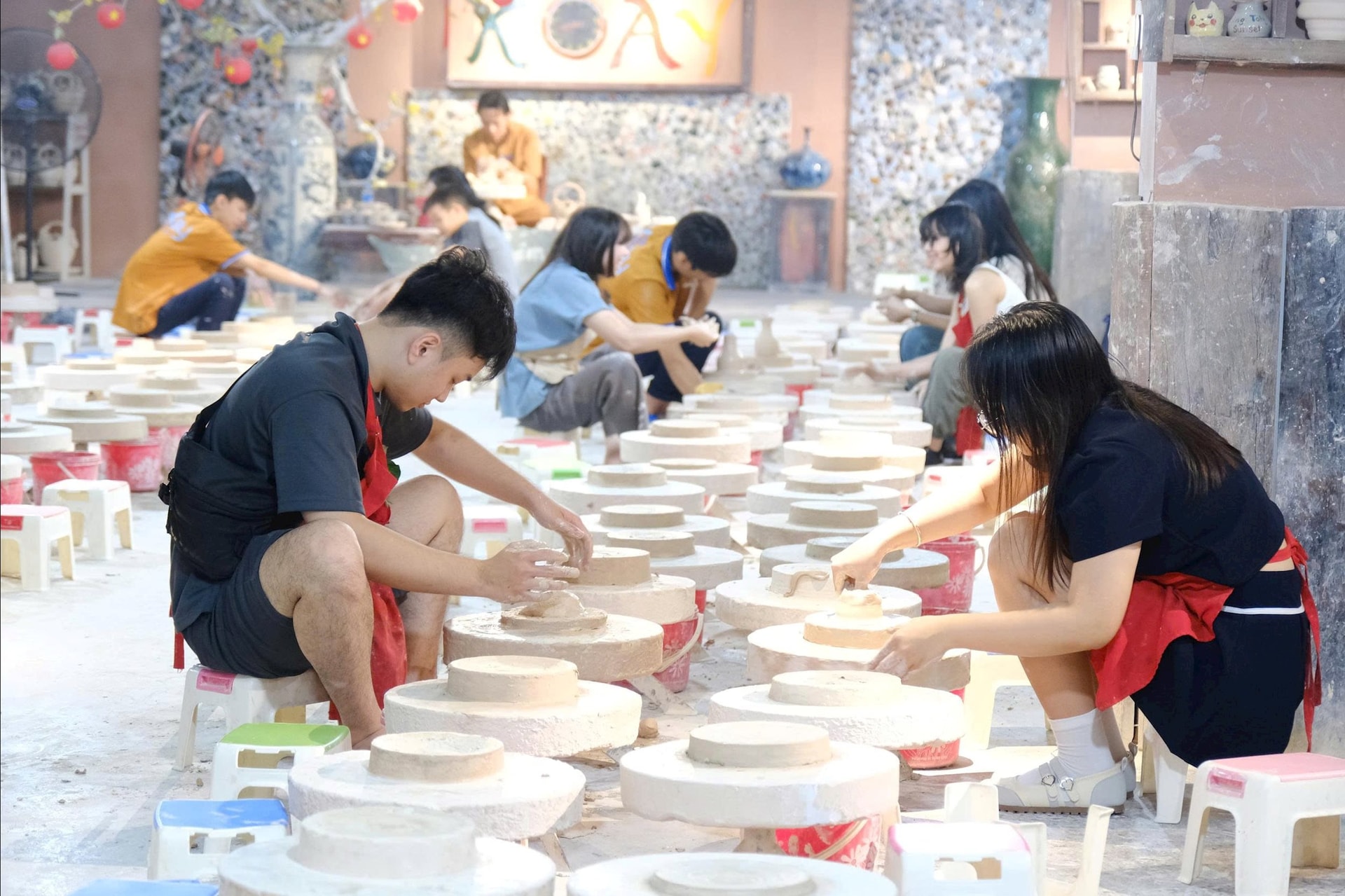
The ground floor houses the Spinning Wheel Studio, where anyone can become an artist in an afternoon. The young instructor led us to the apron-wearing area, then to a spinning wheel already set with a block of dark brown clay. The clay was still damp, soft, and cool. As the wheel gently turned, the block of clay seemed to come alive, swaying and tilting with each clumsy movement of our novice hands.
At first, the clay didn't cooperate. My left hand wasn't steady, and my right hand pressed a little too hard, causing the lump of clay to tilt to one side. The guide gently told us not to force it, just let the clay rotate and follow its movement. We tried again, more gently, more patiently. With each slow rotation, the clay gradually became round, rising into the shape of a small cup. At that moment, everything around us seemed to slow down, leaving only our hands, the rhythm of the rotation, and the sound of the wind blowing through the open door.
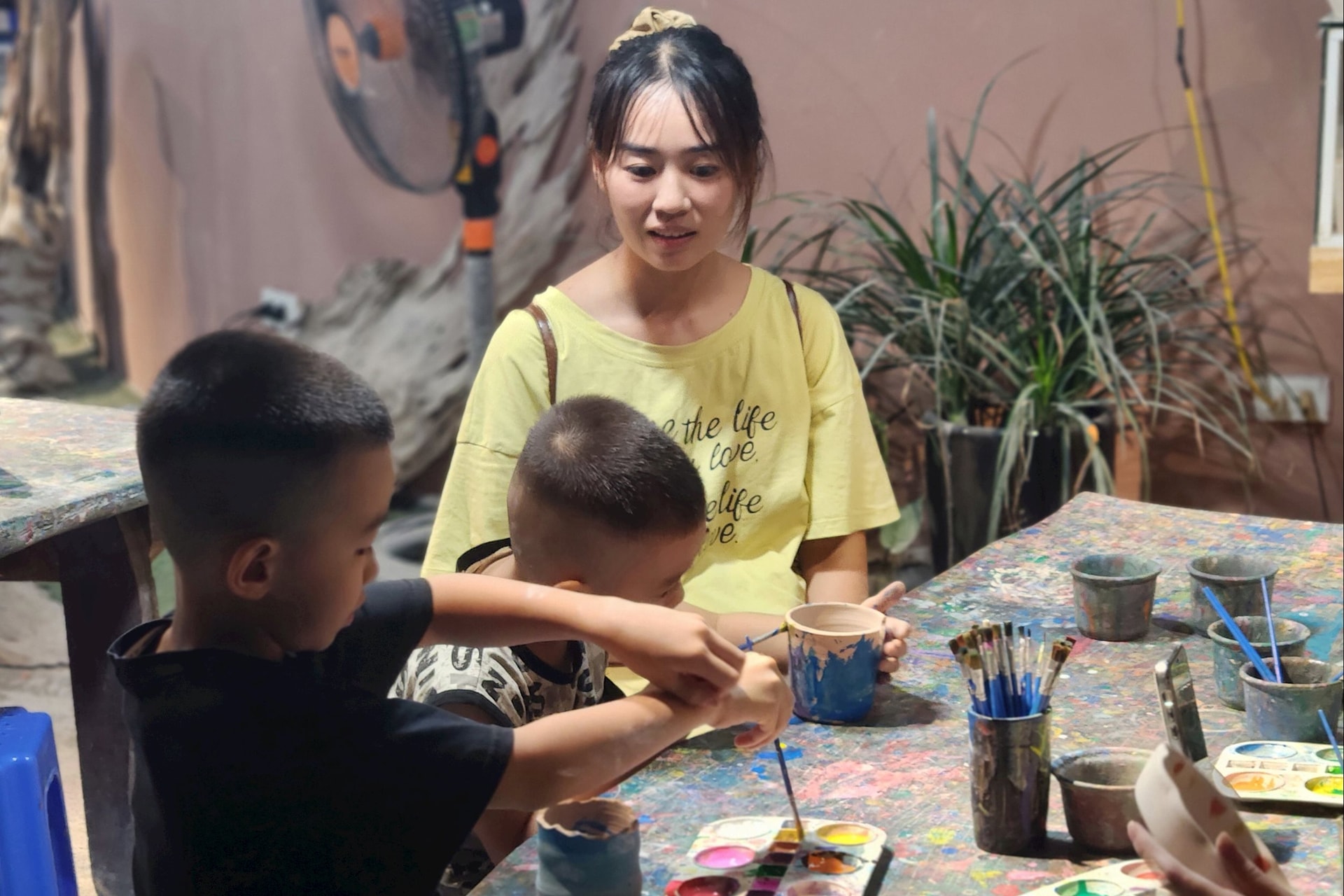
After shaping the clay, we moved on to painting and carving patterns. Some chose to paint bamboo branches, others simply carved a few wavy lines. Under the warm, dim light, the blue color spread out with each brushstroke. The small, charming cups, jars, and plates, each bearing the handprint of a person, were placed on trays awaiting firing. The guide explained that the products would be finished in a few days, the pottery hardening, just as time and fire complete a journey. Listening to him, I suddenly realized that pottery, in itself, is a lesson in patience; only after enduring enough fire does the clay become durable.
Leaving the potter's wheel area, we walked through the museum's exhibition floors. Each floor told a story, with ancient pottery fragments still showing cracks, modern ceramic products with unconventional shapes, and even tools worn smooth by the years. In a small corner, a sign recounted the history of the craft village, where the people of Bat Trang still call their craft "pottery making" rather than "pottery production," a term imbued with love and respect for the earth.

Walking among these artifacts, we clearly saw the connection between people and the land. Each piece of pottery, whether perfect or chipped, bears the mark of a hand. Like our recent experience, sometimes beauty lies in imperfection, in a small slant, in an uneven brushstroke, in the feeling of creating something for the first time with our own hands. These things leave a lasting impression, even more so than a finely crafted object.
As evening approached, the setting sun filtered through the ceramic window panes, casting a warm, earthy glow on the walls. Outside, several other groups of tourists continued to chat and laugh, the potter's wheel turning slowly, the rhythmic sound of clay hitting palms echoing like the breathing of the craft village.
.jpg)
As we left, we looked back at the space we had just left, the light from the kiln still shining on the clay waiting to take shape. The pottery-making experience was over, but the feeling of tranquility and the slow rotation of the potter's wheel remained, reminding us that amidst today's hurried pace of life, just one afternoon spent with hands in the clay is enough to better understand the work and love of the people who preserve this craft...
Source: https://baolamdong.vn/giua-bat-trang-nghe-dat-ke-chuyen-403021.html




![[Photo] A vibrant celebration of generations of Nhan Dan Newspaper staff](https://vphoto.vietnam.vn/thumb/1200x675/vietnam/resource/IMAGE/2026/03/11/1773228432744_cb-75-nam-7-7034-jpg.webp)































































































Comment (0)