

A stable macroeconomic foundation and room for growth in the textile and garment industry.
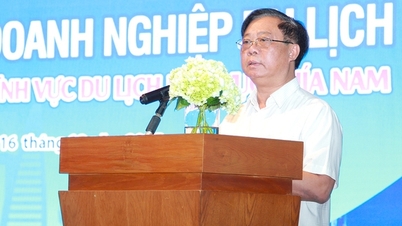
In his opening remarks at the exhibition, Mr. Quach Quang Dong, Deputy Director of the Industry Department ( Ministry of Industry and Trade ), emphasized that in the recent period, the world economy has continuously faced many major shocks, from natural disasters, epidemics, economic recession to geopolitical fluctuations and changes in trade policies in many countries and regions.
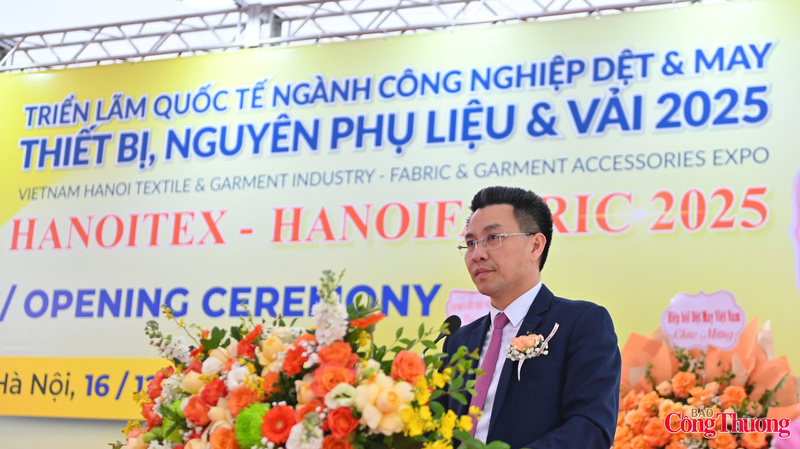
Mr. Quach Quang Dong - Deputy Director of the Department of Industry (Ministry of Industry and Trade). Photo: Nam Nguyen
In this context, according to Mr. Quach Quang Dong, the Vietnamese Party and Government have issued many "reasonable and timely" domestic and foreign policies, focusing on perfecting institutions, improving the investment and business environment, promoting administrative procedure reform, decentralization, and creating maximum convenience for businesses. Along with this is strengthening trade and investment promotion, developing supply chains, and effectively utilizing the 17 free trade agreements (FTAs) that have been signed and are in effect.
" Thanks to this, Vietnam has maintained stability in security, politics , and macroeconomics, building trust among countries, territories, organizations, and domestic and foreign investors; production and import-export activities continue to maintain good growth momentum, with a significant contribution from textile and garment businesses ," Mr. Quach Quang Dong affirmed.
By 2025, textile and garment exports could reach approximately US$46 billion, maintaining Vietnam's position as one of the top three largest textile and garment exporting countries in the world, with a trade surplus of around US$21 billion. Notably, the domestic value-added ratio is expected to reach approximately 52%, reflecting the increasing proactive role of Vietnamese businesses in developing domestic sources of raw materials and components.
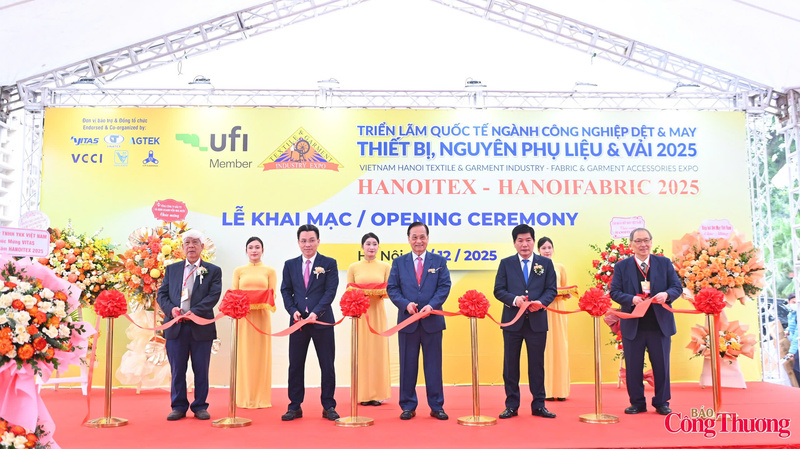
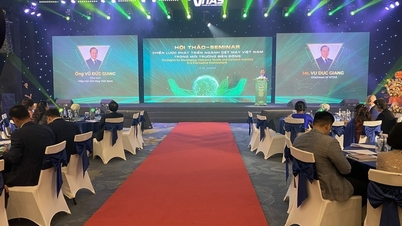
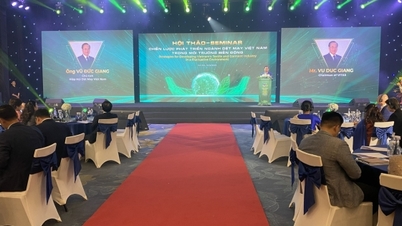
Opening Ceremony of the International Textile and Garment Exhibition, Equipment, Materials and Fabrics 2025 (HanoiTex & HanoiFabric 2025). Photo: Nam Nguyen
However, the head of the Department of Industry also frankly pointed out the existing challenges. International trade continues to be volatile and unpredictable, global demand is declining, input costs are rising, and finding and maintaining export markets is becoming increasingly difficult. In this context, he argued that textile and garment businesses cannot continue to develop extensively, relying mainly on processing and low-cost advantages.
“ Businesses need to strengthen their in-depth development, focusing on stages that bring high added value such as design, using modern equipment, high automation, applying digital transformation and green transformation; promoting the production of raw materials and components, developing distribution systems, and gradually moving up to higher levels in the sustainable production chain, ” Mr. Quach Quang Dong emphasized.
In this context, HanoiTex & HanoiFabric 2025 is considered a practical opportunity for domestic and foreign businesses to access new technologies, modern equipment, and environmentally friendly raw materials. At the same time, it facilitates partnerships, market expansion, increases localization rates, and meets the increasingly stringent rules of origin requirements of new-generation FTAs.
“ I believe that, with the support of relevant units, the efforts of the organizing committee and the business community, the HanoiTex & HanoiFabric 2025 Exhibition will continue to affirm its prestige not only in Vietnam but also in the region, contributing to promoting sustainable, inclusive and equitable international cooperation, with the spirit of '5 together': Together we go, together we arrive, together we work, together we win, together we benefit, ” Mr. Quach Quang Dong expressed.
Connecting equipment, technology, and raw materials for a vision for 2030.
From the perspective of industry associations, Mr. Vu Duc Giang - Chairman of the Vietnam Textile and Garment Association - stated that in 2025, the Vietnamese textile and garment industry is expected to achieve export turnover of approximately 46 billion USD, an increase of about 5.8% compared to 2024. This is not only a growth figure but also a significant milestone as the entire industry enters a strategic phase, shaping development goals for the 2026-2030 period.
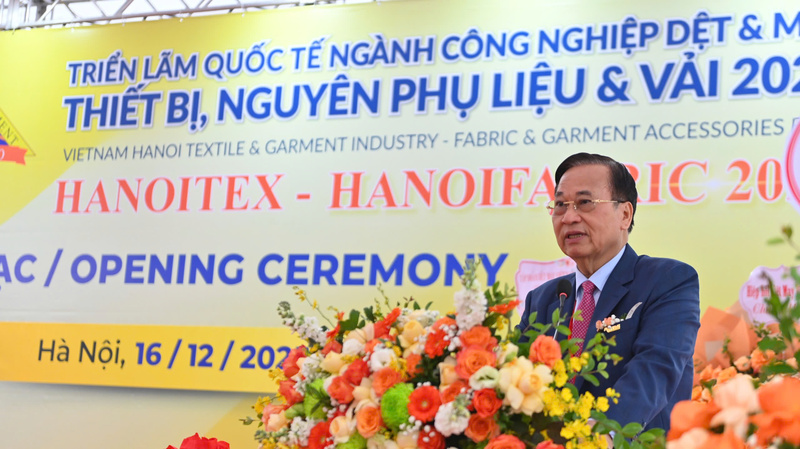
Mr. Vu Duc Giang - Chairman of the Vietnam Textile and Garment Association. Photo: Nguyen Nam
According to Mr. Vu Duc Giang, the new context is opening up many opportunities for Vietnam's textile and garment industry, especially in the strategy of diversifying markets, customers, and products, as Vietnam has been and is benefiting from the new generation of FTAs that have come into effect.
“ This fair is an important opportunity for manufacturers of equipment, technology, and raw materials to build a platform for connecting with manufacturing businesses and brands, thereby creating breakthroughs for the Vietnamese textile and garment industry in the vision to 2030 ,” Mr. Giang emphasized.
On behalf of the Vietnam Textile and Garment Association, Mr. Vu Duc Giang expressed gratitude to the Party, State, Government, central and local ministries and agencies for always creating favorable conditions for the textile and garment industry to invest and develop in depth, enhancing its position and stature. He also acknowledged the contributions of investors, equipment manufacturers, and raw material suppliers who brought to the exhibition modern, groundbreaking technologies, applications of robotics, artificial intelligence, and new material solutions serving the industry's sustainable development strategy.
Sharing the same view, Mr. Cao Huu Hieu, General Director of Vietnam Textile and Garment Group, believes that from 2026 onwards, the textile and garment industry will continue to face many major challenges, especially the fluctuations in trade policies in the United States and other key markets.
“ The risk of increased import tariffs and trade protection measures will raise export costs and narrow profit margins for businesses. Along with that, increasingly stringent requirements regarding rules of origin, transparency, and accountability in the supply chain will force businesses to restructure their supply chains and invest heavily in traceability ,” Mr. Cao Huu Hieu analyzed.
According to Vinatex leaders, the textile and garment industry is not only facing external pressures but also internal challenges as its growth model, based on cheap labor and large-scale exports, is gradually losing its competitive edge. Labor costs are rising, regional competition is intensifying, while environmental, social, and governance (ESG) standards have become mandatory requirements for market access.
In this context, Mr. Cao Huu Hieu suggested that businesses, especially large corporations and conglomerates, need to "renew" their growth drivers through product diversification, increased automation, digitalization of management, brand development, and improved capital efficiency.
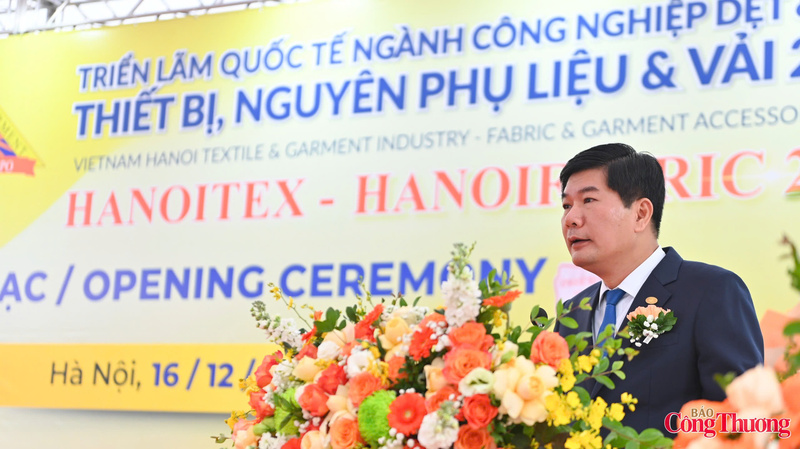
Mr. Cao Huu Hieu - General Director of Vietnam Textile and Garment Group. Photo: Nam Nguyen
According to him, the HanoiTex & HanoiFabric Exhibition continues to affirm its role as an important bridge, helping businesses access advanced technology, equipment, and raw materials, and update on the development trends of the global textile and garment industry; while strengthening connections and cooperation to participate more deeply in the global value chain.
With the close cooperation of domestic and international organizations, HanoiTex & HanoiFabric2025 is expected to be not just a simple trade promotion event, but also a "stepping stone" for the Vietnamese textile and garment industry to strengthen its internal capacity, develop sustainably, and enhance its competitiveness in the coming period.
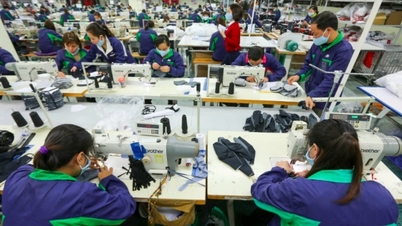
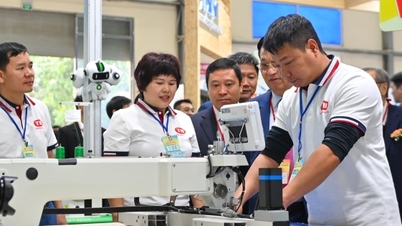
Here are some photos from the exhibition:
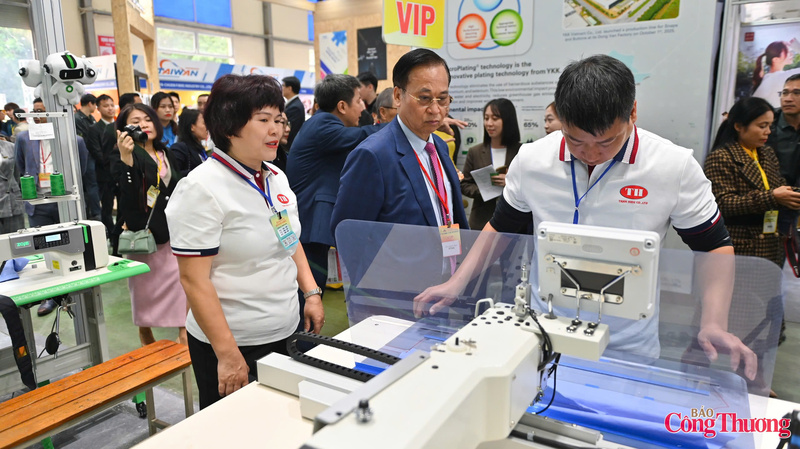
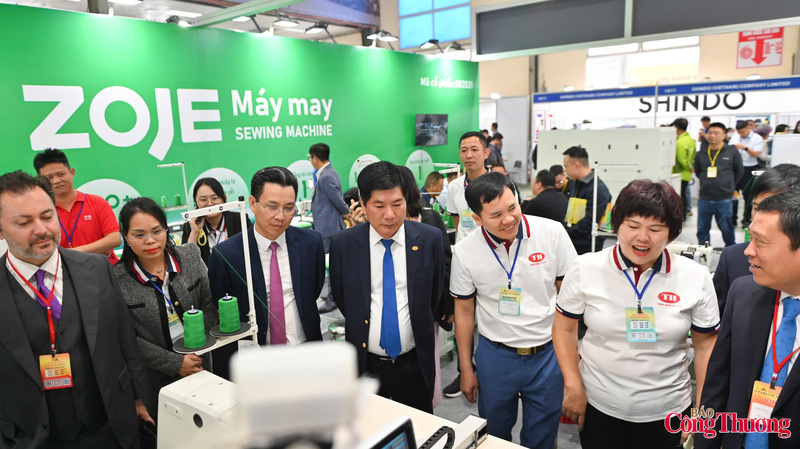
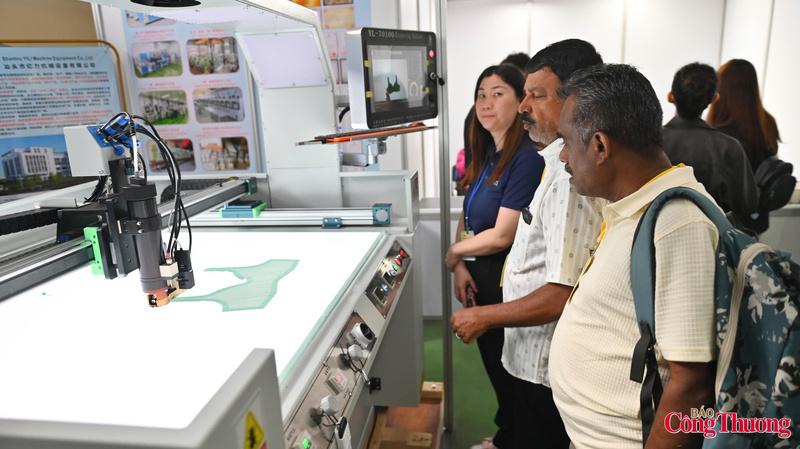
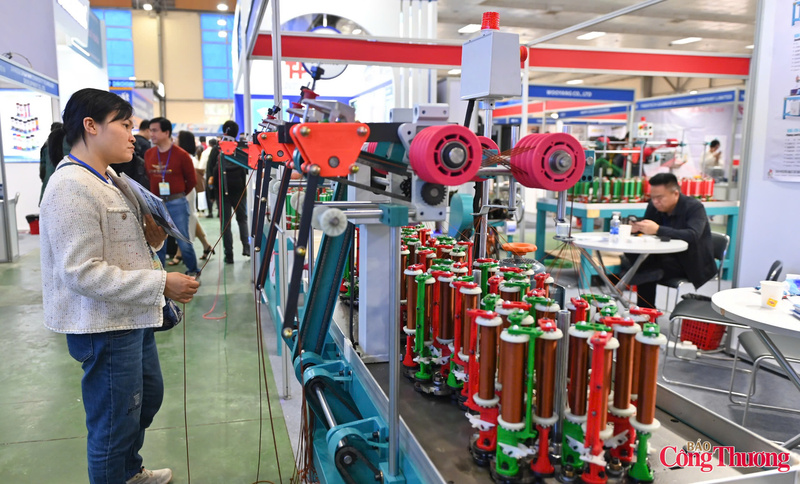
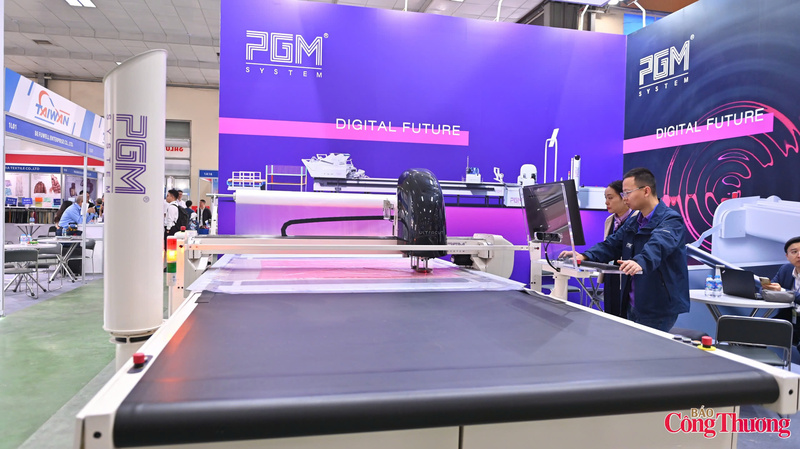
The HanoiTex & HanoiFabric exhibition will take place from December 16-18 in Hanoi. Besides the opening ceremony, the exhibition is expected to include numerous seminars and workshops on trade defense, circular economy, etc., which will help textile and garment businesses identify and discuss appropriate solutions.
Source: https://congthuong.vn/hanoitex-hanoifabric-2025-tiep-suc-cho-det-may-phat-trien-chieu-sau-435005.html
![[Photo] Prime Minister Pham Minh Chinh receives Lao Minister of Education and Sports Thongsalith Mangnormek](/_next/image?url=https%3A%2F%2Fvphoto.vietnam.vn%2Fthumb%2F1200x675%2Fvietnam%2Fresource%2FIMAGE%2F2025%2F12%2F16%2F1765876834721_dsc-7519-jpg.webp&w=3840&q=75)

![[Photo] Prime Minister Pham Minh Chinh receives the Governor of Tochigi Province (Japan)](/_next/image?url=https%3A%2F%2Fvphoto.vietnam.vn%2Fthumb%2F1200x675%2Fvietnam%2Fresource%2FIMAGE%2F2025%2F12%2F16%2F1765892133176_dsc-8082-6425-jpg.webp&w=3840&q=75)
![[Live] 2025 Community Action Awards Gala](/_next/image?url=https%3A%2F%2Fvphoto.vietnam.vn%2Fthumb%2F1200x675%2Fvietnam%2Fresource%2FIMAGE%2F2025%2F12%2F16%2F1765899631650_ndo_tr_z7334013144784-9f9fe10a6d63584c85aff40f2957c250-jpg.webp&w=3840&q=75)

![[Image] Leaked images ahead of the 2025 Community Action Awards gala.](/_next/image?url=https%3A%2F%2Fvphoto.vietnam.vn%2Fthumb%2F1200x675%2Fvietnam%2Fresource%2FIMAGE%2F2025%2F12%2F16%2F1765882828720_ndo_br_thiet-ke-chua-co-ten-45-png.webp&w=3840&q=75)






















































Comment (0)