

The book "Artificial Intelligence from the Perspective of International Relations: Opportunities, Challenges, and Implications for Vietnam," edited by Dr. Vu Le Thai Hoang, Director of the Institute for Strategic Studies ( Diplomatic Academy of Vietnam), has sold out quickly since its release, not only due to its appealing title but also because of the meticulousness and dedication of the research work. Let's sit down with the editor to learn more about the authors' concerns and their determination to explore "new territory" in international relations research.
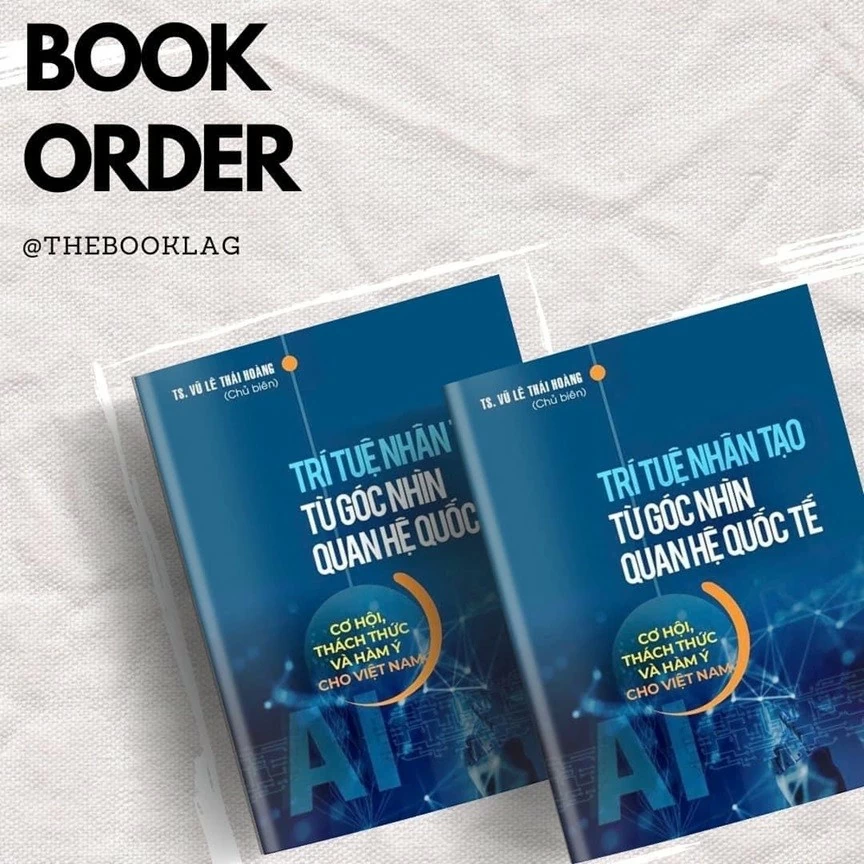 |
| The publication "Artificial Intelligence from the Perspective of International Relations: Opportunities, Challenges, and Implications for Vietnam" is edited by Dr. Vu Le Thai Hoang. (Photo: DL) |
“Understanding the nature of AI, its recent advancements, and its potential impact on the international order is extremely important.” Are the authors intentionally “taking a step ahead” before AI truly enters international life? What are the motivations and driving forces behind this book, which addresses a very novel topic in international relations?
According to the authors, this book may not necessarily be "a step ahead," but rather a timely and necessary effort to help identify the profound changes that AI is creating in international relations. As we have witnessed, especially from 2022-2023, the remarkable development of large language models and AI generation has been creating groundbreaking impacts in many fields.
It can be asserted that AI is no longer a technology of the future, but is already reshaping the geopolitical landscape, altering the global balance of power, and directly impacting the national interests of countries.
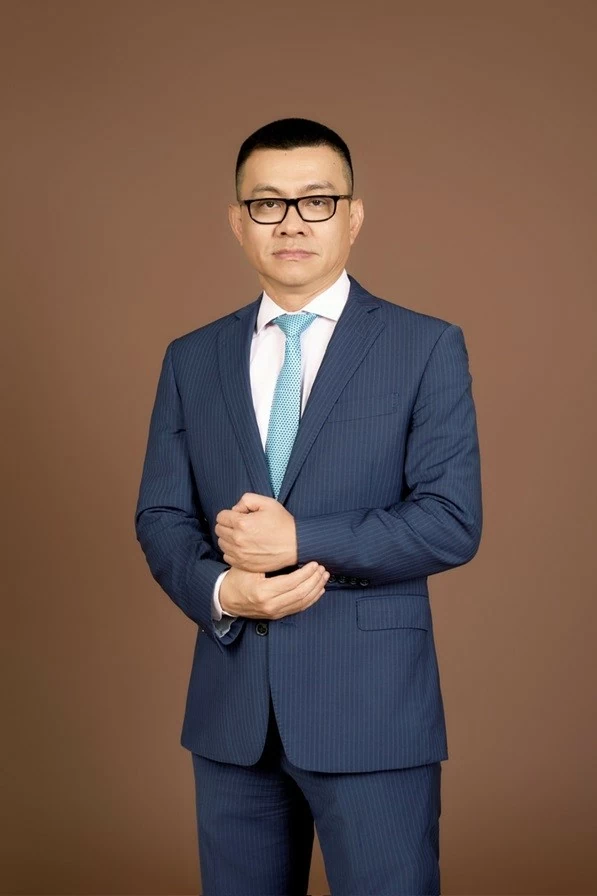 |
| Dr. Vu Le Thai Hoang , Director of the Institute for Strategic Studies, Diplomatic Academy of Vietnam. (Photo: provided by the author) |
Regarding the motivation for compiling this book, it can be seen that this stems from the urgent need for a comprehensive and in-depth understanding of the impact of AI on international relations from Vietnam's perspective. In the context of increasingly fierce strategic competition among major powers in AI technology, researching and understanding the opportunities and challenges that AI presents will be crucial for the country's security and development.
The authors hope that the book will not only contribute to providing an academic reference source but also aim to propose specific policy directions, making a small contribution to efforts to help Vietnam be proactive and self-reliant in the gradually evolving AI era.
When I first approached the topic of AI, I had a thought that reminded me of the saying, "Parents give birth to children, but nature gives them their character." Even the "parents" of AI cannot fully know the limitless potential, personality, and ethics of their "child." Is this understanding correct?
This analogy is interesting and partly true, but perhaps needs to be viewed more cautiously and comprehensively. In reality, AI isn't entirely like a "child" with a naturally gifted personality; rather, it's a system developed based on principles, algorithms, and data designed by humans. However, a notable similarity lies in the ability to learn and evolve beyond its initial framework, especially with today's advanced AI systems.
Through research and analysis, we have found that the "unpredictability" of AI stems primarily from the complexity of its models, the enormous volume of data, and its ability to learn continuously. This poses new challenges in governing and controlling AI, requiring a cautious and responsible approach from the international community.
However, it is important to note that, unlike the "natural personality" of humans, the behaviors and outcomes of AI can still be directed and adjusted through careful design of appropriate specifications, ethical frameworks, and monitoring mechanisms.
AI can accomplish things far beyond the calculations of many experts, even its creators; the development of AI has proven this. "Beyond calculations," "out of control," "miscalculation"... these are highly sensitive terms in international relations, potentially leading to unforeseen consequences. How do we accept this reality and how should we respond? How does this book address and respond to this issue, sir?
Indeed, the "beyond calculation" capabilities of AI are an undeniable reality and pose particular challenges in international relations. However, through the research and analysis in this book, we find that this is not an entirely new situation in the history of international relations – where nations frequently face unpredictable and uncertain factors.
The key point is the approach: Instead of fearing things beyond our complete control, we need to build appropriate governance mechanisms and international cooperation frameworks to guide AI development in a direction that benefits peace and security. The book proposes several specific solutions, such as strengthening multilateral dialogue on AI governance, establishing common principles for responsible AI development and use, and emphasizing the importance of maintaining the human element in strategic decision-making.
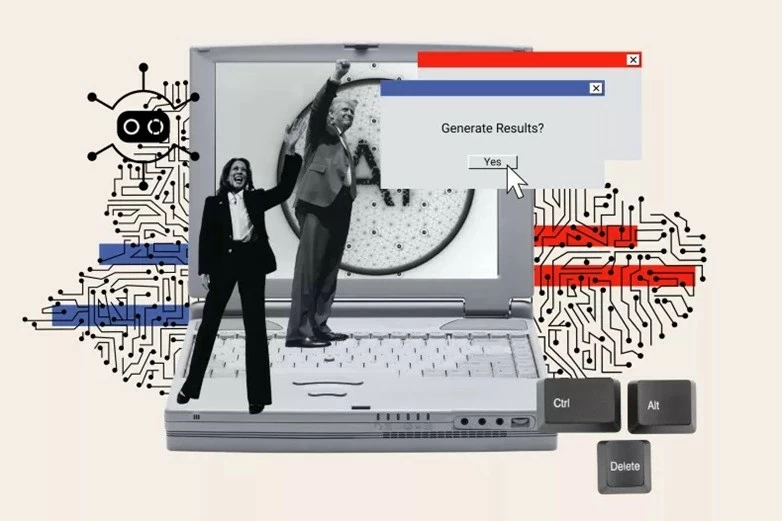 |
| AI has had a certain impact on the US election - Illustration. (Photo: Getty) |
Regarding the future of AI – AGI (AI systems capable of performing any intelligent task that humans can do), in your opinion, will the "security dilemma" be limited to nuclear issues, and what other more pressing concerns will emerge? Once superpowers equip themselves with AI capabilities, how will the balance of power be measured and the overall situation predicted?
The "security dilemma" in the AI era is indeed far more complex and multifaceted than in the nuclear weapons era. While with nuclear weapons we could count the number of warheads, estimate their destructive power, and assess their deterrent capabilities, with AI, especially as we advance towards AGI, evaluating the true potential and capabilities of a nation becomes incredibly difficult.
This stems from the "dual" nature of AI – being both a civilian and a military technology, its rapid and unpredictable development, and its widespread impact on all aspects of life.
In the context of major countries accelerating AI development, "measuring" the balance of power requires new metrics and approaches. It's not simply about comparing the number of patents or investment in research and development, but also about considering factors such as access to data, computing power, the quality of human resources, and especially the ability to integrate AI into strategic decision-making systems.
This makes maintaining strategic stability in the AI era a new challenge, requiring closer coordination and dialogue among nations.
The opportunities presented by AI in international relations seem to be mentioned less frequently than the challenges it poses. Why is that, sir? Will the AI era be the era of the rise of non-state actors?
The book's greater focus on analyzing the challenges is not due to a lack of optimism about AI's potential, but rather stems from a sense of academic and practical responsibility. While the opportunities offered by AI, such as increased productivity, improved public services, or fostered innovation, are often readily identifiable and widely discussed, the potential challenges and risks—particularly in the realm of international relations—are often complex and require more thorough analysis. This is especially important given that many of these challenges are systemic and could profoundly impact the structure of the world order.
Regarding the role of non-state actors, we are witnessing a notable trend where large technology corporations are increasingly playing a significant role in shaping the rules and standards of AI development. However, this does not mean that the role of the state is diminishing – on the contrary, in many cases, we see closer coordination between the public and private sectors in efforts to develop and govern AI, especially in matters related to national security and strategic interests.
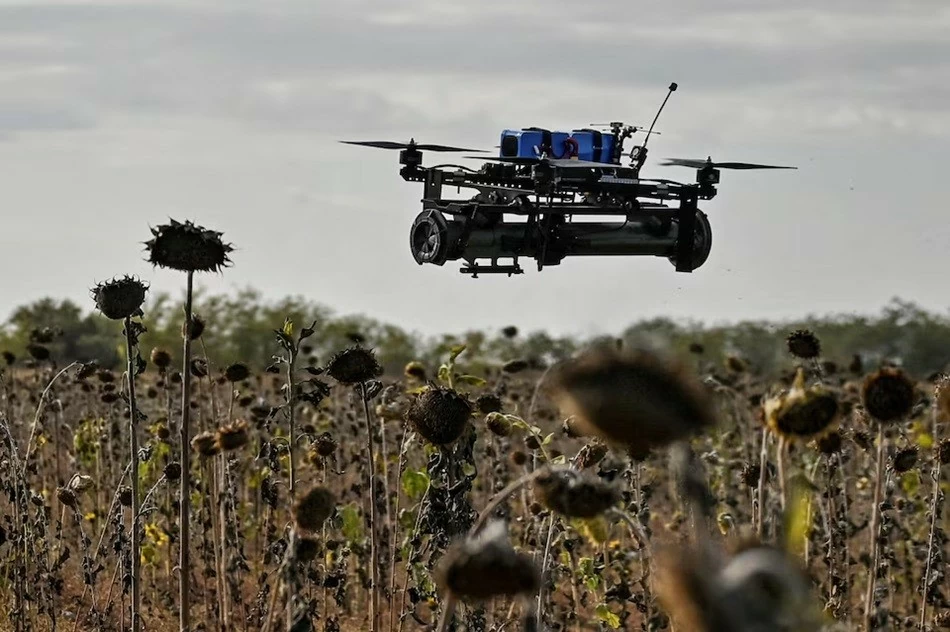 |
| Ukraine is using AI to control drones in its conflict with Russia. (Source: Reuters) |
The book, "A AI's Real-World Laboratory"—the stories of Ukraine and Israel—opens up many questions about AI's role in conflict. It analyzes these aspects in detail. Can we consider this a lesson about the "price" of a confrontation involving AI?
The events in Ukraine and Israel have indeed become unwelcome "laboratories" for the application of AI in modern conflict. Through the analysis in this book, we find that these conflicts demonstrate the increasingly important role of AI in many aspects of modern warfare – from intelligence processing and controlling unmanned vehicles to target detection and tactical decision-making support.
However, the "price to pay" is not simply material damage or loss of life, but also includes deeper humanitarian, ethical, and legal implications. In particular, these cases have highlighted the importance of establishing clear international rules and standards for the use of AI in armed conflict, as well as the urgent need to strengthen civilian protections in the era of high-tech warfare.
Regarding Vietnam, the book mentions a comprehensive AI diplomacy strategy. How will this contribute to Vietnam's efforts to promote international cooperation in AI development for peace and development? What are Vietnam's position, role, and voice in the field of AI, in your opinion, and what are the opportunities and challenges?
The comprehensive AI diplomacy strategy proposed in this book stems from the recognition that Vietnam can and should play an active role in shaping international rules and norms for the development and use of AI. As a dynamic developing country with technological potential and a proven role in many important international issues, Vietnam has the opportunity to act as a bridge between developed and developing countries in the field of AI. This can be achieved through actively participating in multilateral forums on AI governance, promoting South-South cooperation in technology development, and sharing experiences on AI applications for sustainable development.
However, to effectively fulfill this role, Vietnam needs to proactively enhance its endogenous AI capabilities, train a diplomatic team with in-depth knowledge of the technology, and build strategic partnerships in the field of AI with international partners. Especially in the context of technological competition among major countries, Vietnam needs to clearly demonstrate its support for the development and use of AI for the common good and prosperity, while affirming the principle of independence and autonomy in its AI development policy.
The book mentions that the upcoming 14th National Congress of the Party has the opportunity to make the keyword "artificial intelligence" a strategic pillar in the national development vision. What will "embracing" AI mean in achieving the goal of advancing in the new era of the nation, sir?
The inclusion of "artificial intelligence" as a strategic pillar in the documents of the 14th National Congress is not simply the addition of a new technological term, but reflects a strategic vision regarding the crucial role of AI in the country's development. This will be an important basis for directing national resources, promoting innovation, and, more importantly, demonstrating Vietnam's determination to seize the opportunities of the digital age to realize its aspiration for a prosperous and happy nation.
In the current context, proactively embracing AI is of particular importance, not only in terms of economics and technology but also in terms of national security and standing. This requires a comprehensive approach, from developing high-quality human resources and building modern digital infrastructure to perfecting appropriate legal and institutional frameworks.
By strategically positioning AI, Vietnam demonstrates its determination not only to be a recipient of technology but also to become one of the countries actively contributing to the development of AI, serving the interests and aspirations of the nation in the 21st century.
Source: https://baoquocte.vn/cuon-sach-tri-tue-nhan-tao-tu-goc-nhin-quan-he-quoc-te-hieu-de-tu-chu-chu-dong-trong-ky-nguyen-ai-292359.html











































































Comment (0)