

This afternoon, December 13th, Minister of Education and Training Nguyen Kim Son and a delegation from the Ministry of Education and Training visited the Military Technical Academy for a working session. Also present at the meeting was Lieutenant General Le Huy Vinh, Deputy Minister of National Defense .
During the meeting, the Military Technical Academy expressed its readiness to deploy civilian training programs in several engineering specialties, and also to prepare for training semiconductor chip design engineers.
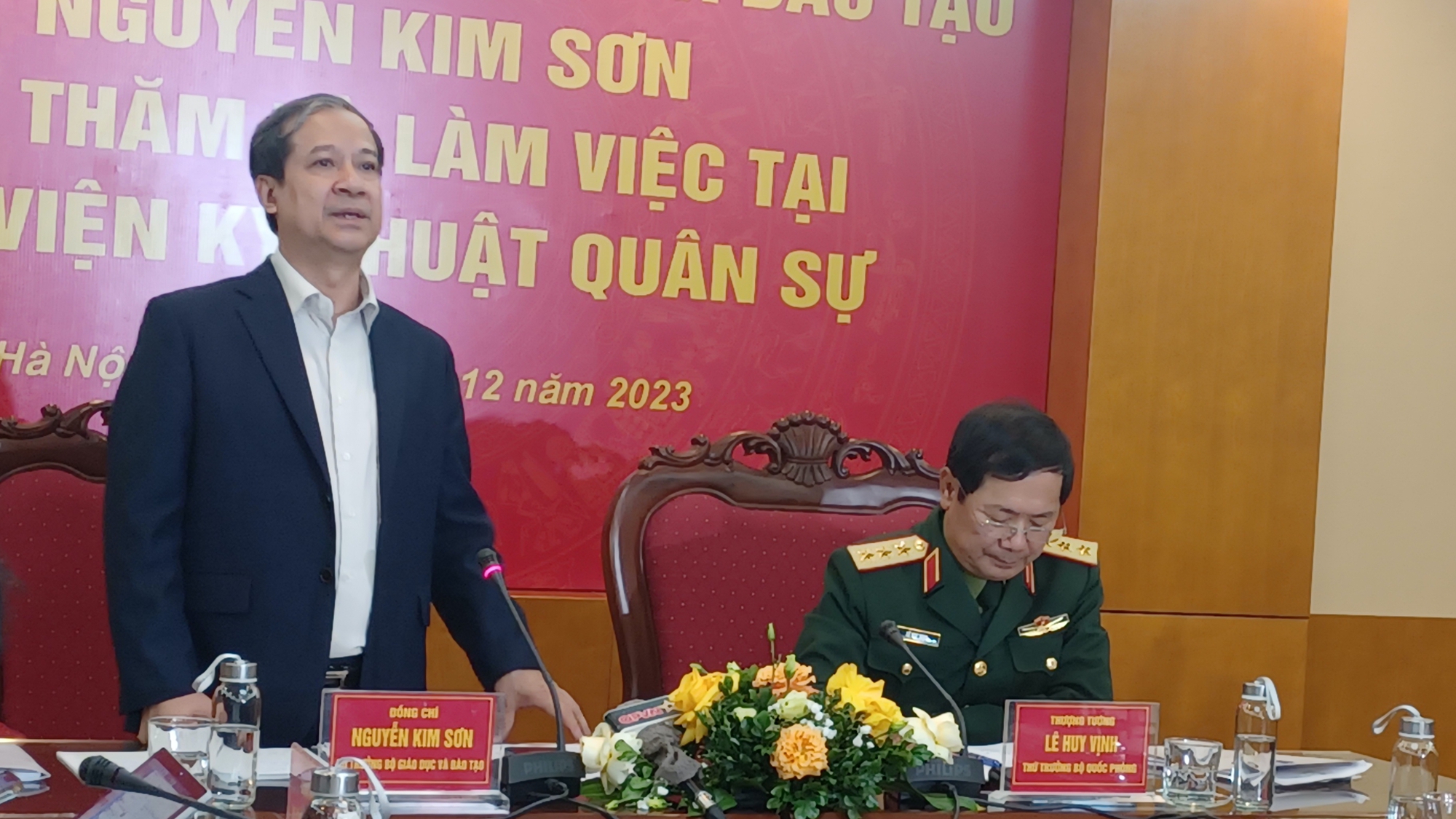
Minister of Education and Training Nguyen Kim Son and Lieutenant General Le Huy Vinh, Deputy Minister of National Defense, at a working session with the Military Technical Academy .
According to Major General Le Minh Thai, Director of the Military Technical Academy , the academy currently offers 51 long-term military engineering training programs in 15 fields, master's degree programs in 28 specializations across 17 fields, and doctoral degree programs in 23 specialized fields across 15 disciplines.
In addition, the academy has 9 civilian training programs, but has stopped admitting civilian students since 2019. With the goal of training "officers - engineers - party members," graduates of the academy must meet 5 output standards: professional knowledge, foreign language skills, IT skills, command capabilities and military conduct, and health and physical fitness.
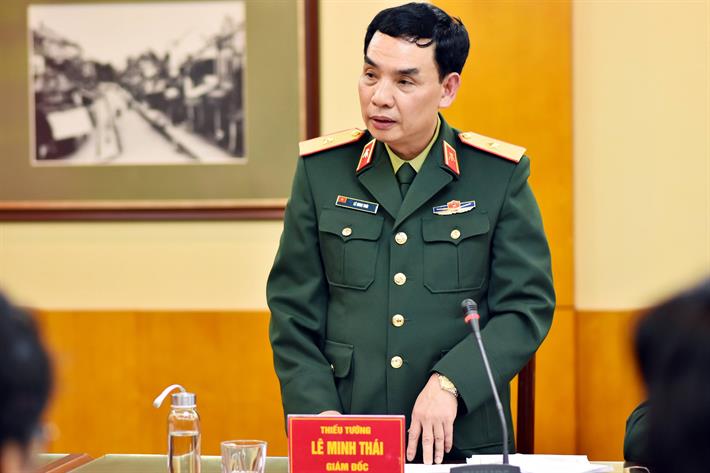
Major General Le Minh Thai, Director of the Military Technical Academy
Regarding future directions and key tasks, the academy has set out four main objectives, emphasizing the importance of thorough preparation and readiness to implement civilian training programs in engineering disciplines linked to fundamental technologies, the Fourth Industrial Revolution, and priority areas of the State and the military.
At the same time, the academy will also prepare in all aspects to be ready to deploy training of semiconductor chip design engineers when assigned the task by the State and the Ministry of National Defense, contributing to building and developing the semiconductor industry ecosystem in accordance with the State's orientation; especially the research and design of semiconductor chips and security chips for modern weapons and equipment, serving national security and defense.
Major General Le Minh Thai proposed: "Currently, the Military Technical Academy has sufficient capacity in terms of teaching staff and facilities to participate in training high-quality human resources for the semiconductor chip industry. Therefore, the academy respectfully requests the Ministry of Education and Training to pay attention and create conditions for the academy to implement the task of training in the semiconductor chip industry."
Regarding the above proposal, Ms. Nguyen Thu Thuy, Director of the Department of Higher Education (Ministry of Education and Training), said that the Military Technical Academy not only has strengths in training human resources for the semiconductor chip industry, but also in other fields that are currently prioritized for training, such as artificial intelligence.
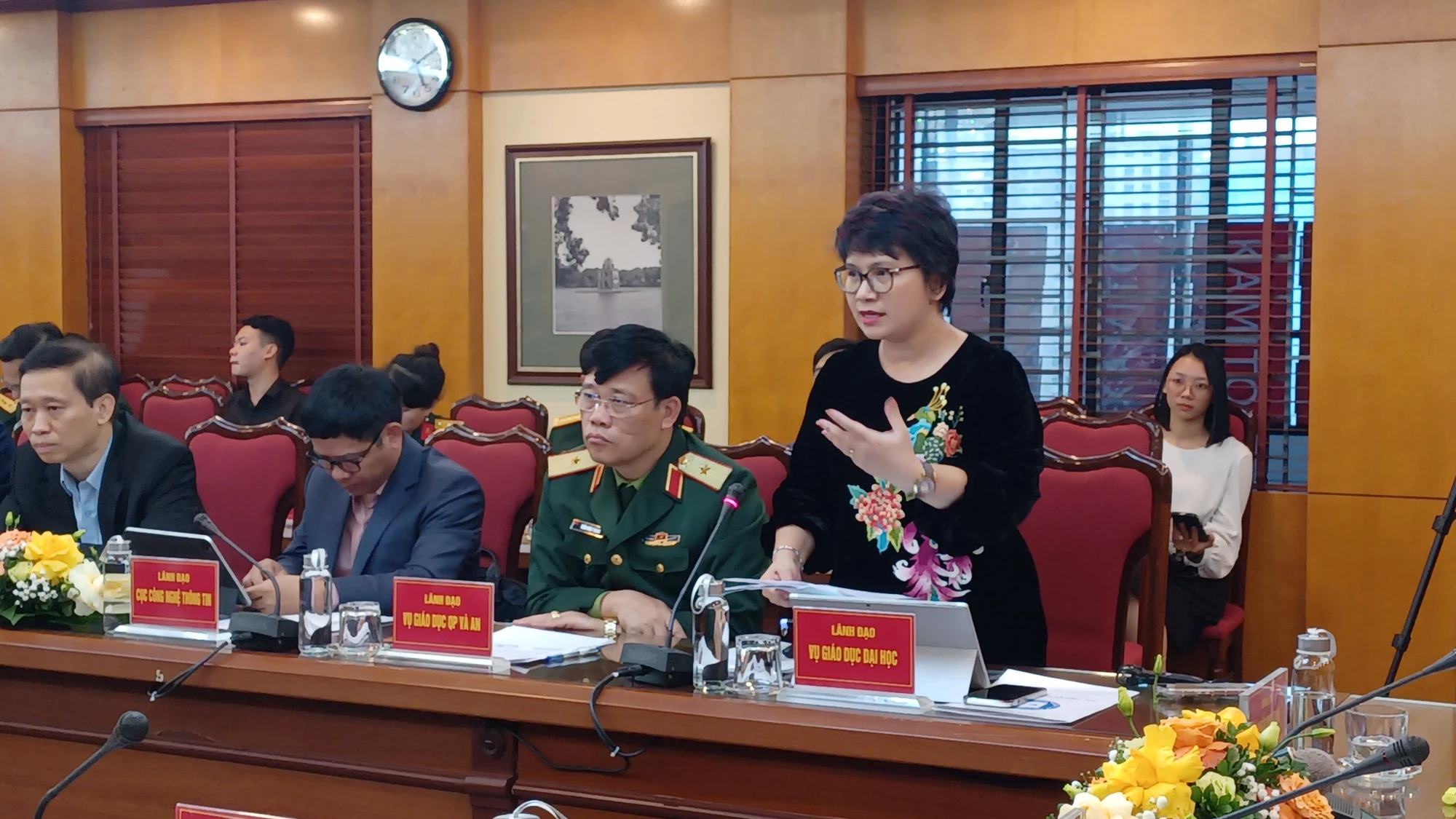
Ms. Nguyen Thu Thuy, Director of the Department of Higher Education, spoke at the working session.
Regarding training in the semiconductor chip field, an area where Vietnam does not yet have a strong advantage, the Ministry of Education and Training believes that the Military Technical Academy is one of the best training units in the entire system at present.
"We strongly support this and will submit a proposal to the minister to include the Military Technical Academy in the list of core training units in the plan to train human resources for the semiconductor chip sector (this plan will be submitted to the Prime Minister in the near future - PV)," Ms. Thuy said.
Minister Nguyen Kim Son also expressed support for the plan to reopen the civilian program at the Military Technical Academy. According to the Minister of Education and Training, with the Military Technical Academy 's current strong faculty (1,153 teaching staff, including 499 PhDs and Doctors of Science, 81 Professors and Associate Professors), training only a very small number of personnel for the military would not fully utilize the resources. Therefore, expanding the training quota for the civilian program will give teachers more motivation to strive, and this will bring new vitality to the academy's training and research activities.
Source link

![[Image] Leaked images ahead of the 2025 Community Action Awards gala.](/_next/image?url=https%3A%2F%2Fvphoto.vietnam.vn%2Fthumb%2F1200x675%2Fvietnam%2Fresource%2FIMAGE%2F2025%2F12%2F16%2F1765882828720_ndo_br_thiet-ke-chua-co-ten-45-png.webp&w=3840&q=75)
![[Live] 2025 Community Action Awards Gala](/_next/image?url=https%3A%2F%2Fvphoto.vietnam.vn%2Fthumb%2F1200x675%2Fvietnam%2Fresource%2FIMAGE%2F2025%2F12%2F16%2F1765899631650_ndo_tr_z7334013144784-9f9fe10a6d63584c85aff40f2957c250-jpg.webp&w=3840&q=75)
![[Photo] Prime Minister Pham Minh Chinh receives the Governor of Tochigi Province (Japan)](/_next/image?url=https%3A%2F%2Fvphoto.vietnam.vn%2Fthumb%2F1200x675%2Fvietnam%2Fresource%2FIMAGE%2F2025%2F12%2F16%2F1765892133176_dsc-8082-6425-jpg.webp&w=3840&q=75)
![[Photo] Prime Minister Pham Minh Chinh receives Lao Minister of Education and Sports Thongsalith Mangnormek](/_next/image?url=https%3A%2F%2Fvphoto.vietnam.vn%2Fthumb%2F1200x675%2Fvietnam%2Fresource%2FIMAGE%2F2025%2F12%2F16%2F1765876834721_dsc-7519-jpg.webp&w=3840&q=75)






































































Comment (0)