

The conference is a significant initiative, launched and chaired by Vietnam since 2019 within the framework of ASEAN digital cooperation, aiming to promote the development of 5G infrastructure and AI applications to serve the sustainable development goals of the region. It brings together representatives from telecommunications regulatory agencies of ASEAN countries, dialogue partners such as China, Japan, and the United States, along with many international organizations, experts, and leading technology companies worldwide . It serves as an annual forum for parties to exchange policies, strategies, and discuss the roadmap for building a unified and sustainable ASEAN digital ecosystem.
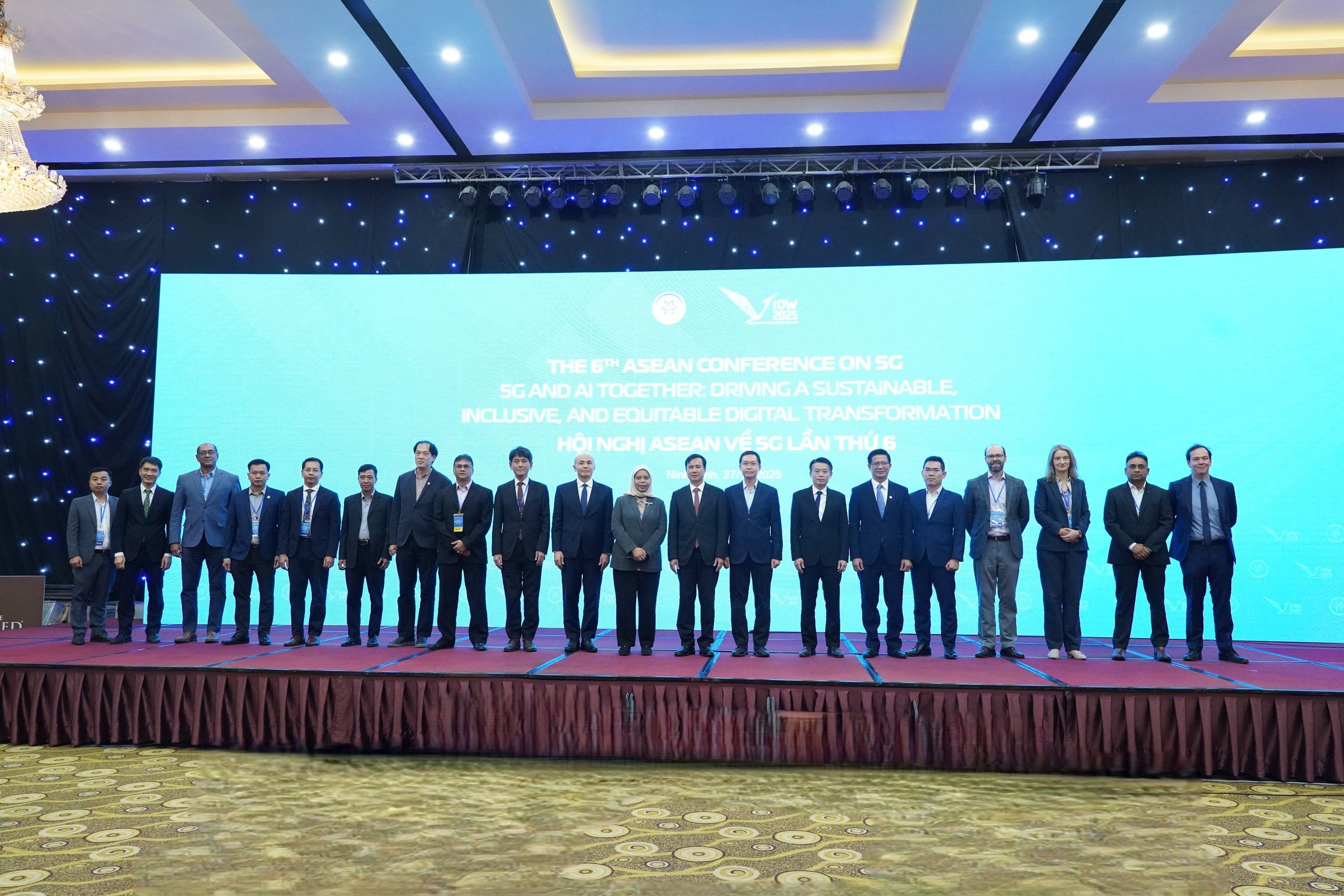
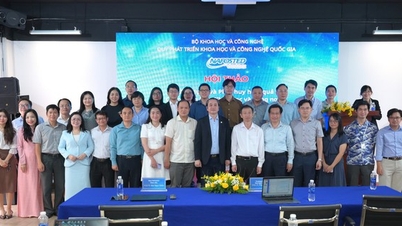
The delegates posed for a commemorative photo.
5G and AI: Two parallel pillars of the digital age
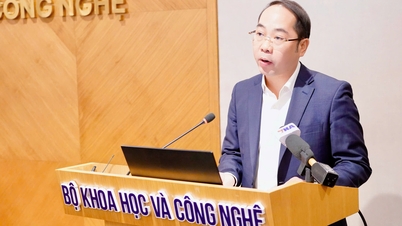
In his opening remarks at the conference, Deputy Minister of Science and Technology Bui The Duy emphasized that this year's conference theme, "5G and AI: Together to promote sustainable, comprehensive and equitable digital transformation," accurately reflects the spirit of the times, where development must be linked to innovation, cooperation, and social responsibility.
According to Deputy Minister Pham The Duy, 5G is not only a crucial infrastructure for the digital economy , but also a vital driver for AI development, enabling its wider deployment thanks to ultra-fast connection speeds, extremely low latency, and real-time data processing capabilities. Conversely, AI is the key to optimizing 5G networks, from traffic management and energy saving to demand forecasting and improved operational efficiency and service quality. The mutually beneficial relationship between 5G and AI is the key to unlocking a smart and sustainable digital ecosystem where technology better serves people and society.
Deputy Minister Pham The Duy stated that, over the past years, Vietnam has continuously strived to develop, test, and commercialize 5G technology, while simultaneously promoting research, application, and governance of AI. With the support of major technology corporations such as Qualcomm, Ericsson, Nokia, Huawei, Viettel, VNPT, and MobiFone, and close cooperation within the ASEAN region, Vietnam is expected to lead the formation of a dynamic and innovative 5G-AI ecosystem.
The Deputy Minister affirmed: "The Ministry of Science and Technology of Vietnam is committed to continuing to accompany, support , and promote international cooperation, making positive contributions to the development of a dynamic, innovative, and sustainable ASEAN digital community."
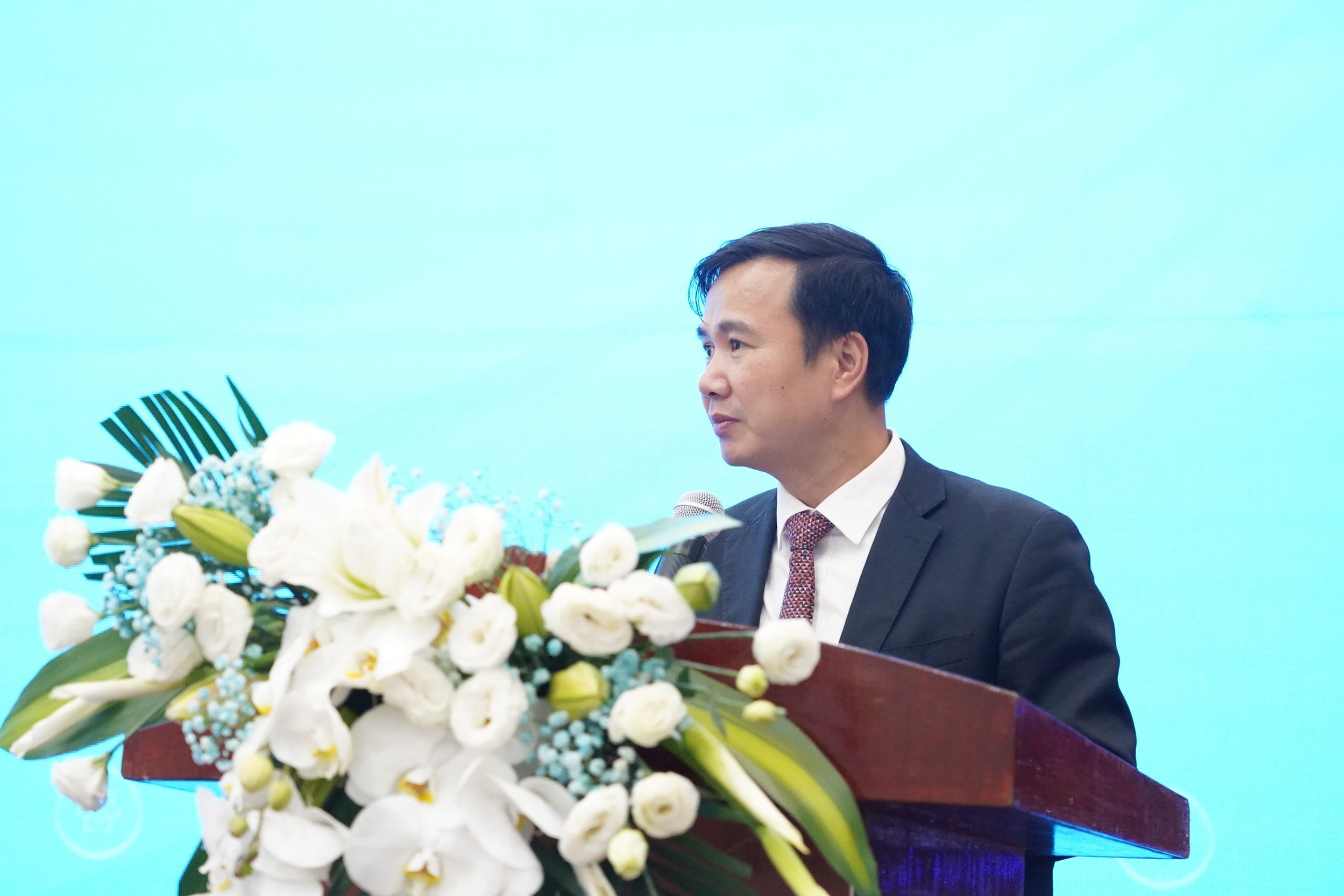
Deputy Minister of Science and Technology Bui The Duy delivered a speech at the conference.
Strengthening public-private partnerships: Driving the rapid development of 5G and AI.
Presenting on "Regional Cooperation on 5G: Standards and Policies in Asia-Pacific," APT Secretary-General Masanori Kondo emphasized the vision of building an open, connected, innovative, and sustainable digital region.
He pointed out four main challenges in 5G deployment: disparities in progress between countries, difficulties in commercialization, the urban-rural digital divide, and high spectrum costs. Accordingly, to unlock the potential of 5G and prepare for 6G/IMT-2030, APT called for enhanced policy cooperation, spectrum harmonization, and the promotion of international standards, aiming for comprehensive connectivity in the new era. At the same time, it committed to promoting digital transformation in the Asia-Pacific region, towards an open, connected, innovative, inclusive, secure, and sustainable digital future for all.
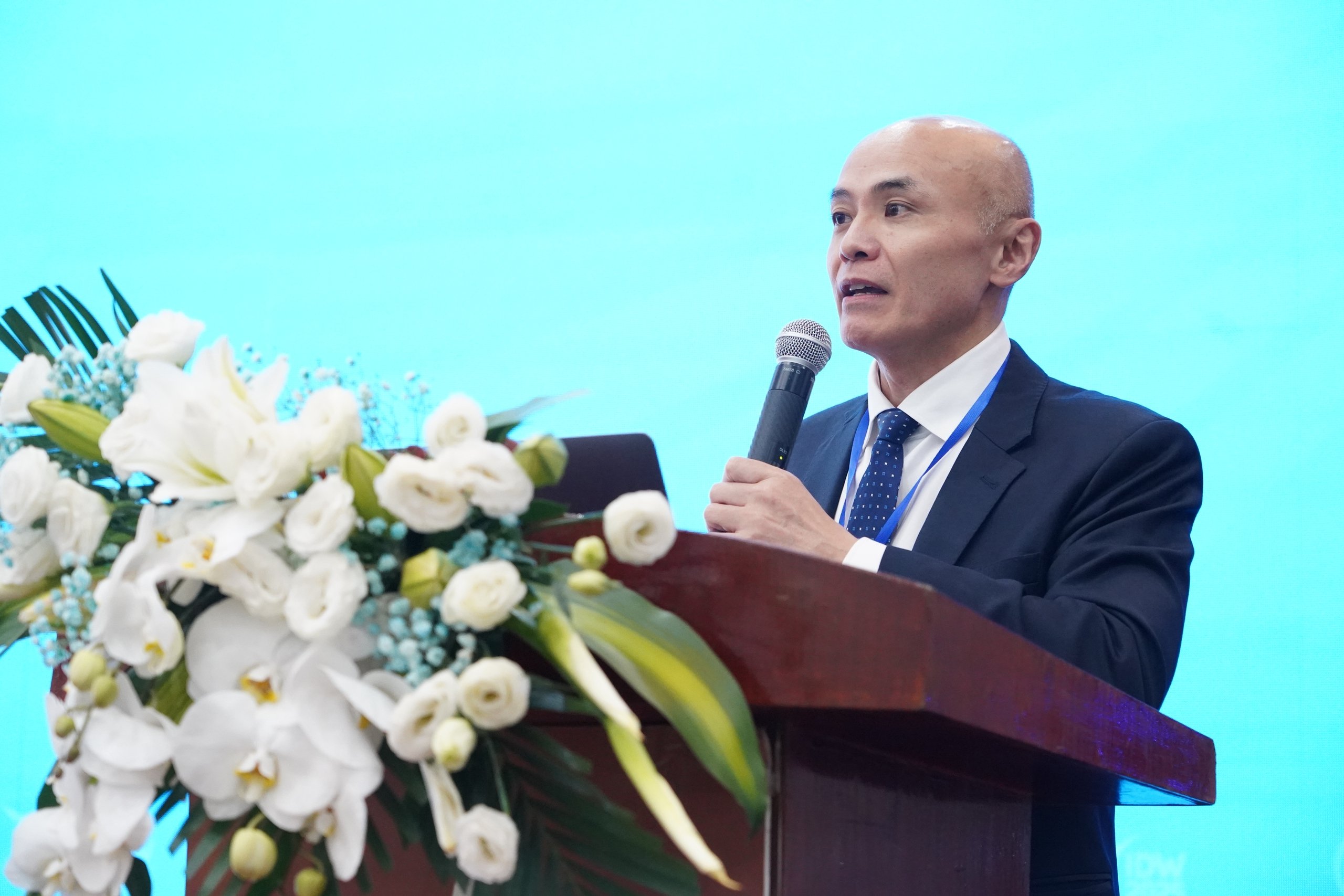
APT Secretary-General Masanori Kondo presented at the conference.
Representing Qualcomm, Ms. Nies Puwati, Director of Government Relations for Southeast Asia, shared the vision of a "connected intelligent edge" – where AI processing moves to the network edge, creating a more flexible and efficient computing space.
According to Nies Puwati, global mobile data traffic will quadruple by 2030, with AI accounting for up to 33% of global WAN traffic. ITU-R predicts that 6G will unlock entirely new experiences, leveraging the entire spectrum to serve global intelligent connectivity, applying native AI communication, extending to the THz band, and integrating the physical, digital, and virtual worlds.
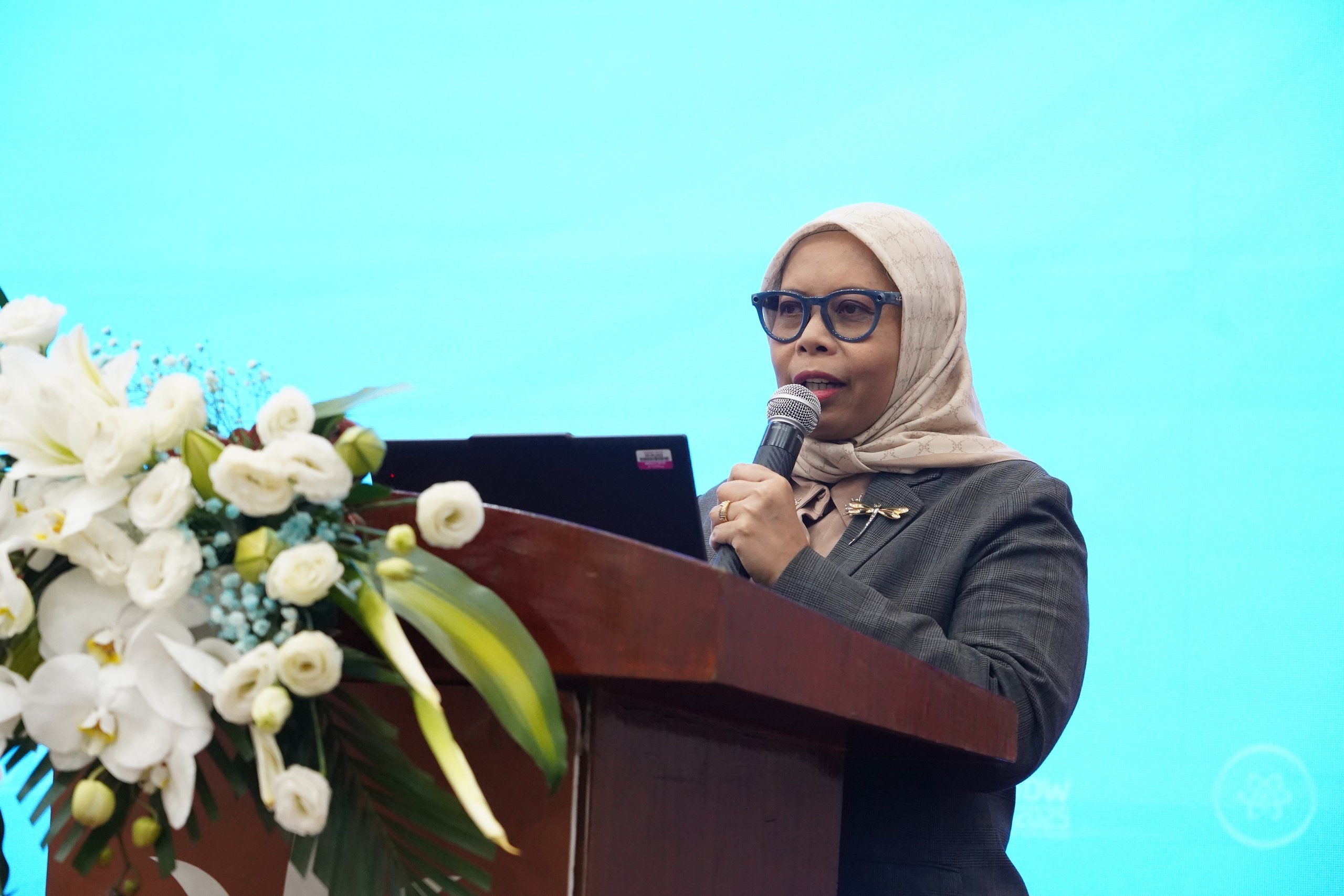
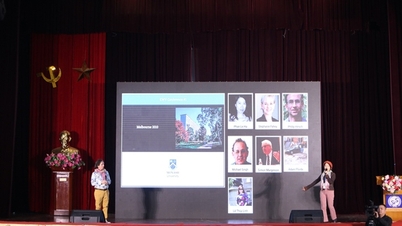
Ms. Nies Puwati, Director of Government Relations for Southeast Asia at Qualcomm, presented at the conference.
Mr. Le Van Tuan, Director of the Radio Frequency Department, shared his experience in planning and auctioning frequency bands for the development of mobile broadband – the foundation for AI and 5G applications in Vietnam.
According to the Director of the Radio Frequency Department, Vietnam's success is demonstrated by the leap in mobile internet speeds, thanks to providing sufficient spectrum (100 MHz mid-band and 700 MHz low-band), while maintaining spectrum costs at a reasonable level, accounting for only about 6% of network operators' revenue. Vietnam is implementing Resolution 193 of the National Assembly, supporting 15% of equipment costs for telecommunications businesses, aiming for 5G coverage to 90% of the population by 2025.
The Director General of the Radio Frequency Department recommended that ASEAN maintain spectrum costs at 5-7% of revenue, while also preparing early for the IMT-2030/6G phase, especially in the 6425–7125 MHz frequency band.
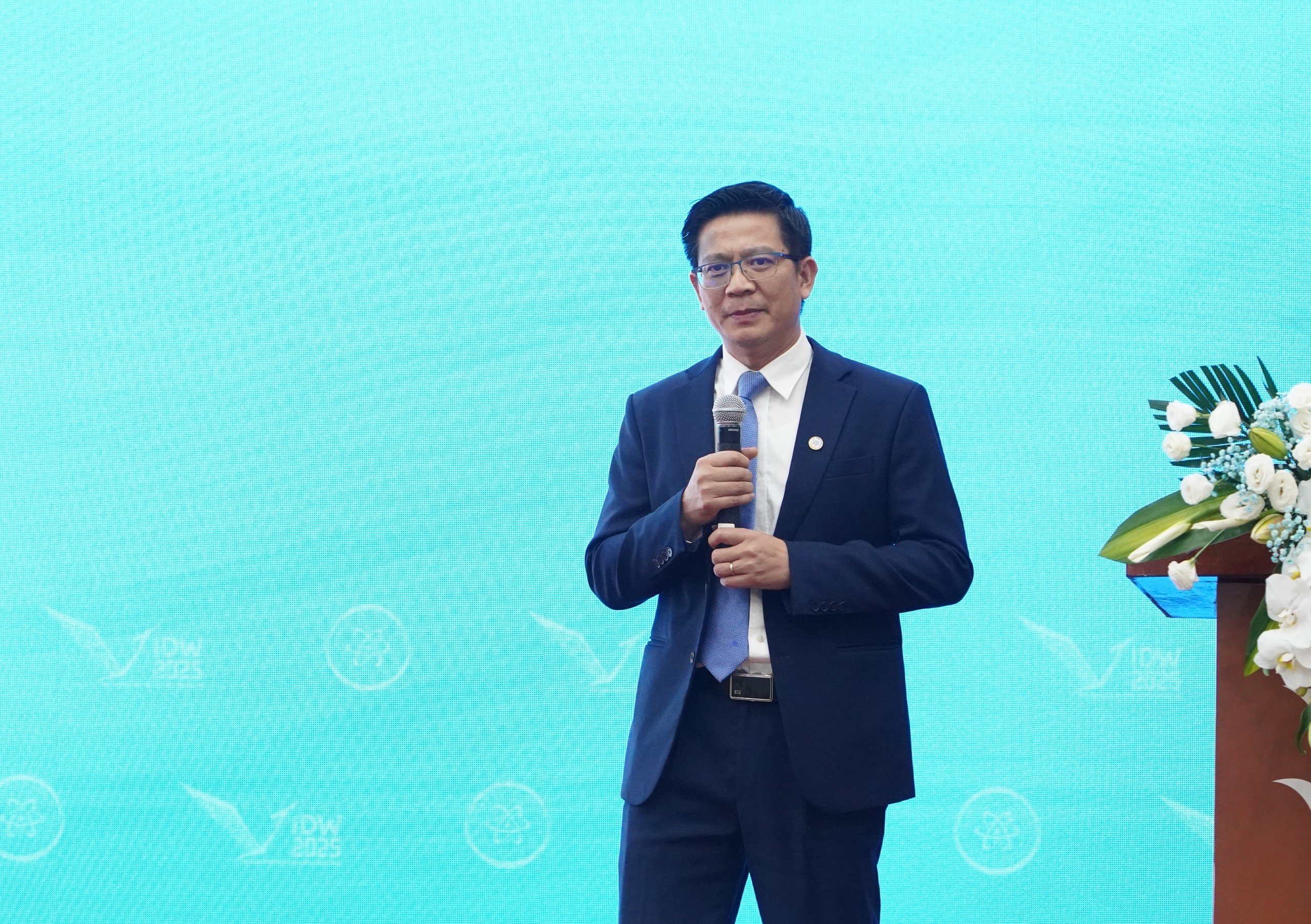
Mr. Le Van Tuan, Director of the Radio Frequency Department, presented at the conference.
From a business perspective, Mr. Pham Le Chung, Head of Digital Services at Ericsson Vietnam, stated that network operators are shifting towards an Open Gateway model, opening APIs to banks, fintech companies, and content platforms to develop value-added services. Successful examples such as Claro Brazil, Telefónica with TikTok, and Banco Itaú demonstrate that 5G is not just a connectivity technology but also a new digital business platform, enabling network operators to transform into comprehensive digital service providers.
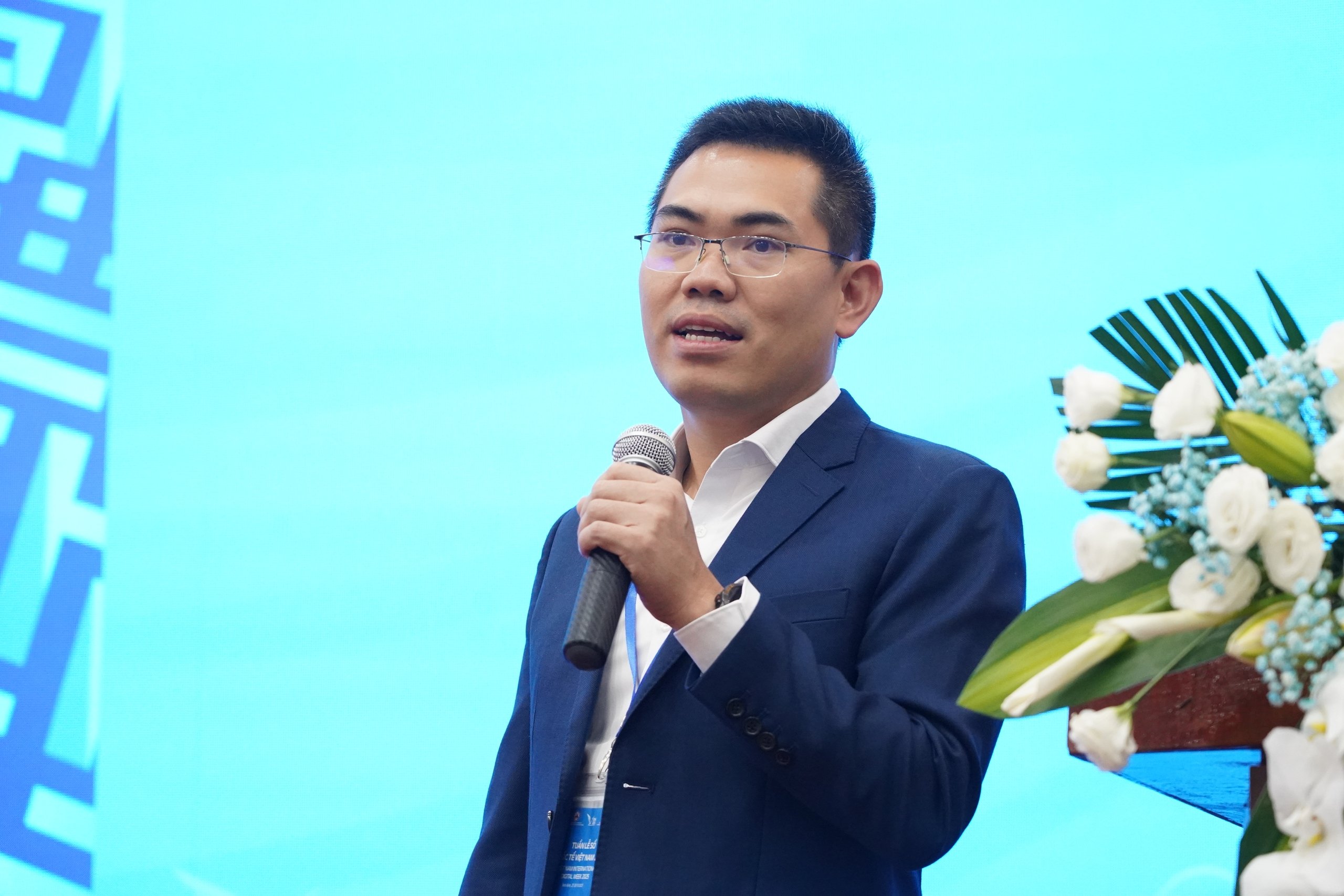
Mr. Pham Le Chung, Head of Digital Services at Ericsson Vietnam, presented at the conference.
Nokia representative Deepak Singh, Head of CSP Solutions for Asia Pacific, said that 5G is creating a "jump in ARPU" (average revenue per user) thanks to superior data experiences and flexible service bundle strategies.
According to Deepak Singh, AI will be the driving force behind the next wave of data growth, as "Digital Twin" technology and machine learning algorithms help optimize network configurations, reduce interference, increase connection performance, and save energy.
Deepak Singh also emphasized three key messages: 5G has entered an effective commercialization phase; 5G SA and 5G Advanced will open up new revenue streams; and AI automation is key to improving operational efficiency, optimizing costs, and fully exploiting 5G's potential.
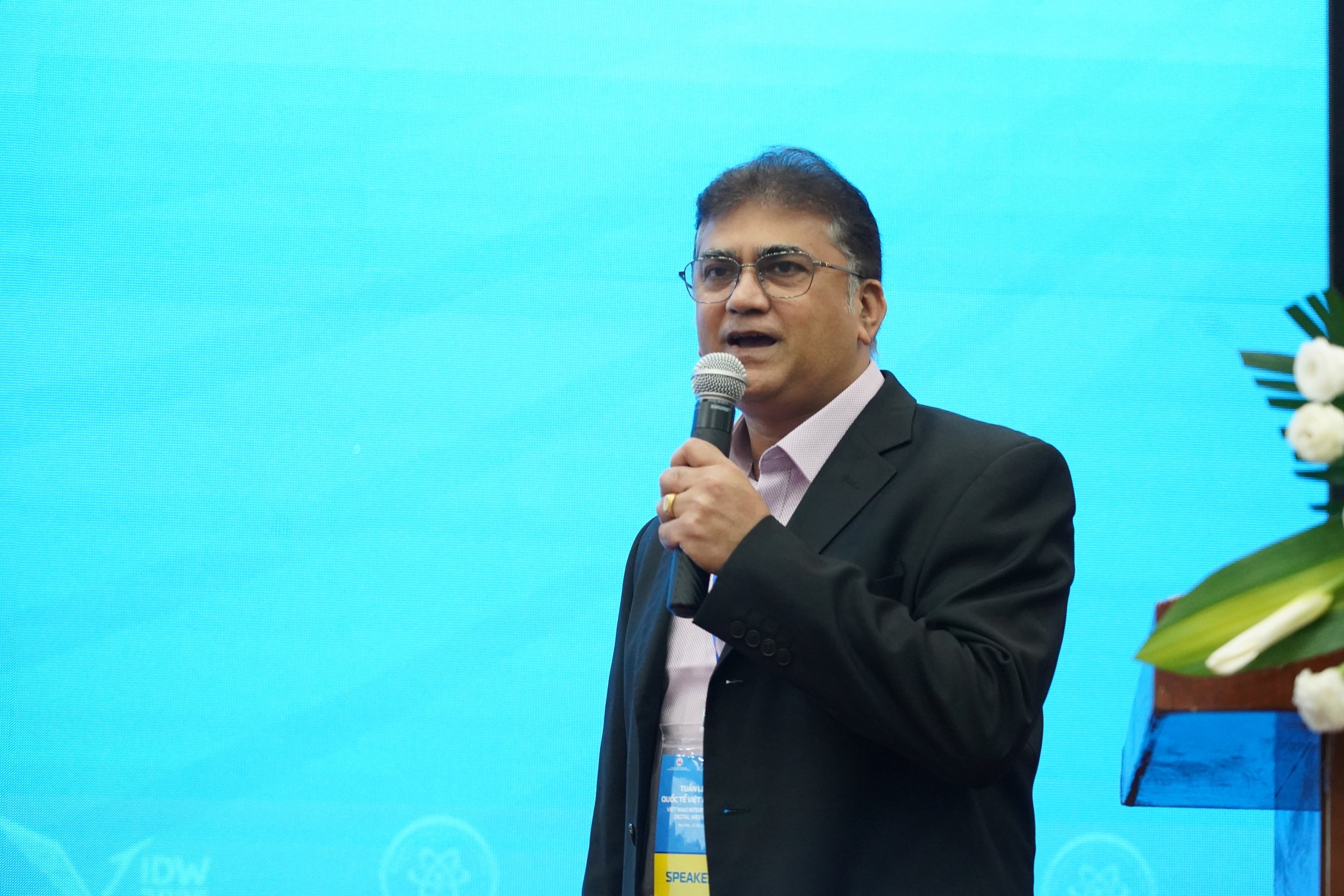
Mr. Deepak Singh, Head of CSP Solutions for Asia Pacific, Nokia, presented at the conference.
At the conference, delegates focused their discussions in three key sessions: the global and regional vision for 5G and AI; practical applications in healthcare, agriculture, transportation, and smart cities; and dialogue on building a sustainable 5G ecosystem between regulatory agencies, governments, and major technology companies such as Viettel, VNPT, and Huawei.
The 6th ASEAN 5G Conference once again affirmed Vietnam's leading role in regional cooperation on 5G and AI, contributing to shaping a dynamic, innovative, and sustainable digital future for ASEAN. The parties agreed to continue harmonizing spectrum, synchronizing standards, and expanding investment cooperation, aiming for a digital ecosystem where technology not only connects data but also connects people and knowledge across the region.
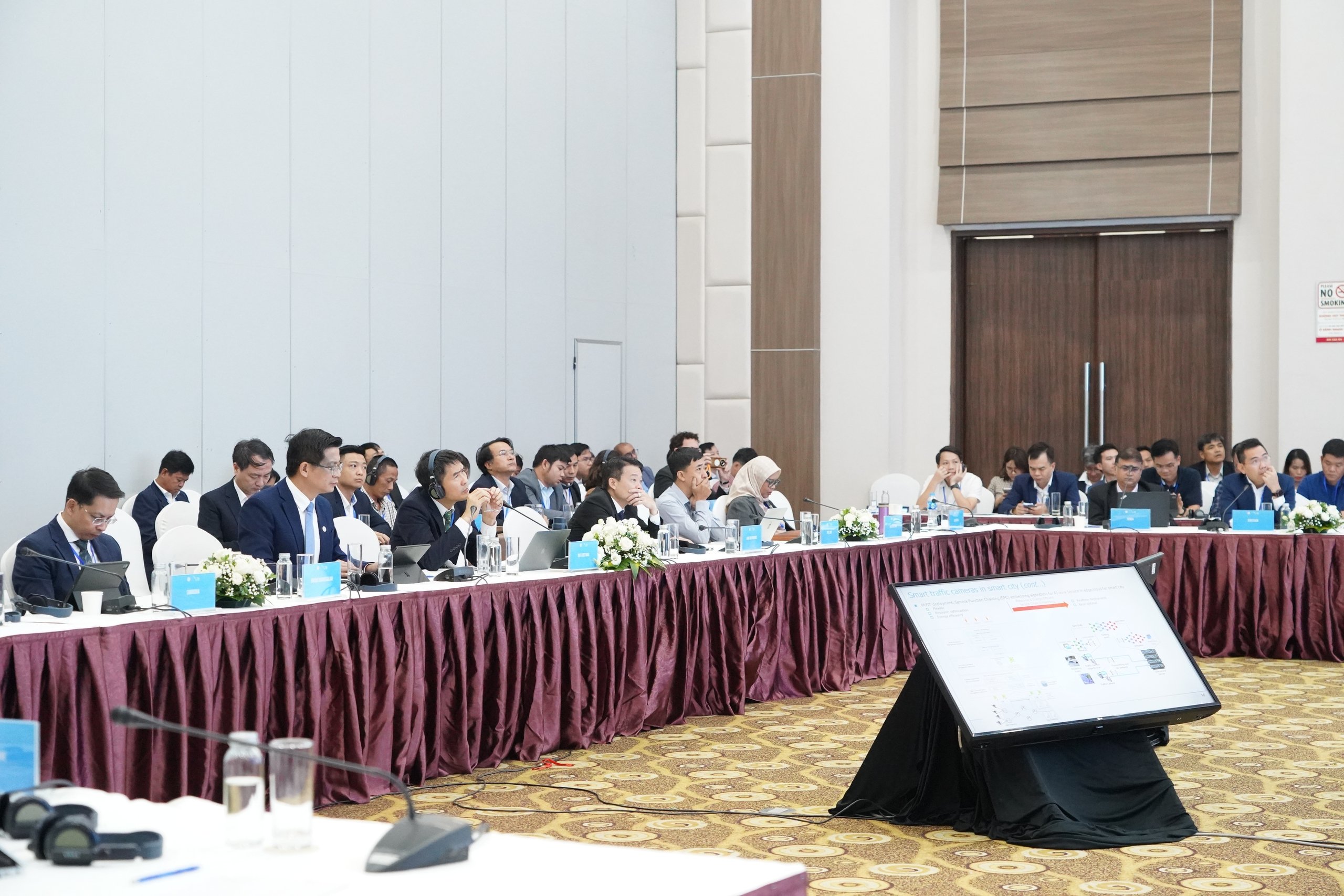
Overview of the Conference.
Source: https://mst.gov.vn/hoi-nghi-asean-5g-lan-thu-6-viet-nam-khang-dinh-vai-role-tien-phong-trong-kien-tao-he-sinh-thai-5g-ai-khu-vuc-197251027165448127.htm





















![[Photo] Prime Minister Pham Minh Chinh holds a phone call with the CEO of Russia's Rosatom Corporation.](/_next/image?url=https%3A%2F%2Fvphoto.vietnam.vn%2Fthumb%2F1200x675%2Fvietnam%2Fresource%2FIMAGE%2F2025%2F12%2F11%2F1765464552365_dsc-5295-jpg.webp&w=3840&q=75)








































Comment (0)