

"The owner" of the windy mountain pass
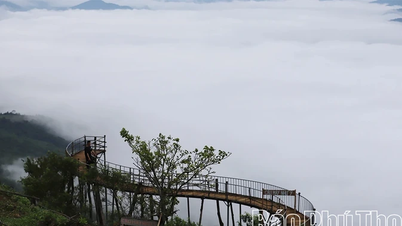
In late October, Pà Cò begins to get cold. The chill of the wind and mist penetrates the skin, easily causing numbness. Even so, amidst this cold, it's undeniable: Pà Cò is truly beautiful! The beauty of the majestic mountains hidden amidst the clouds, of the lush green tea hills, and of the peach and apricot blossoms bursting into bloom, defying the frost. Most beautiful of all is the image of the Hmong girls in their vibrant dresses, their rosy cheeks glowing amidst the cold mist, like a warm light kindled in the vast forest. On such a late October day, on the summit of Rồng Pass – where the wind never stops howling, and the cold numbs every fingertip – we were fortunate to meet the elderly Khà A Lứ and his wife, Vàng Y Mại. At this mountaintop, the elderly Lứ and his wife have persistently stayed in the forest, welcoming visitors, tending their fires, and keeping the place warm. They are affectionately called "the masters of the Dragon Pass" by the locals, and they are also the ones who contributed to the majestic beauty of Pà Cò today.
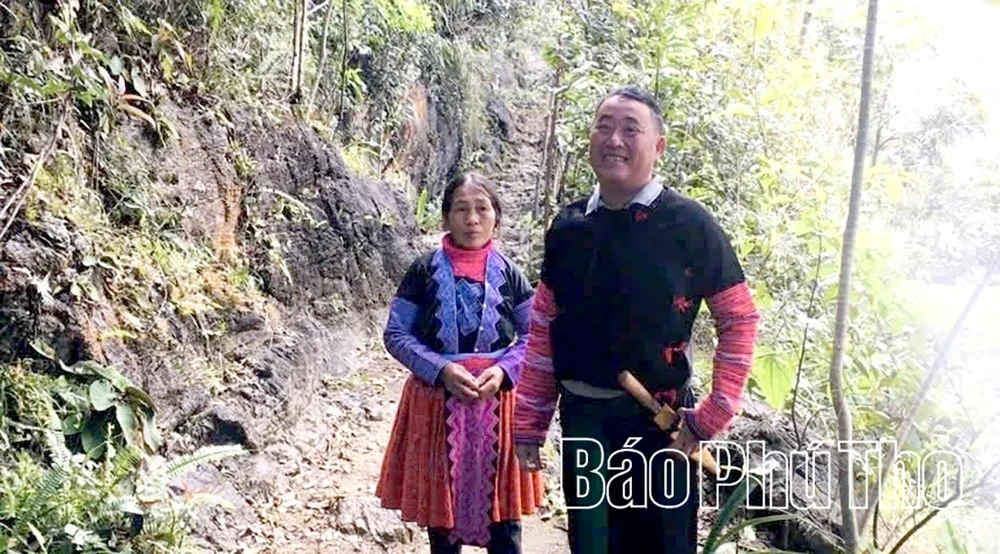
Elder Kha A Lu of Pa Co commune is putting in the effort to build trails through the forest for patrolling and developing ecotourism .
Old Man Lu, now over sixty, has sun-tanned, reddish skin and speaks broken Vietnamese, but his voice is warm and slow. Perhaps that's why the longer we sat, the more we were drawn into his story. It was the story of a lifetime of making a living under the forest canopy, intertwined with every slope, every tree, every blade of grass. Hidden within it is a miraculous transformation in the mindset of a Hmong man accustomed to the "Hmong way of thinking"—born in the forest, clinging to the forest—and from making a living from the forest, he became a forest guardian, creating tourism from the very greenness of his homeland's mountains and forests.
In a small hut nestled against the cliff, smoke from the cooking fire mingled with the thick mist, old man Lu recounted: "My main house is in the village, but in 2014, when many forest areas in the headwaters were severely devastated, the primeval forest on the summit of Dragon Mountain in the Hang Kia - Pa Co Nature Reserve was in a similar situation. The Party and the State implemented a policy of allocating land and forests to the people. Thanks to the propaganda of the officials, I and my wife came here to build a hut and look after and protect this forest."
The early days were not easy because there were almost no roads into the forest, and fallen trees were everywhere, making forest patrols very difficult. Realizing that without a patrol road, the forest would be lost, old man Lu and his wife were determined to build a trail through the forest. With only a hoe, shovel, and their hands, little by little each day, the couple built a path into the forest. After 3 years of effort, a trail of more than 1 km xuyên through the forest made forest patrols much easier. From there, the old man became familiar with every tree and blade of grass and gradually discovered the valuable potential of the forest. Among them is the cluster of 12 centuries-old pine trees that have been recognized as Vietnamese heritage trees.
Now, that trail has become a trekking route to explore Dragon Mountain, attracting many tourists. The story began in 2019, when Pà Cò began developing community-based tourism. Recognizing an important direction to help many households improve the economic efficiency of the forest, the Management Board of the Conservation Area guided Mr. Lứ to develop ecotourism linked with forest conservation. With support from the commune in investing in a parking lot, building a welcome gate, and erecting promotional billboards, Mr. Lứ and his wife started their tourism business. Every morning, when the mist still blankets the mountains, Mr. Lứ puts on his coat, grabs his machete, and follows the trail through the forest. Mrs. Mại lights the fire, prepares a pot of hot tea, and sells various other specialties of Pà Cò to welcome guests. They are familiar faces to groups of trekking enthusiasts, those who want to find a pristine, unspoiled Pà Cò. Whenever a group arrives, the elderly couple warmly guides them, reminding them: "Don't break branches, don't pick flowers, this forest is like our home." After each trip, once the tourists have left, the old man and his wife quietly go into the forest, picking up every piece of trash and tending to the tree stumps. For them, preserving the forest is not just a responsibility, but a way of life.
The "reason" behind change
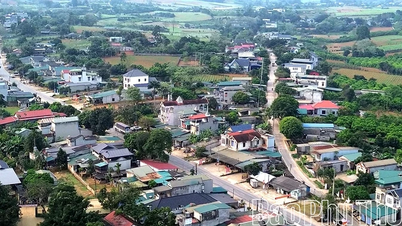
The Hang Kia – Pà Cò Nature Reserve, spanning over 5,300 hectares, is home to some of the rarest and most valuable primeval forests in the Northwest region of Vietnam. The entire Pà Cò commune lies within the core zone of the reserve, where the Hmong people have lived for generations, deeply connected to and considering the forest as an integral part of their being. Living beneath the forest canopy, the Hmong understand that preserving the forest is also preserving their own lifeline. This spirit of forest conservation has become a shared consciousness of the community.
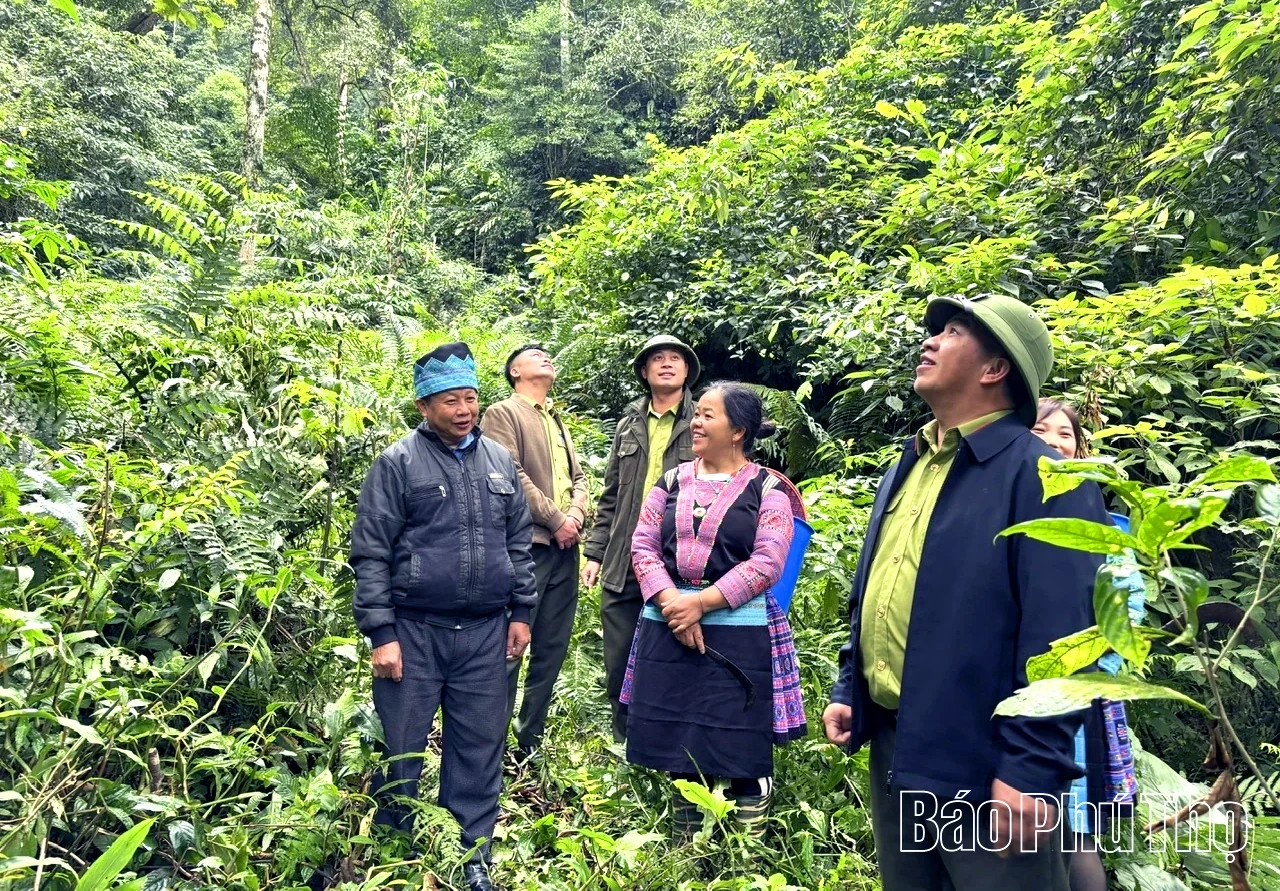
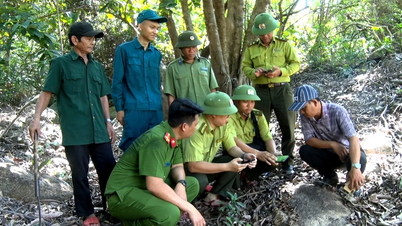
Leaders and staff of the Hang Kia - Pà Cò Nature Reserve Management Board, along with elder Hang A Páo and members of the community forest protection team, participated in a forest patrol.
According to Comrade Sung A Vang, Deputy Head of the Management Board of the Hang Kia – Pa Co Nature Reserve, by 2021, more than 2,000 hectares of forest in the area had been leased to 21 communities in the buffer zone of the reserve, mostly Mong villages in Pa Co commune. Having received the forest, the people not only patrol and protect it but also plant native trees, restore the forest habitat, and combine it with community tourism. The small paths through the forest are now not only patrol routes but also experiential routes for nature-loving tourists. Speaking about how to preserve the forest and encourage people to do so, Elder Hang A Pao – a respected figure in Pa Co hamlet – shared: “I told the Mong people that there is no longer any reason to destroy the forest. In the past, building wooden houses required going into the forest to cut down trees for posts; now we have bricks and cement to build houses, so there’s no need for wood anymore.” Previously, people had to cut down trees for firewood, but now that the government has brought electricity to the village and they have warm blankets, the villagers no longer need to cut firewood. The forest also brings tourists to the village, helping to develop the economy, so there is no longer any reason for the Hmong people to destroy the forest. The forest has been assigned to individual households by officials, so each family has a responsibility to protect their family's forest. Protecting the forest is protecting the life of the village.
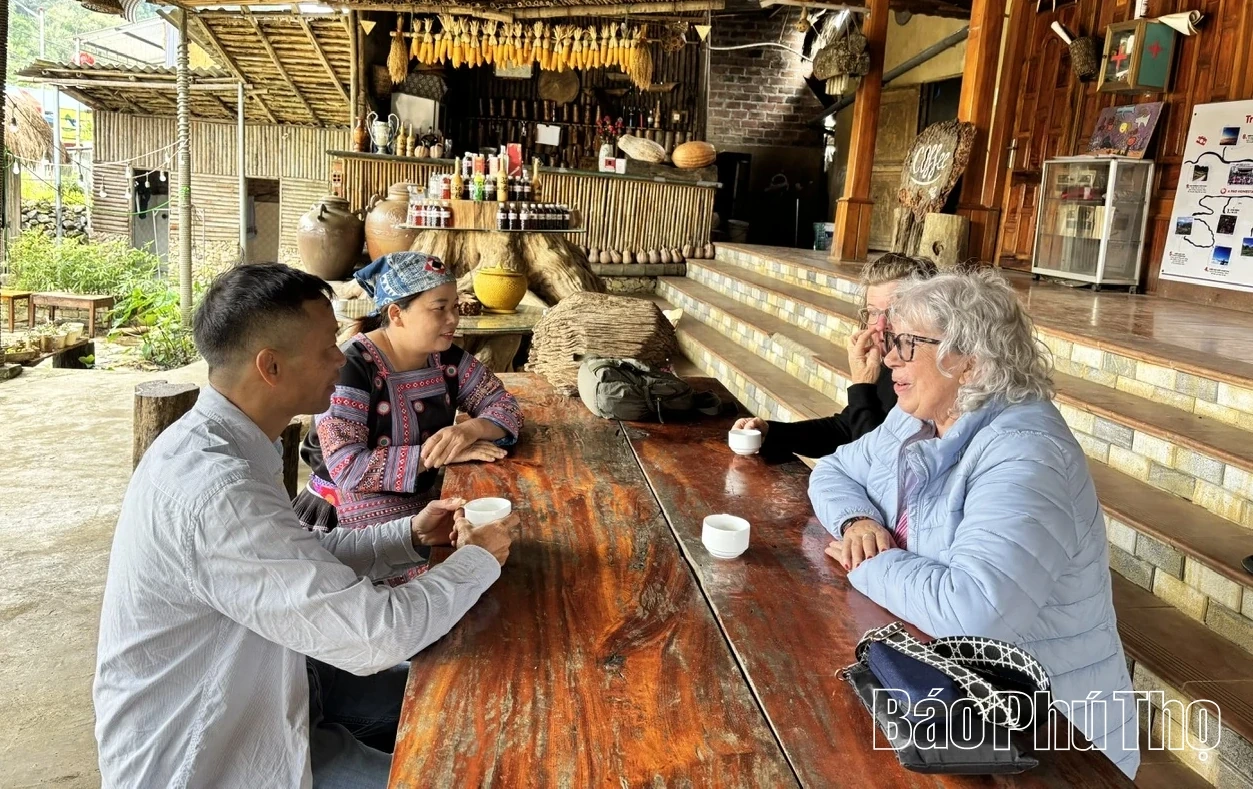
Thanks to its majestic natural scenery and unique local culture, Pà Cò has become an attractive tourist destination for both domestic and international visitors.
From that simple yet profound "Mèo's logic," through persistent effort and effective models, witnessed firsthand, the elders Páo and Lứ, along with the Party committee and local government, have propagated and mobilized the people in the village to plant and protect the forest. As Comrade Sùng A Vàng, Deputy Head of the Conservation Area Management Board, said: That is the "logic" behind the change in the mindset of the Hmong people today. It is thanks to that "logic" that each Hmong person has become a true forest guardian. And the Hmong community of Pà Cò is the "extended arm" of the forest rangers, contributing to keeping the Pà Cò forest greener, and more importantly, to a stable life through green and sustainable tourism.
Dinh Hoa
Source: https://baophutho.vn/khi-nguoi-mong-giu-rung-lam-du-lich-241879.htm
![[Image] Nearly 125,000 Hanoi students completed the Literature exam for the 10th grade entrance exam.](https://vphoto.vietnam.vn/thumb/1200x675/vietnam/resource/IMAGE/2026/05/30/1780117233041_ndo_br_thiet-ke-chua-co-ten-2-png.webp)





















































































Comment (0)