

 |
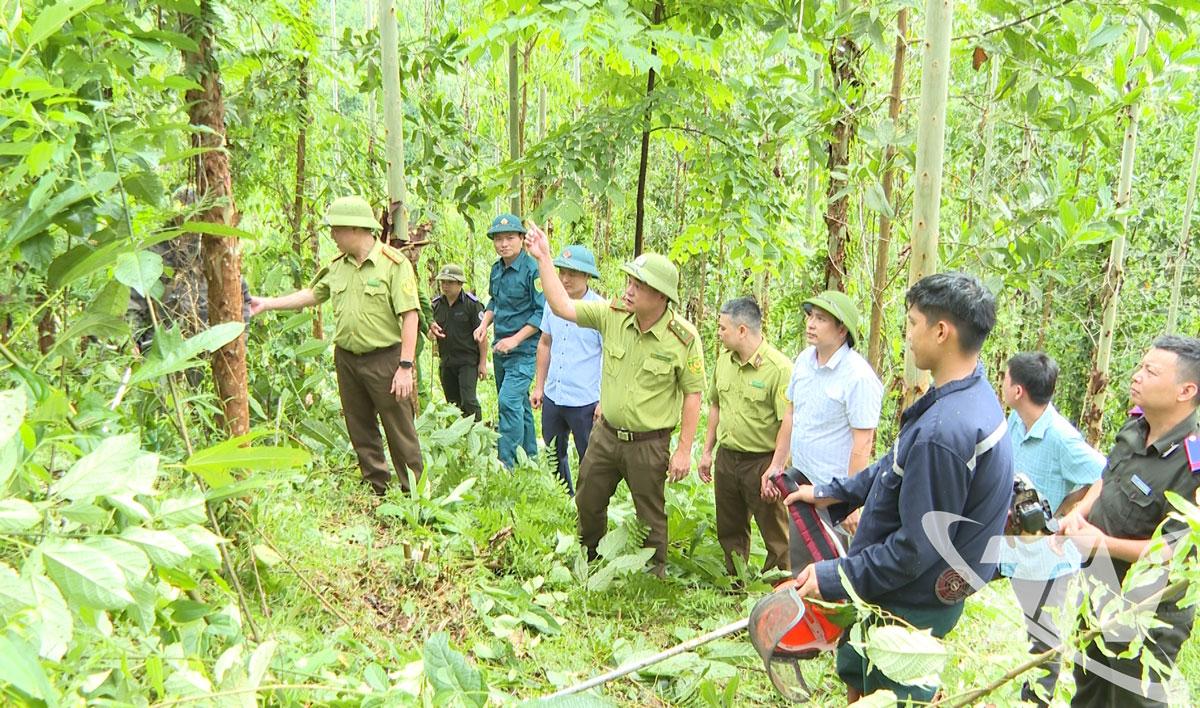
| The Sang Moc commune authorities, in coordination with relevant agencies, are disseminating information about the Forestry Law to forest owners. |
Located nearly 60km from the provincial center, Sang Moc is a highland commune, primarily inhabited by ethnic minorities. Along the provincial road leading into the commune, endless stretches of lush green acacia and eucalyptus forests extend as far as the eye can see.
With a natural area of over 9,000 hectares, of which forest land accounts for up to 90%, Sang Moc has identified the development of agriculture and forestry as the main direction in its economic development.
Excitedly leading us on a tour of his more than 6 hectares of forest ready for harvesting, Mr. Nong Van Nhuoc from Ban Chuong hamlet shared: "My family used to be very poor. Since participating in the State's reforestation projects, I boldly expanded my area, and now I have 4 hectares of eucalyptus and 2 hectares of acacia. Thanks to the forest, my family has escaped poverty and has the means to raise and educate our children."
Thanks to the awareness campaigns conducted by forest rangers and local authorities, the villagers understand that reforestation must go hand in hand with forest conservation and protection. "In reforestation, fire prevention and control are crucial. After harvesting, we clear the land before the dry season, gathering dry leaves and branches to rot so that when burned, the fire won't spread," Mr. Nhuoc said.
In Ban Chuong, many households have transformed their lives thanks to the forest. Due to the limited agricultural land, the people mainly develop production forests. The entire hamlet has nearly 300 hectares of production forest and more than 70 hectares of special-use forest. Income from the forest has helped families build houses, buy machinery, and improve their living standards. For them, the acacia and eucalyptus forests have become a "savings," contributing to changing the face of the highland region.
Recognizing the value of forests, the people of Ban Chuong village focus not only on planting production forests but also on strictly protecting special-use and natural forests. Forest owners all sign commitments to manage and protect the forests; they actively participate in training and education on forest fire prevention and control. As a result, out of 120 households in the village, only 12 remain poor and 5 are near-poor.
Mr. Nguyen Van Lam, head of Ban Chuong hamlet, said: "Previously, the villagers didn't know how to manage undergrowth, and burning it easily caused fires to spread, resulting in economic losses. Now, with guidance, they know how to clear the undergrowth, create firebreaks, and erect fences to protect young forests. Forest rangers regularly come down to educate and remind people, so everyone complies well. The area of natural forest is strictly protected, and there is no longer any encroachment on the forest."
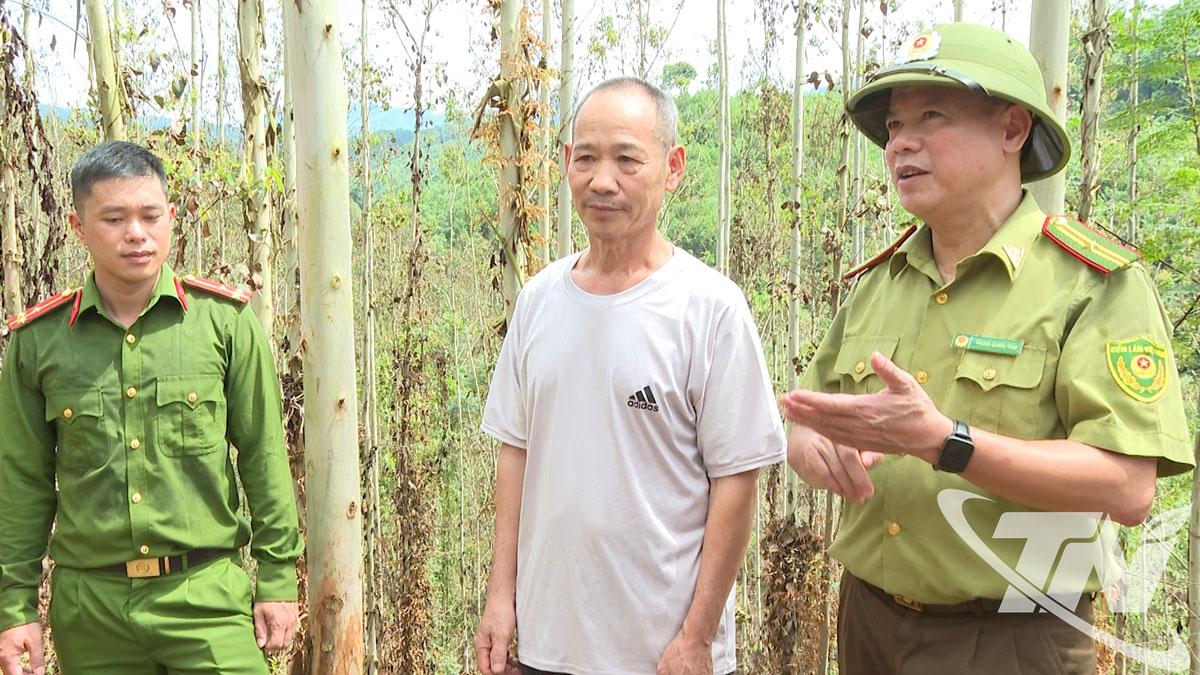 |
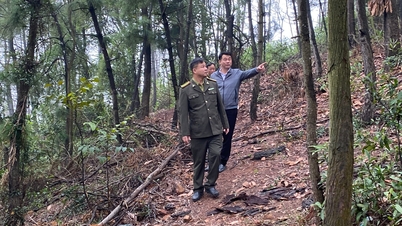
| Mr. Nong Van Nhuoc was instructed by officers from Forest Ranger Station No. 14 on how to clear the undergrowth after logging. |
As a mountainous commune facing many difficulties, with fragmented terrain and limited farming skills, Sang Moc has over 87% of its population belonging to ethnic minorities, whose livelihoods mainly depend on agriculture and forestry. Recognizing forests as a strength, the commune government focuses on disseminating information and guiding people to plant forests according to plan, adhering to technical procedures and regulations on forest fire prevention and control; while also strengthening the protection of special-use forests and natural forests.
Mr. Ha Van Dan, Vice Chairman of the People's Committee of Sang Moc commune, informed: The People's Committee of the commune closely coordinated with various forces, especially Forest Ranger Station No. 14, the Police, and the Military , to sign a cooperation agreement on forest management, protection, and fire prevention and control. After implementing the two-tiered government model, the commune has strengthened the Forest Fire Prevention and Control Steering Committee, issued directives, and disseminated information to each hamlet.
As a result, people's awareness has been significantly raised. The commune is currently researching ways to attract investment programs and projects to develop the forest economy, aiming to increase income and achieve sustainable poverty reduction for the people.
During a public awareness campaign conducted by Forest Ranger District No. 14 in Sang Moc, we clearly felt the efforts of the authorities and the local people in preserving and developing the forest. Because the majority of the population are ethnic minorities, language is a major barrier in the campaign. To overcome this, forest rangers collaborate with influential figures in the villages to communicate and explain the information in the local language, making it easier for the people to understand and follow.
Mr. Phan Quoc Thu, acting Head of Forest Ranger Station No. 14 in Thai Nguyen province, said: "The unit closely follows the directives of the Provincial Forest Protection Department, issuing many guiding documents to strengthen forest management, protection, and fire prevention and control. Thanks to regular awareness campaigns, people have reduced deforestation; they know how to safely handle undergrowth, avoiding indiscriminate burning and instead gathering it in specific areas, creating firebreaks, and notifying the authorities before handling it. As a result, the number of forest fires during the dry season has decreased significantly."
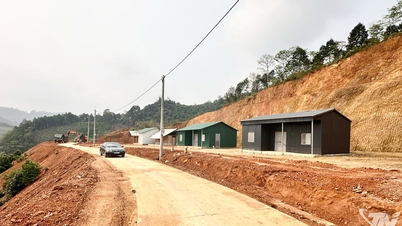
Efforts in developing the forestry economy and protecting forests are yielding clear results in Sang Moc. Along with investments in electricity, roads, schools, and health stations, new houses are springing up in increasing numbers. Hundreds of hectares of production forests are ready for harvest, generating hundreds of millions of dong in value each season.
Forests not only provide a stable source of income but also retain water, prevent erosion, and protect the ecological environment. When people consider forests as a sustainable livelihood, the forests in Sang Moc are better protected, contributing to the development of a green economy and maintaining the local ecological environment.
Source: https://baothainguyen.vn/kinh-te/202511/kinh-te-rung-mo-huong-phat-trien-faa255b/




![[Photo] Prime Minister Pham Minh Chinh receives the Chinese Ambassador to Vietnam](https://vphoto.vietnam.vn/thumb/1200x675/vietnam/resource/IMAGE/2026/04/05/1775397481797_ndo_br_dsc-5512-jpg.webp)
























































































Comment (0)