

The Japanese have shaped the tea ceremony into a national philosophy, an art of living conveyed through the enjoyment of a cup of tea. Meanwhile, Vietnam – a leading coffee powerhouse in the world , possessing some of the world's finest Robusta coffee beans, and boasting a centuries-old history of coffee appreciation – still sees Vietnamese coffee valued in the lower segment, primarily exported in raw form, and failing to establish its rightful place within the industry and the nation.
With the desire to elevate the Vietnamese coffee industry to a new level, enhancing the value of coffee not just as an ordinary beverage but also as a cultural, artistic, spiritual... and even philosophical coffee, worthy of its position as a world coffee powerhouse - Trung Nguyen Legend Group has dedicated time and effort over many years to researching the history, culture, art... of coffee in all aspects of human life to transform coffee into "Philosophical Coffee".
Throughout Trung Nguyên Legend's journey of creation and development, the spirit of commitment to serving the community has always been the core principle, implemented through numerous action programs to build great aspirations and ambitions; contributing to establishing a new position for the Vietnamese coffee industry on the world coffee map.
The Japanese did it!
Vietnamese people can do it too, and do it even better!
The aspiration for a sustainable future for the global coffee industry.
Throughout its development from the 9th century to the present day, coffee has always been a popular and widely enjoyed beverage globally. Particularly, with its profound and interconnected influence on all aspects of human life, promoting economic growth, social welfare, and creating livelihoods for millions of people across countries involved in production, processing, distribution, and consumption, coffee is a global industry.
Along with its immense value to humanity, the coffee industry has also faced significant social and environmental challenges. Much of the world's largest coffee-growing regions, located in countries such as Brazil, Vietnam, Colombia, Ethiopia, and Jamaica, are home to some of the most climate-sensitive ecosystems on Earth. Since the 1970s, concerns surrounding the sustainable development of the coffee industry have emerged, revolving around environmental issues such as deforestation, soil erosion, biodiversity loss, and direct impacts on farmers such as price fluctuations, pests, and climate change. This has led to the formation of the first fair trade initiatives, focusing on establishing price floors and social support measures to mitigate the effects of market volatility.
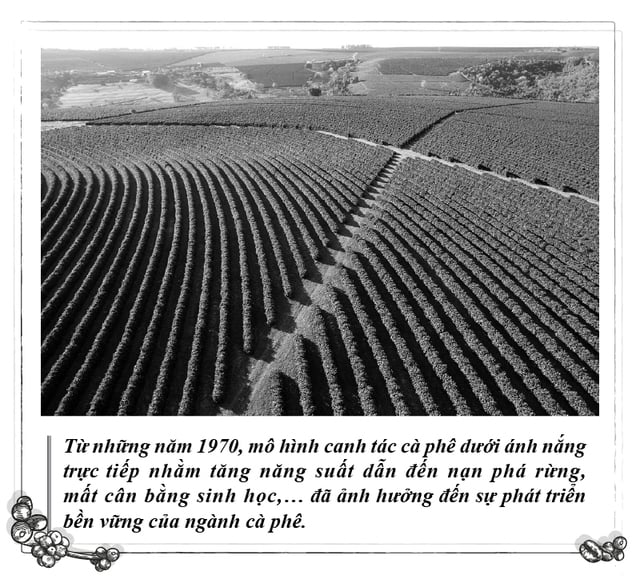
During this period, the adoption of sun-grown coffee cultivation methods to increase yield, instead of traditional shade-grown methods, put pressure on the ecosystems of many species. This situation prompted environmental conservation organizations and the international community to speak out, opening up a discourse on the concept of "sustainable coffee" with the aspiration to transform the exploitative coffee industry into a model that can be sustained and developed sustainably without undermining the ecological and social foundations it depends on.
In 1987, the United Nations Brundtland Commission officially defined "sustainable development" as "development that meets the needs of the present without compromising the ability of future generations to meet their own needs," with three core pillars: economic, social, and environmental. Following the widespread global recognition of this concept, various international organizations and associations have proposed definitions of "sustainable development" in the coffee industry. Among these, the definition from the International Coffee Organization (ICO) is comprehensive and asymptotic: " Sustainable development in the coffee industry is all efforts to ensure the livelihoods of coffee farmers and producing communities (People), establish a fair economic system, a transparent market, and a stable global coffee supply chain (Prices & Profits), while protecting the environment and natural resources (Planet) ."
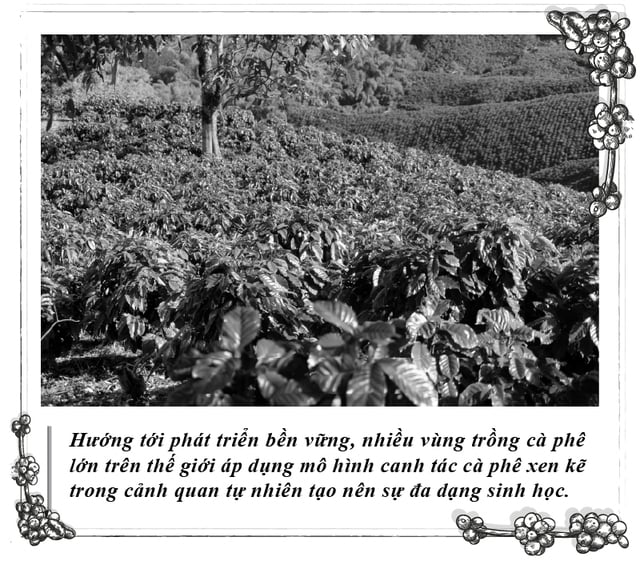
In the context of climate change, environmental challenges, and the ever-increasing demand for coffee, "sustainable development" is not just a trend but also an inevitable path for the global coffee industry to build resilience, circularity, and regeneration, thereby creating a sustainable future for the global coffee industry.
Proposed sustainable farming models and standards include: regenerative agriculture , organic farming, agroforestry , shade-based coffee cultivation, water conservation, and the use of green technologies. Simultaneously, promoting income equity and improving working conditions for farmers is also emphasized. Sustainable coffee businesses commit to transparency throughout the entire supply chain, from coffee origin to production and consumption processes.
Current international certifications such as Rainforest Alliance, Fair Trade, UTZ Certified, and Organic Coffee are evidence of the acceptance of sustainable coffee models. These criteria help create value-added coffee products that are environmentally responsible, as well as promote the sustainable development of the coffee industry, contributing to ecological balance and human prosperity.
"A solution for a harmonious and sustainable future" for humanity.
In its journey towards sustainable development, the global coffee industry has witnessed significant efforts from numerous countries, businesses, organizations, researchers, and others, who have introduced initiatives, solutions, and implementations to promote sustainable development for the global coffee industry.
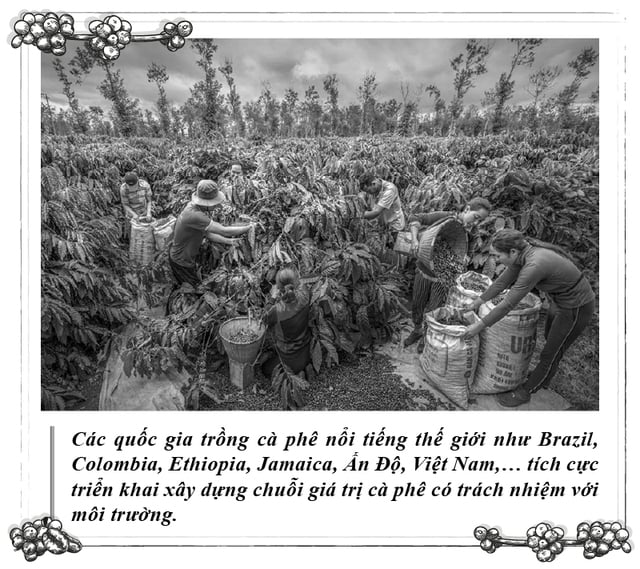
Several of the world's leading coffee-producing countries have actively implemented sustainable coffee models, including Brazil, Colombia, Ethiopia, India, Jamaica, and Vietnam. These are places where organizations like Rainforest Alliance, Fairtrade, and UTZ Certified have collaborated with local farmers to build environmentally responsible coffee value chains.
In particular, along with efforts to promote the sustainable development of the coffee industry, contributing to environmental preservation and biodiversity conservation, many studies show that the coffee industry can absolutely become a solution for a harmonious and prosperous future for humanity.
In particular, Trung Nguyên Legend, with its global vision, has dedicated many years to researching the history of coffee in all aspects of human life to fundamentally and comprehensively rethink the world coffee industry. In 2012, at the World Economic Forum, the founder and chairman of Trung Nguyên Legend Group, Dang Le Nguyen Vu, proposed "7 initiatives for the global coffee industry." Aimed at creating synergy and healthy competition within the global coffee industry for sustainable development, the " 7 initiatives for the global coffee industry" received enthusiastic support from experts in many fields around the world.
In particular, the "Rethinking the Concept of Coffee" initiative opens a new direction in the understanding of coffee: not just the world's most popular beverage, but also a heritage of humanity, influencing every aspect of human life; a source of responsible, invigorating, and creative energy. These values will form the foundation for building the coffee industry as a pioneering model of harmony and sustainable development in today's green and creative economy. At the same time, it will also serve as a basis for connecting and developing a community of coffee users as a source of responsible creativity, leading to sustainable success and genuine happiness for themselves and their communities.

For over a decade, Trung Nguyên Legend, positioned as a coffee heritage within the global trend of coffee exchange, has consistently strived to realize its initiatives. Along with preserving and diversifying coffee styles and cultural standards, bringing robusta coffee and Vietnamese coffee culture and brands to the world, and creating a model location that brings together billions of coffee lovers and enthusiasts, Trung Nguyên Legend has begun to connect and develop a global coffee community, contributing to the development of a sustainable model for the world coffee industry, bringing balance, harmony, and prosperity .
Today, the global effort to develop a sustainable coffee industry is a humane and compassionate endeavor, fostering a responsible lifestyle that ensures ecological balance and harmony with the environment. Particularly in the creative economy, with its core values of energy, creative innovation, and the ability to regenerate and preserve the environment and maintain biodiversity, the coffee industry can develop a comprehensive coffee ecosystem, becoming a model leading the way for a sustainable and prosperous global economy.
COFFEE PHILOSOPHY - A Brief History of Coffee Economics
We invite you to watch the series of videos on Coffee Philosophy, which have been uploaded to the channel https://bit.ly/caphetrietdao

Read the next installment: Ana Maria Primavesi and the principles of ecological agriculture.
Source: https://thanhnien.vn/ky-112-ca-phe-va-su-phat-trien-ben-vung-185250728175736324.htm
![[Photo] General Secretary and President To Lam presides over the meeting to approve the draft report on the results of the second inspection by the Politburo of the Standing Committee of the Hanoi City Party Committee.](https://vphoto.vietnam.vn/thumb/1200x675/vietnam/resource/IMAGE/2026/05/26/1779789811432_a2-bnd-4430-9620-jpg.webp)































































Comment (0)