

The digital economy is defined as an economy based on digital technology and digital platforms, with economic activities conducted using and through digital technology and platforms, especially electronic transactions carried out over the internet.
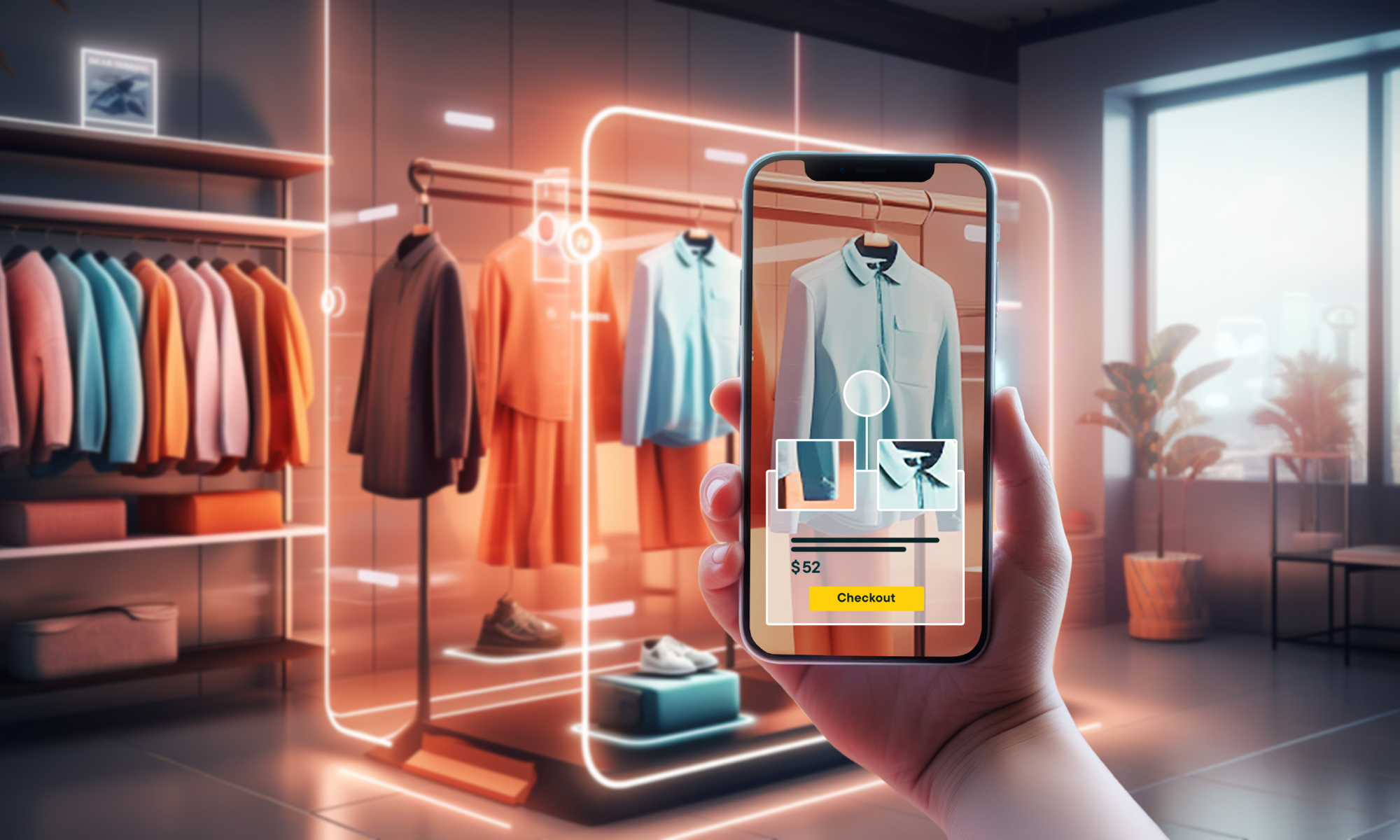
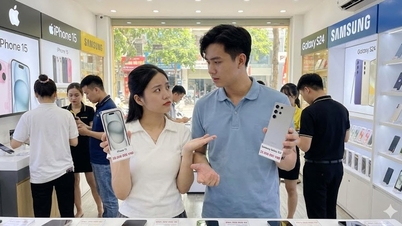
Physical is considered a solution that helps boost multi-channel sales through the application of technology.
This model is structured around the following pillars: ICT/telecommunications Digital Economy (ICT Digital Economy); Internet/Platform Digital Economy (Internet Digital Economy); and Sectoral/Field Digital Economy (Industry Digital Economy).
According to the "e-Economy SEA 2022" report published by Google, Temasek, and Bain & Company, Vietnam will be the fastest-growing digital economy among six countries (Indonesia, Malaysia, Philippines, Singapore, Thailand, and Vietnam) between 2022 and 2025, with GMV (gross merchandise value) increasing by 31% from US$23 billion in 2022 to US$49 billion in 2025.
In this context, Physical solutions – a term describing the integration of technology in the real world (parallel virtual reality) – could be a catalyst for increasing the contribution of the digital economy to GDP.
This combination aims to provide a better customer experience in today's shopping world through AR (augmented reality) and VR (virtual reality) technologies.
Physical technology is not as complex as its definition suggests and has become familiar to businesses and consumers since the Covid-19 pandemic. Specifically, the most active application of this concept today is in the retail industry.
For example, in 2020, L'Oréal Group introduced a 3D shopping experience at its Lancôme store in Singapore. Customers could experience a skincare consultation using a selfie with E-youth Finder, a diagnostic tool that uses artificial intelligence to measure key skin parameters and suggest a skincare routine.
Most notably, Amazon, after dominating the online retail market, began venturing into traditional retail with its Amazon Go chain of stores. Customers can enter, shop, and leave; the technology system identifies the items purchased and deducts the money from their credit card, with the receipt sent to them via email.
In Vietnam, many large businesses, especially in the retail sector, have been using Phygital for the past five years, but under a different name: multi-channel selling.
According to analysts, Vietnam possesses many factors that facilitate the development of Physical solutions. Recent statistics from Insider Intelligence on smartphone users in Southeast Asia from 2021 to 2026 show that in 2021, the number of smartphone users in Vietnam reached approximately 62.8 million, an increase of 3.6% compared to the previous year and accounting for 96% of internet users nationwide.
It is estimated that in 2023, the number of smartphone users in Vietnam will reach 63.8 million, an increase of 1.6% compared to 2022 and accounting for 96.1% of the country's internet users. Within Southeast Asia, the estimated number of smartphone users in Vietnam by the end of 2023 is only surpassed by Indonesia, the most populous country in the region.
Insider Intelligence estimates that at this rate, by 2026, the number of smartphone users in Vietnam will reach 67.3 million, a 1.7% increase compared to the previous year and accounting for approximately 96.9% of internet users.
Source link

![[Image] Vietnam's colorful journey of innovation](/_next/image?url=https%3A%2F%2Fvphoto.vietnam.vn%2Fthumb%2F1200x675%2Fvietnam%2Fresource%2FIMAGE%2F2025%2F12%2F14%2F1765703036409_image-1.jpeg&w=3840&q=75)


























































![[Image] Vietnam's colorful journey of innovation](https://vphoto.vietnam.vn/thumb/402x226/vietnam/resource/IMAGE/2025/12/14/1765703036409_image-1.jpeg)



































Comment (0)