

Affirming the quality of education
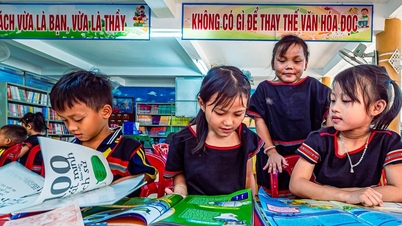
According to Mr. Dinh Thai Vinh Tra, Head of the Department of Ethnic Minority Education and Students, Vinh Long Department of Education and Training, the province has 9 ethnic minority boarding schools with 87 classes and 3,045 students; 100% of the students are from ethnic minorities (Khmer and Hoa). In addition, the province also has a Pali-Khmer vocational school with 6 classes and 215 students.
Over the years, the development of local education has always been a priority for all levels and sectors, considered a crucial task. Thanks to close coordination between government agencies, the education sector, and the community, investment in ethnic boarding schools under Sub-project 1 - Project 5 of the National Target Program for socio -economic development in ethnic minority areas in Vinh Long has achieved many positive results.
It is evident that, with investment in infrastructure and equipment, the quality of education in ethnic minority and mountainous areas of the province has significantly improved, creating a solid foundation for ensuring equity in access to education and enhancing the quality of mass education, contributing to narrowing the development gap between regions.
The percentage of junior high school graduates entering 10th grade in senior high school reached 98.9%, with approximately 40% attending ethnic minority boarding schools. The graduation rate for senior high school students was 100%; the number of senior high school graduates entering universities, colleges, and vocational schools exceeded 70%.
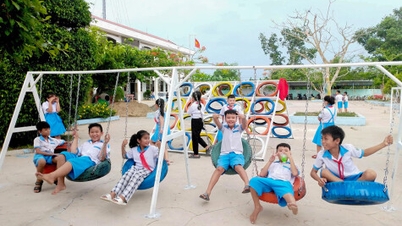
In An Giang, the network of ethnic boarding schools is quite complete, developing widely across communes, wards, and special zones, basically meeting the learning needs of students. The planning of the network and scale of ethnic boarding schools is considered reasonable and appropriate to local conditions.
According to Mr. Tran Quang Bao, Director of the Department of Education and Training of An Giang province, all 9 ethnic boarding schools in the province have been recognized as meeting national standards. These include 2 high schools with 27 classes and 917 students, and 7 junior high schools with 68 classes and 2,264 students.
Ethnic boarding schools are strategically located to suit the natural, economic, and political characteristics of each locality, concentrated in areas with large ethnic minority populations (Khmer, Cham, Hoa) or bordering other ethnic groups.
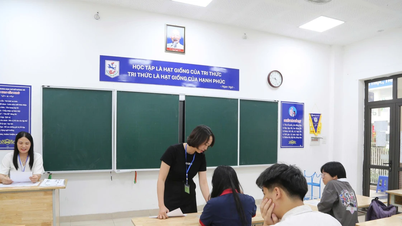
Most administrators and teachers meet the required training standards and have received adequate training to fulfill the 2018 General Education Program. The quality of education and the graduation rate of ethnic minority boarding schools are high, with many schools leading the province, affirming their position as top schools in ethnic minority and mountainous regions.
The Department of Education and Training has implemented correctly, fully, and promptly the regulations and policies for teachers, students, and educational institutions in ethnic minority areas and areas with special difficulties. These policies have created motivation for children of ethnic minorities to excel in their studies and training.

There are still shortcomings.
Besides the achievements, during the implementation of the contents and activities of Sub-project 1, Project 5, National Target Program for socio-economic development in ethnic minority and mountainous areas, Vinh Long province still encountered some difficulties and shortcomings.
Firstly, the system of ethnic boarding schools in the former Tra Vinh area comprises 8 schools, one of which is located in a commune/ward not included in the list of communes approved by Decision No. 861/QD-TTg dated June 4, 2021, of the Prime Minister.
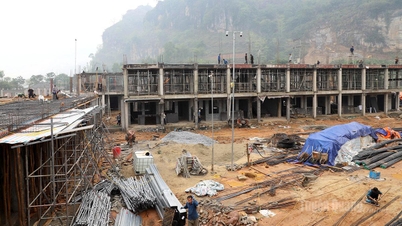
Secondly, regarding the technical design: The existing facilities of the school previously had fire safety approvals, but when new facilities were added, additional requirements were made for an automatic fire alarm system, indoor and outdoor fire extinguishing systems, auxiliary staircases, etc. These requirements resulted in a significant increase in volume and cost, but were not included in the list of construction items stipulated in the investment program.
Thirdly, regarding equipment procurement: Currently, the Ministry of Education and Training has not yet issued specific guidelines on the list of equipment for digital transformation and teaching, which localities can use as a basis for procurement.
Given the above situation, the implementation of the objectives of Sub-project 1 - Project 5 is currently behind schedule, affecting the disbursement of operational funds under the National Target Program for socio-economic development in ethnic minority and mountainous areas, giai đoạn 2021 - 2030, phase 1 (from 2021 to 2025).
Sharing his concerns about the difficulties and shortcomings, Mr. Tran Quang Bao stated that implementing the enrollment plan based on quotas in particularly disadvantaged communes has led to some students with low exam scores still being admitted, affecting the quality of education. Furthermore, some admitted students do not enroll due to various reasons.
The enrollment area for ethnic minority boarding schools is increasingly shrinking due to regulations requiring permanent residence and settlement for three years or more in particularly disadvantaged areas, rendering students from some island communes no longer eligible for enrollment.
Ethnic minority students face difficulties adapting to the strict boarding school environment and living far from their families, leading to stress and negatively impacting their academic performance.
Some remote areas lack stable network infrastructure, and many parents have limited tech skills, making it difficult to implement online enrollment software.
According to Mr. Tran Quang Bao, in these schools, the upgrading of facilities to match the increase in student numbers is still slow. Local budgets are facing difficulties, so they have not been able to invest in 100% of the minimum teaching equipment as required. The schools still lack dormitory rooms (in terms of area), toilets, sanitary facilities, clean water facilities, and standard communal kitchens.
Most ethnic boarding schools lack full-time Khmer language teachers due to difficulties in opening training classes. Staffing is also insufficient, making it difficult to care for and nurture students.
Improve policies, enhance quality.
Based on practical difficulties, the Department of Education and Training of Vinh Long Province proposes that the Ministry of Education and Training research and adjust the regulations on student enrollment criteria stipulated in Clause 3, Article 9 of Circular No. 04/2023/TT-BGDĐT dated February 23, 2023, on the promulgation of the Regulations on the organization and operation of ethnic boarding schools, to suit the current situation of communes in areas with particularly difficult socio-economic conditions that have been recognized as achieving new rural standards; and at the same time, research policies for articulation programs from ethnic boarding schools to university level.
To improve the quality of ethnic boarding schools, the Director of the Department of Education and Training of An Giang province proposed that the Government continue to pay attention to and increase funding for the implementation of the National Target Program for ethnic boarding schools and ethnic semi-boarding schools compared to the 2021-2025 period.
At the same time, diversify training methods to ensure they are suitable for the conditions and needs of learners and ethnic minority cadres, such as on-the-job training, online training, day-care, and residential training… Link recruitment and planning with the training and development of human resources from ethnic minorities.
Students are provided with travel allowances based on the regular fare of public transportation, twice a year (both ways) to visit their families during Tet (Lunar New Year) and summer vacation. Regarding student recruitment, Mr. Tran Quang Bao suggested increasing the scale and expanding the recruitment area for ethnic minority boarding schools to meet the demand for students while maintaining the quality of incoming students.
Regarding facilities and equipment, Mr. Tran Quang Bao hopes to continue prioritizing funding from the National Target Program and the medium-term public investment plan for the period 2026-2030 to build more classrooms, subject rooms, dormitories, and other auxiliary facilities. He also requests that the competent authorities allocate more funding from the National Target Program for the period 2026-2030 to the An Giang Education sector than in the period 2021-2025 to purchase and equip with minimum teaching equipment.
Regarding the management staff, teachers, and employees, Mr. Tran Quang Bao suggested that the Ministry of Education and Training should soon issue economic and technical norms so that localities have a legal basis to commission universities to open training courses for Khmer language teachers according to regulations. He also recommended strengthening professional training and development, organizing more in-depth and practical training courses for teachers, focusing on integrated subjects, new teaching methods, and the use of technology in teaching...
According to Tran Quang Bao, Director of the Department of Education and Training of An Giang province, it is necessary to strengthen language support for students by organizing supplementary Vietnamese language classes for ethnic minority students.
Encourage extracurricular activities, study clubs, and soft skills education programs to help students develop self-learning, problem-solving, and communication skills. Expand scholarship programs and financial support for students from disadvantaged backgrounds. The Department of Education and Training will strengthen supervision and support in the implementation of the 2018 General Education Program and specific educational content…
Source: https://giaoducthoidai.vn/nang-chuan-truong-dan-toc-noi-tru-post754766.html





![[Video] Sunset at Lap An Lagoon – Where the sun sets over the fishing nets](https://vphoto.vietnam.vn/thumb/1200x675/vietnam/resource/IMAGE/2026/05/31/1780192137701_beach-landscape-sea-water-nature-grass-745871-pxhere-com.jpeg)
















![[Video] Sunset at Lap An Lagoon – Where the sun sets over the fishing nets](https://vphoto.vietnam.vn/thumb/800x450/vietnam/resource/IMAGE/2026/05/31/1780192137701_beach-landscape-sea-water-nature-grass-745871-pxhere-com.jpeg)












































![[Video] Sunset at Lap An Lagoon – Where the sun sets over the fishing nets](https://vphoto.vietnam.vn/thumb/402x226/vietnam/resource/IMAGE/2026/05/31/1780192137701_beach-landscape-sea-water-nature-grass-745871-pxhere-com.jpeg)































Comment (0)