

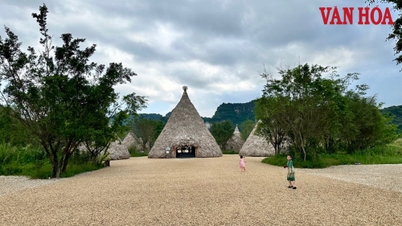
According to the People's Committee of Ninh Binh province, in recent times, the work of managing, preserving and promoting the value of the World Cultural and Natural Heritage of Trang An Scenic Landscape Complex has been implemented with attention by all levels, sectors, tourism businesses and people in the heritage site, achieving many positive results.
To continue effectively implementing the management, conservation and promotion of heritage values, the People's Committee of Ninh Binh province requires departments, branches, sectors and localities to step up propaganda and strictly implement the Law on Cultural Heritage 2024 (effective from July 1, 2025) along with decrees and decisions of the Government, the Provincial People's Committee and relevant legal provisions on heritage management and protection to officials, party members, businesses and people to raise awareness and compliance with regulations on heritage protection.
The Ninh Binh Provincial People's Committee assigned the Department of Tourism to preside over and coordinate with relevant sectors and localities to develop a management plan and regulations for protecting the Trang An Scenic Landscape Complex Heritage, incorporating content on environmental protection of natural heritage according to regulations. Coordinate to strengthen inspection and strictly handle violations of construction order, land management, and tourist accommodation; guide organizations and individuals to assess the impact on heritage before implementing projects.
The Department of Culture and Sports presides over and coordinates with relevant agencies and units to perform the function of state management of heritage conservation and promotion activities. Coordinates the review and proposal of locations and areas for archaeological exploration and excavation; advises and requests competent authorities to grant licenses for archaeological exploration and excavation and research activities in heritage areas. Appraises or participates in appraising projects that may affect the original elements and landscape of heritage.
At the same time, the Department of Construction is assigned to strengthen the management of investment and construction projects in heritage areas, coordinate regular inspections, and strictly handle illegal and improper constructions.
The Department of Agriculture and Environment strengthens the direction of special-use forest management, landscape protection, does not allow the conversion of agricultural land use purposes in the core heritage zone and guides the proper implementation of environmental protection regulations.
The Department of Finance is required not to issue new or adjust investment certificates for projects using agricultural land in the core zone; for the buffer zone, only consider granting certificates for low-density eco-tourism projects to limit impacts on heritage.
The provincial inspectorate strengthens inspection, promptly detects and recommends strict handling of acts of heritage encroachment or violations in management and conservation work.
Ninh Binh Provincial People's Committee requests the People's Committees of Hoa Lu, Tay Hoa Lu, Nam Hoa Lu, Yen Son wards and the People's Committees of Quynh Luu and Dai Hoang communes to strengthen land management, construction order, tourism business, strictly handle violations, especially cases of illegal construction on agricultural land or encroachment on land managed by the commune or ward. At the same time, it is necessary to dismantle illegal constructions, restore the original status, and not change the purpose of using agricultural land, pond land, and gardens in the core heritage area. The Chairmen of the People's Committees of communes and wards are fully responsible if violations occur.
In addition, localities need to coordinate in supervising the construction of projects. If archaeological relics or artifacts are discovered, construction must be stopped, the site must be protected and reported to the authorities. Propaganda and dissemination of regulations on planning, land and construction management in heritage areas must also be strengthened so that people can understand and comply with the law.
Investment, construction, repair and renovation activities of works, projects, individual houses, and socio-economic activities in heritage areas, outside the buffer zone of world heritage areas that are likely to have negative impacts on the original elements constituting the relics, landscapes and culture of world heritage must strictly comply with the Law on Cultural Heritage. Before implementation, it is necessary to consult the Department of Tourism and comply with current legal regulations on cultural heritage.
Source: https://baophapluat.vn/ninh-binh-tang-cuong-cong-tac-quan-ly-bao-ton-va-phat-huy-gia-tri-quan-the-danh-thang-trang-an.html


![[Photo] Opening of the 14th Conference of the 13th Party Central Committee](https://vphoto.vietnam.vn/thumb/1200x675/vietnam/resource/IMAGE/2025/11/05/1762310995216_a5-bnd-5742-5255-jpg.webp)






















![[Photo] Panorama of the Patriotic Emulation Congress of Nhan Dan Newspaper for the period 2025-2030](https://vphoto.vietnam.vn/thumb/1200x675/vietnam/resource/IMAGE/2025/11/04/1762252775462_ndo_br_dhthiduayeuncbaond-6125-jpg.webp)
















































Comment (0)