


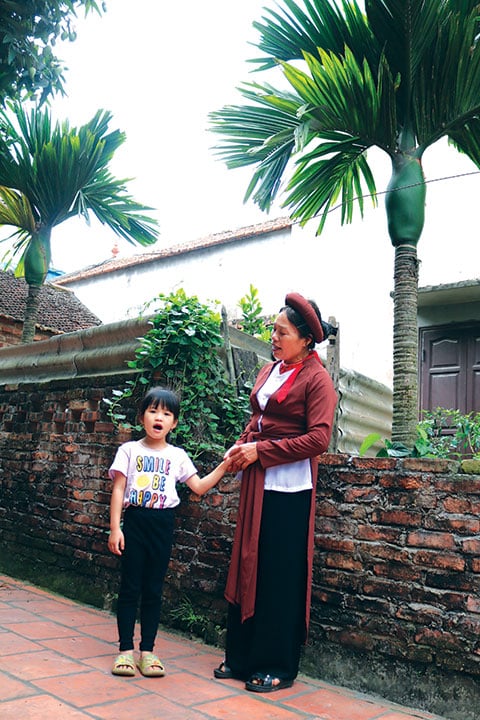
She teaches her grandchild to sing Quan Ho folk songs (illustrative photo). |
For Vietnamese people, "family traditions" is a simple yet deeply cultural term. These traditions shape the lifestyle of each family. They are the sum total of moral values, family customs, ways of life, and norms preserved and passed down through generations. Family traditions originate from simple things, such as the way parents speak to their children, the way children treat their grandparents, filial piety, marital affection, sharing in times of hardship, and forgiveness for mistakes. It's no coincidence that our ancestors said, "A harmonious family brings prosperity." A family that maintains a cultured and compassionate way of life will be fertile ground for nurturing decent individuals who live with love and responsibility towards themselves and the community.
It is through behavior, lifestyle, and family traditions that each family can create its own inner strength, contributing to the cultural identity of the entire community and nation. Today, with the fast-paced development of society, many young people leave their hometowns to work or establish careers in distant cities. The model of multi-generational families living together is no longer as common as before. Young families often live independently for convenience in work and daily life. Single-parent families and small families are also becoming more prevalent. However, no matter how the form changes, family affection remains a solid foundation.
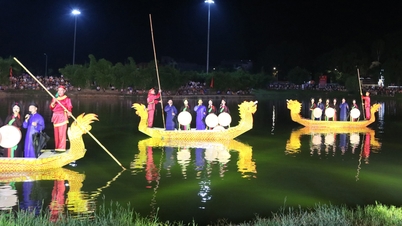
The countryside of Bac Ninh - Kinh Bac region, a place that preserves many precious traditional cultural values. Among them, the preservation of family traditions and customs within each family and clan has become a cherished tradition. It is not uncommon to find families here who have taught for three or four generations, upholding the spirit of the teacher. Many families have maintained traditional crafts such as carpentry, painting, and pottery for generations. Then there are families dedicated to preserving traditional art forms such as Quan Ho folk singing, Tuong, Cheo, and water puppetry. From these models of "Quan Ho in the family" and "Quan Ho at home," the lifestyle, manners, and character of the Quan Ho people are amplified, refined, and sustainably passed down through generations. The family is always a symbol of closeness, love, and sharing. It is not only a place for continuing traditions and customs, but also a source of spiritual strength for each member to move forward in life. The teachings, life experiences, and warm affection from grandparents and parents are invaluable assets that help the younger generation grow into well-rounded individuals, appreciate their roots, and become good citizens.
Modern society brings many positive changes in material life, educational opportunities, and access to technology, but it also presents challenges and risks of eroding traditional values, especially in young families. The habit of gathering, eating meals together, and spending time together is gradually becoming a luxury in some families. Therefore, lessons in behavior, lifestyle, and morality are gradually being forgotten...
Preserving family traditions doesn't mean being conservative or clinging to outdated customs and prejudices. On the contrary, it's a process of selecting and preserving core values such as compassion, filial piety, and responsibility, and passing them on in a way that suits the times. A modern family can combine tradition with the creation of new values. Family meals don't need to be elaborate or feature many dishes, but they must include conversation, asking questions, and sharing feelings. Living spaces may be small, but they need the presence of love and sharing...
In the journey of building and developing each individual, there is no place more sacred, warm, and profound than family. Family is not only a home and a source of spiritual support, but also the cradle that nurtures character and is the origin of all cultural values and national traditions.
Source: https://baobacninh.vn/nep-nha-trong-thoi-ai-so-97882.html











































Comment (0)