

Vietnam's port industry is gradually becoming a shining star on the global economic map thanks to the strong growth of FDI.
In the report "Container Port Industry - Reaching Out to the Open Sea, Seizing New Opportunities" by VnDirect Research, the analysis team at VnDirect Research assesses that Vietnam's port industry is gradually becoming a shining star on the global economic map thanks to the strong development of FDI (foreign direct investment) and the ability to leverage its strategic location and modern infrastructure advantages.
“In recent years, Vietnam has affirmed itself as an open economy, deeply integrated into the global market. The shift from a trade deficit to a trade surplus since 2012 marks a significant milestone, highlighting the effectiveness of the country's reform and integration policies,” commented an analyst from VnDirect Research.
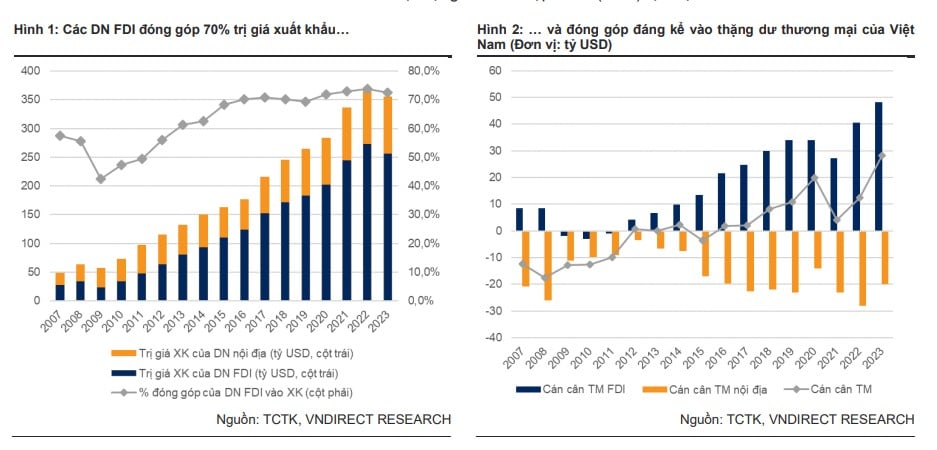 |
| Foreign direct investment (FDI) has played a key role in boosting Vietnam's export growth, with FDI enterprises accounting for over 70% of total export value. Source: General Department of Customs, Vietnam Ports Association (VPA), VNDirect Research |
Foreign direct investment (FDI) has played a key role in boosting Vietnam's export growth, with FDI enterprises accounting for over 70% of total export value. The third wave of FDI (2015-2019) contributed significantly to the boom in import and export activities, helping Vietnam rise to become a dynamic trading hub in the region.
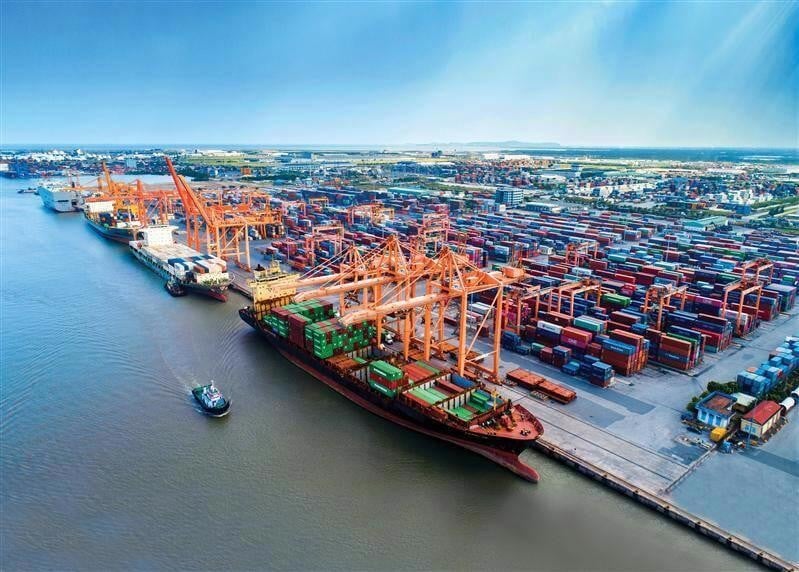 |
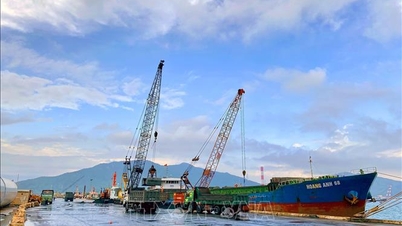
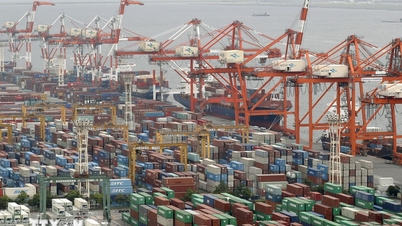
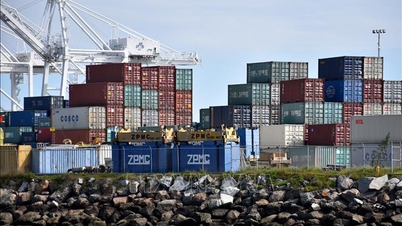
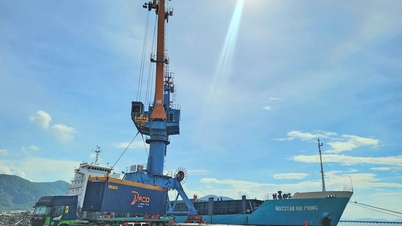
| Vietnam's container port industry is thriving, becoming a crucial link in the global supply chain. Photo: Thu Minh |
The impressive growth rate of Vietnam's trade from 2007 to 2023, with a compound annual growth rate (CAGR) of 12.1%, has fueled demand for cargo transportation through seaports. This strong export growth has significantly boosted demand for cargo transportation through seaports, reflected in a CAGR of 5.45% in port throughput.
Although trade activity decreased by 6.5% compared to the same period in 2023, port throughput increased by 6.5%. This shows that, despite a decline in the mobile phone and components sector, the port industry maintained stable growth thanks to other factors such as the growth of other export sectors and improvements in port infrastructure.
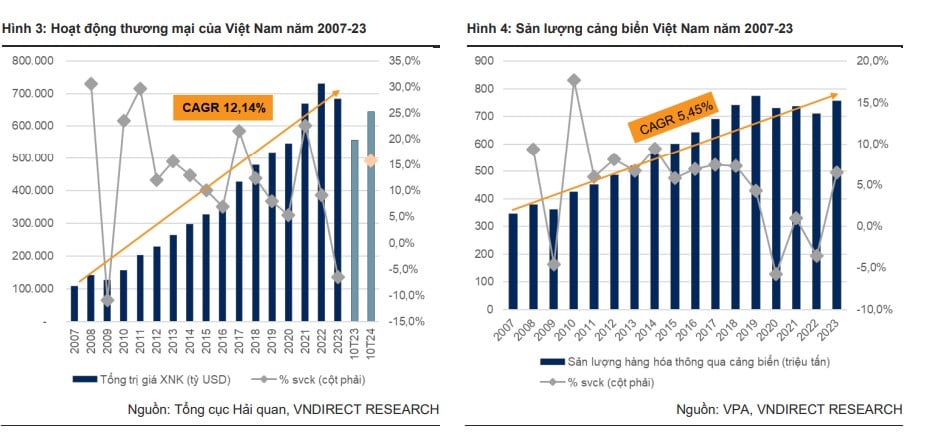 |
| Vietnam's port trade and output growth from 2007 to 2023. Source: General Department of Customs, Vietnam Port Association (VPA), VNDirect Research |
Furthermore, its favorable geographical location and high connectivity have enabled Vietnam's port industry to fully capitalize on the advantages of increasing global trade. Vietnam's Global Connectivity Index (LSCI) has steadily increased since 2013, reaching 409.1 points in Q2 2024, placing it 8th in the ranking. This significant improvement is a result of the development of large port clusters, with the potential for deep-water port development and a long coastline, enhancing Vietnam's connectivity with international shipping routes.
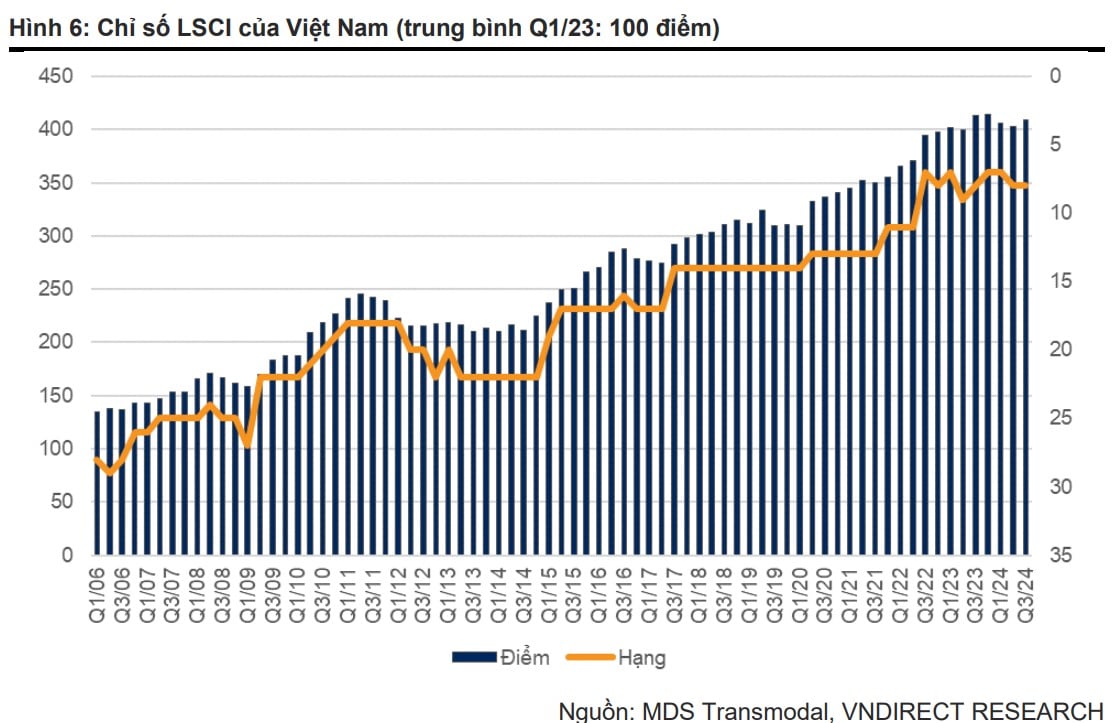 |
| Vietnam's Shipping Connectivity Index (LSCI) from Q1/2006 to Q3/2024. Source: MDS Transmodal, VNDirect Research |
In recent years, the global shipping industry has witnessed a significant increase in vessel size to boost productivity and reduce shipping costs. Statistics from the Vietnam Maritime Administration (VMA) show that the number of large vessels entering and leaving Vietnamese ports has increased over the past five years, reflecting a global trend. In 2019, there were approximately 4,538 large vessel visits, a number that rose to 5,474 in 2023, marking a total increase of 20.6%. The Cai Mep – Thi Vai port complex, with its capacity to serve large vessels, plays a crucial role in connecting international routes from Asia to the Americas and Europe.
Vung Tau Port, one of Vietnam's largest ports, has witnessed remarkable growth in the number of large vessels calling, from over 300 in 2013 to over 2,100 in 2023. Currently, the port can accommodate container ships with deadweight tonnages ranging from over 80,000 DWT to over 232,000 DWT. Furthermore, average berth times at Vietnamese ports are estimated at around 10-15 hours, lower than the global average of 22.7 hours and the median of 19.3 hours, according to 2023 S&P Global Market Intelligence data from a sample of 4,864 vessels, demonstrating the efficiency of cargo handling operations and port infrastructure.
According to VnDirect Research, Vietnam's port industry is currently led by two major enterprises: Saigon Newport Corporation (SNP) and Vietnam Maritime Corporation - Vinalines (MVN). These are two leading enterprises in the port sector and are both among the most efficient state-owned enterprises from 2020 to 2023.
SNP is a leading Vietnamese company in port operations, logistics services, transportation, and the maritime industry. The company has developed a diverse ecosystem connecting logistics centers, inland container depots (ICDs), gateway ports, and deep-water ports, while maintaining close ties with import-export businesses, shipping lines, government agencies, and associations. SNP focuses on sustainable development, the digital economy, the green economy, and the use of clean energy. Currently, SNP owns 16 port facilities, with HICT and SICT being the two most prominent. It is estimated that SNP accounts for approximately 39.4% of Vietnam's container market share, with a throughput of 9.75 million TEU.
MVN (listed on UPCOM) is a core enterprise in Vietnam's maritime industry, specializing in shipping, port operations, and maritime services. MVN is a pioneer in expanding international cooperation and integration, providing global maritime services, and making significant contributions to the development of Vietnam's maritime economy. Since 2020, VIMC has operated as a joint-stock company. MVN also owns several prominent listed companies such as PHP, SGP, VOS, and CDN.
Financial reports show that in the first nine months of 2024, SNP's revenue increased by 16.2%, while system-wide profit increased by 35.5% compared to the same period last year. For MVN, consolidated after-tax profit in the first six months of 2024 increased by approximately VND 715 billion compared to the same period last year. The strong growth in revenue and profit of port operators like SNP and MVN demonstrates the recovery and stable development of Vietnam's port industry, especially in the context of a challenging global economy.
The container port industry is not only a crucial link in the supply chain but also a major driver of national economic growth. With its advantageous geographical location, stable FDI inflows, and a strong commitment to infrastructure investment, Vietnam is poised to assert its role as a new logistics hub in Asia – a place where all trade routes converge.
Source: https://congthuong.vn/nganh-cang-bien-viet-nam-dang-dan-tro-thanh-ngoi-sao-sang-tren-ban-do-kinh-te-toan-cau-363314.html




![[Photo] Two flights successfully landed and took off at Long Thanh Airport.](/_next/image?url=https%3A%2F%2Fvphoto.vietnam.vn%2Fthumb%2F1200x675%2Fvietnam%2Fresource%2FIMAGE%2F2025%2F12%2F15%2F1765808718882_ndo_br_img-8897-resize-5807-jpg.webp&w=3840&q=75)





















































































Comment (0)