


The National Assembly has just passed the amended Value Added Tax (VAT) Law, officially allowing agricultural businesses to deduct input tax. This humane policy promises to release trillions of dong in "tied-up capital," creating a historic boost and gently supporting the acceleration of Vietnam's agricultural export sector.
Unlocking trillions of dong in capital, boosting agricultural exports.
The official approval by the National Assembly of the Law amending and supplementing a number of articles of the Value Added Tax Law on December 11, 2025, is considered an important step forward, providing timely support for the agricultural export sector.
The most groundbreaking highlight is the inclusion of semi-processed or unprocessed agricultural and aquatic products in the category of goods exempt from output VAT declaration and payment, effective from January 1, 2026. This adjustment realizes a long-standing desire of the business community: allowing businesses producing, processing, and trading agricultural products to deduct the entire amount of input VAT incurred during the procurement and processing stages.
In reality, the previous mechanism of not allowing input VAT deductions resulted in trillions of dong in taxes being "stuck" for businesses, causing capital to be "tied up" in agricultural processing enterprises, seriously affecting cash flow and reinvestment capacity. It is estimated that the amount of capital trapped in non-deductible VAT across the entire industry reached trillions of dong, significantly reducing working capital and the competitiveness of Vietnamese agricultural products in the international market.
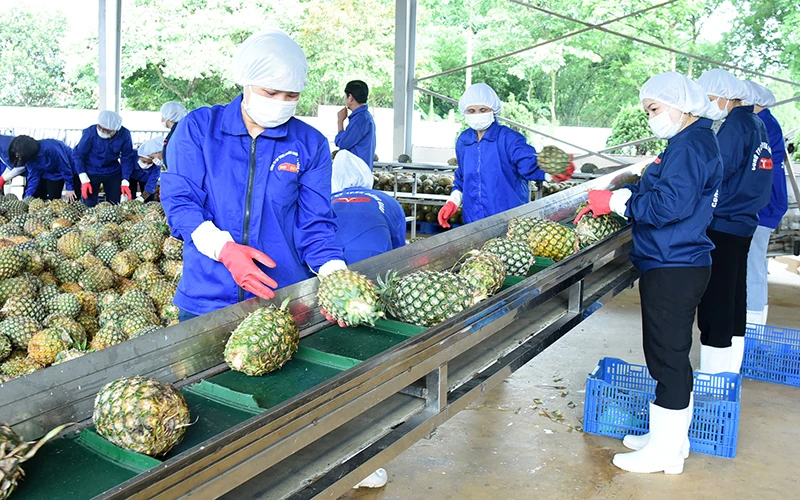
The trillions of dong that are released will become working capital and investment capital for advanced processing technology.
Assessing the positive impact of the new law, economist Associate Professor Dr. Dinh Trong Thinh commented that this is a historic decision, demonstrating the Government and National Assembly's timely listening and policy adjustments. Allowing input VAT deduction is not only about returning money to businesses, but also a financial mechanism that will help Vietnam's agricultural sector accelerate immediately. The trillions of dong freed up will become working capital, investment capital for deep processing technology, improving product quality, and helping Vietnamese agricultural products compete more firmly in demanding markets such as the EU and the US, where standards for traceability and sustainable development are increasingly stringent.
From the business perspective, Mr. Nguyen Van Luong, owner of a seafood import-export company in Can Tho, shared: "About 10-15% of our company's capital is always 'tied up' in input VAT that is not refundable or deductible. When the new law comes into effect in 2026, we will have tens of billions of VND more to purchase modern machinery, strengthen the traceability system, build supply chains, and expand raw material areas according to international standards. This is the biggest leverage that export businesses are waiting for, helping us confidently execute large and long-term contracts with foreign partners."
Simplify tax refund procedures and provide support to household businesses.
According to economic experts, the amended Value Added Tax Law not only alleviates difficulties for the agricultural sector but also thoroughly resolves obstacles related to tax refunds, a matter that has caused much concern among the business community in general. The National Assembly decided to abolish Clause 3 of Article 12 and Point c of Clause 9 of Article 15 of the law, which were conditions that had previously caused controversy and administrative barriers.
These abolished conditions previously caused difficulties, prolonged the tax refund process, and negatively impacted cash flow, especially for businesses with large investment projects and export projects. The abolition makes the tax refund procedure more streamlined, transparent, and faster, contributing to an improved investment and business environment and enhancing national competitiveness.
This amendment, made in the spirit of Resolution No. 66-NQ/TW, demonstrates the Government's determination to reform administrative procedures and support businesses in overcoming difficulties, especially in the context of economic recovery.
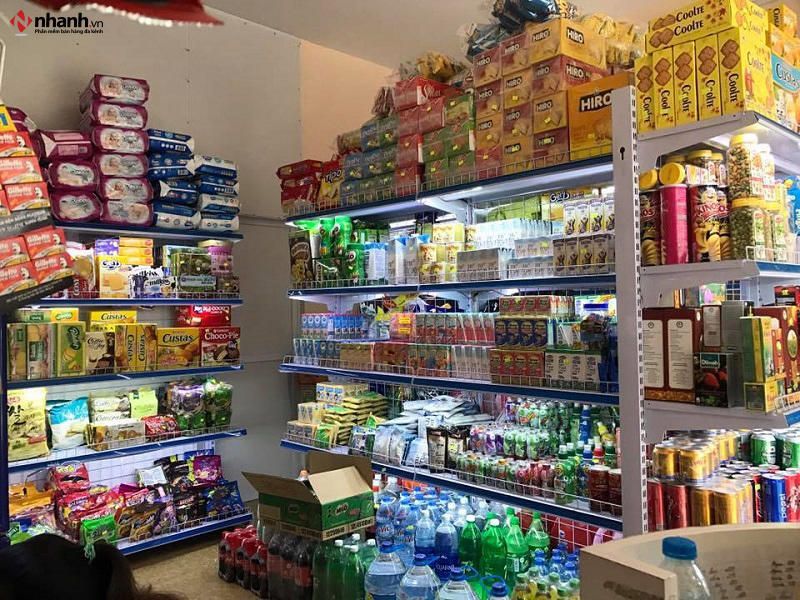
The amended VAT law is a direct support for millions of households and individual businesses.
Another highlight of the amended VAT Law is the direct support for millions of households and individual businesses, contributing to the promotion of the micro-economy. The National Assembly approved a decision to raise the VAT-exempt revenue threshold to 500 million VND per year, helping to reduce the burden of procedures and taxes for small businesses. Ms. Quach Thuy Ha, owner of a small grocery store on Nghia Tan Street (Hanoi), expressed her excitement: "Raising the threshold to 500 million VND is a huge support for small business owners like us, helping to reduce the burden of administrative procedures, bookkeeping, and tax obligations. More importantly, it creates more room for capital accumulation so that we can expand our business or convert to a small enterprise model, helping our family economy develop more sustainably."
In a brief exchange with reporters, a leader of the Tax Department (Ministry of Finance) stated that the agency is fully preparing the necessary conditions, including decrees, detailed guiding circulars, and electronic invoice software programs, to ensure that the Value Added Tax Law takes effect on January 1, 2026. This will help ensure a smooth transition without disrupting the production and business activities of enterprises and individuals.
Source: https://vtv.vn/luat-thue-gia-tri-gia-tang-sua-doi-khai-thong-von-nghin-ty-cho-nong-san-xuat-khau-100251214115128862.htm

![[Photo] Two flights successfully landed and took off at Long Thanh Airport.](/_next/image?url=https%3A%2F%2Fvphoto.vietnam.vn%2Fthumb%2F1200x675%2Fvietnam%2Fresource%2FIMAGE%2F2025%2F12%2F15%2F1765808718882_ndo_br_img-8897-resize-5807-jpg.webp&w=3840&q=75)



















































































Comment (0)