

1. In the days leading up to Tet (Lunar New Year), upon arriving at An Lac rice cake village (Duy Nghia commune), even before venturing deep into the village, you can already smell the fragrant aroma of roasted mung beans. The scent of glutinous rice flour wafts through the narrow lanes on the breeze.
An Lac now has more than 20 bakeries. On ordinary days, the village is as quiet as any other rural village. But about a month before Tet (Lunar New Year), everything changes. Families wake up earlier and go to bed later. Some families start at three in the morning, while others work through the night to meet the surge of orders.
In his familiar kitchen, Mr. Dang Xuan Cam meticulously attends to each step: grinding the flour, simmering the filling, drying the cakes, and molding them. He says that printed cakes are only made during the Tet holiday season; they don't taste good if kept longer. Sometimes, when customers place a large order, the entire family of six has to work day and night. Every year, the kitchen fires up at the beginning of the twelfth lunar month. This year, his family plans to make about three tons of cakes, mainly mung bean printed cakes and sticky rice printed cakes.
Leaving An Lac and heading south to Thu Bon commune (formerly Duy Chau, Duy Xuyen), the Tet atmosphere reappears through the bamboo-framed ovens that appear in front of houses; that's when the puffed rice cake season begins.
The family of Mr. Vo Huu Lam, in Tan Tho village, has been involved in this craft for three generations. Having worked in the kitchen for over 20 years, he knows every aspect of the cooking process, from the heat setting to each batch of sticky rice, by heart. Every year leading up to Tet (Lunar New Year), he and his neighbors are busy preparing the sticky rice for popping. This year, his family is preparing about 800kg of sticky rice to make nearly 1,000 puffed rice cakes for the Tet market.
According to Mr. Lam, the puffed rice cake is entirely handmade, so each slice is the result of the craftsman's hard work. The glutinous rice must be dried and cleaned of any broken grains nearly a month in advance. The most difficult part is controlling the fire: the fire must be strong enough for the rice grains to puff up, turn golden brown evenly, and not burn. After roasting, the puffed rice is cleaned of husks, mixed with a mixture of sugar and ginger, then pressed into molds and dried over charcoal.
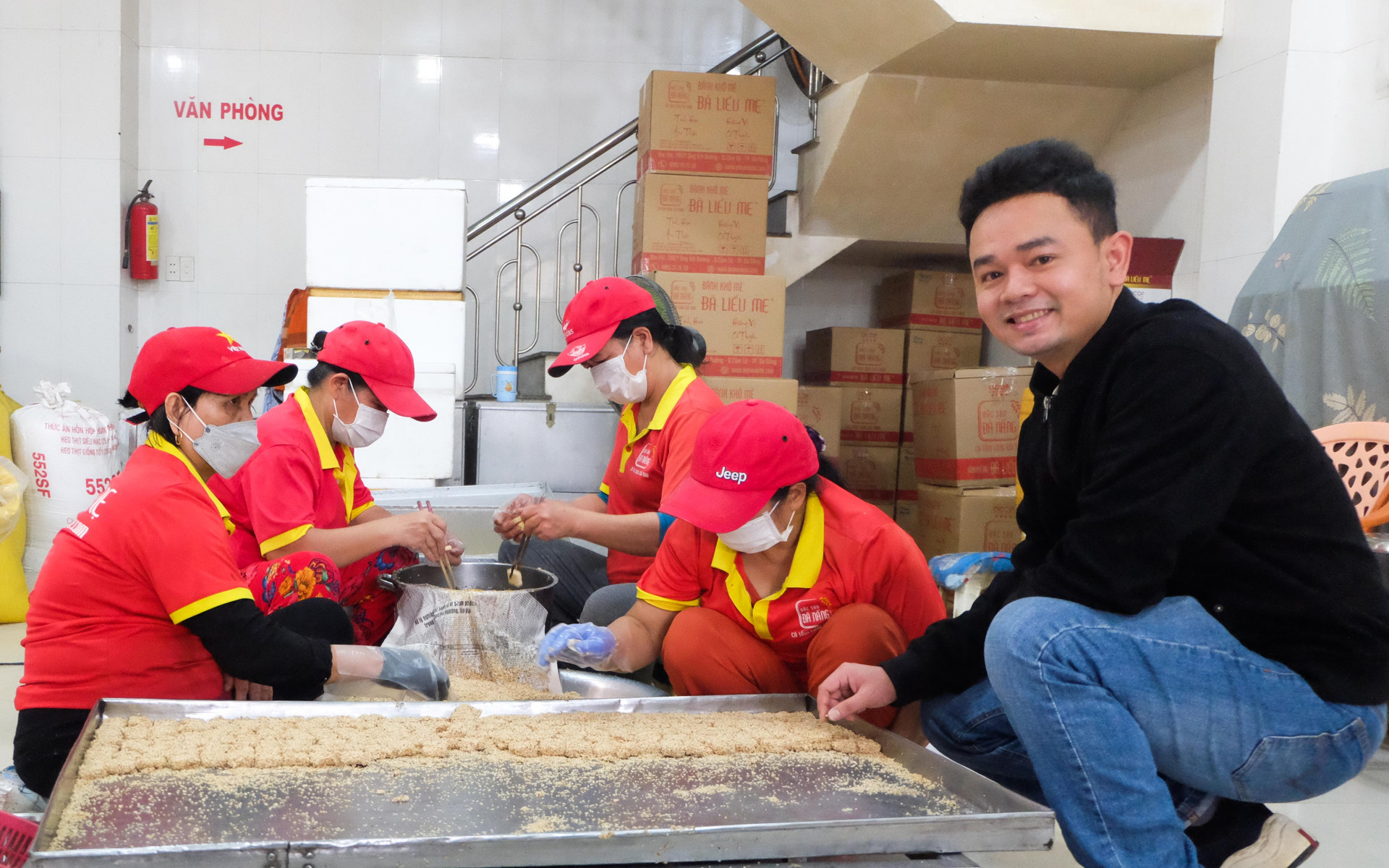
2. These days, the sesame brittle workshop of Mrs. Lieu Me (Cam Le ward) is almost constantly busy. The ovens burn brightly from early morning until late at night. The spring atmosphere here begins with familiar sounds: the rhythmic tapping of molds, the sizzling of the fire under the charcoal oven. The aroma of cooked malt mixed with the scent of roasted sesame seeds creates a fragrance that, even with just a fleeting whiff, evokes memories of Tet (Vietnamese New Year).
According to Mr. Huynh Duc Sol, the owner of the facility, the workshop started ramping up production from the beginning of December. When orders increased sharply, the facility mobilized more than 30 workers, maintaining continuous production to supply approximately 3,000-4,000 cakes per day, serving the market and meeting the Tet gift needs of locals and tourists.
Currently, Ba Lieu Me sesame brittle has 6 product lines, achieving OCOP 4-star certification and ranking among the top 10 famous Vietnamese specialty gift cakes. Although many new flavors have been developed, the main ingredients remain the same, such as sesame seeds and rice. The production process is primarily based on traditional methods and does not use preservatives. "We always prioritize the quality and traditional value of our products," Sol shared.
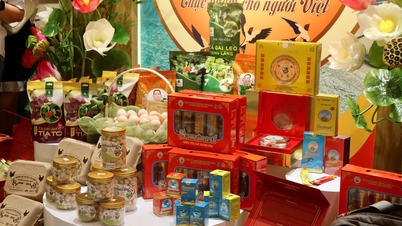
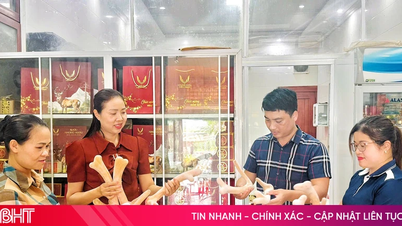
3. For generations, Quang Nam province has always made these traditional Tet cakes: banh to, banh in, banh no, banh dau xanh, banh kho me… They are not elaborate, but the absence of any of them makes Tet feel incomplete. During family gatherings over a warm cup of tea, these are simple, rustic treats that anyone who has tasted them will find hard to forget.
From ancestral altars and gift baskets on every trip back home, to the belongings of those living far from home, Tet cakes accompany the people of Quang Nam through countless springs. Behind the perfectly balanced sweetness of these cakes made from simple ingredients like rice, glutinous rice, and sesame seeds lies the frugal and persistent way of life of the people of Central Vietnam, a characteristic of Quang Nam's culture, quiet yet profound, just like the land itself.
Amidst a market overflowing with mass-produced confectionery, traditional confectionery villages continue to thrive through quiet perseverance. Therefore, Tet cakes are more than just food. They are the flavor of memories, a culinary heritage preserved through each passing season. Every spring, from the glowing red ovens, batches of cakes travel far and wide, carrying the flavors of Da Nang and the stories of the people who quietly keep the flame of this ancient craft alive.
Source: https://baodanang.vn/ngot-thom-banh-tet-3323494.html






























































Comment (0)