

Buyo Plastic's next-generation bioplastics are biodegradable in the natural environment. Instead of using starch, they utilize organic waste to create materials with properties similar to plastic but safer for health.
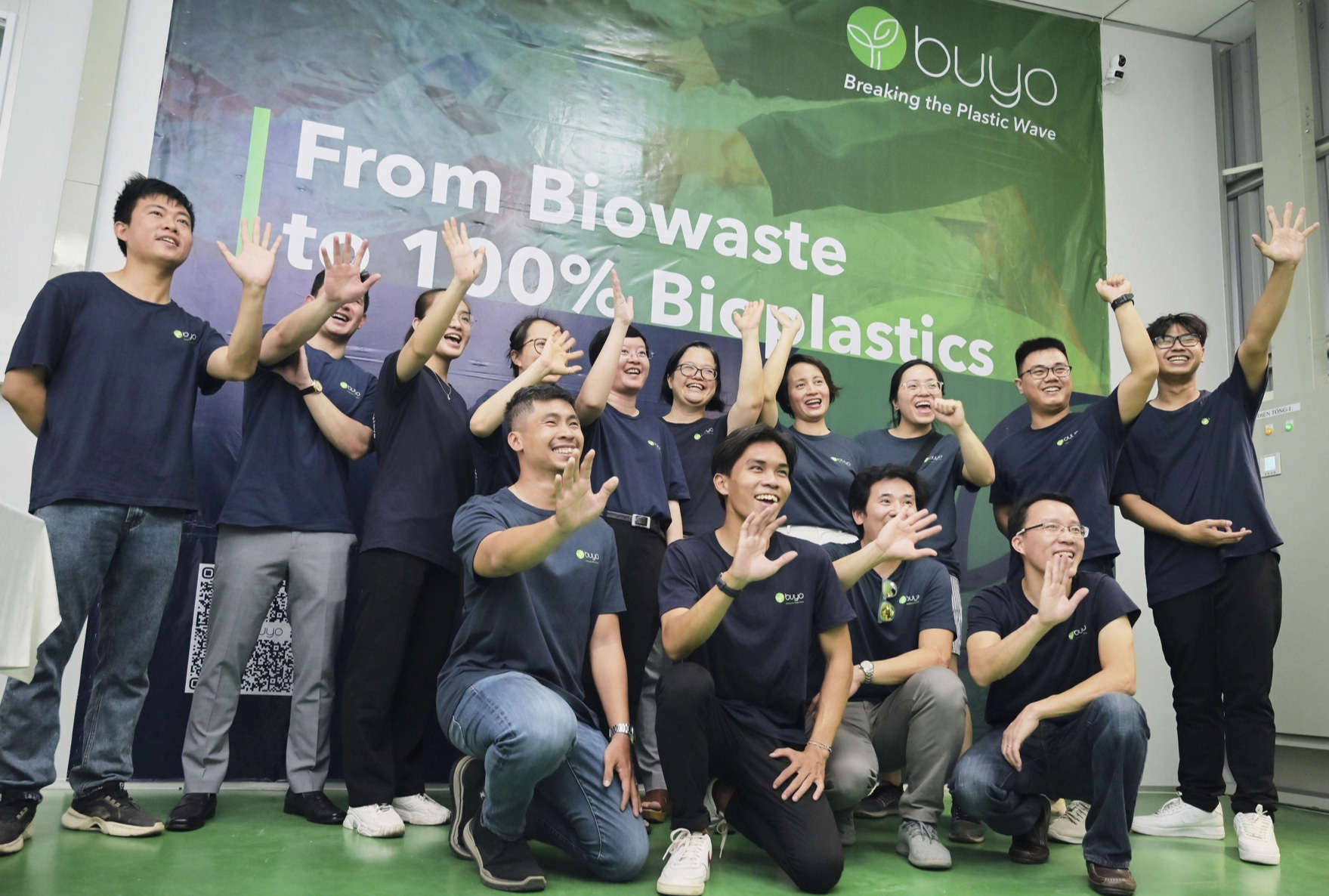
Founded in 2022, Buyo Plastic's team consists of many young employees - Photo: HC
Plastic waste pollution is the biggest reason that prompted CEO Do Hong Hanh of Buyo Plastic and her team to decide to start a business researching and producing new generation biodegradable plastics.
Bioplastics do not use starch.
Plastic waste has become a pressing issue not only in Vietnam but globally. Ms. Hanh said that many recycling solutions have been proposed, but none have been completely effective.
It is estimated that only about 10% of the world's plastic waste is recycled because it requires significant effort and cost for collection, sorting, and processing. This means that 90% of plastic waste is dumped into the environment and persists for a very long time.
"I wanted to find new materials to replace plastic, especially plastic bags," Ms. Hanh explained the reason Buyo Plastic was founded in 2022, focusing on developing technology to produce biodegradable plastics of organic origin that can decompose in the natural environment.
Instead of using starch, they utilize organic waste to produce materials with properties similar to conventional plastics but that are environmentally friendly. This is a new generation of bioplastics that not many companies in the world have been able to produce.
Ms. Ngoc said that starch-based bioplastics are capable of biodegrading in normal environments in a relatively short time, making them environmentally friendly and safe for human health.
However, it consumes a lot of resources and manpower to produce, which can affect food security. Meanwhile, bioplastics of organic origin have limited durability and strength, and relatively poor water and heat resistance.
"Therefore, bioplastics are not yet truly widespread in the market," Ms. Hanh analyzed.
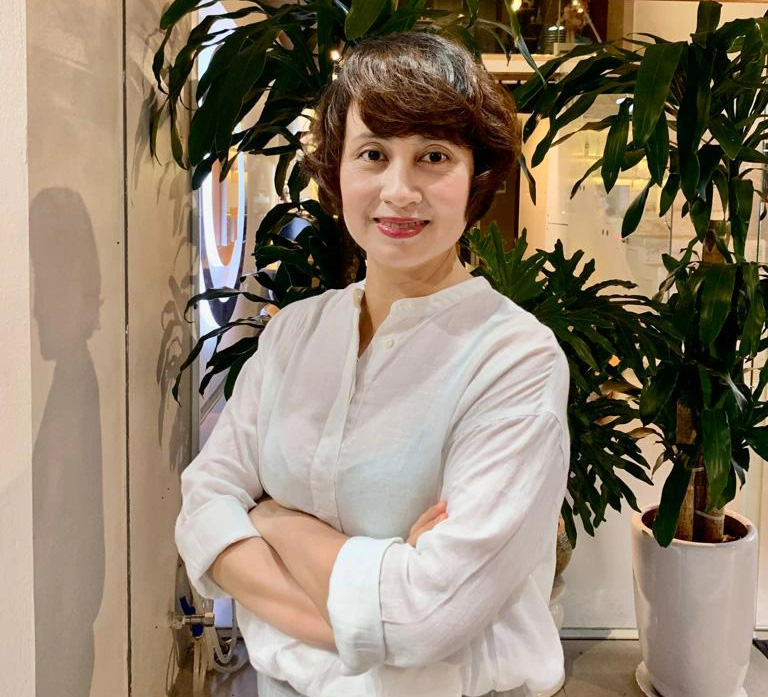
Before embarking on her startup venture, Ms. Do Hong Hanh - CEO of Buyo Plastic - held management positions at various companies and corporations both domestically and internationally. - Photo: HC
A policy boost for newly developed materials.
Buyo Plastic offers two technological solutions. One involves processing food waste from food and beverage factories, mixing it with other biopolymers to create composite materials, and then manufacturing various types of packaging, bags, wrapping films, spoons, forks, pallets, bottle caps, etc.
Secondly, there is microbial fermentation, which involves cultivating bacteria by utilizing the remaining nutrients in food waste. This process creates a new material that doesn't require mixing and can be applied in high-tech industries such as healthcare .
Ms. Do Hong Hanh (CEO of Buyo Plastic)
Policy leverage is crucial for businesses to compete with conventional plastics. Self-competition will be very difficult because the scale of bioplastic businesses is still small.
However, CEO Do Hong Hanh stated that the biggest drawback is the higher price of bioplastics compared to petroleum-based plastics, and this applies to Buyo Plastic's products as well.
"Conventional plastics, petroleum-based plastics, have been commercialized for hundreds of years, with global production. Meanwhile, global bioplastic production accounts for only about 1-2% of the plastics market, making it difficult to compete on cost with conventional plastics," Ms. Hanh said.
But bioplastics offer environmental benefits. Consumers, especially the younger generation, are willing to pay a higher price for these materials.
However, for bioplastics to compete with conventional plastics, a significant role from the government and the state is needed. Some countries have implemented policies to encourage the use of new types of plastics, built technical barriers, and banned plastics.
The problem also lies in the fact that policies need to keep pace with the rapid development of new materials. Ms. Hanh explained that the recent attention focused on completely eliminating plastic bags in supermarkets, and most people immediately thought of replacing them with paper bags.
Although paper is an environmentally friendly material, if used for packaging hot or wet food, it still needs to be coated with a layer of plastic on the inside. So how is it different from plastic packaging, except the outside is made of paper?
"The policy-making process should involve exchange and consultation between policy-making agencies and researchers to continuously update information, technological advancements, and broaden the definition of plastic alternatives. Otherwise, even if plastic bags are banned, new materials will have little chance of participating," Ms. Hanh said.
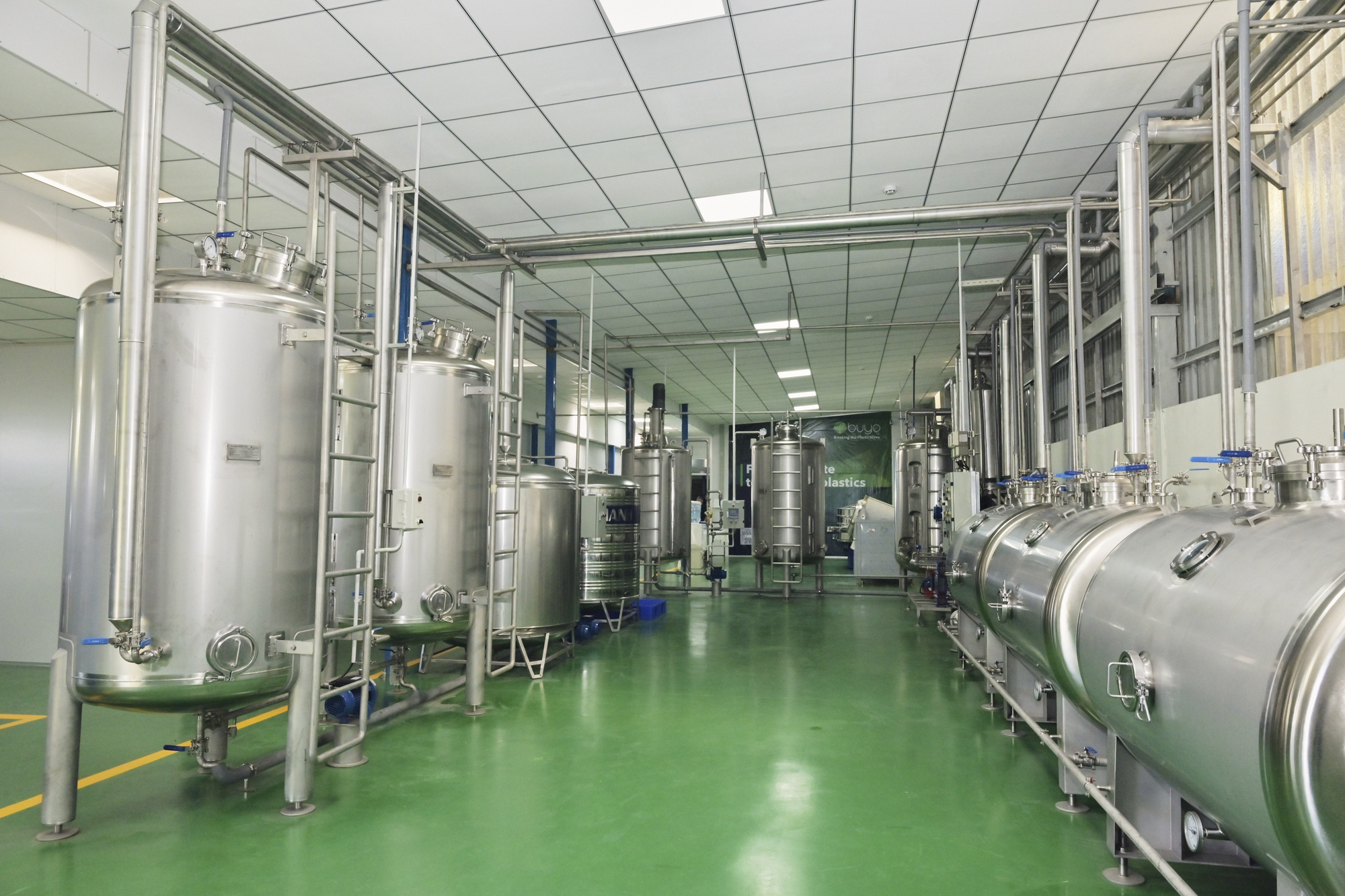
Buyo Plastic's bioplastic manufacturing plant in Cu Chi District (Ho Chi Minh City) - Photo: HC
We need more companies like Buyo Plastic to meet market demands.
According to the CEO of Buyo Plastic, there is currently a significant demand for next-generation bioplastics like Buyo Plastic's products. Buyo Plastic is prioritizing solutions to increase scale and improve production capacity to meet market demand. Simultaneously, they are improving technology and reducing costs to remain competitive in pricing.
The company, which develops a B2B business model, is working with many large companies and corporations, including food and beverage manufacturers, to develop next-generation biodegradable plastic products.
"To meet market demand, we need many companies like Buyo. But I see this demand coming more from overseas markets. Vietnam urgently needs a policy boost to create a strong transformation," Ms. Hanh stated.
20 outstanding startups selected for the finals of the Youth Start-up Award 2024.
The Tuoi Tre Start-up Award 2024 is organized by Tuoi Tre newspaper and the Ho Chi Minh City Youth Union, in collaboration with the Business Support Center for Young Entrepreneurs (BSSC) and the Packaging Recycling Alliance of Vietnam (PRO Vietnam).
The judging panel will interact and connect with startups through a special Coffee Talk judging format. Promising startups will be honored at a gala scheduled for November 2024.
The top 20 startups selected for the finals will receive funding support from the following organizations: VinaCapital, ACB Bank, Volvo, KN Group, Dai-ichi Life Vietnam, An Hoa, Faslink, Ecco Golf Vietnam, Tin Nghia...
The grand prize (100 million VND) was awarded by the program's advisory board, led by Mr. Pham Phu Ngoc Trai - Chairman of PRO Vietnam.
Source: https://tuoitre.vn/nhua-sinh-hoc-the-he-moi-cua-buyo-plastic-20241025001605037.htm

![[Image] Vietnam's colorful journey of innovation](/_next/image?url=https%3A%2F%2Fvphoto.vietnam.vn%2Fthumb%2F1200x675%2Fvietnam%2Fresource%2FIMAGE%2F2025%2F12%2F14%2F1765703036409_image-1.jpeg&w=3840&q=75)







































![[Image] Vietnam's colorful journey of innovation](https://vphoto.vietnam.vn/thumb/402x226/vietnam/resource/IMAGE/2025/12/14/1765703036409_image-1.jpeg)



















Comment (0)