

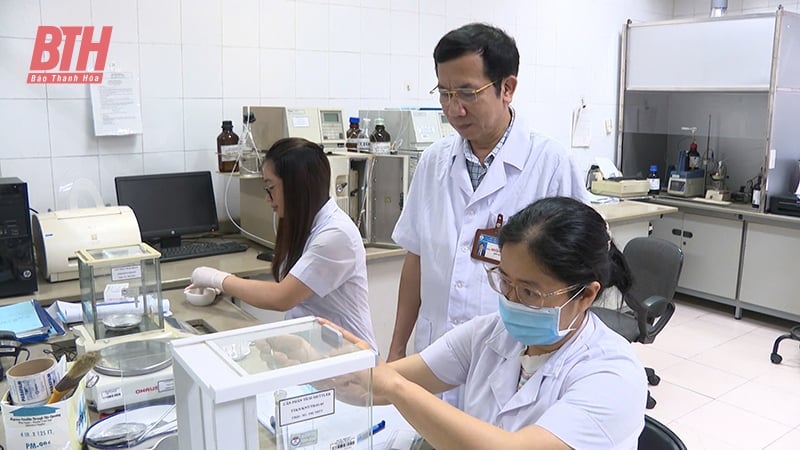
The Drug Testing Center of the Thanh Hoa Department of Health is testing the counterfeit pharmaceuticals transferred by the police.
Notably, the production and sale of these counterfeit goods have been ongoing for many years, particularly with dozens of counterfeit medicines and health supplements being produced and put into circulation.
To improve management efficiency, especially in ensuring quality and promptly detecting, preventing, and handling the production and sale of counterfeit goods, particularly counterfeit medicines and health supplements, on April 17, 2025, Deputy Prime Minister Le Thanh Long signed Official Dispatch No. 41 on handling cases of production and sale of counterfeit medicines and health supplements. The dispatch requested the Ministry of Health to closely coordinate with the Ministry of Public Security in investigating and handling the aforementioned counterfeit goods cases. It also directed localities to immediately review and recall all detected counterfeit medicines and health supplements, promptly preventing and minimizing the harm caused by the use of counterfeit medicines and health supplements.
Regarding this matter, on April 18, 2025, Mr. Do Thai Hoa, Deputy Director of the Thanh Hoa Department of Health, stated: Immediately after receiving information that the Thanh Hoa Provincial Police had dismantled a large-scale counterfeit pharmaceutical production and trading ring nationwide, the Department of Health leadership directed functional units to conduct inspections and reviews. To date, no counterfeit pharmaceutical products have been found circulating in medical facilities.
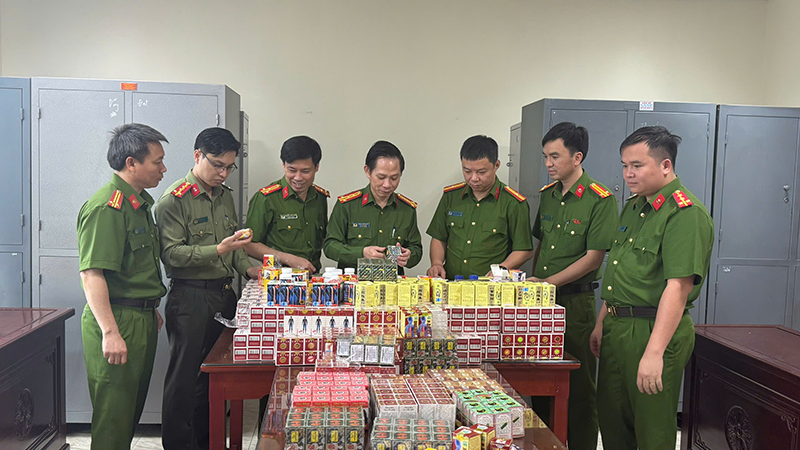
Among the 21 types of products seized by the police, 4 were counterfeit Western medicines: Tetracycline, Chlorocid, Pharcoter, and Neo-Codion; the remaining 39,323 boxes contained 17 types of counterfeit products suspected to be traditional medicines, with labels indicating their intended use as medicinal drugs. However, initial analysis and testing by the Drug Testing Center of the Thanh Hoa Department of Health revealed that the majority of the counterfeit traditional medicines contained painkillers. When patients bought and took these medicines (mainly for musculoskeletal diseases), they felt immediate pain relief. Therefore, patients would trust and continue to buy the counterfeit medicines without suspicion. Regarding the counterfeit Western medicines, no toxic properties have been detected so far, but they lack the antibiotic properties indicated on the packaging. To produce these counterfeit medicines, the perpetrators purchased raw materials such as starches, binders, pharmaceutical additives, bamboo charcoal, coloring agents, etc., and then mixed and packaged them themselves to resemble medicine.
According to Mr. Hoa, medicines are a special type of commodity that directly affects the health and lives of patients, therefore requiring strict management. Counterfeit products cannot penetrate the public hospital system because they lack the necessary documents and certificates to participate in bidding. These counterfeit products are mainly sold online and through retail channels.
Following this incident, the Thanh Hoa health sector advises the public to be vigilant when buying medicine, only purchasing from reputable, licensed establishments, and avoiding buying unregulated drugs on social media. In particular, people should proactively check the origin of medicine before purchasing. If any suspicious signs of counterfeit drug production or sale are detected, report them immediately to the health authorities and relevant agencies for handling.
Thai Thanh (Contributor)
Source: https://baothanhhoa.vn/noi-lo-thuoc-gia-246071.htm


![[Photo] Commemorating the unwavering friendship between Vietnam and Laos](/_next/image?url=https%3A%2F%2Fvphoto.vietnam.vn%2Fthumb%2F1200x675%2Fvietnam%2Fresource%2FIMAGE%2F2026%2F01%2F27%2F1769518372051_ndo_br_1-jpg.webp&w=3840&q=75)
![[Photo] Announcement Ceremony of the Art Program “Light Concert – Welcoming the New Year 2026”](/_next/image?url=https%3A%2F%2Fvphoto.vietnam.vn%2Fthumb%2F1200x675%2Fvietnam%2Fresource%2FIMAGE%2F2026%2F01%2F27%2F1769514762857_le-cong-bo-ct-hoa-nhac-anh-sang-1772-9042-jpg.webp&w=3840&q=75)


![OCOP during Tet season: [Part 3] Ultra-thin rice paper takes off.](/_next/image?url=https%3A%2F%2Fvphoto.vietnam.vn%2Fthumb%2F402x226%2Fvietnam%2Fresource%2FIMAGE%2F2026%2F01%2F28%2F1769562783429_004-194121_651-081010.jpeg&w=3840&q=75)


![OCOP during Tet season: [Part 2] Hoa Thanh incense village glows red.](/_next/image?url=https%3A%2F%2Fvphoto.vietnam.vn%2Fthumb%2F402x226%2Fvietnam%2Fresource%2FIMAGE%2F2026%2F01%2F27%2F1769480573807_505139049_683408031333867_2820052735775418136_n-180643_808-092229.jpeg&w=3840&q=75)
![OCOP during Tet season: [Part 1] Ba Den custard apples in their 'golden season'](/_next/image?url=https%3A%2F%2Fvphoto.vietnam.vn%2Fthumb%2F402x226%2Fvietnam%2Fresource%2FIMAGE%2F2026%2F01%2F26%2F1769417540049_03-174213_554-154843.jpeg&w=3840&q=75)




Comment (0)