

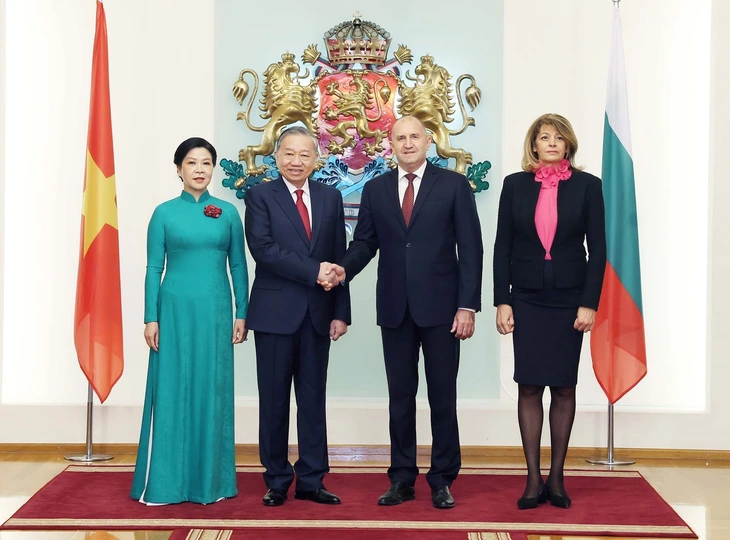
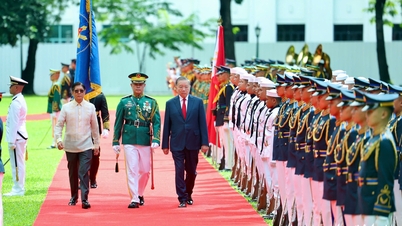
General Secretary To Lam and his wife with President of the Republic of Bulgaria Rumen Radev and his wife at the Presidential Palace - Photo: VNA
The upgrading of relations between Vietnam and Bulgaria to a Strategic Partnership took place on October 23rd, within the framework of General Secretary To Lam's first official visit to the land of roses.
Science and technology are important pillars.
"After 75 years of establishing diplomatic relations, with firm confidence in the bright future of bilateral relations, we have adopted a Joint Declaration on establishing a Vietnam-Bulgaria Strategic Partnership," General Secretary To Lam announced at a press conference following talks with Bulgarian President Rumen Radev on October 23.
The Vietnamese leader then emphasized that, building on 75 years of traditional friendship and the strong determination of the leaders and people of both countries, the establishment of a Vietnam-Bulgaria Strategic Partnership will open a new era of cooperation for the two nations.
For his part, Bulgarian President Rumen Radev affirmed that with its economic development achievements and increasingly high political standing, Vietnam is an important factor in Southeast Asia. He assessed that General Secretary To Lam's visit has opened up new opportunities and visions, further deepening bilateral cooperation.
During the earlier talks, the two leaders exchanged views and reached a high level of agreement on six groups of solutions to guide bilateral relations in the new context and with a new stature. In particular, politically, they will continue to promote exchanges of delegations and high-level contacts through all channels. Regarding defense and security cooperation, both sides agreed to strengthen cooperation in training and cooperation in areas such as UN peacekeeping, cybersecurity, and military medicine.
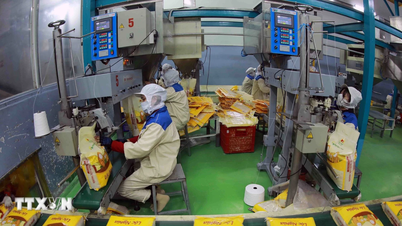
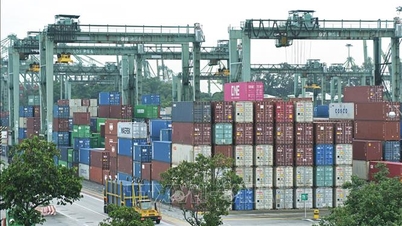
Notably, in the context of the global economy facing numerous significant challenges, the two countries agreed to coordinate closely, making economic, trade, and investment cooperation a central pillar in their strategic partnership.
Vietnam and Bulgaria are committed to closely coordinating efforts to maintain and strengthen free trade, as well as strongly promote trade and investment through opening their markets to each other; ready to be a "gateway" for Vietnamese and Bulgarian goods to enter the ASEAN and EU markets.
Both sides agreed to make scientific and technological cooperation a key pillar in the Vietnam-Bulgaria Strategic Partnership. Accordingly, the two countries will expand cooperation in areas such as training human resources in information technology in the fields of digital transformation, digital economy, digital infrastructure and e-government, pharmaceuticals and biomedical science, artificial intelligence (AI) and modern computer science, green energy, etc.
Vietnam "maintains constancy while adapting to change."
Vietnam's upgrading of relations with Bulgaria, and previously with other traditional friends and partners, is a testament to the spirit of "adapting to changing circumstances while maintaining core principles" in a complex and volatile world. Vietnam's core principles are its independent and self-reliant foreign policy, its multilateralism and diversification, and its unwavering commitment to international relations.
Dr. Nicholas Chapman (Tohoku University, Japan) noted that although many things have changed in the nearly 40 years since Vietnam implemented its Doi Moi (Renovation) policy, Vietnam's core strategic interests remain unchanged. These are maintaining a peaceful and stable environment, protecting national independence and sovereignty, and enhancing Vietnam's standing in the international arena.
In an increasingly multipolar world, with new problems and threats emerging, Chapman argues that Vietnam's foreign policy aims to reduce uncertainty while benefiting from globalization.
The scholar specializing in Vietnamese studies noted that Hanoi implements its multilateral foreign policy through three key mechanisms: a network of relationships from Strategic/Comprehensive Partnerships upwards, trade agreements, and commitments to multilateralism.
In particular, the Strategic/Comprehensive Partnership currently encompasses Vietnam's bilateral cooperation with key partners across various fields, thereby bringing economic, political, and security benefits to the country.
In the context of global uncertainty, according to Chapman, by cooperating with countries that share interests in mitigating the risks of conflict and trade wars, Vietnam can limit the impact and stabilize the future of its economy.
Source: https://tuoitre.vn/quan-he-viet-nam-bulgaria-buoc-sang-trang-moi-20251024073722349.htm

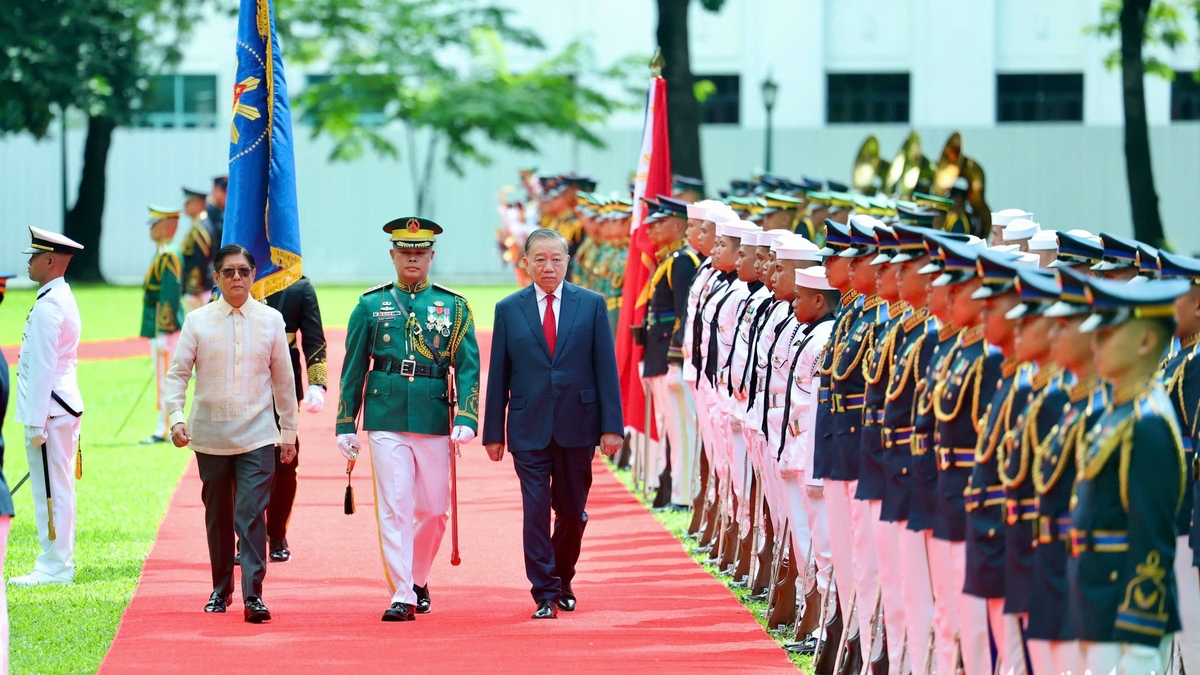
![[Photo] General Secretary and President To Lam and the President of the Philippines hold talks.](https://vphoto.vietnam.vn/thumb/1200x675/vietnam/resource/IMAGE/2026/06/01/1780286997787_anh-man-hinh-2026-06-01-luc-11-09-43.png)




























































Comment (0)