The next US president will significantly impact Washington's policy toward North Korea, while the US-Japan-South Korea alliance will continue to grow.
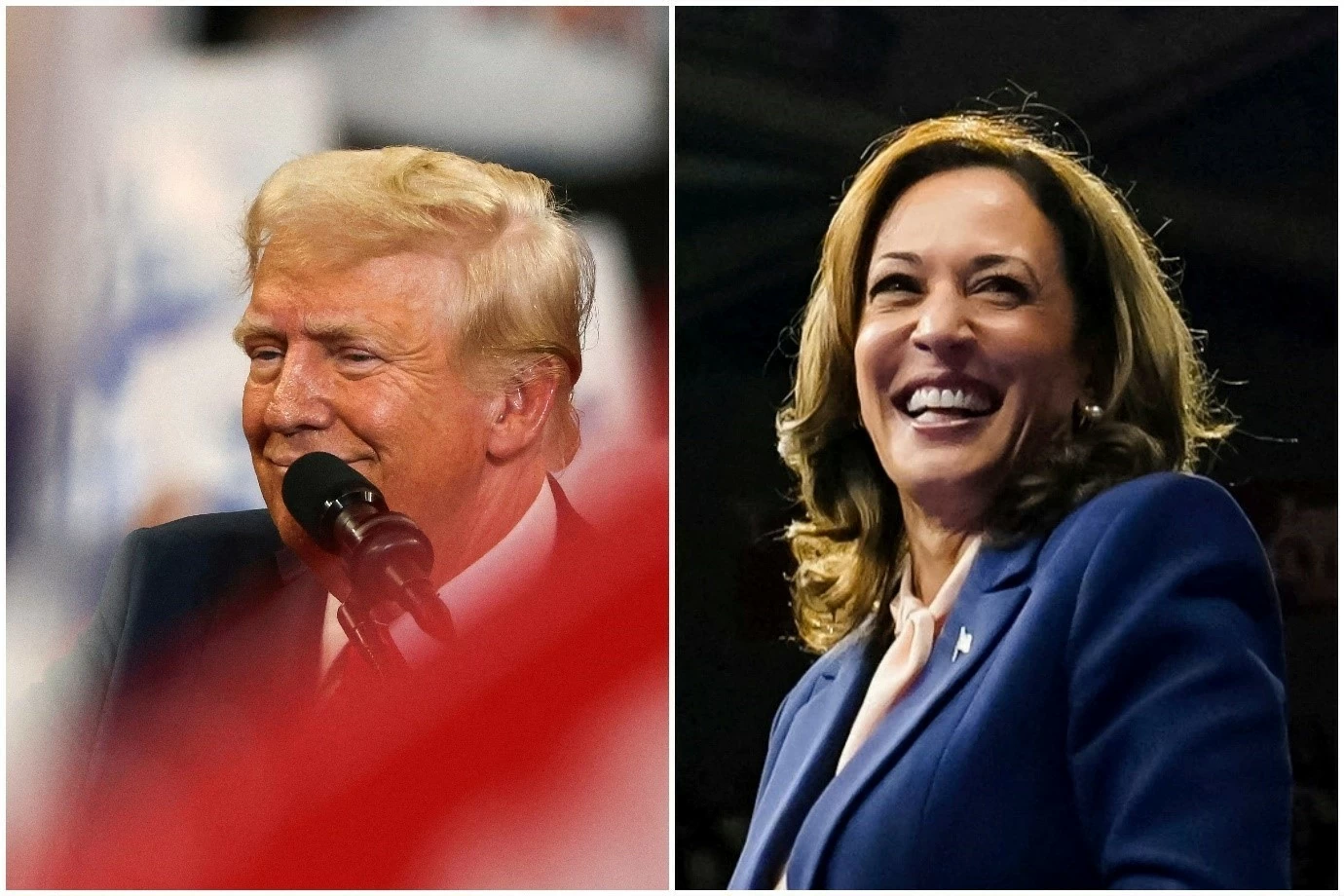 |
| Whoever becomes the next president of the United States will have a certain impact on Washington's policy toward Northeast Asia. (Source: Reuters) |
In just over two months, the United States will find its new leader – either incumbent Vice President Kamala Harris or former President Donald Trump. Analysts from Tokyo and Seoul to Pyongyang are closely watching this unpredictable race to predict its impact on the region.
Distinctive personality
A key question being debated is who will be chosen for the cabinet positions of both Trump and Harris once they become president. For Trump, the individuals appointed will significantly influence Washington's foreign policy, particularly positions such as National Security Advisor, Secretary of State, or U.S. Trade Representative.
Several leading candidates exhibiting a clear conservative "America First" leaning could catch Trump's eye. For example, former Trade Representative Robert Lighthizer (a nominee for Treasury Secretary) advocates for a balanced trade policy with trading partners (renegotiating NAFTA, imposing tariffs on China, and freezing the WTO Appellate Body by preventing the appointment of new judges). Another candidate who prioritizes competition with China could also be chosen for the National Security Advisor position, such as Elbridge Colby, who served as Deputy Assistant Secretary of Defense under Trump.
If elected, Trump's unconventional and unpredictable leadership style could influence America's approach to allies and the North Korea issue. Furthermore, the former president's desire to leave a diplomatic "legacy" or imprint in his final presidential term could provide greater impetus for significant peace programs or bilateral agreements.
Conversely, if Harris becomes the new occupant of the White House, her cautious "collective leadership" style would tend to adhere closely to the Democratic Party's foreign policy, including maintaining international alliances, upholding global norms and rules, and prioritizing multilateral cooperation.
With much of her career tied to the legal field, Harris may have certain limitations in terms of foreign policy experience. As Vice President under Joe Biden, her impact on shaping foreign policy is negligible. This fact could leave Kamala reliant on advisors, many of whom hold a more traditional approach.
Harris is expected to retain most of the officials from the Biden administration and appoint her current personal advisors. Her current national security advisors, Philip Gordon and Rebecca Lissner, are considered traditionalists and internationalists, so their approach to foreign policy is likely to follow that of previous Democratic presidents.



From the outside, China's role will undoubtedly continue to influence the White House's calculations. As the U.S. and its allies seek to counter China's growing influence, this will be a key factor in strengthening the U.S.-Japan-South Korea alliance. Furthermore, North Korea's nuclear program and military activities are also indispensable factors in any U.S. president's policy planning toward Northeast Asia. Especially given the improved Japan-South Korea relations under Prime Minister Kishida Fumio and President Yoon Suk Yeol, particularly with the goal of addressing the shared security concern of North Korea, this could further solidify the U.S.-Japan-South Korea trilateral alliance.
The North Korea issue
If elected, Trump would likely pursue a personal relationship with North Korean leader Kim Jong Un, hoping to become the first US president to definitively resolve the issue of denuclearization of the Korean Peninsula. However, this ambition is unlikely to materialize. While Trump might achieve some symbolic agreements, such as declarations toward denuclearization and a temporary halt to nuclear warhead testing and missile launches, he is unlikely to force North Korea to abandon its nuclear weapons.
Meanwhile, Harris is expected to maintain the tough stance from the Biden administration regarding North Korea's nuclear ambitions and will prioritize cooperation with allies South Korea and Japan, as well as regional and international forums, to address the issue. Harris may also resume US-North Korea talks, but not a direct summit with leader Kim Jong Un unless Pyongyang makes concrete commitments.
To overcome the limitations of experience in the Korean Peninsula issue, Ms. Harris may authorize U.S. diplomats to work with North Korea to achieve concrete results on denuclearization. In addition, she may consider easing economic sanctions against Pyongyang to support improvements in the lives of North Koreans, in exchange for verifiable actions by North Korea in the denuclearization process. This is plausible given Ms. Harris's previous statements, including interviews with the Council on Foreign Relations. back in 2019.
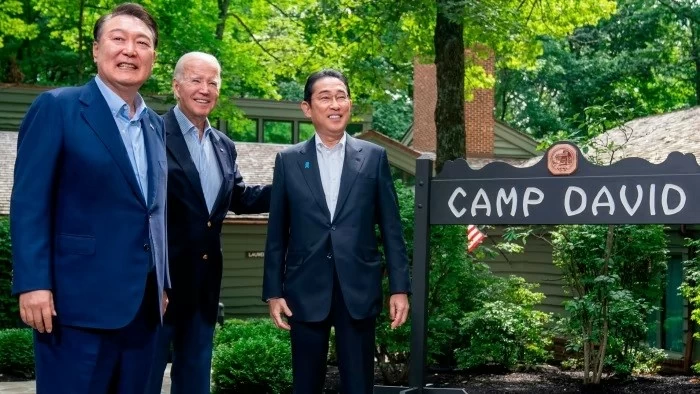 |
| South Korean President Yoon Suk Yeol, U.S. President Joe Biden, and Japanese Prime Minister Kishida Fumio at Camp David, Washington, August 18, 2023. (Source: Reuters) |
US-Japan-South Korea relations
With his "America First" policy, Trump could pressure South Korea and Japan to increase burden-sharing in security and enhance their defense capabilities, playing a more proactive role in the regional security structure. This would indirectly give Japan and South Korea more impetus to promote bilateral cooperation, helping to further warm relations between the two countries.
Furthermore, since both Japan and South Korea have some of the highest trade surpluses with the US, these two countries could be targets for Trump. Trump might seek to renegotiate the FTA with South Korea to shift the trade balance in a way that benefits the US.
During her term as Vice President, according to ABC News statistics, four of Harris's 17 foreign trips were to East Asia. She visited seven countries in the region, including Japan, South Korea, and the Korean Demilitarized Zone. On these trips, Washington reaffirmed its commitment to allies to ensure regional security and stability, while also mending relations between Seoul and Tokyo.



If Harris is elected, the tripartite relationship between the US, Japan, and South Korea could continue to strengthen bilateral alliances with Japan and South Korea, and promote trilateral cooperation to address concerns in Northeast Asia. Unlike Trump, Harris may avoid a transactional approach in bilateral relations with Tokyo and Seoul, instead focusing on enhancing military cooperation to address regional security issues and maintain a "free and open" Indo-Pacific region.
To date, Washington has shown no intention of joining the Comprehensive and Progressive Trans-Pacific Partnership (CPTPP), but if elected, Harris could still strengthen trade ties with Japan and South Korea to enhance U.S. economic influence in the region.
Regardless of whether Trump or Harris wins, the United States will continue to maintain and promote the multilateral cooperation mechanisms established during President Biden's administration. According to Reuters, even during the campaign, Trump's advisors conveyed to Seoul and Tokyo the message that the former president would support efforts to strengthen US-Japan-South Korea relations. Meanwhile, Harris's campaign team also signaled its intention to leverage cooperation with allies to contain China's influence in the region.
Another common point between the Trump administration and the future Harris administration is the prospect of strict export controls on China in the technology sector, along with calls for allies to implement similar restrictive policies. This could revitalize the Chip 4 "alliance" in both scenarios. However, the possibility remains that Trump's protectionist policies will be a negative factor in this cooperation mechanism.
In summary, this year's US presidential election will not only affect the United States but also have a strong impact on the security structure and international relations in Northeast Asia. Regardless of which candidate becomes the occupant of the White House, it will create new challenges and opportunities for the region amidst an increasingly complex and volatile geopolitical situation.


![[Photo] Strengthening character and expertise: Intense training for artillery soldiers.](https://vphoto.vietnam.vn/thumb/1200x675/vietnam/resource/IMAGE/2026/06/30/1782815602541_lu-368-1875-4571-jpg.webp)