

Correct policy
The Ministry of Education and Training has recently issued a document guiding the implementation of secondary education tasks for the 2024-2025 school year. This document specifically addresses several issues related to the testing and evaluation of the Literature subject.
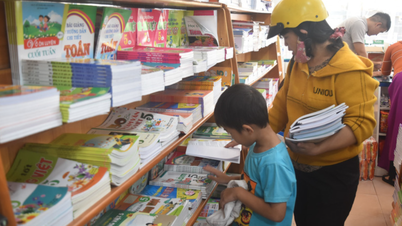
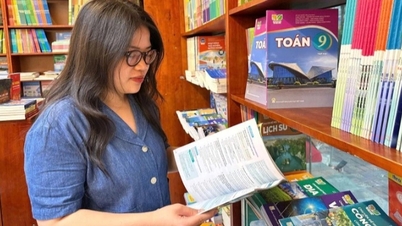
According to the official document, junior and senior high schools should avoid using texts and excerpts already studied in textbooks as materials for testing and evaluating reading comprehension and writing skills in periodic tests.
Furthermore, assessments must be conducted in accordance with regulations, not exceeding the program's learning objectives, and regular testing and evaluation should be strengthened through practical exercises, learning projects, etc.
In addition, schools also need to strengthen the development of question banks and test matrices according to the learning objectives of the subject curriculum; prepare 9th-grade students to familiarize themselves with the orientation of the entrance exam for 10th grade, and 12th-grade students to familiarize themselves with the orientation of the high school graduation exam.
The use of source material in tests and exams for Literature has always received public attention. Recently, some schools have caused a public uproar by using inappropriate or sensitive source material outside of the textbook.
According to Mr. Nguyen Phuoc Bao Khoi, a lecturer in Literature at Ho Chi Minh City University of Education, the requirement that educational institutions not use texts or excerpts already studied in textbooks as materials for periodic Literature tests is actually a detailed elaboration of points 2a and 2b in Circular 3175 of the Ministry of Education and Training dated July 21, 2022, regarding the legalization of requirements for source materials used in testing and evaluation.
Specifically, it is necessary to identify students who need to apply their learned knowledge and reading, writing, speaking, and listening skills to new contexts and materials. Furthermore, assessments should avoid reusing texts already studied in textbooks as materials for reading comprehension and writing tests to accurately assess students' abilities and overcome the problem of students merely memorizing or copying content from pre-existing materials.
According to Mr. Khoi, the requirement not to use texts or excerpts already studied in textbooks as assessment materials is consistent with the implementation of the 2018 Literature curriculum, which focuses on developing qualities and competencies.
This is a correct policy that has been reiterated many times, further affirming the Ministry of Education and Training's determination to reform testing and evaluation, especially for Literature, a subject that receives close public attention.
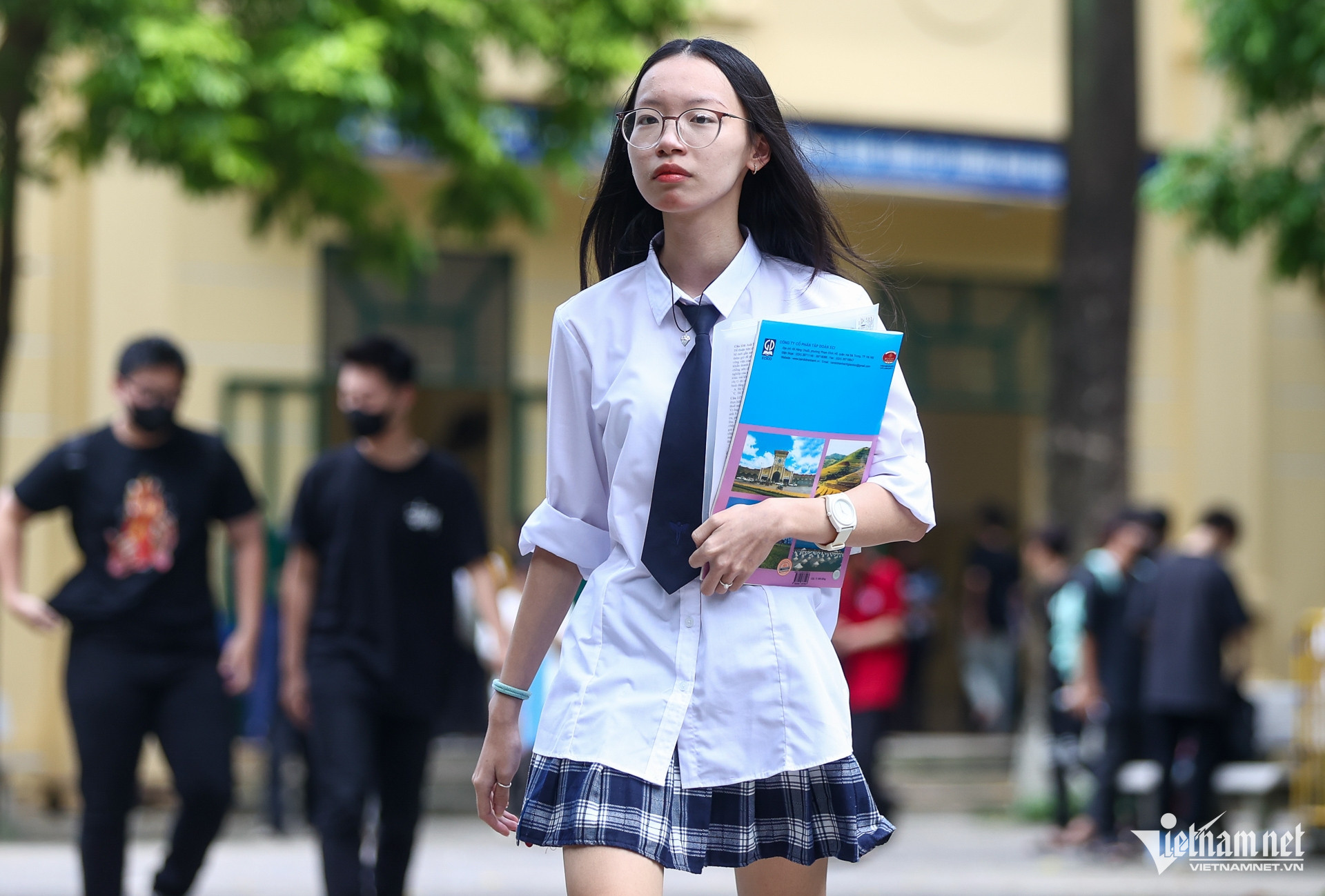
However, Mr. Khoi noted that in the assessment of Literature, it is necessary to develop a set of criteria for selecting literary materials. Although the 2018 Literature curriculum outlines some criteria, these criteria still need to be specified and detailed to form checklists for evaluating literary materials, thereby providing a basis for standardizing this issue.
'Avoid excessive and reckless freedom'
Mr. Ho Tan Nguyen Minh, a Literature teacher at Luong Van Chanh Specialized High School in Phu Yen , believes that not using textbook materials for periodic exams is an inevitable trend of the new curriculum, which is oriented towards developing students' competencies.
This offers several benefits, such as: Meeting the requirement of "one curriculum, multiple textbooks." Using materials outside of textbooks ensures that the abilities of all students are assessed, guaranteeing fairness for all students regardless of which textbook they use at their school.
Using materials outside of textbooks will reduce the problem of "teachers guessing the questions, students focusing on specific topics," and rote learning. This will force teachers to shift their teaching methods from simply transmitting information to developing skills and competencies in students. Students will also have to actively practice their abilities in order to be able to answer the questions.
Furthermore, using materials outside of textbooks will encourage both teachers and students to broaden their understanding of linguistics. Previously, when textbook materials were used, teachers and students would repeatedly revisit a few texts, leading to boredom. Now, to create exam questions, teachers must read many more materials, and students must practice using a variety of different materials to succeed.
However, according to Mr. Minh, for the use of teaching materials outside of textbooks to be highly effective, several factors need careful consideration. Specifically, not using textbook materials gives teachers more freedom in choosing materials. However, this can easily lead to excessive freedom, resulting in inappropriate, overly sophisticated, or overly simplistic and superficial approaches.
"I believe that when selecting teaching materials, it's crucial not to choose based on the teacher's preferences, but rather to select materials that are appropriate for the students. Therefore, the chosen materials must be coherent, clear, manageable, age-appropriate, and uphold traditional customs and values," warned Mr. Minh.
Furthermore, Mr. Minh believes that the answers should be open-ended, and the grading method should also be open-ended, not imposing students into a rigid system of ideas provided by the teacher. Students must accept different reading comprehension abilities, going beyond the boundaries of the answer key, especially in literary texts.
Avoid including too many different types of texts in the same exam, as this can lead to students being unable to solve them or not having enough time to think things through thoroughly.
“Integration is necessary; we need to select a really good text that meets multiple requirements. Both the reading comprehension and essay writing sections (social commentary and literary analysis) will be based on that text. On the other hand, since it's a text outside of the textbook, students have to process it themselves to complete the assignment, so when grading, we shouldn't be too strict. We need to accept writing styles and expressions that may be a little naive or clumsy, but that's their own writing, not something copied from somewhere else,” said Mr. Minh.
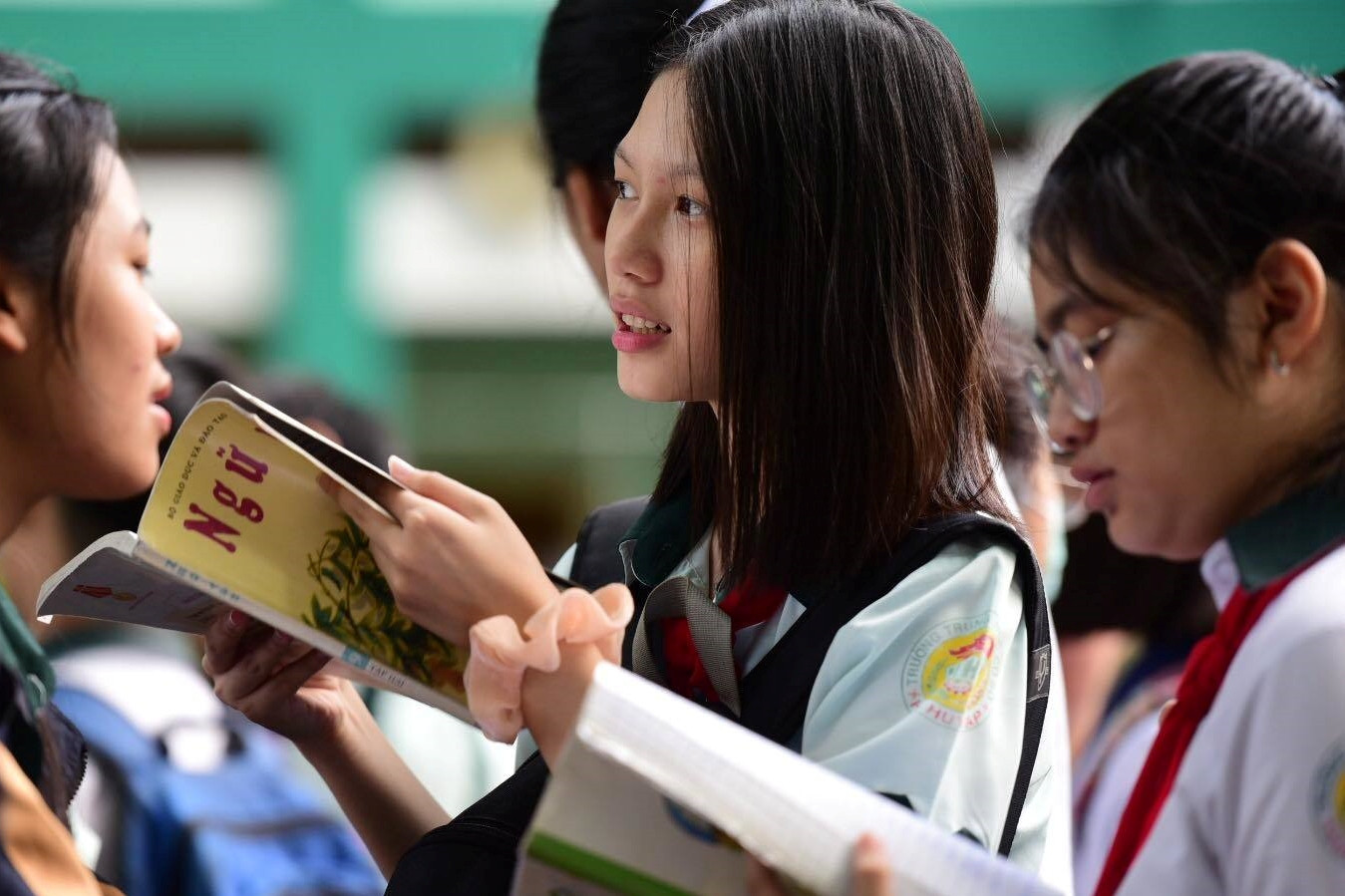
Starting this year, textbook materials will not be used for Literature exams.
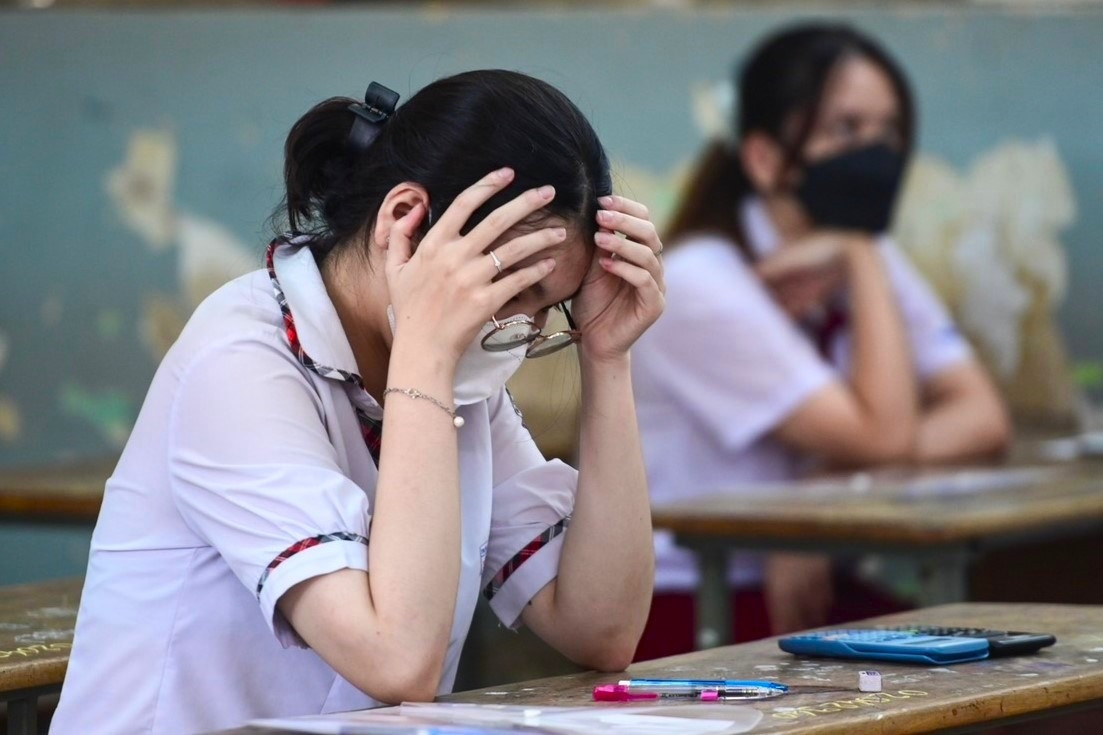
Why were the Literature scores in the 2024 high school graduation exam so unusually high?
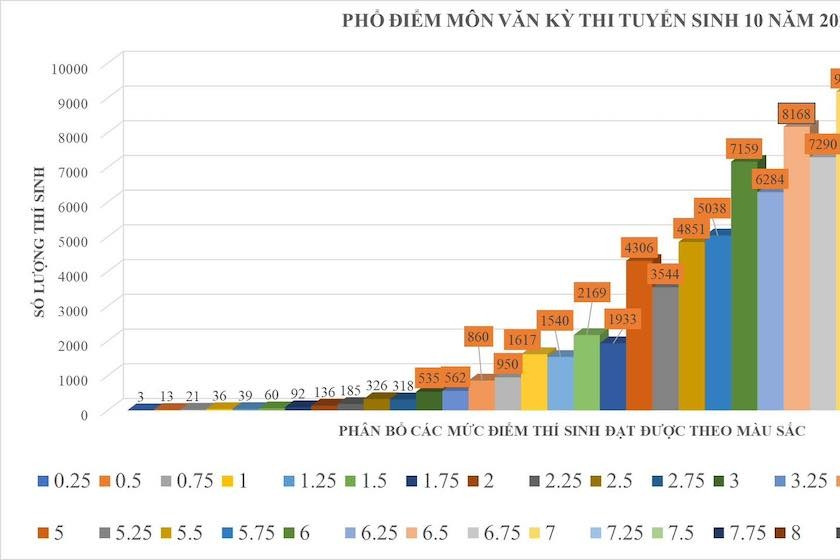
Only one student achieved a score of 9.5 in the Literature subject in the 10th grade entrance exam in Ho Chi Minh City.
Source: https://vietnamnet.vn/su-dung-van-ban-ngoai-sach-giao-khoa-kiem-tra-ngu-van-tranh-de-dai-phan-cam-2308921.html

![[Image] Leaked images ahead of the 2025 Community Action Awards gala.](/_next/image?url=https%3A%2F%2Fvphoto.vietnam.vn%2Fthumb%2F1200x675%2Fvietnam%2Fresource%2FIMAGE%2F2025%2F12%2F16%2F1765882828720_ndo_br_thiet-ke-chua-co-ten-45-png.webp&w=3840&q=75)

![[Photo] Prime Minister Pham Minh Chinh receives Lao Minister of Education and Sports Thongsalith Mangnormek](/_next/image?url=https%3A%2F%2Fvphoto.vietnam.vn%2Fthumb%2F1200x675%2Fvietnam%2Fresource%2FIMAGE%2F2025%2F12%2F16%2F1765876834721_dsc-7519-jpg.webp&w=3840&q=75)
![[Live] 2025 Community Action Awards Gala](/_next/image?url=https%3A%2F%2Fvphoto.vietnam.vn%2Fthumb%2F1200x675%2Fvietnam%2Fresource%2FIMAGE%2F2025%2F12%2F16%2F1765899631650_ndo_tr_z7334013144784-9f9fe10a6d63584c85aff40f2957c250-jpg.webp&w=3840&q=75)
![[Photo] Prime Minister Pham Minh Chinh receives the Governor of Tochigi Province (Japan)](/_next/image?url=https%3A%2F%2Fvphoto.vietnam.vn%2Fthumb%2F1200x675%2Fvietnam%2Fresource%2FIMAGE%2F2025%2F12%2F16%2F1765892133176_dsc-8082-6425-jpg.webp&w=3840&q=75)
























































Comment (0)