

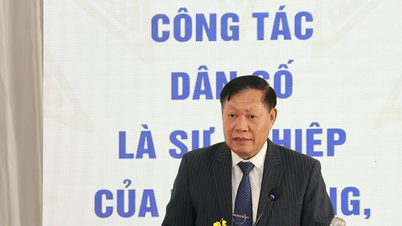
According to Mr. Ha Anh Duc, Director of the Department of Medical Examination and Treatment ( Ministry of Health ), smart healthcare is becoming an advanced trend, helping to improve the quality of medical examination and treatment. However, the implementation of new technologies still faces many challenges, from inadequate infrastructure to a lack of uniformity in human resource training.
According to Mr. Ha Anh Duc, Director of the Department of Medical Examination and Treatment (Ministry of Health ), smart healthcare is becoming an advanced trend, helping to improve the quality of medical examination and treatment. However, the implementation of new technologies still faces many challenges, from inadequate infrastructure to a lack of uniformity in human resource training.
The Ministry of Health has just issued a set of hospital quality criteria aimed at developing smart healthcare. Sir, what difficulties are there in implementing these criteria?
The Ministry of Health's issuance of Circular No. 35/2024/TT-BYT is a significant step forward in improving the quality of medical examination and treatment. However, its implementation still faces many difficulties. One of the major challenges is that applying these criteria requires hospitals to make significant investments in infrastructure, equipment, and personnel.
Hospitals, especially at the grassroots level, face difficulties in recruiting and retaining staff with the necessary professional qualifications and skills. Furthermore, work processes and quality management systems in some hospitals are not standardized, leading to ineffective implementation of criteria.
How do you assess the current implementation of smart healthcare in hospitals?
Smart healthcare enables doctors to access and analyze electronic medical records instantly, leading to more accurate diagnoses and treatments. Technologies such as artificial intelligence, machine learning, and big data analytics help detect diseases early, develop optimal treatment plans, and minimize errors in healthcare.
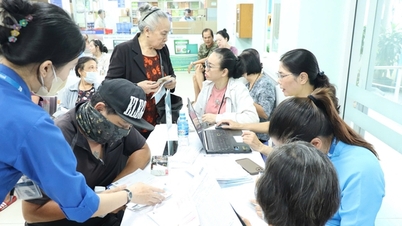
The application of technology such as online appointment scheduling, cashless payments, and online access to test results has helped patients minimize waiting times. Systematic appointment reminders and remote support via online platforms also facilitate easier treatment for patients.
Smart hospital management systems optimize workflows and reduce administrative workload for healthcare staff. The implementation of smart healthcare also facilitates the development of telemedicine models, allowing patients who cannot travel to hospitals to receive timely advice and treatment. This is especially important for remote and rural areas where access to healthcare services is limited.
However, as I mentioned, despite these many benefits, in reality, many hospitals, especially in rural and remote areas, face difficulties in terms of funding and human resources, making the implementation of smart healthcare challenging.
According to him, what should hospitals do to overcome these challenges and maximize the benefits of smart healthcare technology?
Along with raising awareness of the importance of digital transformation for hospitals, policy support from the Ministry of Health and relevant agencies is needed, especially prioritizing investment in smart healthcare technology from the state budget and socialized programs.
In addition, hospitals need to focus on training healthcare staff, ensuring they have the necessary skills and knowledge to utilize new technologies. Another crucial element is establishing a monitoring and feedback system to promptly detect problems and make timely adjustments.
Can you share specific examples of how smart healthcare has helped improve the quality of medical care at some hospitals?
A clear example of the implementation of smart healthcare and improved quality of medical care is the application of electronic health records (EMR) systems in major hospitals. Before EMR, patient information was often recorded manually, leading to many errors and wasting time when searching for information.
With EMR, all patient information, from medical history and test results to treatment prescriptions, is stored accurately and easily accessible, allowing doctors to continuously monitor patient health and make quick, accurate treatment decisions.
Furthermore, the implementation of a hospital management system (HIS) in healthcare facilities is also a significant breakthrough, helping to optimize the coordination and management of hospital beds and monitor the work efficiency of departments such as laboratory, pharmacy, and nursing.
Thanks to this system, hospitals can have tighter control over resources, allocate hospital beds rationally, and minimize overcrowding or shortages of equipment and medicines. This improves work efficiency, giving doctors and medical staff more time to care for patients.
Source: https://baodautu.vn/thach-thuc-trong-trien-khai-he-thong-y-te-thong-minh-d249193.html
![[Live] 2025 Community Action Awards Gala](/_next/image?url=https%3A%2F%2Fvphoto.vietnam.vn%2Fthumb%2F1200x675%2Fvietnam%2Fresource%2FIMAGE%2F2025%2F12%2F16%2F1765899631650_ndo_tr_z7334013144784-9f9fe10a6d63584c85aff40f2957c250-jpg.webp&w=3840&q=75)
![[Image] Leaked images ahead of the 2025 Community Action Awards gala.](/_next/image?url=https%3A%2F%2Fvphoto.vietnam.vn%2Fthumb%2F1200x675%2Fvietnam%2Fresource%2FIMAGE%2F2025%2F12%2F16%2F1765882828720_ndo_br_thiet-ke-chua-co-ten-45-png.webp&w=3840&q=75)

![[Photo] Prime Minister Pham Minh Chinh receives Lao Minister of Education and Sports Thongsalith Mangnormek](/_next/image?url=https%3A%2F%2Fvphoto.vietnam.vn%2Fthumb%2F1200x675%2Fvietnam%2Fresource%2FIMAGE%2F2025%2F12%2F16%2F1765876834721_dsc-7519-jpg.webp&w=3840&q=75)

![[Photo] Prime Minister Pham Minh Chinh receives the Governor of Tochigi Province (Japan)](/_next/image?url=https%3A%2F%2Fvphoto.vietnam.vn%2Fthumb%2F1200x675%2Fvietnam%2Fresource%2FIMAGE%2F2025%2F12%2F16%2F1765892133176_dsc-8082-6425-jpg.webp&w=3840&q=75)




























































































Comment (0)