

Having known about his first term, heard his campaign platform, and anticipated his moves early on, the international community was still somewhat surprised by President Donald Trump's statements and actions after two weeks in office.
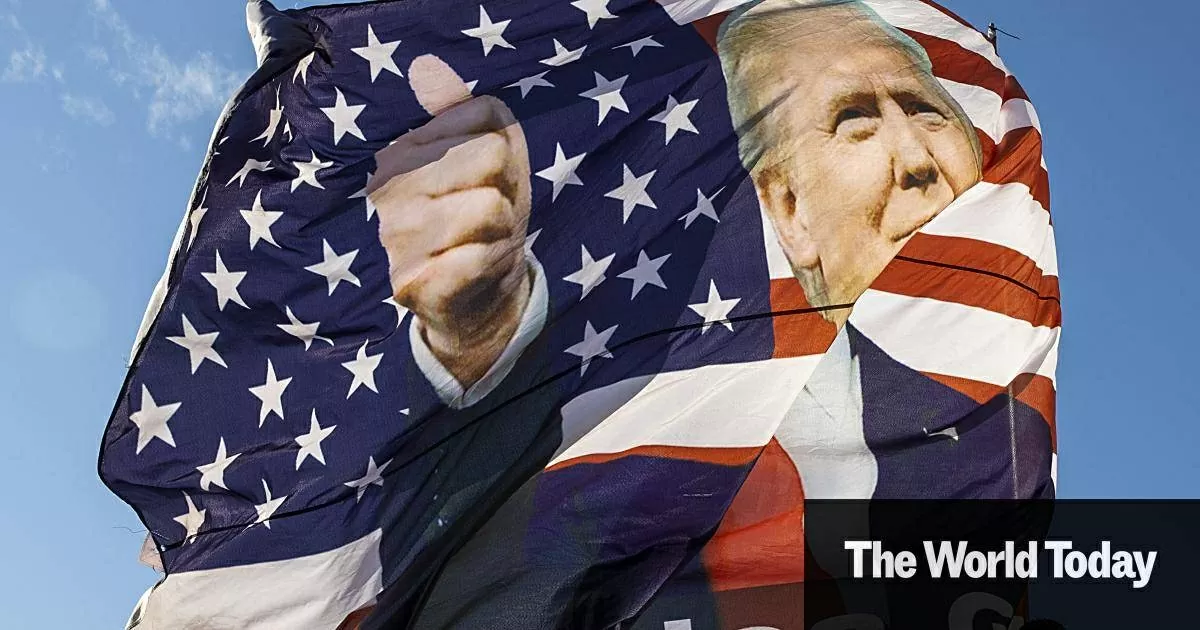 |
| US President Donald Trump returns to the White House, more formidable than ever. (Source: Chatham House) |
What's new in Trump 2.0?
President Donald Trump began his second term with experience and confidence. He enjoyed Republican support in both houses of Congress; he faced no pressure to run for a third term (although some lawmakers wanted to amend the Constitution to pave the way). Meanwhile, Russia was embroiled in a nearly three-year conflict, the EU was grappling with internal issues, and the United Nations faced demands for reform… This meant that the 47th US President had an opportunity to demonstrate his global role and power.
On his first day in office, the White House occupant signed nearly 200 executive orders, consistent with his campaign promises. Along with declarations of strategic direction and policies came concrete action: the complete deportation of illegal immigrants. This calculated move targeted a pressing, feasible issue, a "break the stick one by one" approach. Mexico reacted strongly, but ultimately yielded to the threat of sanctions. Many countries silently observed.
One arrow, many targets. The US has said it and done it, showing no mercy to close allies. If Mexico is doing this, then other allies, partners, rivals, and those involved in other issues should be wary. Prior to this, they announced import tariffs of up to 25% on other countries and 10% on China. The US leader is determined to invest $500 billion in breakthroughs to maintain its number one position in AI. Most notably, President Donald Trump bluntly stated that the US is expanding in proportion to its power, for national security reasons, by acquiring Greenland, the Panama Canal, and Canada at all costs.
The new president's slogan remains, "America First, Make America Great Again." The guiding principle is to prioritize Washington's economic interests, national security, and global leadership; to place America at the center of global geopolitics ; and to reshape international power and the global order in a way that benefits the country amidst volatility and numerous rivals.
The combination of deterrence and self-interest; economic, military , and diplomatic power; action and leadership; and the use of official information and social media to overwhelm opponents—along with a decisive, forceful leadership style that doesn't shy away from confrontation—makes President Donald Trump even more unpredictable, forcing others into a passive, unexpected, and disadvantageous position, leaving them unable to react in time.
Key trends
Three trends are emerging in the world . Firstly , hotspots are more or less likely to cool down or open up new avenues, specifically:
One, The US is trying to resolve the conflict in Ukraine in its own way. If Washington stops or reduces aid, NATO and the EU will struggle to provide long-term support to Ukraine, forcing Kyiv to make concessions. President Donald Trump wants to maintain his dominant role in Europe, benefiting from the security umbrella, selling weapons, and weakening Russia, while also reducing costs and focusing his efforts on confronting China.
The warning of sanctions against Russia if it refuses to negotiate, and vice versa, still carries some weight, but it cannot be a knockout blow, even technically. Russian exports to the US are only $5 billion, much smaller than to many other partners, and are a strategic commodity for the US. Russia's allies and partners are numerous enough and know how to circumvent sanctions.
President Vladimir Putin's subtle reference to the ban on negotiations and the long-standing legal basis of President Volodymyr Zelensky's actions is a powerful, understated counterattack. The US and the West may reconsider the future role of the leader in Kyiv. Moscow's battlefield advantage allows it to maintain its position and not lower its demands for an end to the conflict; moreover, it is demanding negotiations with the US, NATO, and the EU on the Ukraine issue and, further, a more equitable future relationship between Russia and Europe and the West.
Despite differing calculations, Russia and the United States share common interests. Both sides have things to exchange, such as Arctic cooperation and nuclear arms control. This forms the basis of hope for the anticipated summit between President Vladimir Putin and President Donald Trump, to discuss many major global issues. However, their goals and objectives differ significantly, meaning the summit may not be far off, but the outcome remains difficult to predict.
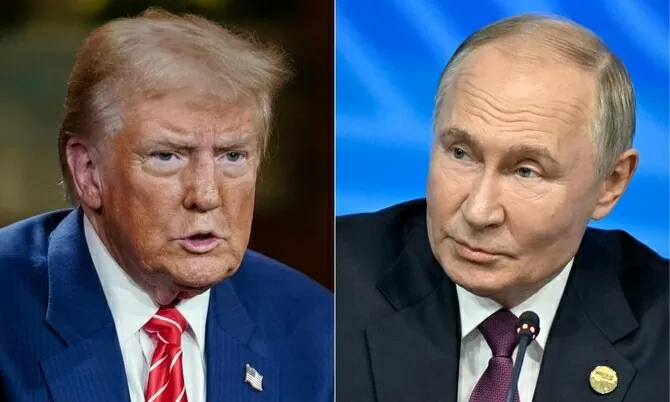 |
| Will President Donald Trump soon hold a summit with his Russian counterpart Vladimir Putin? (Source: AFP) |
Second, promoting a ceasefire between Israel and Hamas is crucial to prevent the conflict from spiraling out of control and escalating into a regional war. The US wants to demonstrate its role as the leading peacemaker, securing its strategic interests in the region and preventing other major powers from interfering. President Donald Trump continues to wholeheartedly support Tel Aviv, drawing Arab countries closer to Israel and seeking to control oil production and prices to his advantage.
Washington is taking a tougher stance against Tehran regarding the disarmament of its nuclear capabilities and its support for anti-American and anti-Israeli forces. The US has the tools to exert strong pressure, while Iran faces increasing difficulties. Tehran may have to accept new conditions, sacrificing the gradual lifting of sanctions. The US and its allies are exploiting the situation in Syria to plan the establishment of a Kurdish state, consolidate their foothold, eliminate rivals, and maintain long-term control over Damascus.
While a ceasefire in the Gaza Strip may be difficult to reverse, the complete withdrawal of Israeli troops from the occupied territory, contrary to the 1967 UN resolution on the Palestinian borders and the establishment of a Palestinian state, is a complex, protracted, and even intractable undertaking. Therefore, the Middle East remains vulnerable to conflict and instability.
Third, President Donald Trump may meet with Chairman Kim Jong Un to discuss North Korea's nuclear program and South-North Korean relations. Conversely, issues concerning Taiwan, Greenland, Panama, and Canada will become more complicated. The Indo-Pacific region may experience increased friction, but conflict is less likely.
Secondly , economic and trade issues are heating up, becoming more complex and fragmented. With the new tariffs, President Donald Trump will escalate the US-China confrontation in economics, trade, and technology to a more intense level than in his first term. By deterring and punishing Beijing's partners, Washington is expanding competition in many other strategic areas.
China has just declared that the world has enough room for mutually beneficial cooperation with the US, while also being ready to respond with corresponding tariffs and countermeasures. DeepSeek unexpectedly launched a low-cost AI model, shaking up leading US technology companies. By targeting America's strengths, Beijing's message is clear: nothing is impossible.
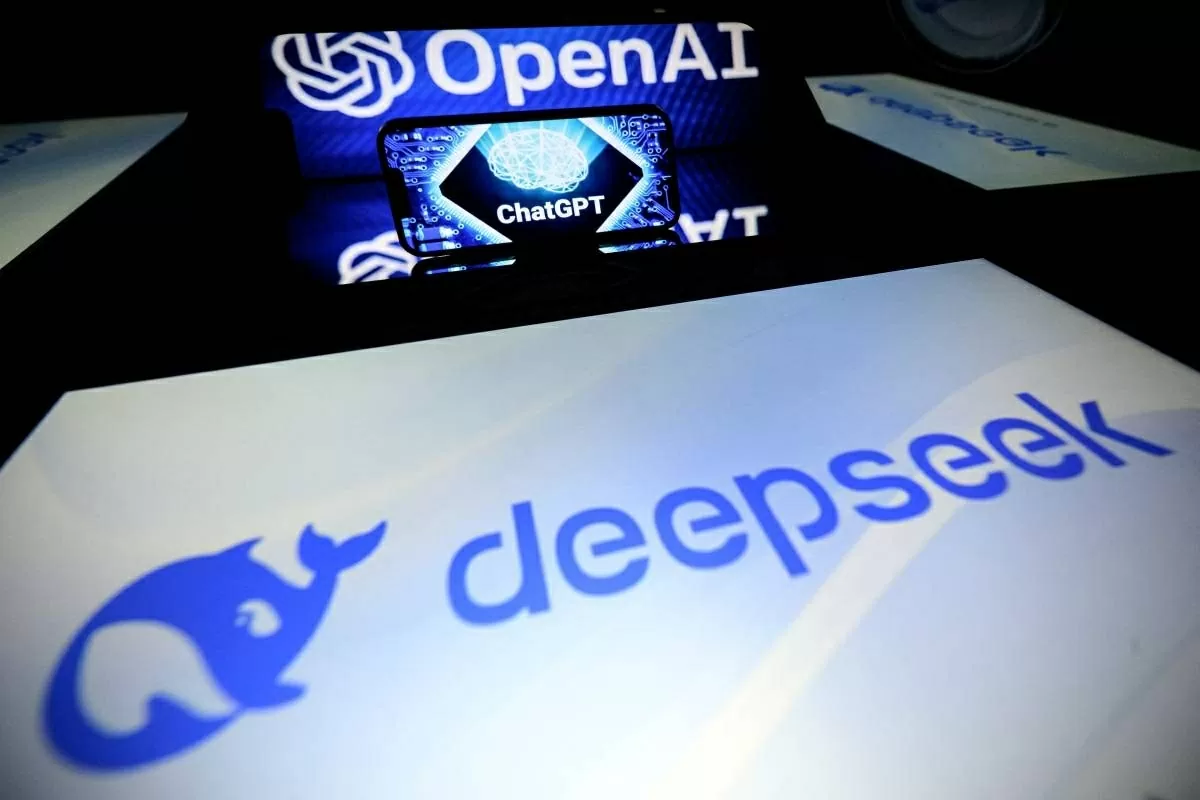 |
| DeepSeek represents the latest challenge to OpenAI, a company that has established itself as a leader in the industry thanks to the launch of ChatGPT in 2022. (Source: Manila Times) |
The US is not only targeting China but is also expanding the global trade war. The reciprocal tariffs are also a kind of "epidemic" that deepens market fragmentation and disrupts supply chains and production. Unilateralism is evident in President Donald Trump's withdrawal from the Paris Agreement on climate change and potentially from other multilateral institutions due to inequality concerns.
The combined effect of these factors could lead to inflation and rising prices, threatening the recovery and development of the global economy and hindering the response to common challenges. The extent of the impact will depend on the policies and subsequent actions of the US and the international community's ability to respond and adapt.
Choose a side, bipartisan or multilateral?
As soon as candidate Donald Trump declared victory, Russia, China, Iran, North Korea, and others intensified cooperation, alliances, and the signing and upgrading of strategic partnerships. China, Russia, and the founding members strengthened and expanded the BRICS group, while also improving its quality.
The statement is not aimed at opposing anyone or undermining the USD, but rather at seeking a new, fairer order. However, BRICS remains a formidable counterweight, outperforming the West in economic, trade, and diplomatic aspects, affirming a trend that is difficult to reverse.
The US announcement of tariffs and the annexation of Greenland, the Panama Canal, and Canada startled many of its allies and partners, prompting them to adjust their strategies and policies in preparation. Some countries chose to cooperate more closely with the United States, making concessions to avoid further deterrence.
Countries that are not allies or rivals are also taking steps to mitigate the negative impacts. Three trends have emerged: aligning with the bipolar world, either the US or its rivals; or not choosing a side or polarity, but instead engaging in multilateral cooperation, carefully selecting the content, scope, and level of engagement, ensuring that relations with one polarity do not hinder or give the other a pretext for a reaction.
The third trend is increasingly being chosen by many countries: diversifying markets, reducing the trade deficit with the US and other major countries; selecting key areas that suit their capabilities and the needs of their partners; and proactively participating in global supply and production chains to take advantage of new opportunities. This is the approach Vietnam needs and can take.
***
Every new development has begun, and its effects depend on the policies and subsequent actions of various countries. President Donald Trump is back, more formidable than in his first term, but the US cannot do whatever it wants. Opponents, allies, and partners are becoming increasingly calculating, shrewd, and cautious. There have already been reactions from both within and outside the US. Let's wait and see.
Source: https://baoquocte.vn/the-gioi-chuyen-dong-giat-minh-thich-ung-303088.html
![[Image] Leaked images ahead of the 2025 Community Action Awards gala.](/_next/image?url=https%3A%2F%2Fvphoto.vietnam.vn%2Fthumb%2F1200x675%2Fvietnam%2Fresource%2FIMAGE%2F2025%2F12%2F16%2F1765882828720_ndo_br_thiet-ke-chua-co-ten-45-png.webp&w=3840&q=75)
![[Photo] Prime Minister Pham Minh Chinh receives Lao Minister of Education and Sports Thongsalith Mangnormek](/_next/image?url=https%3A%2F%2Fvphoto.vietnam.vn%2Fthumb%2F1200x675%2Fvietnam%2Fresource%2FIMAGE%2F2025%2F12%2F16%2F1765876834721_dsc-7519-jpg.webp&w=3840&q=75)

![[Live] 2025 Community Action Awards Gala](/_next/image?url=https%3A%2F%2Fvphoto.vietnam.vn%2Fthumb%2F1200x675%2Fvietnam%2Fresource%2FIMAGE%2F2025%2F12%2F16%2F1765899631650_ndo_tr_z7334013144784-9f9fe10a6d63584c85aff40f2957c250-jpg.webp&w=3840&q=75)
![[Photo] Prime Minister Pham Minh Chinh receives the Governor of Tochigi Province (Japan)](/_next/image?url=https%3A%2F%2Fvphoto.vietnam.vn%2Fthumb%2F1200x675%2Fvietnam%2Fresource%2FIMAGE%2F2025%2F12%2F16%2F1765892133176_dsc-8082-6425-jpg.webp&w=3840&q=75)



































![[Video] Independence and self-reliance linked with international integration through 40 years of reform](https://vphoto.vietnam.vn/thumb/402x226/vietnam/resource/IMAGE/2025/12/16/1765899635777_1-1-8054-png.webp)


























Comment (0)