

Helping products reach further
Bac Ninh has approximately 184,000 hectares of agricultural land, of which fruit trees account for nearly 54,000 hectares, generating over 7,400 billion VND per year. Key fruits such as lychees, longans, oranges, pomelos, and custard apples are now available in many markets. One of the factors helping Bac Ninh's agricultural products open up to the world market is its traceability system.
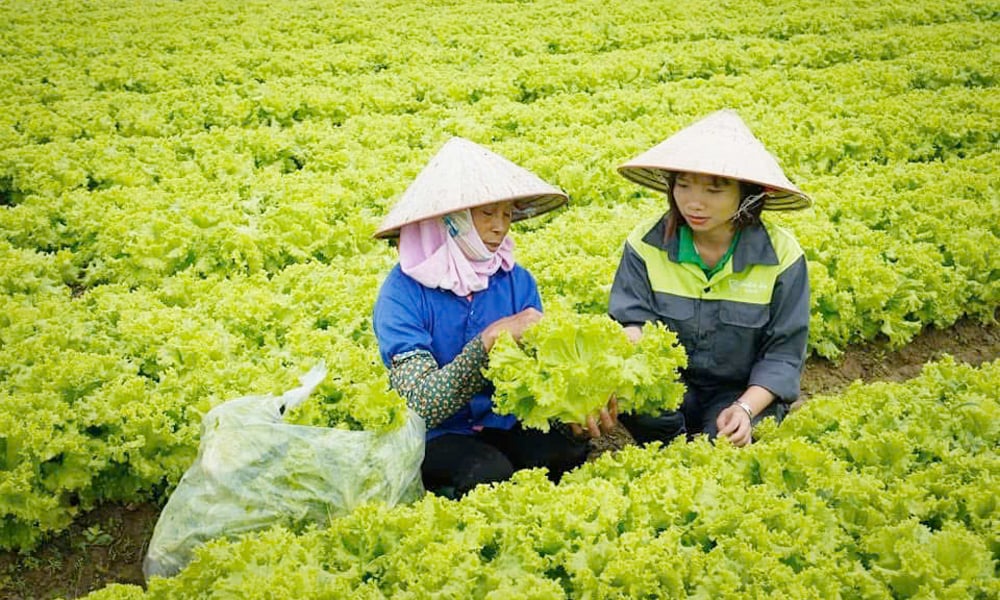 |
Harvesting produce at Yen Dung Clean Vegetable Cooperative. |
Yen Dung Clean Vegetable Cooperative specializes in producing and trading clean vegetables and fruits using high-tech agricultural methods, with a greenhouse and net house system covering over 30 hectares, and an automated irrigation and fertilization system based on Israeli technology. To build its reputation and brand, the Cooperative prioritizes transparency in its production process, proactively registering planting area codes for many key products such as baby cucumbers, chili peppers, and queen melons. Customers can access complete information about the origin and cultivation process by scanning the QR code on their mobile phones. Ms. Tran Thi Kim Trang, Deputy Director of the Cooperative, shared that on average, the cooperative supplies over 600 tons of vegetables and fruits to the market each month, mainly to restaurants, businesses, schools, and supermarket chains inside and outside the province, generating a total revenue of approximately 35-40 billion VND per year.
Aiming for a civilized and modern agricultural production system, many production and business establishments in the province have registered with the relevant authorities (Department of Science and Technology; General Department of Standards, Metrology and Quality under the Ministry of Science and Technology ) to obtain barcodes and product traceability codes. This is considered a "digital passport" that helps products enter the export market and increase the value of agricultural products.
Establishing credibility, increasing value.
Bac Ninh is known as the capital of lychee and many other high-quality fruit crops. Specifically for lychees, the province has so far been granted 240 planting area codes, covering a total area of over 17,400 hectares, and 42 packaging facility codes. Many of these codes are for export. Thanks to this "digital passport," lychee exports in 2025 are expected to reach over 78,000 tons, accounting for 38% of total production. The province's lychees are present in many demanding markets such as Europe and the United States, and are sold in major supermarket chains like Safeway, Costco, Selgros, and Rungis Market.
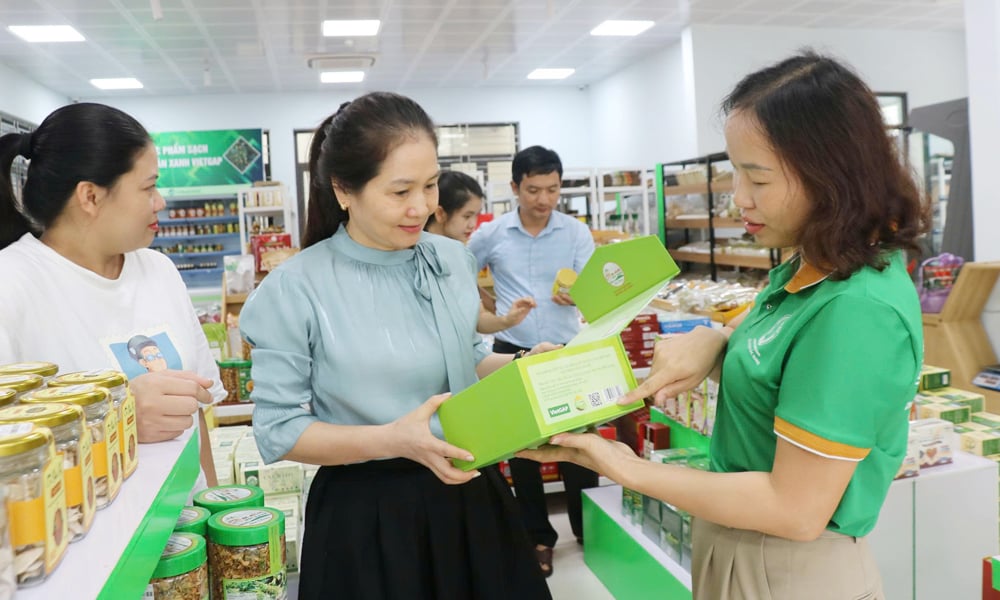 |
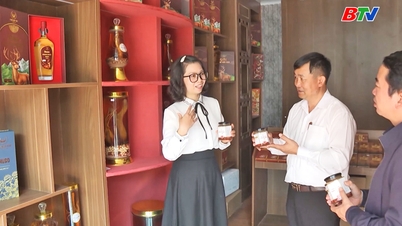
Officials from the Center for Cooperative Development Support (Provincial Cooperative Union) introduce OCOP products with QR codes and barcodes to help consumers trace their origin. Photo: Thanh Nam. |
To ensure transparency and openness regarding information on agricultural products, the Provincial People's Committee has consistently implemented various support policies for relevant entities. Currently, the province is implementing a project to deploy, apply, and manage a traceability system in the province for the period 2021-2025, striving to have at least 30% of businesses, cooperatives, and production, trading, and service establishments in the province using barcodes and having traceability systems that meet national and international standards; and 100% of key, distinctive, potential, and OCOP export products and goods applying traceability systems.
According to the Department of Science and Technology, in recent times, the unit has intensified propaganda, guidance, and account creation for collectives and individuals to apply traceability on the provincial and national traceability portals. In addition, implementing the Project to support the sustainable development of fruit production in the province from 2021-2025, the Department of Agriculture and Environment and local authorities have also provided technical support to entities to standardize safe and sustainable production processes, build production areas meeting GlobalGAP and organic standards, and support the digitalization of growing areas. As of August 2025, the entire province has 404 growing area codes, covering an area of over 18,800 hectares, and 43 packaging facilities that have been granted codes for export.
| As of August 2025, the province has 404 registered growing areas, including 240 lychee growing areas with a total area of over 17,400 hectares and 42 packaging facility codes. Many of these areas are for export. Thanks to this "digital passport," lychee exports in 2025 are expected to reach over 78,000 tons, accounting for 38% of the total production. The province's lychees will be present in many demanding markets such as Europe and the United States, and sold in major supermarket chains like Safeway, Costco, Selgros, and Rungis Market. |
Despite initial successes, the application of agricultural product traceability still faces many difficulties. According to Mr. Le Ba Thanh, Deputy Director of the Department of Agriculture and Environment, some key fruit crops such as apples, guavas, oranges, and pomelos have been planned and directed for concentrated cultivation areas, but the production area remains limited, mainly consisting of intercropping with other fruit trees. Furthermore, the cost of certification for production meeting VietGAP, GlobalGAP, and organic standards is high, requiring advanced technical skills and significant investment in care, while the selling price of agricultural products meeting these standards is not significantly higher than that of mass-produced products. This makes farmers hesitant to adopt the system without government support. In reality, Bac Ninh currently lacks large enterprises investing in agricultural production, trading, and processing, especially deep processing of agricultural products. Many households are unfamiliar with electronic record-keeping and adherence to standardized procedures, leading to difficulties in managing planting area codes. These gaps need to be filled soon so that key agricultural products can be tightly controlled from production to processing, expanding markets and increasing value.
Faced with this challenge, Bac Ninh province has developed a plan to implement the traceability project for the period 2026-2030, aiming for 100% of organizations and individuals producing key products, OCOP products, and eligible export goods to apply traceability by 2030. Key solutions set forth by the province include: perfecting mechanisms and policies, reviewing documents, and issuing regulations to encourage the application of blockchain, AI, and Big Data technologies in traceability; and providing tax incentives and capital support for businesses to invest in modern technology.
At the conference on solutions to promote safe agricultural production and expand export markets, organized by the Provincial People's Committee on August 18th, Mr. Pham Van Thinh, Member of the Provincial Party Standing Committee, Vice Chairman of the Provincial People's Committee, and Head of the Provincial National Assembly Delegation, emphasized the necessity of implementing traceability down to each product and household involved in the production and business of key agricultural products. Bac Ninh province is opening up and implementing many preferential policies on land and taxes to attract investors to build infrastructure for deep processing of agricultural products in industrial zones and clusters. The province is also directing the expansion of crop areas according to safe standards (VietGAP, GlobalGAP, organic) to create a linked chain with traceability, meeting the requirements of domestic consumption and export.
Traceability is not only a mandatory requirement for exporting agricultural products but also a "key" for Bac Ninh to build its brand, enhance competitiveness, and develop a transparent and modern agricultural sector. When the entire production process is transparent, consumers both domestically and internationally can trace the origin, local products will have a stronger foothold in the market, opening doors for agricultural products to reach the world. In the coming time, the provincial authorities and localities will continue to disseminate information and raise awareness among people, cooperatives, and businesses about agricultural product traceability. They will also strengthen support and advice for organizations and individuals to build safe product supply chains; and effectively utilize the province's traceability portal and the national product and goods traceability portal.
Source: https://baobacninhtv.vn/truy-xuat-nguon-goc-nong-san-chia-khoa-mo-canh-cua-ra-the-gioi-postid425202.bbg
![[Photo] Two flights successfully landed and took off at Long Thanh Airport.](/_next/image?url=https%3A%2F%2Fvphoto.vietnam.vn%2Fthumb%2F1200x675%2Fvietnam%2Fresource%2FIMAGE%2F2025%2F12%2F15%2F1765808718882_ndo_br_img-8897-resize-5807-jpg.webp&w=3840&q=75)





















































































Comment (0)