

For a storm to be given a name, it must have a swirling pattern and wind speeds of 63 km/h or higher upon its formation. The list of storm names is proposed by the National Meteorological and Hydrological Service (NMHSs) of a WMO member state in a specific region. The corresponding regional agency then approves the names at its annual or biennial meetings.
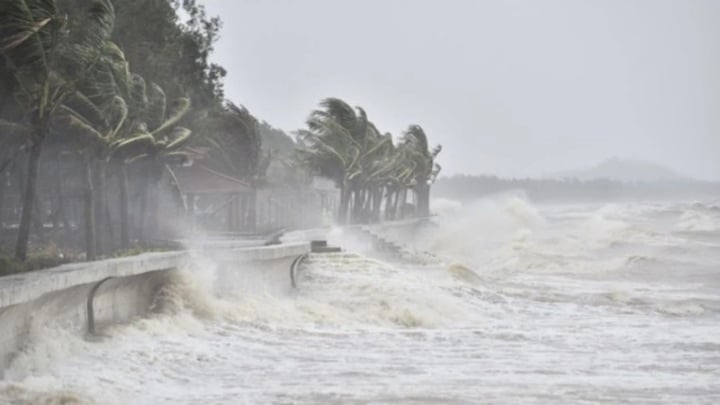
Storms that make landfall always have specific names.
Why do storms have names?
Before the 1950s, hurricanes appearing in the Atlantic Ocean were often given very simple names. People would name them according to the order in which the hurricanes occurred during the year. However, over time, people discovered that this naming method was inefficient and extremely impractical. In particular, when multiple hurricanes arrived simultaneously, it created significant difficulties for meteorologists in analyzing and discussing them.
Therefore, in 1953, the US National Weather Service began using a list of female names to name hurricanes. The order was based on the English alphabet. By 1978, people began using male names to name many hurricanes. A year later, the policy of using both male and female names for hurricanes was established.
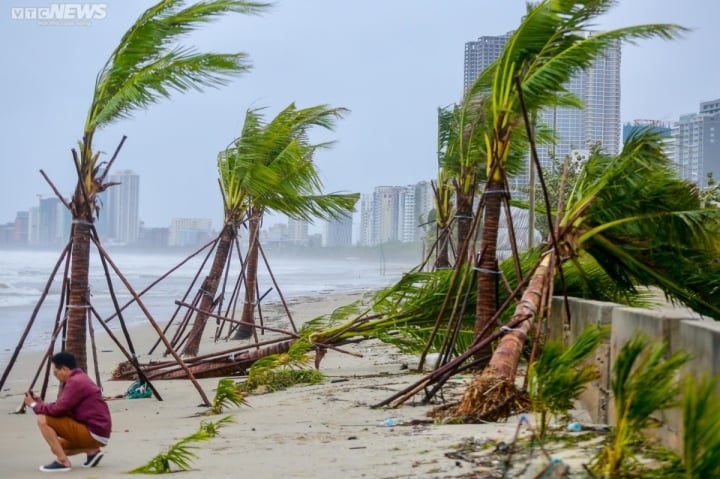
Naming storms helps meteorologists easily identify and analyze the situation.
Currently, the Atlantic Ocean has six lists of hurricane names, and these are used on a rotational basis. This means that the list of hurricane names used in 2017 will be used again in 2023. In the event that hurricanes move from one ocean to another, their names will also change according to the regulations of each region.
Each ocean in the world has its own list of hurricane names. In the Northwest Pacific, hurricanes are named after animals or plants. In the Western Pacific (comprising 14 countries), hurricane names are rotated through five lists, with each country allowed to register 10 names.
Many storm names were removed after the storms passed through the areas.
According to the WMO, the registered international names for typhoons in Vietnam include: Son Tinh, Co May, Ba Vi, Con Son, Son Ca, Tra Mi, Ha Long, Vam Co, Song Da, and Sao La. Meanwhile, China registered the following names for typhoons: Long Vuong (replaced by Hai Quy), Ngo Khong, Ngoc Tho, Hai Yen, Phong Than, Hai Than, Do Quyen, Dien Mau, Hai Ma, and Hai Duong.
There are no specific regulations limiting the number of storm names in a year. Storms are named in a sequential order from top to bottom. For example, after Typhoon Sonca, the next storm in the Northwest Pacific will be named Nesat.
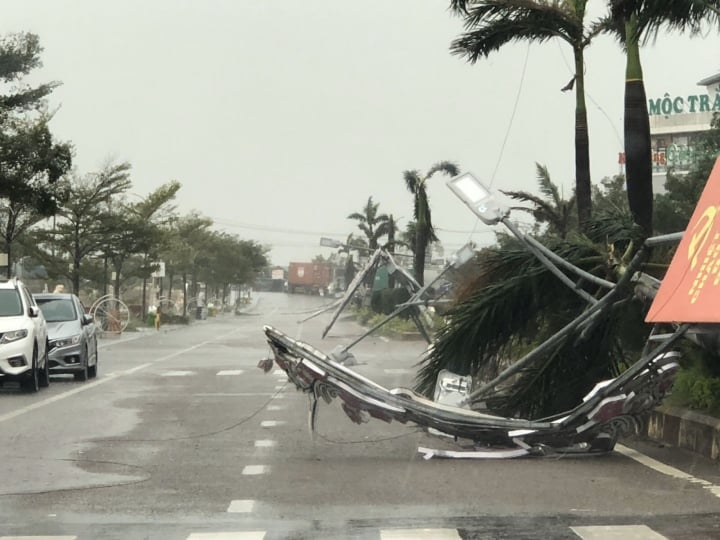
Storms often leave behind extensive damage.
When these storms cause severe damage to the areas they pass through, they are removed from the list. For example, South Korea once requested the removal of Typhoon Saomai (nominated by Vietnam) from the list of typhoon names because it caused serious consequences for South Korea. Vietnam also requested the removal of Typhoon Chanchu, named by South Korea, because it caused serious consequences for Vietnam.
Many other well-known hurricane names such as Mangkhut (Philippines, 2018), Irma and Maria (Caribbean, 2017), Haiyan (Philippines, 2013), Sandy (USA, 2012), Katrina (USA, 2005), Mitch (Honduras, 1998) and Tracy (Darwin, 1974) were also removed from the WMO list for the same reason.
Tuyet Anh (Source: Compilation)
Beneficial
Emotion
Creative
Unique
Wrath
Source




![[Photo] National Assembly Chairman Tran Thanh Man successfully concludes his participation in IPU-152](https://vphoto.vietnam.vn/thumb/1200x675/vietnam/resource/IMAGE/2026/04/18/1776502638199_vna-potal-chu-tich-quoc-hoi-ket-thuc-tot-dep-chuong-trinh-tham-du-ipu-152-8709975-jpg.webp)

















































































Comment (0)