

On October 29th, Vice Chairman of the Hanoi People's Committee Vu Thu Ha held a working session with Hanoi High-Tech College (HHT) regarding the school's development plan to become a high-quality training institution, fulfilling the function of a national center for high-quality vocational training and practice.
The meeting was not only an opportunity to review the progress of an important project in the capital's vocational education sector, but also demonstrated the city's strategic vision in developing high-quality human resources to serve the digital transformation process and international integration.

Hanoi High-Tech College is one of the pioneering vocational education institutions in the capital city, built on an autonomous model that closely integrates training, research, and vocational practice. After merging with Hanoi College of Environmental Technology and Hanoi High-Tech Vocational College and being renamed Hanoi High-Tech College in 2022, the college has continuously developed in scale, capacity, and reputation within the national vocational education system.
The campus has three training facilities located in Xuan Phuong, Thanh Xuan, and Tu Liem wards, with modern facilities, workshops, a technology center, and spacious dormitories, creating a professional learning and training environment for thousands of students each year.
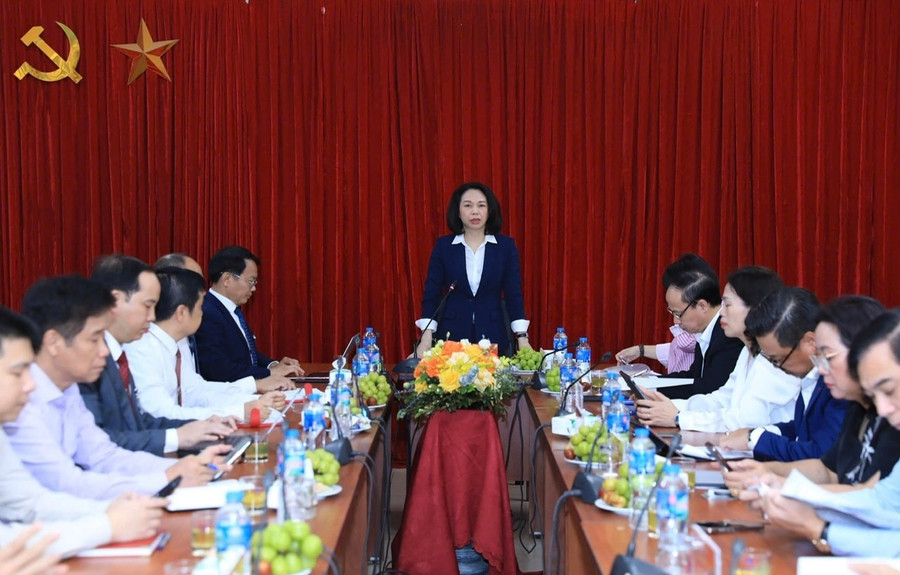
The school's faculty and staff comprises 220 people, including 7 PhDs, 5 doctoral candidates, and 107 master's degree holders. Many lecturers are continuing their postgraduate studies to enhance their professional qualifications. This core force ensures the quality of training in the 46 disciplines the school is currently offering, spanning the fields of technology, engineering, economics , services, and creative design.
In the 2025-2026 academic year, the school's training scale will reach over 7,300 long-term students, not including short-term courses with 1,000-1,500 students each year. Notably, the employment rate for graduates is over 98%, affirming the school's prestige, quality, and strong connection with businesses and the labor market.
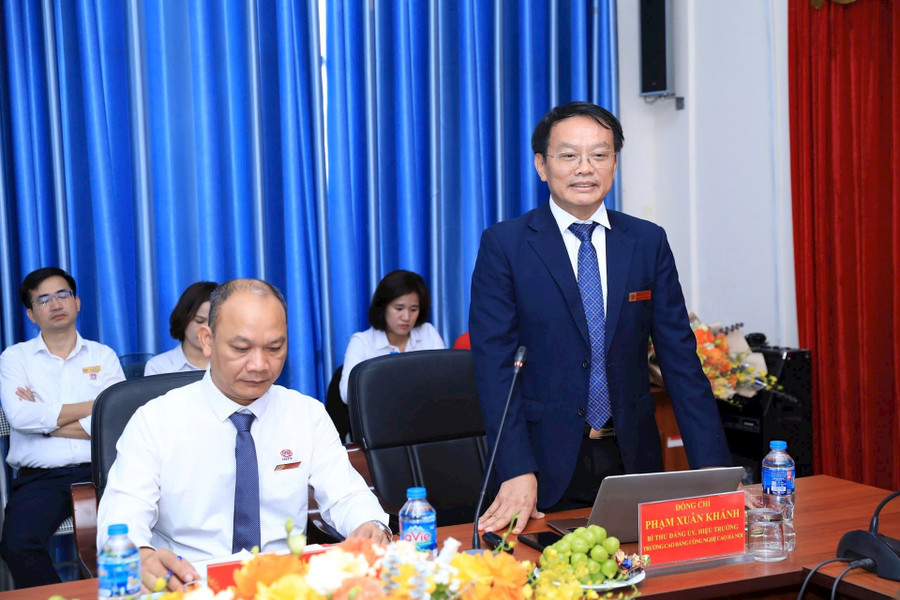
Distinguished Educator, Doctor Pham Xuan Khanh – Principal of Hanoi High-Tech College – stated that, based on the direction of the Central Government and the city, the school aims to become a high-quality school by 2026, and strives to become a national center for high-quality vocational training and practice by 2028.
To realize this goal, the school aims to implement a fully autonomous financial model, encompassing both recurrent and investment expenditures, while proactively deploying a public-private partnership mechanism to mobilize social resources for investment in facilities, equipment, and training programs. The school also plans to expand its scale to 16,000–17,000 students in the coming period; broaden its domestic and international student recruitment scope; standardize 90% of its training programs according to the national qualifications framework; and develop 3–5 new training programs linked to high technology, digital skills, and green skills.
In addition, the school aims to develop at least 15 key vocational fields, including 3–5 fields with outstanding competitiveness in the region, creating a mark for Hanoi's vocational training brand on the regional map.
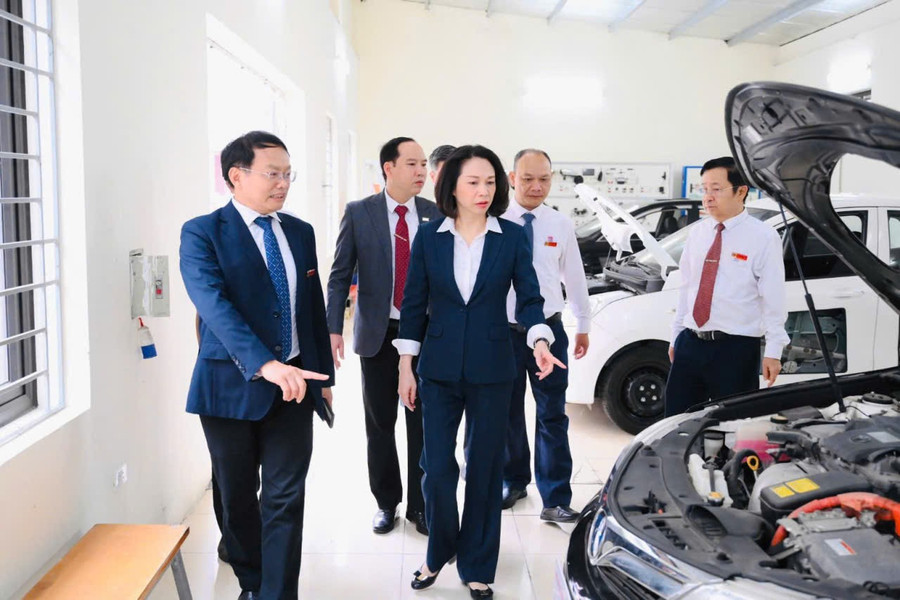
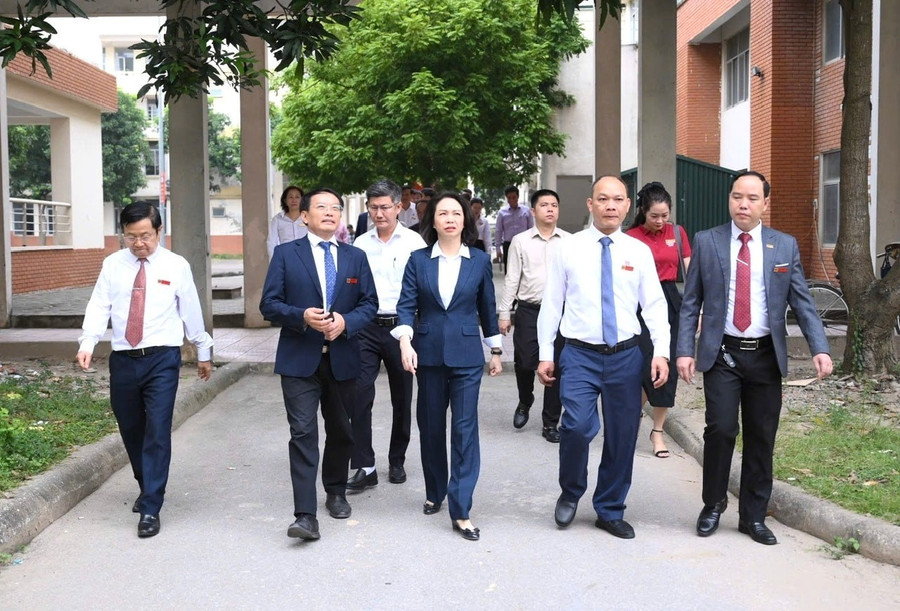
Notably, Hanoi High-Tech College is focusing on developing new strategic fields that align with global scientific and technological trends, such as artificial intelligence, aerospace engineering, semiconductor chip design, and high-speed rail engineering. These are considered cutting-edge fields in modern industrial development, requiring high-quality, creative, and technologically proficient human resources.
To ensure the conditions for implementation, the school proposes that the city and the Ministry of Education and Training increase investment in facilities and equipment for practical training and internships; build more dormitories, transportation infrastructure, and public works to serve students. At the same time, it requests financial support for training and capacity building for the teaching staff – a key factor determining the quality of education.
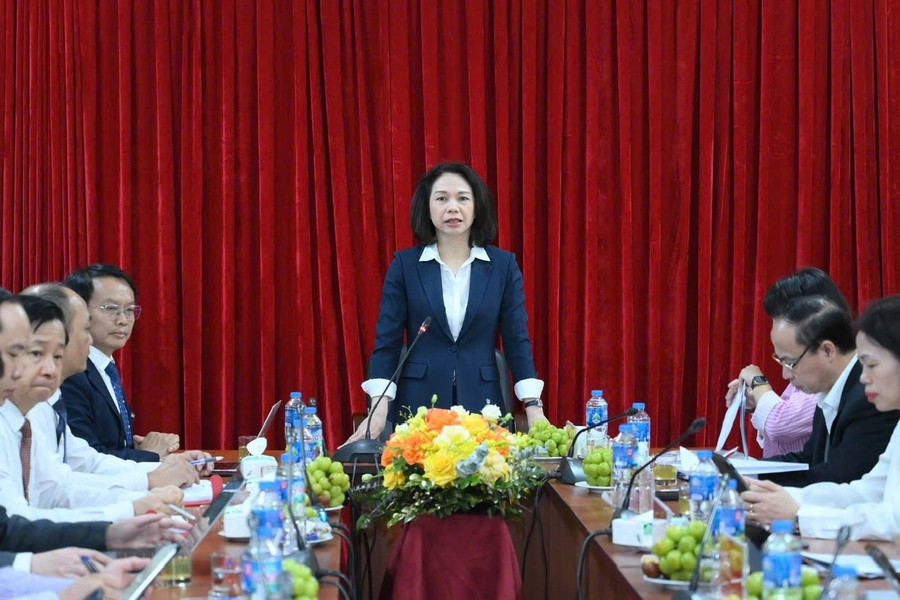
During the meeting, representatives from relevant departments and units discussed and contributed many specific ideas to finalize the school development plan, especially regarding investment orientation, human resource policies, and criteria for high-quality schools.
Vice Chairman of the Hanoi People's Committee Vu Thu Ha emphasized that building the Hanoi High-Tech College into a national center for high-quality vocational training is not only the school's responsibility, but also a shared responsibility of departments, agencies, and localities in the capital's vocational education development strategy.
The Vice Chairman of the Hanoi People's Committee requested that relevant units coordinate closely in the process of developing the Project, while also noting the need to update any changes in organization and structure to ensure consistency and alignment with the city's vocational education network plan.
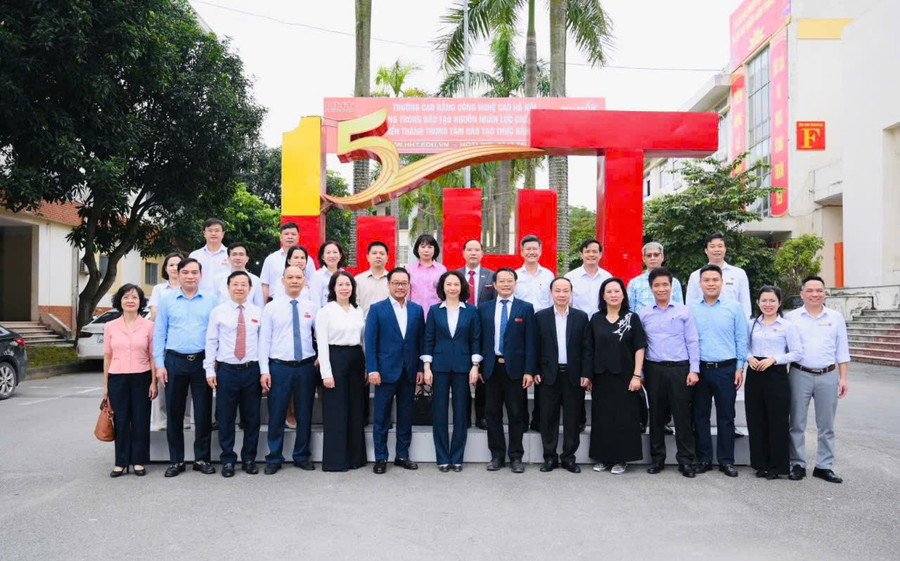
The Vice Chairman of the Hanoi People's Committee also requested the school to fully incorporate the feedback and add content on innovation and scientific and technological development – indispensable elements in a modern high-quality school model. At the same time, the Hanoi High-Tech College needs to finalize the project proposal according to specific criteria, closely following the roadmap for building a national key school, and report to the Hanoi People's Committee in November of this year.
The meeting concluded in a spirit of consensus and high determination. The agreed directions not only open up new avenues for development for Hanoi High-Tech College but also affirm the city's commitment to investing in high-quality human resources – a core element of sustainable development.
With its strategic vision, dedicated faculty, and strong commitment to innovation, Hanoi High-Tech College is gradually asserting its position as a pioneering vocational training institution, a place where knowledge, technology, and aspirations converge, contributing to building Hanoi into a modern, integrated, and developing vocational education center in the new era.
Source: https://giaoducthoidai.vn/xay-dung-truong-cao-dang-cong-nghe-cao-ha-noi-thanh-co-so-dao-tao-chat-luong-cao-post754529.html

![[Photo] Prime Minister Pham Minh Chinh receives the Governor of Tochigi Province (Japan)](/_next/image?url=https%3A%2F%2Fvphoto.vietnam.vn%2Fthumb%2F1200x675%2Fvietnam%2Fresource%2FIMAGE%2F2025%2F12%2F16%2F1765892133176_dsc-8082-6425-jpg.webp&w=3840&q=75)
![[Image] Leaked images ahead of the 2025 Community Action Awards gala.](/_next/image?url=https%3A%2F%2Fvphoto.vietnam.vn%2Fthumb%2F1200x675%2Fvietnam%2Fresource%2FIMAGE%2F2025%2F12%2F16%2F1765882828720_ndo_br_thiet-ke-chua-co-ten-45-png.webp&w=3840&q=75)

![[Live] 2025 Community Action Awards Gala](/_next/image?url=https%3A%2F%2Fvphoto.vietnam.vn%2Fthumb%2F1200x675%2Fvietnam%2Fresource%2FIMAGE%2F2025%2F12%2F16%2F1765899631650_ndo_tr_z7334013144784-9f9fe10a6d63584c85aff40f2957c250-jpg.webp&w=3840&q=75)
![[Photo] Prime Minister Pham Minh Chinh receives Lao Minister of Education and Sports Thongsalith Mangnormek](/_next/image?url=https%3A%2F%2Fvphoto.vietnam.vn%2Fthumb%2F1200x675%2Fvietnam%2Fresource%2FIMAGE%2F2025%2F12%2F16%2F1765876834721_dsc-7519-jpg.webp&w=3840&q=75)



































![[Photo] Prime Minister Pham Minh Chinh attends the Vietnam Economic Forum 2025](https://vphoto.vietnam.vn/thumb/402x226/vietnam/resource/IMAGE/2025/12/16/1765893035503_ndo_br_dsc-8043-jpg.webp)

























Comment (0)