

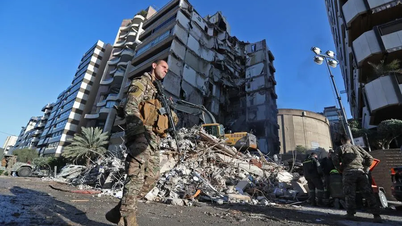
The findings of the investigation by the United Nations Interim Force in Lebanon (UNIFIL), summarized in a report obtained by Reuters, stated that the force's personnel did not observe any exchange of fire between the two countries across the Israel-Lebanon border in the 40 minutes prior to the Israeli Merkava tank opening fire.
The UNIFIL report cites United Nations Security Council Resolution 1701 (UNSCR 1701), concluding: “The firing of weapons against civilians, and in this case against individuals who could be clearly identified as journalists, is concluded to be a violation of UNSCR 1701 (2006) and relevant international law.”
The 27-page report, drafted on February 27, further stated: “The agency has determined that no exchange of fire was recorded on the Green Line at the time of the incident. The motive behind the attack on the journalists remains unclear.”
According to Resolution 1701, which came into effect in 2006 to end the war between Israel and Lebanon's Hezbollah, United Nations (UN) peacekeepers were deployed to monitor the ceasefire along the 120km-long Green Line between Israel and Lebanon.
In this mission, UN soldiers are tasked with documenting ceasefire violations and investigating the most serious offenses.
Besides killing Abdallah, the two artillery shells fired from the tank also injured six other journalists at the scene.
When asked about the UNIFIL report, Israel Defense Forces (IDF) spokesman Nir Dinar said Hezbollah attacked Israel near Hanita on October 13. The IDF responded by using tanks to shell the area to eliminate the threats and later received reports that several journalists were injured.
“The IDF deeply regrets the injuries sustained by unrelated parties and affirms that it did not intentionally fire on civilians, including journalists. The IDF believes that freedom of the press is of paramount importance and reiterates that being present in a conflict zone is a dangerous act.”
He stated that the Fact-Checking and Assessment Agency of the General Staff, an agency responsible for assessing particularly noteworthy incidents, will continue its investigation into this matter.
According to the IDF website, the group that verified this factual information has submitted a report to the Israeli military's legal office, which will decide whether a criminal investigation is necessary.
"It needs protection."
Reuters' editor-in-chief, Alessandra Galloni, has demanded that Israel explain why the attack that killed 37-year-old Abdallah (which could have happened) occurred and that the perpetrators be held accountable.
Two sources familiar with the matter said that the UNIFIL report was submitted to the UN in New York on February 28 and has since been shared with the Israeli and Lebanese militaries.
In its recommendations, the report states: “The IDF should conduct an investigation into the incident and assess the procedures in place at the time to prevent a recurrence. The IDF should share the findings of the investigation with UNIFIL.”
A UN spokesperson confirmed that the UNIFIL report had been shared with the parties involved.
The spokesperson said: “We reiterate that all parties must fulfill their responsibilities under international law and that civilians, including journalists, should never be considered targets of attack. Journalists and media professionals need to be protected.”
In its investigation, UNIFIL sent an investigative team to the site of the incident on October 14, and received contributions from the Lebanese Armed Forces and an anonymous witness who was present on the hill when the incident occurred.
Details of the incident that occurred in UNIFIL's area of operation are included in the UN Secretary-General's regular report on the implementation of UN Security Council Resolution 1701. However, UNIFIL's investigations are often not made public, and Reuters was unable to ascertain the UN's subsequent steps.
UNIFIL spokesperson Andrea Tenenti said he was not authorized to comment on the investigation.
UNIFIL's findings closely follow a Reuters investigation published on December 7th, which revealed that seven journalists from Agence France-Presse, Al Jazeera, and Reuters were attacked by two 120mm artillery shells fired from a distance of 1.34km in Israel.
The group of reporters filmed cross-border shelling from a distance in an open field on a hill near the Lebanese village of Alma al-Chaab for almost an hour before the incident occurred.
The following day, the IDF stated that it had collected visual evidence and that this evidence was being analyzed. The IDF has not yet released a report on the findings.
In its report, UNIFIL stated that it had sent a letter and questionnaire to the IDF requesting assistance. The IDF responded with a letter but did not answer the questionnaire.
Reuters has not received a copy of the IDF letter that UNIFIL summarized in its report.
Nguyen Quang Minh (according to Reuters)
Source

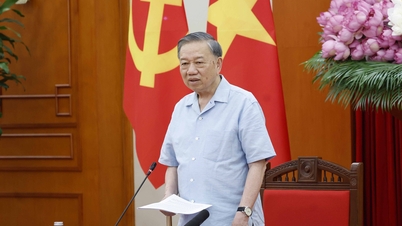
![[Photo] General Secretary and President To Lam presides over a meeting on preparations for the review of one year of operation of the three-tiered government system.](https://vphoto.vietnam.vn/thumb/1200x675/vietnam/resource/IMAGE/2026/06/02/1780391821195_a1-bnd-4595-9717-jpg.webp)





































































Comment (0)