

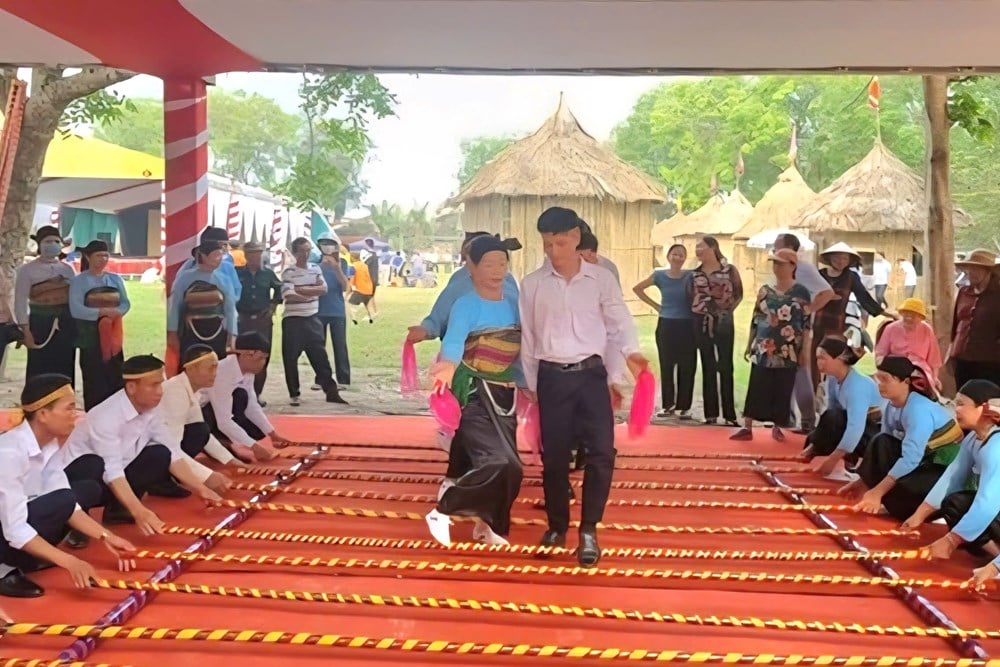
When the rhythm of the village drums awakens a whole realm of memories.
“This year’s Muong Kho festival was very crowded. Young people from the old village, now living in the city, packed their bags and came back. The young people performed the bamboo dance, the elderly taught shamanic rituals. The children even knew the prayers for the new rice harvest…”, an elder from Dien Lu commune (Thanh Hoa province) recounted with emotion.
Not just Muong Kho. Implementing Conclusion No. 82-KL/TU of the Standing Committee of the Thanh Hoa Provincial Party Committee on strengthening the Party's leadership over the work of preserving and promoting the cultural heritage values of Thanh Hoa province, 2017-2025, over the past eight years, a series of traditional festivals that seemed to have been dormant amidst modern life have been revived: the Muong Xia festival associated with the legend of the god Tu Ma Hai Dao , the Pon Poong festival, the unique folk performance of the Black Thai people, the Set Booc May festival, the Ca Da festival, the harvest festival of the Muong people, the New Year's dance festival of the Dao people… These rituals, once lost due to war, poverty, or social upheavals, are now revived in everyday life.
There, the people don't just perform rituals. They dance, they sing, they offer sacrifices, they tell stories. They pass down lullabies, chants, prayers, gong sounds... like streams of memories that never cease flowing. The village festival is no longer a display of outdated cultural identity, but a vibrant space where each person contributes to preserving the national spirit in their own way.
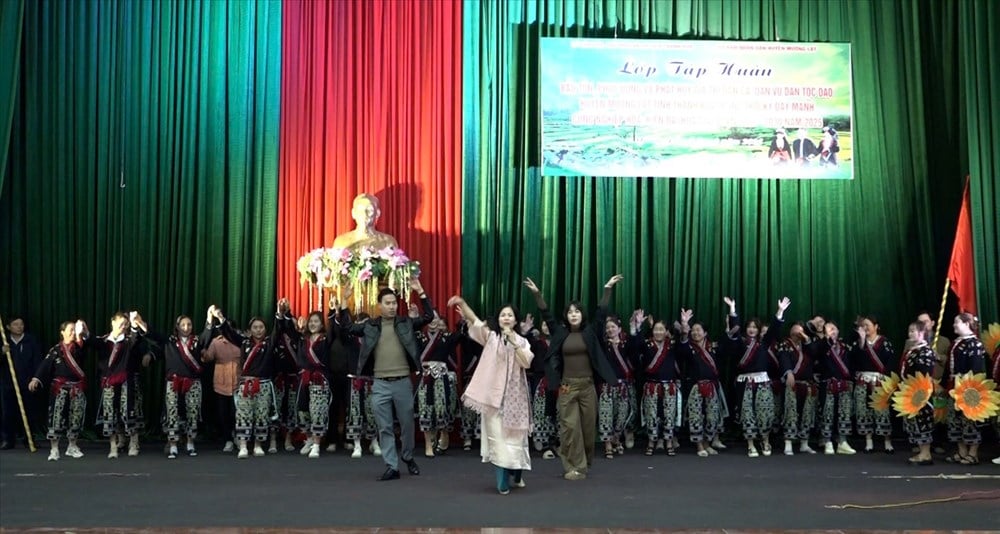
Many elderly artisans are still passionate about teaching the melodies, weaving ceremonial costumes, erecting the ceremonial pole, and preparing traditional offerings. Some village elders travel from one village to another searching for lost incantations.
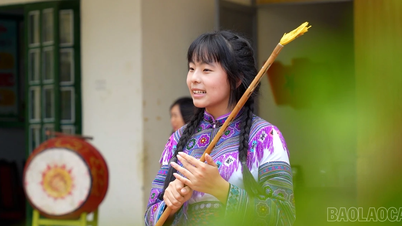
Young people, who were once hesitant to wear traditional brocade clothing, are now ready to perform the bamboo dance, beat gongs, and pound rice with pestles. Children are gradually learning folk songs from village festivals and playing traditional games during the Lunar New Year.
During the implementation of Conclusion 82-KL/TU, Thanh Hoa province compiled dossiers and included 27 intangible cultural heritage items in the national list, many of which are folk festivals and performances. But behind those numbers are thousands of people working together to preserve a part of the national identity.
Beyond simply restoring the form, conservation efforts in Thanh Hoa focus on restoring the spirit, the core element that constitutes the soul of the festival. From the roles of the shaman, artisans, and those offering sacrifices… to the language of the rituals, the props, and the ancient prayers, everything is researched, documented, compiled, and re-shared with the community.
Many practical projects have emerged, such as: "Restoring and promoting the value of typical traditional festivals," "Publishing documents on teaching folk rituals," "Digitizing traditional festivals," etc. Furthermore, scientific workshops and training courses have been organized in each commune and village to pass on the methods of organizing festivals to the local people themselves.
A Dao ethnic artisan in Ngoc Lac (formerly) once shared with emotion: "The Nhang Chap Dao festival (the New Year's dance) used to be just a memory for me, but now the children know about it. I feel I'm no longer alone."
Today's village festival – where "village" meets "the world"
In the past, traditional festivals often took place quietly within the secluded spaces of individual communities. But today, village festivals in Thanh Hoa province have become cultural gathering places, where not only communities are united, but also visitors from near and far are invited to participate.
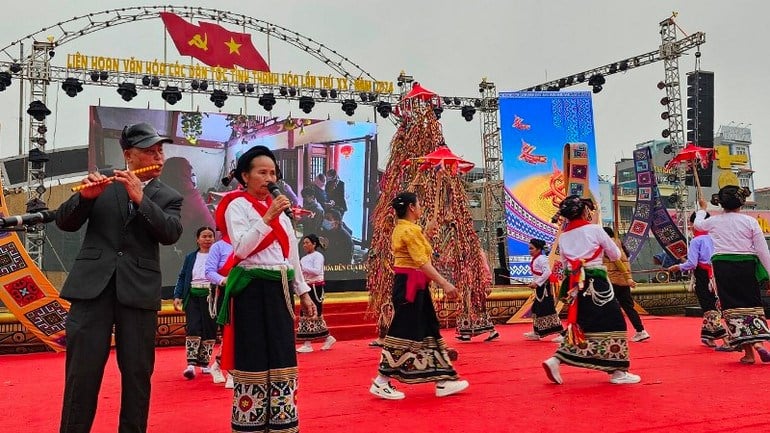
The Lam Kinh Festival with its procession of King Le's ancestral tablets, the Ba Trieu Temple Festival associated with the national heroine, and the Mai An Tiem Festival, a symbol of the vitality of the people of Thanh Hoa province… have all been staged and integrated into tourism tours and traditional experience programs.
Tens of thousands of tourists flock here every year, not only to "watch" the festival, but also to "live" in the culture, making cakes, pounding rice flakes, erecting the ceremonial pole, wearing ethnic costumes, and playing traditional games.
Thanh Hoa province has skillfully integrated festivals into socio-economic development: linking them with the construction of new rural areas, the development of community tourism, and the preservation of traditional crafts. Many localities such as Quan Son (formerly), Quan Hoa (formerly), Ngoc Lac (formerly), Thuong Xuan (formerly) ... have transformed village festivals into opportunities to promote OCOP products, green tourism, and local culture.
Since 2017, more than 100 traditional festivals have been held annually, with a series of parallel activities such as folk art competitions, food exhibitions, reenactments of folk games, and seminars on ethnic culture. The provincial television station launched a special segment "Destination in Thanh Hoa," producing documentaries about village festivals. Newspapers, social media, and short-video platforms have also joined in, transforming these traditional festivals into digital cultural trends.
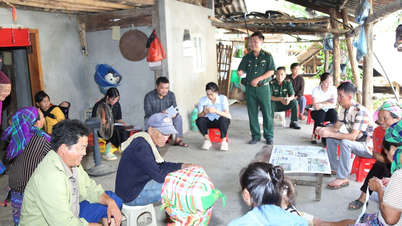
Not only tourists but also the local people have changed. They proactively contribute land and labor to repair village communal houses, renovate festival grounds, rebuild the ceremonial pole, and rediscover the prayers. In some localities, such as the former Cam Thuy district, the former Lang Chanh district, and the former Muong Lat district , clubs for preserving traditional festivals have been established, with members including teachers, village elders, and young people... all sharing the responsibility of preserving the memories of their homeland.
Thanh Hoa province also places special emphasis on training cultural personnel: organizing dozens of training courses for folk artisans, festival guides, and commune cultural officials. Hundreds of outstanding artisans have been awarded titles and supported in teaching. Policies to reward and honor those who preserve the soul of heritage are also specifically implemented because they are the "soul" of the festivals.
Village festivals are not just about "watching" them; they are about living, breathing, loving, and being proud of them. When a village holds a festival, it's an opportunity for the community to come together, remember their roots, share joys and sorrows, and nurture their identity. Village festivals not only revive memories but are also a profound, natural, and highly effective form of "community education."
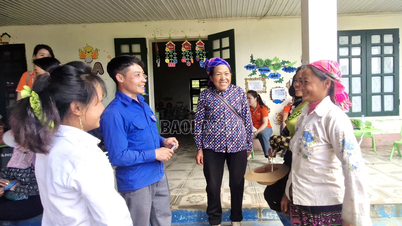
Perhaps the most touching moments weren't the dazzling performances on stage, but rather the image of an elderly village elder quietly beside an old drum; a child with trembling hands touching an ancestral costume; a Muong woman smiling as she watches her daughter perform an ancient dance amidst the village festival...
There, heritage is not found in books, but is present in every step, every drumbeat, every radiant glance of the local people.
The return of village festivals is not just about reviving a custom; it's about reviving the soul of the nation.
(To be continued)
Source: https://baovanhoa.vn/van-hoa/bai-2-hoi-sinh-le-hoi-giu-lua-hon-lang-158894.html
![[Image] Hanoi Police officially crowned champions of V-League 2025/2026](https://vphoto.vietnam.vn/thumb/1200x675/vietnam/resource/IMAGE/2026/05/31/1780244769054_ndo_br_039d561b692be875b13a-jpg.webp)
![[Photo] The General Secretary, President and his wife begin their state visit to the Philippines.](https://vphoto.vietnam.vn/thumb/1200x675/vietnam/resource/IMAGE/2026/05/31/1780230559452_anh-man-hinh-2026-05-31-luc-19-28-11.png)

![[Photo] Admire the coral "masterpiece" amidst the million-year-old heritage of Dak Lak province.](https://vphoto.vietnam.vn/thumb/1200x675/vietnam/resource/IMAGE/2026/05/31/1780221235105_anh-man-hinh-2026-05-31-luc-16-53-27.png)
![[Photo] Solemn bathing ceremony and Buddha procession in Hue](https://vphoto.vietnam.vn/thumb/1200x675/vietnam/resource/IMAGE/2026/05/31/1780228263543_1-jpg.webp)













![[Video] Sunset at Lap An Lagoon – Where the sun sets over the fishing nets](https://vphoto.vietnam.vn/thumb/340x192/vietnam/resource/IMAGE/2026/05/31/1780192137701_beach-landscape-sea-water-nature-grass-745871-pxhere-com.jpeg)

































![[Photo] Admire the coral "masterpiece" amidst the million-year-old heritage of Dak Lak province.](https://vphoto.vietnam.vn/thumb/402x226/vietnam/resource/IMAGE/2026/05/31/1780221235105_anh-man-hinh-2026-05-31-luc-16-53-27.png)




























Comment (0)