

The Government Inspectorate believes that the high rate of overdue administrative procedures in the fields of pharmaceuticals, traditional medicine, and medical equipment under the Ministry of Health, with many years of backlog, "is one of the factors leading to the shortage of medicines and equipment."
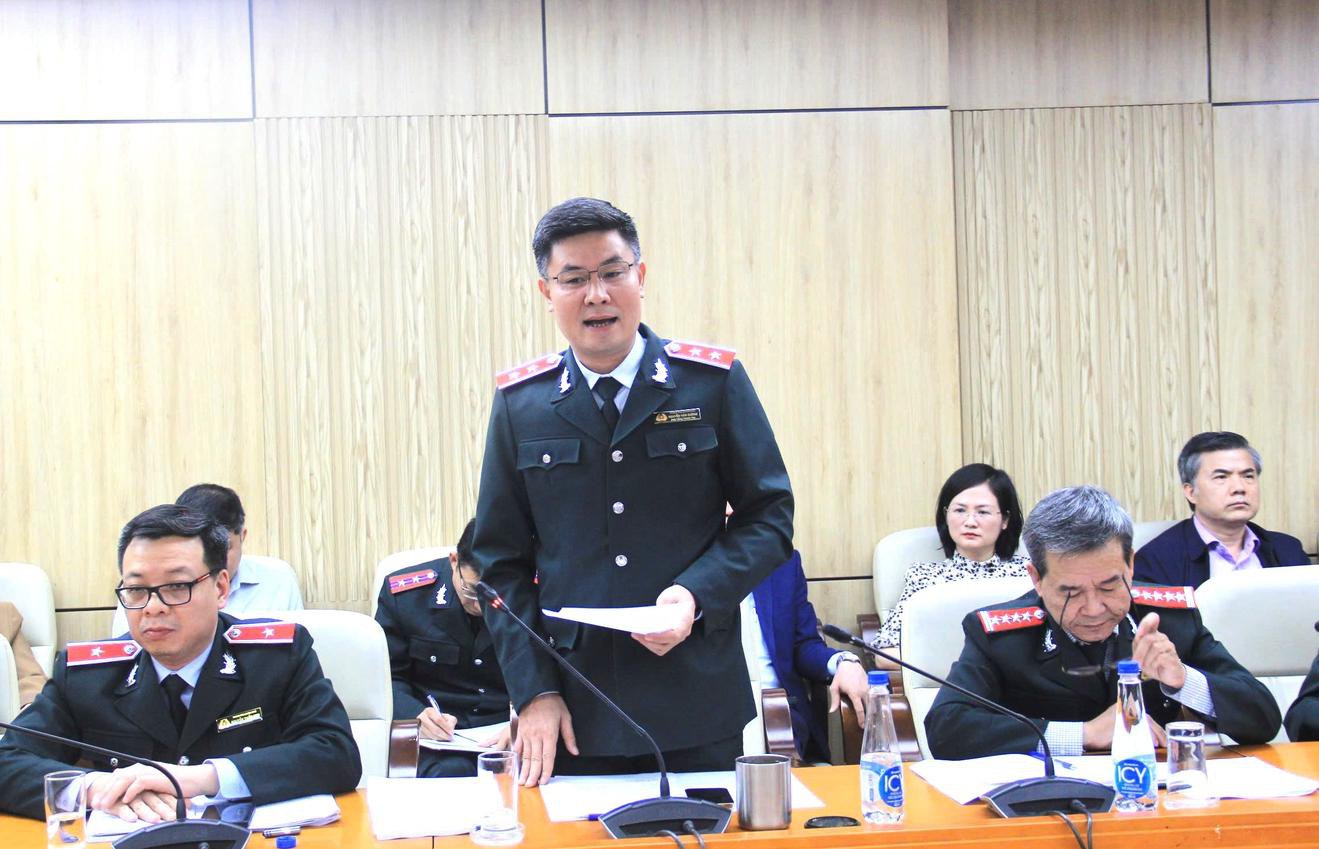
Deputy Chief Inspector of the Government Nguyen Van Cuong requested the Ministry of Health and other agencies to develop a plan to seriously implement the inspection conclusions - Photo: Government Inspectorate
On the afternoon of December 6th, the Government Inspectorate issued a conclusion on the inspection of the responsibilities of officials and employees in handling administrative procedures and providing public services to citizens and businesses at the Ministry of Health .
The inspection agency has pointed out numerous shortcomings and deficiencies in the handling of administrative procedures at the Ministry of Health.
Notably, the Government Inspectorate pointed out that delays in handling administrative procedures at the Ministry of Health not only cause inconvenience to citizens and businesses but also lead to shortages of medicines and equipment. This also risks creating a "request-and-grant mechanism," lacking transparency, and "causing public resentment."
The rate of overdue applications is nearly 70%.
The conclusion states that the review, evaluation, reduction, simplification of administrative procedures, and decentralization of administrative procedures at the Ministry of Health have been slow, incomplete, and not in accordance with the Government's resolution and the Prime Minister's directives.
Through inspections of 20 administrative procedures and 55 administrative procedure processing files at 5 units under the Ministry of Health, including the Drug Administration Department, the Medical Examination and Treatment Management Department, the Food Safety Department, the Traditional Medicine Management Department, and the Medical Infrastructure and Equipment Department, the Government Inspectorate discovered many shortcomings and violations.
According to the Inspectorate, the Ministry of Health's report on the results of handling administrative procedures does not accurately reflect the reality, the data is inaccurate, and "the number of overdue applications is very large, but the processing is very slow."
The Ministry's periodic report to the Government stated that the rate of overdue applications for the period 2021-2023 was 4.97%. However, the actual review revealed that the rate of overdue applications was 69.8% (an increase of over 64% compared to the figure reported by the Ministry), the conclusion stated.
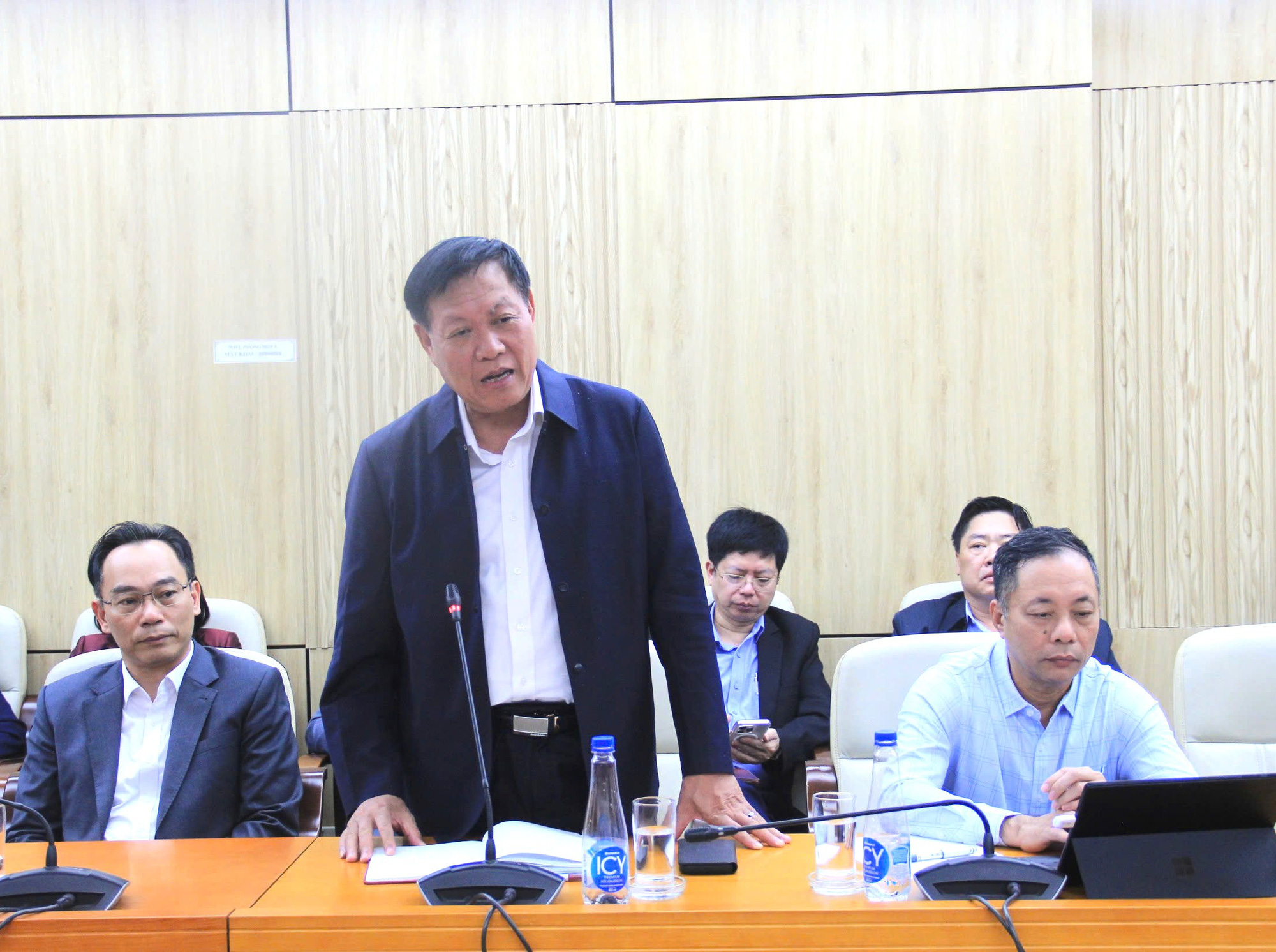
Deputy Minister of Health Do Xuan Tuyen acknowledged the conclusions of the inspection and stated that he would strictly implement the recommendations of the Government Inspectorate - Photo: Government Inspectorate.
The inspection results revealed that 19 administrative procedures had overdue processing times, 10 administrative procedures had overdue processing times exceeding 50%, and some administrative procedures had overdue processing times of 89-90%.
Notably, some administrative procedures have overdue files averaging over 400 days. Some files take 2-4 years to receive, process, and request for additional documents, while the regulation stipulates 3 working days, the conclusion stated.
Meanwhile, the agency responsible for processing applications under the Ministry of Health "did not apologize to citizens and businesses" as required by regulations for allowing applications to be processed overdue.
The Drug Administration Department has been lax in its management.
At the Drug Administration Department, the Government Inspectorate discovered a situation where applications were submitted and reviewed earlier but were not processed in the same order as required. When the applications were handed over to the reviewers, the priority order for each application and the completion deadline were not specified.
The Drug Administration Department has also not fully disclosed the status of application processing on the Ministry of Health's administrative procedure information system.
The monitoring and management of administrative procedures were found to have many limitations and weaknesses. In many cases, even though the processing deadline had passed, the process was still being monitored and reported as ongoing.
According to the conclusion, the Drug Administration Department was lax in managing and monitoring the detailed list of administrative procedure files for 3 procedures, including: "Issuance, renewal, amendment and supplementation of drug and drug raw material registration certificates" arising before 2020 that were either resolved during the inspection period or had not been resolved by the time of the inspection.
This has caused shortages of medicines and medical equipment.
At the five aforementioned units, the Government Inspectorate confirmed that there were instances of requiring businesses to supplement and complete documents beyond the regulations, and requesting additional documents more times than permitted.
These units also make incomplete or unclear requests, request additional information when regulations have been repealed, or request additional documentation proving that the constituent elements of drug prices are applied in violation of the law…
According to the inspectors, this led to businesses having to provide additional information and explanations multiple times, causing inconvenience.
The results of a sample inspection of 20 administrative procedures show that the rate of overdue applications in the fields of pharmaceuticals, traditional medicine, and medical equipment is very high, with many applications accumulating for many years.
The Government Inspectorate believes that delays in handling administrative procedures "are one of the factors leading to the shortage of medicines and medical equipment."
Along with limitations and weaknesses in record management and failure to fully comply with principles in handling applications, the inspection concluded that there is a "risk of creating a 'request-and-grant' mechanism," causing inconvenience, failing to ensure objectivity, fairness, and transparency in handling administrative procedures, and causing frustration for citizens, businesses, and the public.
The Ministry of Health is conducting a review of the responsibilities of its leaders.
The Government Inspectorate has requested the Ministry of Health to instruct the Drug Administration Department to take decisive action to rectify and overcome the lax management and monitoring of dossiers for the processing of certain administrative procedures.
The Ministry of Health is rectifying and improving public service responsibility, addressing shortcomings in the issuance of certificates confirming the content of advertisements for health supplements, medicines, and medical examination and treatment services, ensuring that businesses advertise truthfully and do not mislead the public and society.
"Fully implement the appraisal process and strengthen inspection and supervision, especially for cases of advertising of health supplements that differ from the registered content, easily causing misunderstandings about the uses, origin, and quality, which may affect people's health and cause waste in society," the conclusion stated.
The inspectors also recommended that the Ministry of Health review and improve legal regulations to prevent the abuse of conditions and procedures for registering health supplement products for the purpose of registering pharmaceutical products (if applicable).
The Ministry of Health is strengthening inspections and audits of the responsibilities of officials, civil servants, and heads of departments and divisions under the ministry that handle administrative procedures with a large backlog of files, promptly addressing violations and rectifying management.
"Based on the inspection findings and the Prime Minister's directives, the Ministry of Health is conducting a review of the responsibilities of the head and relevant leaders of the Ministry of Health regarding shortcomings, deficiencies, and violations in state management and the handling of administrative procedures and provision of public services to citizens and businesses."
"In accordance with its authority, the Government Inspectorate proposed conducting reviews with leaders of departments, divisions, units, collectives, and individuals under the Ministry of Health involved in shortcomings, defects, and violations," the Government Inspectorate suggested.
Source: https://tuoitre.vn/bo-y-te-ho-so-qua-han-gan-70-nhieu-khuyet-diem-trong-giai-quyet-thu-tuc-hanh-chinh-20241206200911414.htm

![[Image] Leaked images ahead of the 2025 Community Action Awards gala.](/_next/image?url=https%3A%2F%2Fvphoto.vietnam.vn%2Fthumb%2F1200x675%2Fvietnam%2Fresource%2FIMAGE%2F2025%2F12%2F16%2F1765882828720_ndo_br_thiet-ke-chua-co-ten-45-png.webp&w=3840&q=75)

![[Photo] Prime Minister Pham Minh Chinh receives the Governor of Tochigi Province (Japan)](/_next/image?url=https%3A%2F%2Fvphoto.vietnam.vn%2Fthumb%2F1200x675%2Fvietnam%2Fresource%2FIMAGE%2F2025%2F12%2F16%2F1765892133176_dsc-8082-6425-jpg.webp&w=3840&q=75)
![[Photo] Prime Minister Pham Minh Chinh receives Lao Minister of Education and Sports Thongsalith Mangnormek](/_next/image?url=https%3A%2F%2Fvphoto.vietnam.vn%2Fthumb%2F1200x675%2Fvietnam%2Fresource%2FIMAGE%2F2025%2F12%2F16%2F1765876834721_dsc-7519-jpg.webp&w=3840&q=75)
![[Live] 2025 Community Action Awards Gala](/_next/image?url=https%3A%2F%2Fvphoto.vietnam.vn%2Fthumb%2F1200x675%2Fvietnam%2Fresource%2FIMAGE%2F2025%2F12%2F16%2F1765899631650_ndo_tr_z7334013144784-9f9fe10a6d63584c85aff40f2957c250-jpg.webp&w=3840&q=75)























































































Comment (0)