

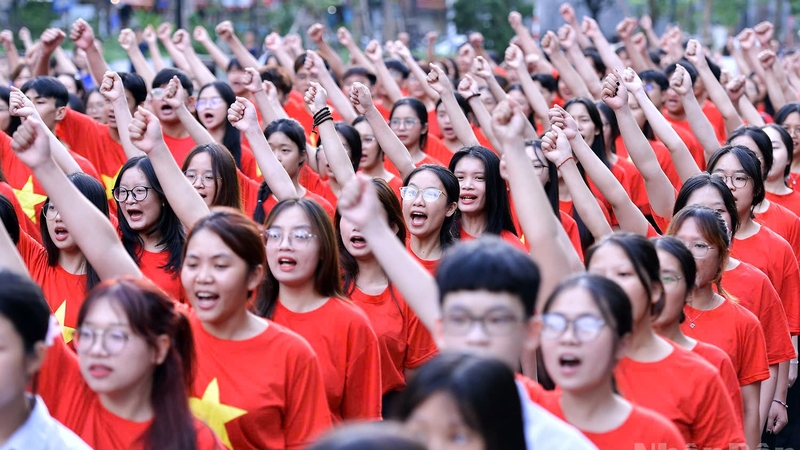
Vietnam is a unique nation, because its history of resistance against foreign invaders was not only built on the strength of weapons, but more importantly, on the strength of ideals and spirit, especially during the more than 20 years of the war against the US to save the country. Living through those fiery days, when the whole country was brimming with the spirit of going to war, determined to defeat the American invaders to regain independence, freedom, and national unity, Vietnamese musicians of that era captured the spiritual current of the nation and composed a series of songs with the power of divisions.
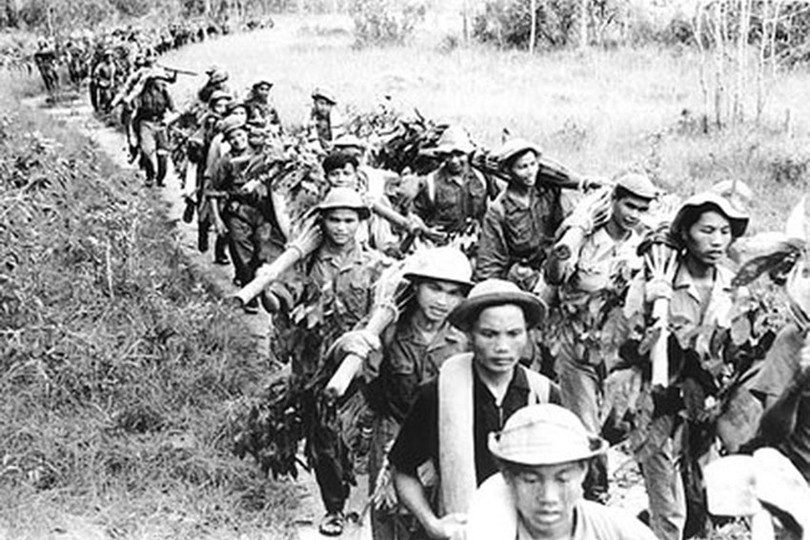
The works of composers such as Do Nhuan, Luu Huu Phuoc, Pham Tuyen, Trong Bang, Trinh Cong Son, Huy Du, Huy Thuc, Phan Huynh Dieu, Doan Nho, Hoang Hiep, Xuan Giao, Tran Chung, Van Dung, Vu Trong Hoi, Anh Duong, Van Ky, Nguyen Van Ty… were quickly broadcast on the Voice of Vietnam Radio and the Liberation Radio, urging young men from the villages to volunteer to go to war, urging feet to cross high mountains and steep slopes towards the South, urging hands to cut through mountains to build roads, and urging vehicles to travel under bombs and bullets towards the great front lines.
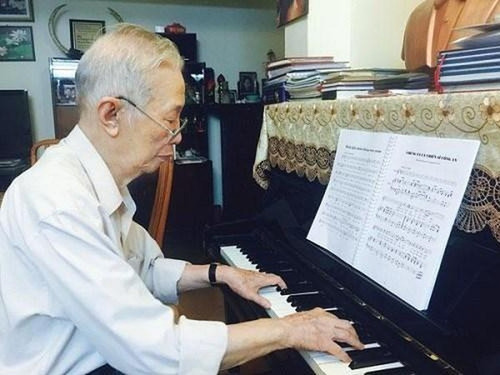
"The Storm Has Risen," written in 1968 by Professor, musician, and People's Artist Trong Bang, exudes the spirit of a general offensive and uprising from all directions with its urgent and vibrant melody and lyrics: "The storm has risen / From the South, our homeland / From Tri Thien, crossing the Central Highlands, spreading to the swamps / Millions of people are brimming with energy… People are going to fight / Shoulder to shoulder, they march on…"
As the resistance war entered its most intense phase, the "Singing to Drown Out the Sound of Bombs" movement, launched by the Central Committee of the Ho Chi Minh Communist Youth Union, quickly spread throughout the country, from the rear to the front lines, along the vital transportation routes of the Truong Son Road. A series of songs were born, imbued with the spirit of relentless attack, giving strength to the young volunteers, soldiers, messengers, and all the people and soldiers nationwide, such as: "The Girl Who Opens the Road" (Xuan Giao); "My Road Stretches Along the Country," "Footsteps on the Truong Son Mountain Range" (Vu Trong Hoi); "My Vehicle Passes Through the Truong Son Road" (Van Dung); "The Truong Son Walking Stick" (Pham Tuyen); "Light the Fire, My Dear" (music by Huy Du, lyrics by Giang Lam); "The Song of Truong Son" (music by Tran Chung, lyrics by Gia Dung); "Remembering Uncle Ho on a Truong Son Night" (music by Tran Chung, lyrics by Nguyen Trung Thu)...
These are the romantic epics on the legendary Truong Son trail, steeped in blood, sweat, and the great aspiration of liberating their country: "The road bears your footprints / The road is imprinted in my heart / How much I love the Truong Son road / When your love burns in my heart"; "Light the fire, my love / Fight the Americans day and night / The universe follows us / In the battlefield, there is the Moon Goddess / Shining brightly through the night"; "Oh, there are stars that stay awake with us tonight / Like your eyes shining with countless hopes / We remember Mother Nam Can, we cherish you Cua Viet…" In the final years of the resistance war, Saigon, the last stronghold of the American-puppet regime, was the destination to end the protracted war.
With the song "Marching Towards Saigon," composer Luu Huu Phuoc expresses the burning desire and longing, and the hurried steps filled with surging excitement: "Saigon, we've returned! We've returned... Marching towards Saigon / We'll sweep away the enemy / Heading towards the plains, we'll advance towards the city / The nation awaits / This is the final battle / Marching towards the plains, liberating the city."
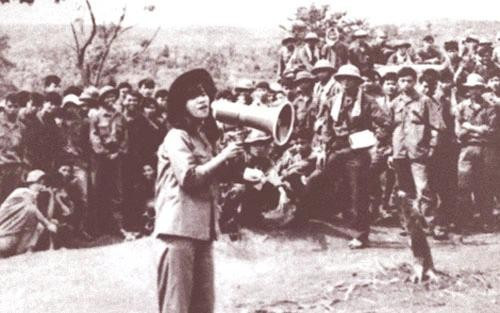
Alongside the lively, stirring, and marching songs are a series of lyrical, profound, and heartfelt melodies, expressing the yearning for peace, happiness, and national unity. The love between couples is intertwined with love for the country, noble and beautiful. The image of the mother, lover, and wife in the rear, faithfully waiting, diligently working and producing, sending their faith to those on the front lines, is beautifully portrayed in the songs of composer Nguyen Van Ty such as: "Mother Loves Her Child," "The Five-Ton Song"; and in the songs of composer Phan Huynh Dieu such as: "The Shadow of the Kơ-nia Tree," "You Are at the Head of the River, I Am at the End of the River," "March of Day and Night" (poem by Bui Cong Minh); "Life Is Still Beautiful" (poem by Duong Huong Ly): Though separated by two different paths of the campaign / We still share the same shimmering moonlight / The song of a bird / The sea breeze / A spring morning before the field bunker, seeing the sky so blue...
The aspiration to dedicate oneself to an ideal, the willingness to sacrifice, the belief in victory, and the hope for a peaceful future for the country are deeply etched in works such as "Song of Hope" (Van Ky); "Voluntary" (Truong Quoc Khanh); "A Song by the Banks of Hien Luong River" (Hoang Hiep - Dang Giao); "Red Leaves" (Hoang Hiep); "The Standing Guard's Lamp" (Hoang Hiep, setting to a poem by Chinh Huu)...
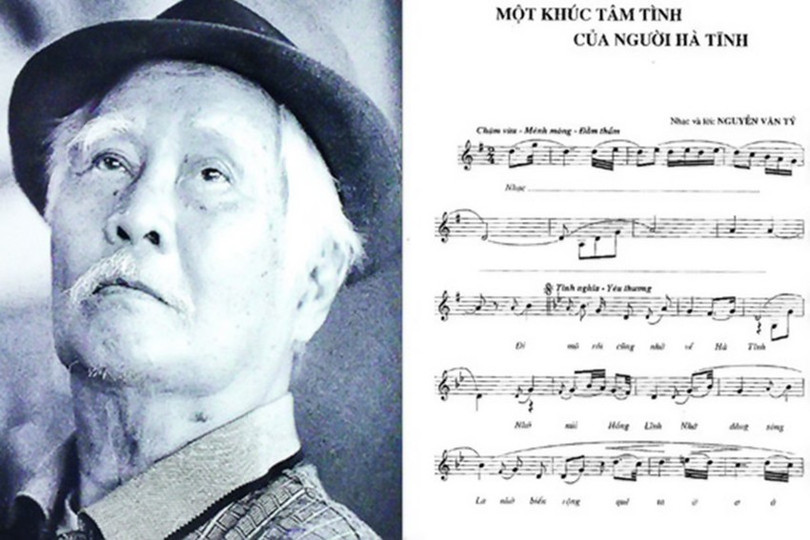
During the war against the US, Ha Tinh was a "land of music," a place where many musicians found their calling. Dozens of songs about Ha Tinh were sung by many people, notably: "Joyful Road Opening" (Do Nhuan); "Greetings, My Girl from Lam Hong" (Anh Duong); "A Heartfelt Song of a Ha Tinh Person" (Nguyen Van Ty); "Girl of the La River", "Ha Tinh, Our Homeland" (Le Ham); "Ha Tinh on the Road to Victory" (Thai Quy); "Song of Ha Tinh" (Do Dung); "The Girl of the La River" (Doan Nho); "The Road to Ha Tinh" (Vinh An)...
Right in this land steeped in folk songs and rhymes, many rhyming verses were born to encourage the fighting spirit of the army and people, most notably the rhyme "The Fallen Thunder God" by author Le Thanh Binh, which both adults and children knew by heart at that time: "Why is the place so deserted? On the twenty-sixth of March, the Thunder God came to our province. The militia of Thach Hoa commune brought out their rifles and fired in a rhythm of one to three, shooting until the cattle slipped and fell. One shot, then two, then three, the Thunder God's tail was severed, its wings broken, the Thunder God fell headlong, its wings broken..."
It's impossible to list all the musical works from our nation's resistance against the American invasion, as they were born from the fighting spirit, the fervent patriotism, the fighting spirit of the entire nation, and the pure, beautiful, noble, and romantic souls of an entire generation. These are invaluable spiritual assets left to posterity, musical records of history created by composers and artists that will continue to resonate, stay alive, and echo not just after 50 years, but for thousands of years to come…
Source: https://baohatinh.vn/ca-khuc-cach-manh-suc-manh-chien-thang-post286914.html

![[Photo] Close-up of an Australian warship visiting Tien Sa port, Da Nang](https://vphoto.vietnam.vn/thumb/1200x675/vietnam/resource/IMAGE/2026/03/28/1774675489416_tau-5-jpg.)






























































Comment (0)