

Since the beginning of the year, the Department of Agriculture and Environment of Can Tho City has closely coordinated with specialized units and localities to implement many programs to support livestock development. The focus has been on guiding people to shift from small-scale to large-scale, concentrated livestock farming, applying good livestock farming practices (VietGAHP), building biosecure and disease-free livestock farming models, and linking product consumption along the value chain.
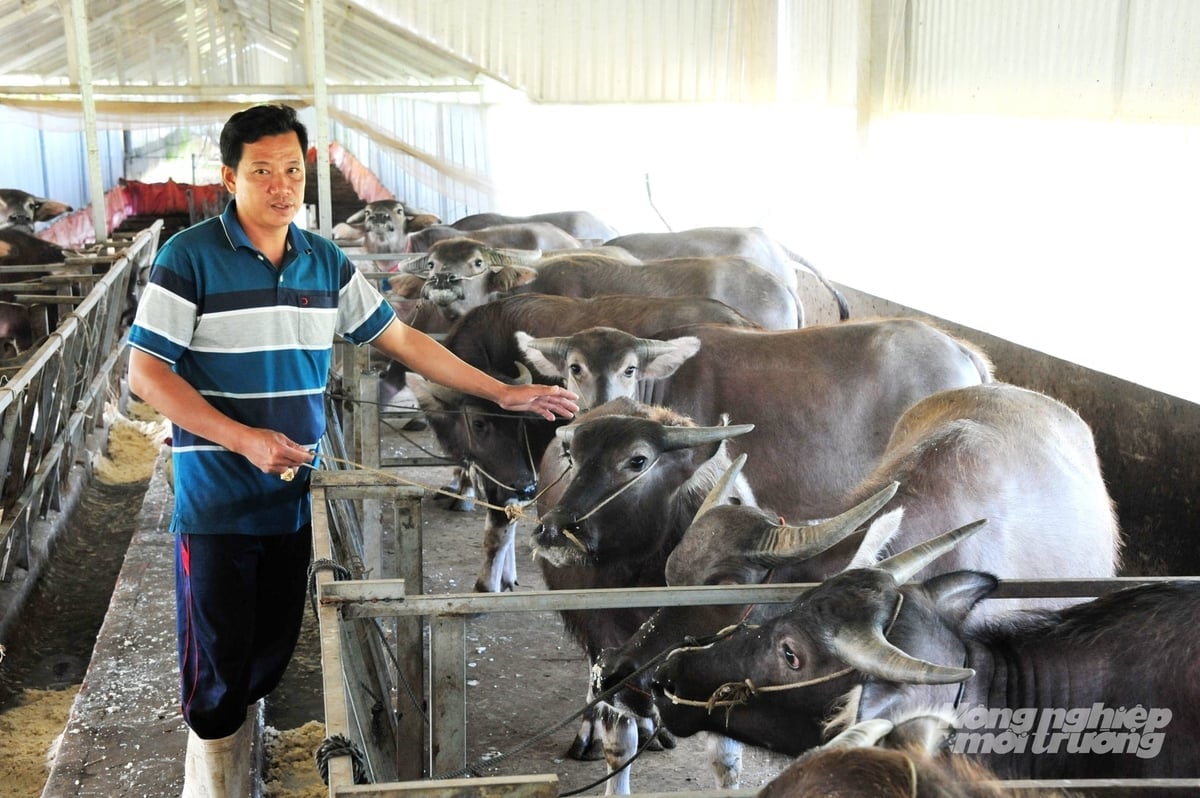
The closed-loop buffalo farming model, with strict disease control, helps reduce risks and improve productivity and product quality. Photo: Le Hoang Vu.
Simultaneously, technical training, vaccination awareness campaigns, and disinfection of livestock facilities are carried out regularly. Authorities also facilitate people's access to policies supporting breeding stock, especially parent stock, to improve the quality of livestock from the outset. This year, the city has supported over 450 parent breeding pigs, along with some buffalo, cattle, and goats, under a mechanism where the State provides 50% of the funding and the people contribute the remaining 50%.
In Thanh Phu commune, Mr. Tran Van Minh's biosecure pig farming model is showing clear effectiveness. With a scale of over 300 pigs, the farm is equipped with a closed barn system, waste treatment, and strict control over people and vehicles entering and exiting.
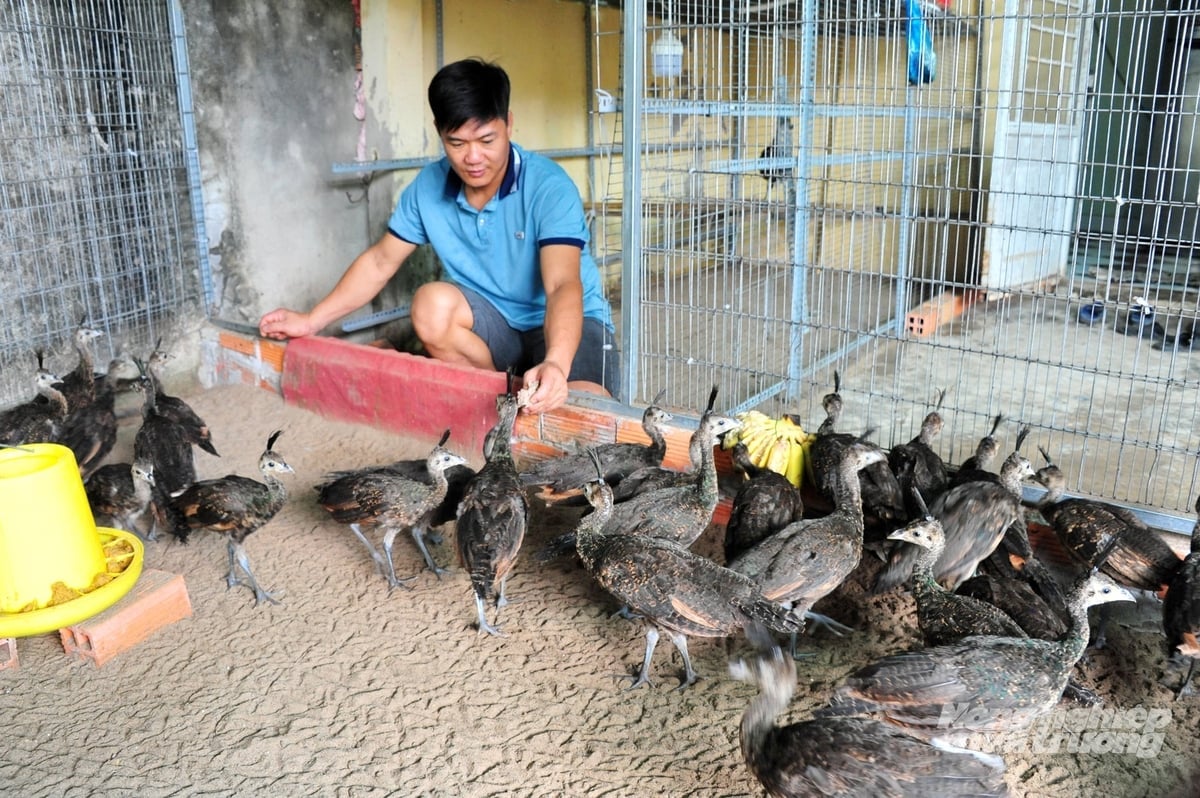
Veterinary officials in Can Tho City guide livestock farmers on ensuring full vaccination, contributing to the protection of livestock and the stability of production. Photo: Le Hoang Vu.
Mr. Minh said: "Since implementing biosecurity measures and administering full vaccinations, our family's pig herd has been almost free from disease outbreaks. Although costs increased initially, the low mortality rate compensates for this, the pigs grow faster, and the market demand is more stable."
Not only pig farmers, but many poultry farmers in the city are also boldly changing their methods. Ms. Nguyen Thi Hong, a free-range chicken farmer in Thoi Lai commune, said that previously her family raised chickens based on experience, which often led to disease outbreaks.
For over two years, Mrs. Hong's family has been guided by local veterinary officers on proper vaccination, coop hygiene, and flock monitoring procedures. As a result, the chickens have been healthy, rarely get sick, and fetch higher prices because traders trust them.
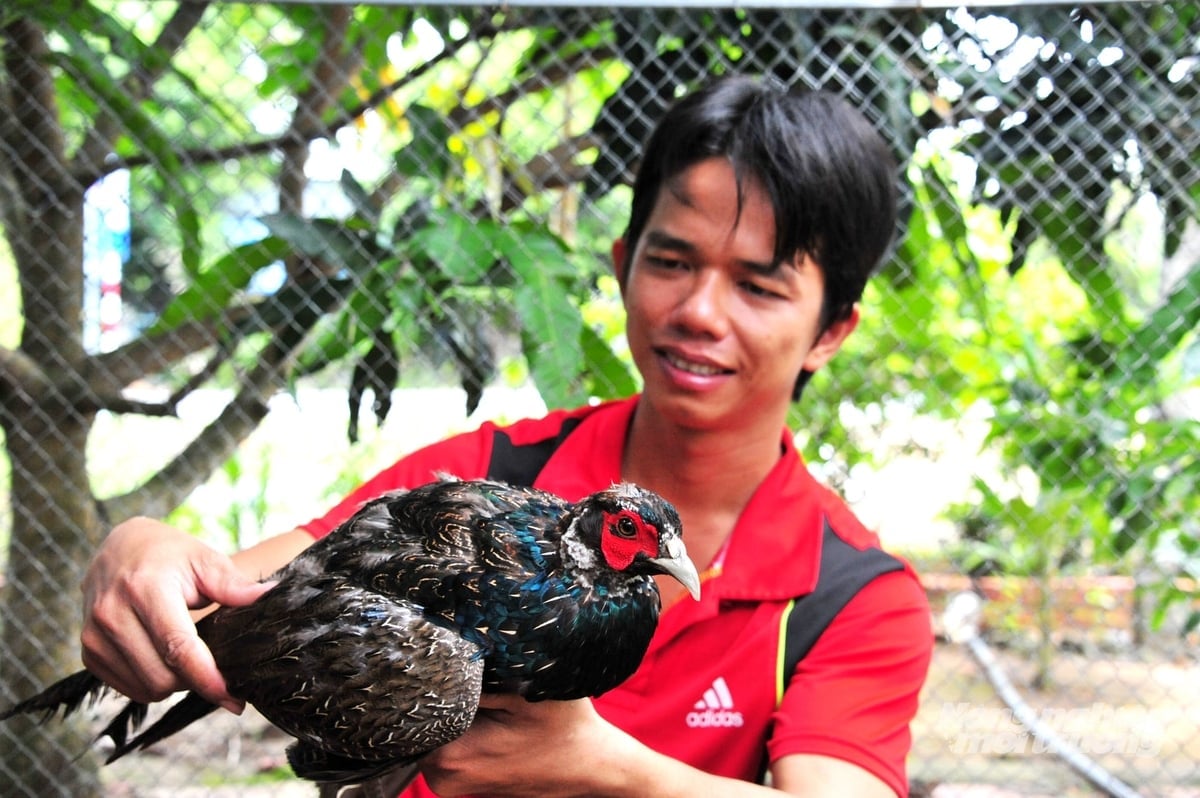
Locals apply biosecurity practices in livestock farming, regularly cleaning their barns to produce products that meet market demands. Photo: Le Hoang Vu.
Thanks to comprehensive solutions, the total number of livestock and poultry in Can Tho City continues to increase compared to previous years. Currently, the city has more than 16 million poultry; nearly 500,000 pigs; over 62,000 cattle; along with tens of thousands of buffaloes, goats, and other livestock. The estimated production of various types of meat in 2025 is over 171,000 tons, and poultry eggs more than 720 million, adequately meeting domestic consumption needs.
In addition, swiftlet farming is thriving with over 1,100 establishments, contributing to the diversification of agricultural products and increasing people's income. Some specialty livestock such as spotted deer, civets, and bees are also maintained on a household scale, creating sustainable livelihoods for farmers.
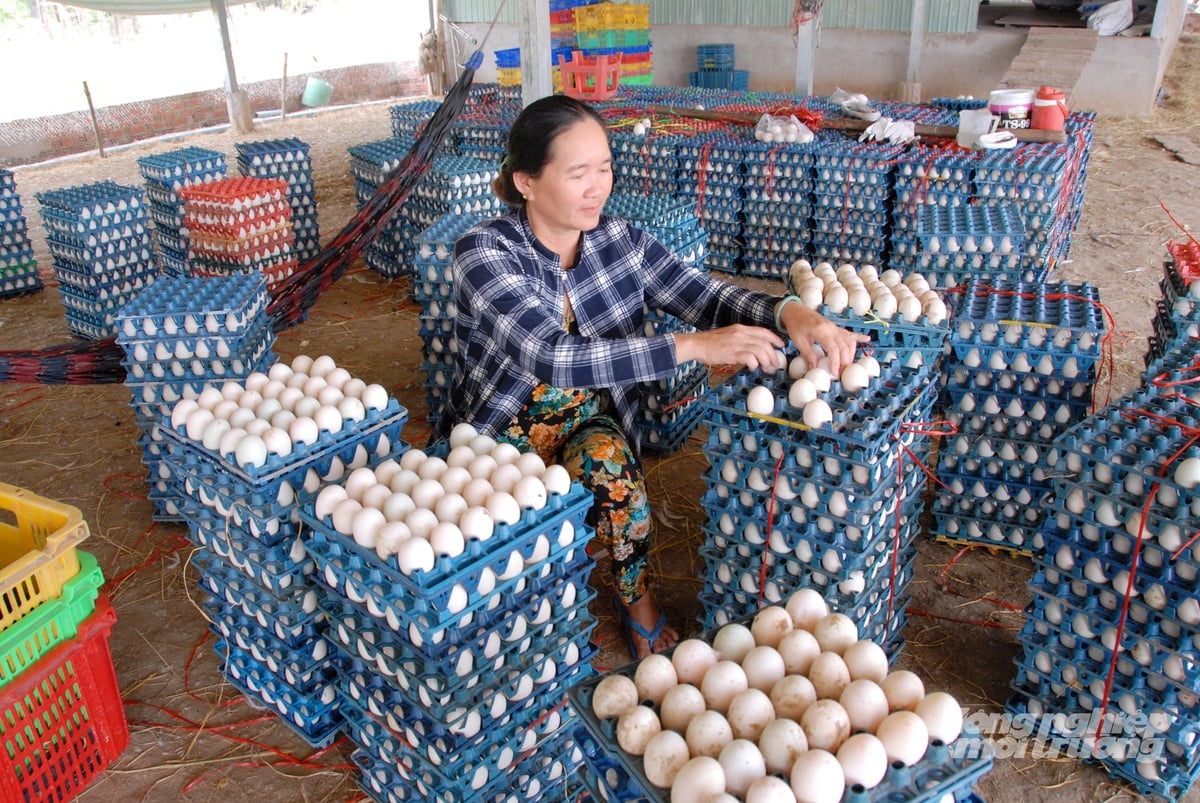
Many households and businesses in Can Tho City are investing in expanding their scale, linking production and consumption, and increasing the value of the livestock industry. Photo: Le Hoang Vu.
Mr. Nguyen Tan Nhon, Deputy Director of the Department of Agriculture and Environment of Can Tho City, said: Livestock farming in the city is clearly changing towards increasing both scale and quality. Farm-based, concentrated, biosecure, and disease-free livestock farming models are becoming increasingly common, contributing to increased product value and economic efficiency for farmers.
Currently, Can Tho City has more than 1,100 livestock and poultry farms, many of which are medium and large-scale. The city also has dozens of facilities certified under VietGAHP, along with disease-free farming areas, creating favorable conditions for the formation of integrated chains from production to consumption of meat, eggs, and milk.
According to Mr. Nguyen Tan Nhon, in the coming time, the Department of Agriculture and Environment of Can Tho City will continue to work alongside people and businesses to promote livestock farming towards industrialization and modernization, linked with environmental protection and traceability.
Source: https://nongnghiepmoitruong.vn/chan-nuoi-can-tho-chuyen-minh-theo-huong-an-toan-sinh-hoc-d789419.html


![[Photo] Prime Minister Pham Minh Chinh receives Lao Minister of Education and Sports Thongsalith Mangnormek](/_next/image?url=https%3A%2F%2Fvphoto.vietnam.vn%2Fthumb%2F1200x675%2Fvietnam%2Fresource%2FIMAGE%2F2025%2F12%2F16%2F1765876834721_dsc-7519-jpg.webp&w=3840&q=75)
![[Photo] Prime Minister Pham Minh Chinh receives the Governor of Tochigi Province (Japan)](/_next/image?url=https%3A%2F%2Fvphoto.vietnam.vn%2Fthumb%2F1200x675%2Fvietnam%2Fresource%2FIMAGE%2F2025%2F12%2F16%2F1765892133176_dsc-8082-6425-jpg.webp&w=3840&q=75)
![[Live] 2025 Community Action Awards Gala](/_next/image?url=https%3A%2F%2Fvphoto.vietnam.vn%2Fthumb%2F1200x675%2Fvietnam%2Fresource%2FIMAGE%2F2025%2F12%2F16%2F1765899631650_ndo_tr_z7334013144784-9f9fe10a6d63584c85aff40f2957c250-jpg.webp&w=3840&q=75)
![[Image] Leaked images ahead of the 2025 Community Action Awards gala.](/_next/image?url=https%3A%2F%2Fvphoto.vietnam.vn%2Fthumb%2F1200x675%2Fvietnam%2Fresource%2FIMAGE%2F2025%2F12%2F16%2F1765882828720_ndo_br_thiet-ke-chua-co-ten-45-png.webp&w=3840&q=75)








































![[Live] Closing Ceremony and Award Presentation for the "Impressive Vietnam Tourism" Video/Clip Creation Contest 2025](https://vphoto.vietnam.vn/thumb/402x226/vietnam/resource/IMAGE/2025/12/17/1765974650260_z7273498850699-00d2fd6b0972cb39494cfa2559bf85ac-1765959338756946072104-627-0-1338-1138-crop-1765959347256801551121.jpeg)

















Comment (0)