

Support people's livelihoods
The pair of buffaloes that Ms. Dang Thi Xuan's family in Na Chan hamlet, Tam Kim commune is taking care of are supported by the Value Chain Linkage Project under Program 1719. Providing livelihoods through livestock is considered a suitable solution for rural mountainous conditions, helping poor and near-poor households, especially ethnic minorities, to have more conditions to develop their household economy and expand buffalo and cow breeding - an industry closely associated with local production practices.
In addition to supporting livestock, the project also organizes technical training for participating households. People are instructed on livestock raising methods that combine traditional experience with modern techniques such as: artificial insemination, care processes according to each growth stage and vaccination schedules for common diseases. This knowledge helps livestock farmers to be more proactive, limit risks and increase livestock productivity.

For Ms. Xuan's family, the pair of buffaloes has become an important support to reduce immediate difficulties and create a foundation for long-term economic development. Ms. Xuan said: Since receiving the two buffaloes and participating in technical training sessions, care has been easier and the buffalo herd has developed well.
In 2024, Na Chan hamlet will implement a value chain linkage project by supporting buffalo breeding for 25 households, each household will receive 2 buffaloes to develop their livelihoods. This is one of 5 production development support projects approved for implementation in Tam Kim commune. The total capital allocated for the projects is more than 1 billion 681 million VND, with 165 poor and near-poor households in the commune participating in the benefits.
Forming large-scale raw material areas
In Nguyen Hue commune, low-yielding corn fields are gradually being replaced by arrowroot plants that bring higher economic value. This transformation not only reflects efforts to change production thinking but is also associated with the changing face of the countryside thanks to investment from the State.
Ms. Hau Thi Hong, Lung Ga hamlet, Nguyen Hue commune shared: In recent years, thanks to the investment of the State, the hamlet has electricity, phone signal and Internet, people have more convenient access to information, learn new ways of doing business, and know how to choose suitable crops.
For many households in Lung Ga, cassava has become a staple crop. With high productivity and more stable income than corn, people have more motivation to expand their acreage. One cassava root can produce about 10 kg of tubers, which can be sold at a much higher price and profit than growing corn before.
Nguyen Hue Commune has included arrowroot in the support list of Program 1719, considering this a suitable conversion direction for local soil conditions and people's cultivation capacity. At the same time, expanding the area of arrowroot also creates a stable source of raw materials for the developing arrowroot vermicelli industry in the locality, especially the product with the An Lai vermicelli brand. When the input is guaranteed on the spot, the commune's processing facilities have the conditions to increase production capacity, improve quality and build a more sustainable brand.
Changing production thinking
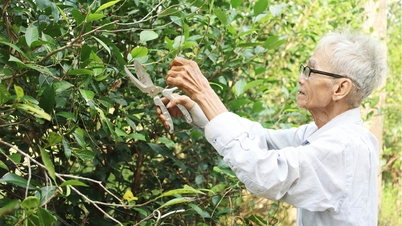
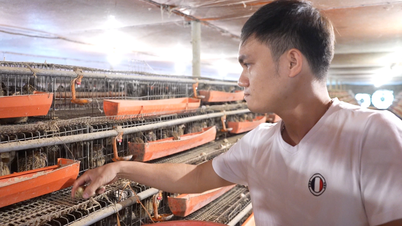
Aiming at improving sustainable livelihoods, projects supporting production development along the value chain have created a positive change: people's production thinking has been significantly changed thanks to access to science and technology. In the period of 2021 - 2025, the whole province has implemented nearly 1,000 projects and plans to support production development, linkage models from the provincial to community levels. More than 46,500 households participated, most of whom were poor and near-poor households. With support resources of more than 924.6 billion VND, people not only received plants and seedlings but were also equipped with technical knowledge. Training courses on planting, raising livestock, disease prevention processes, and sustainable farming techniques have helped people change their previous production habits. Many households have switched from using chemical fertilizers to organic, from practicing experienced farming to applying technical processes, from self-sufficient farming to commodity-oriented production. The units in charge of the association always closely follow each stage, provide technical guidance on planting, care, and harvesting, and at the same time purchase products, creating trust for people to boldly apply new techniques.
Along with key plants and animals such as anise, macadamia, tea, sugarcane, purple cardamom, livestock, poultry, etc., cinnamon planting linkage models are having great influence. In Bao Lac and Bao Lam areas, two linkage chains have been deployed to support 359 households in the communes of Ha Quang, Tong Cot, Lung Nam, Ha Lang, Vinh Quy, to plant 317.9 hectares of cinnamon.
The changes in each hamlet and village from the production support projects of Program 1719 show that science and technology are gradually becoming the "key" to opening up new economic ways for ethnic minorities. Boldly approaching modern farming and livestock techniques helps increase productivity, improve income and production thinking is also changing towards a more professional and systematic direction. This is an important foundation for production development support projects to continue to operate effectively and sustainably, creating momentum for people to confidently expand their scale, master their livelihoods and gradually improve their lives.
Source: https://baocaobang.vn/chuyen-bien-tu-duy-san-xuat-cua-nguoi-dan-tu-tiep-can-khoa-hoc-ky-thuat-3182784.html
![[Photo] Worshiping the Tuyet Son statue - a nearly 400-year-old treasure at Keo Pagoda](/_next/image?url=https%3A%2F%2Fvphoto.vietnam.vn%2Fthumb%2F1200x675%2Fvietnam%2Fresource%2FIMAGE%2F2025%2F12%2F02%2F1764679323086_ndo_br_tempimageomw0hi-4884-jpg.webp&w=3840&q=75)
![[Photo] Parade to celebrate the 50th anniversary of Laos' National Day](/_next/image?url=https%3A%2F%2Fvphoto.vietnam.vn%2Fthumb%2F1200x675%2Fvietnam%2Fresource%2FIMAGE%2F2025%2F12%2F02%2F1764691918289_ndo_br_0-jpg.webp&w=3840&q=75)




















![[Video] Protecting World Heritage from Extreme Climate Change](https://vphoto.vietnam.vn/thumb/402x226/vietnam/resource/IMAGE/2025/12/03/1764721929017_dung00-57-35-42982still012-jpg.webp)






































Comment (0)