

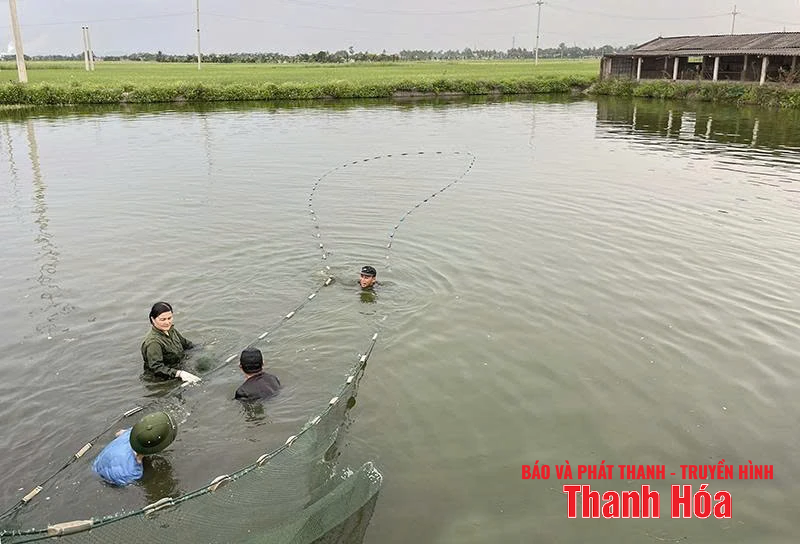
The model of converting inefficient rice land into high-yield aquaculture by Mr. Le Van Tinh's family in Hoang Thanh commune.
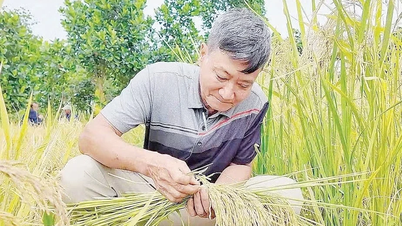
In previous years, the more than 5 sao (approximately 0.5 hectares) of rice fields belonging to Mr. Le Van Tinh's family in Hamlet 3, Hoang Thanh Commune, were located in a low-lying area, frequently flooded, resulting in low yields. Encouraged and guided by the local authorities to convert inefficient agricultural land to aquaculture, Mr. Tinh acquired an additional 0.5 hectares of low-lying land from neighboring households to invest in digging ponds for freshwater fish farming combined with livestock raising, forming a comprehensive economic model. According to Mr. Le Van Tinh, since the conversion, after more than a year of traditional freshwater fish farming, the average yield has reached 4 tons. Along with livestock and poultry farming, after deducting expenses, the profit is nearly 200 million VND per year.
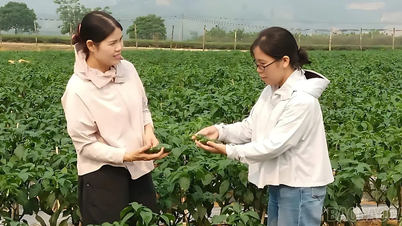
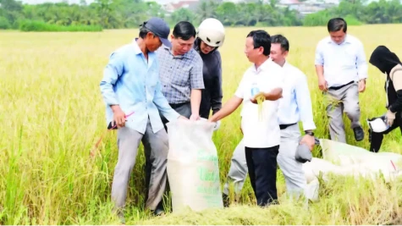
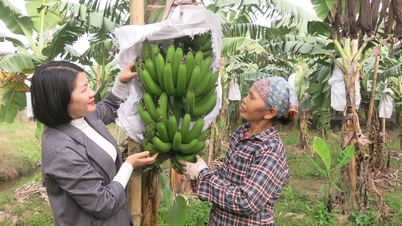
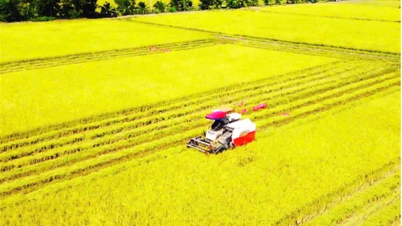
In the first six months of 2025, the entire province flexibly converted 863.7 hectares of low-yield, low-efficiency rice land to other crops. This included 673.6 hectares for annual crops, 153.5 hectares for perennial crops, and 36.6 hectares for rice cultivation combined with aquaculture. According to the Department of Agriculture and Environment, the models of converting from rice cultivation to other annual crops all yielded higher returns compared to rice cultivation alone. For example: the model of growing yellow melons in Yen Dinh commune and Dong Son ward generated an income of 250-300 million VND/hectare/year; growing flowers and ornamental plants in Ham Rong ward generated an income of 200-250 million VND/hectare/year; growing chili peppers in Tay Do commune generated an income of 250 million VND/hectare/year; and growing vegetables in Dong Quang ward generated an income of 180-200 million VND/hectare/year. Areas converted from rice cultivation to perennial crops have yielded high economic returns, such as: the ornamental peach tree cultivation model in Quang Chinh commune generating over 400 million VND/ha/year, and the fruit tree cultivation model in Tho Xuan commune generating 150-300 million VND/ha/year... For areas converted from rice cultivation to rice cultivation combined with aquaculture, most are carried out on low-lying, flood-prone rice fields during the rainy season, resulting in unstable rice yields. Although the economic efficiency is not significantly higher than cultivating two rice crops per year, households converting one spring rice crop and one fish crop achieve relatively stable incomes of 50-90 million VND/ha/year.
Identifying the flexible conversion of low-yield, low-efficiency rice-growing land to other crops is one of the important solutions to improve the efficiency of rice land use, especially in areas where rice cultivation yields lower economic returns than other crops. Since the beginning of the year, the Department of Agriculture and Environment has urged and guided localities to promote the conversion of crop structures on low-efficiency rice-growing land through the agricultural production plan. However, currently, the remaining low-efficiency rice-growing areas are mainly located in the midland and mountainous regions with complex terrain, limited transportation, and irrigation infrastructure, making the conversion process difficult. Furthermore, most households have fragmented and small-scale agricultural land, making it difficult to produce agricultural products commercially. The unstable market for converted products also discourages households from investing in this conversion.
To ensure the flexible conversion of low-yield, low-efficiency rice-growing land to other crops effectively, the Department of Agriculture and Environment is actively coordinating with communes and wards to guide, inspect, and supervise the conversion of perennial crops on remaining rice-growing land, ensuring compliance with the Law on Crop Production and other current legal regulations. Simultaneously, it is reviewing and supplementing the list of perennial crops permitted for conversion on rice-growing land, adapting it to each stage of development and the local situation. Furthermore, relevant agricultural units are coordinating with localities to inspect and monitor implementation results, promptly addressing violations of crop conversion regulations on rice-growing land.
Text and photos: Le Hoi
Source: https://baothanhhoa.vn/chuyen-doi-dat-trong-lua-hieu-qua-thap-sang-cay-trong-khac-256643.htm


![[Image] National Assembly discusses the implementation of the socio-economic development plan.](https://vphoto.vietnam.vn/thumb/1200x675/vietnam/resource/IMAGE/2026/04/20/1776696707422_ndo_br_img-20260420-185419-jpg.webp)
![[Photo] General Secretary and President To Lam meets with National Assembly delegates from ethnic minorities.](https://vphoto.vietnam.vn/thumb/1200x675/vietnam/resource/IMAGE/2026/04/20/1776696701056_a1-bnd-8331-3342-jpg.webp)






















































Comment (0)