

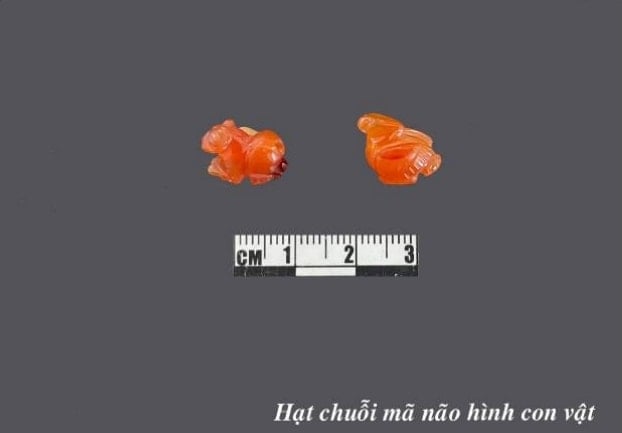
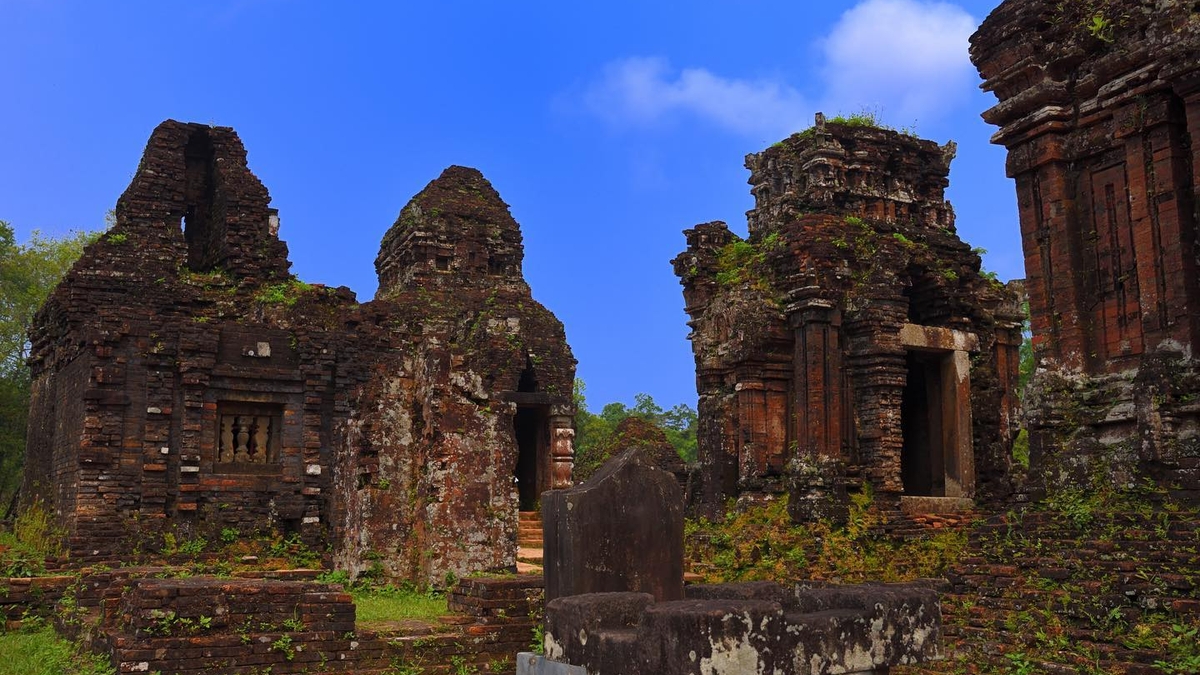
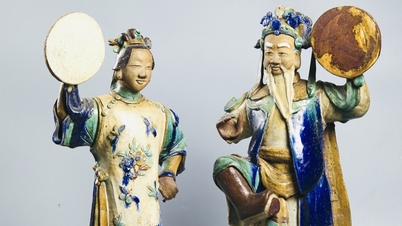
Among the 33 national treasures recognized by the Prime Minister in the final batch of 2024, there are 4 treasures from Quang Nam. Of these, 2 national treasures are currently kept at the Quang Nam Museum, dating from the 3rd century BC to the mid-1st century AD.
Original, unique artifacts
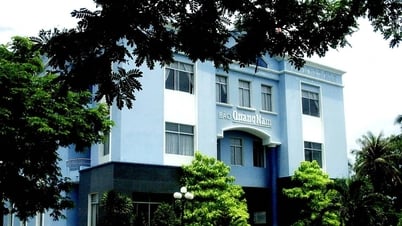
At Quang Nam Museum, the collection of Sa Huynh culture gold jewelry in Lai Nghi burial site (Dien Nam Dong ward, Dien Ban town) includes 108 intact artifacts, divided into 2 groups, preserved here.
Mr. Nguyen Thanh Hong - Director of the Department of Culture, Sports and Tourism said that these are original, unique artifacts discovered at the Lai Nghi burial site through archaeological excavations, with intact cultural layers, and have been analyzed for age by many methods. The artifacts are unique in shape, typical, have historical and cultural value, so they have met the criteria to be recognized as national treasures.
Meanwhile, the two treasures, a bronze drum and a bronze jar owned by Mr. Luong Hoang Long (residing in Hoi An City), were both dated to the Dong Son Culture (4th - 3rd century BC to 1st - 2nd century AD).
The Dong Son bronze drum has a face diameter of 49.5cm, a height of 35.5cm, and a base diameter of 56cm. Its basic condition is still intact. Through the carving on the drum, for the first time we know about a mascot created by the ancient Vietnamese people that is quite close to ancient Egyptian art, expressed in the famous sphinx statue (human head, lion body).
The carvings of mascots by Dong Son artisans are equally surreal: they have the body and bushy tail of a weasel, a beak like a bird and an antlers like a deer. The stages of the ritual of sacrificing cows and humans, perhaps to worship the river god, are also described in detail. A number of other vivid patterns also contribute to reflecting the spiritual and cultural life and beliefs of the ancient Vietnamese people.
The Dong Son bronze jar has a cylindrical shape and a lid. The jar has a total height (including the lid) of 58cm, a mouth diameter of 39cm, and a base diameter of 35.5cm.
This is a Dong Son bronze jar with a unique and intact form, with patterns that archaeologists have known for the first time, from the pattern of a skirt, the pattern of a peacock standing on the back of a turtle, the pattern of a person sitting on a bronze drum to play a leather drum, the pattern of a sacrificed person being imprisoned in a chamber or having their hair grabbed in preparation for sacrifice, and 4 statues depicting 4 hunting dogs shaped on the lid of the jar.
Conveying the quintessence of the land
Regarding the two treasures of bronze drum and bronze jar, the leader of the Department of Culture, Sports and Tourism said that these are valuable artifacts in the research of Dong Son culture, contributing to the restoration of the ancient history of the country from the economy , society, and spiritual life of our ancestors.
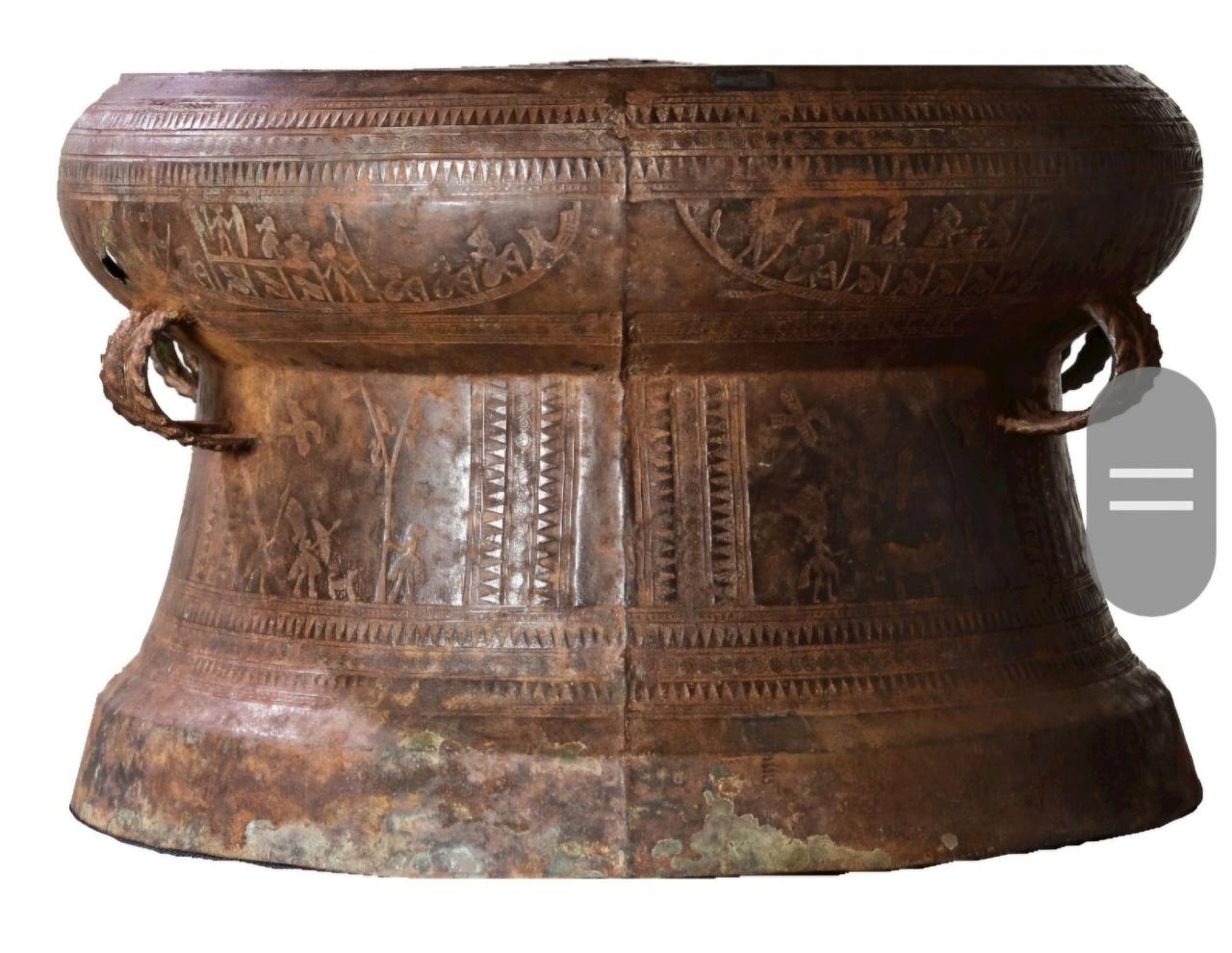
This is also a product of great intelligence, demonstrating the rare creativity, ingenuity and sophistication of our ancestors with indigenous bronze metallurgy techniques - a bronze culture that is among the best in Southeast Asia. This also contributes to affirming that the cultural level of the Dong Son people was quite high compared to the Southeast Asian people at that time.
Thus, up to now, Quang Nam province has 7 individual national treasures and a collection of gold jewelry at Lai Nghi burial site.
For Quang Nam Museum, the presence of national treasures creates great attraction, promotes promotion and increases the number of visitors to the museum, as well as receives attention from state agencies in terms of funding for preservation, research and display. This is also a valuable source of materials for organizing community education activities, scientific and cultural research.
Mr. Tran Van Duc - Deputy Director in charge of Quang Nam Museum said that in the coming time, the museum will deploy digital technology applications to protect and promote the value of treasures such as 3D scanning, digitizing artifacts, organizing live and online exhibitions, propaganda, promotion, and further promoting the value of these artifacts on mass media and social networks. In addition, Quang Nam Museum will continue to build profiles for burial suits made of bronze, iron, etc. discovered in the Lai Nghi area.
Source: https://baoquangnam.vn/dau-an-vung-dat-nhin-tu-bao-vat-quoc-gia-3147444.html

![[Photo] Da Nang: Hundreds of people join hands to clean up a vital tourist route after storm No. 13](https://vphoto.vietnam.vn/thumb/1200x675/vietnam/resource/IMAGE/2025/11/07/1762491638903_image-3-1353-jpg.webp)






















































Comment (0)