

Professor, Doctor Dinh Xuan Dung - former Vice Chairman of the Central Council for Literary and Artistic Criticism:

We need to create a cultural heritage route by linking and linking these areas.
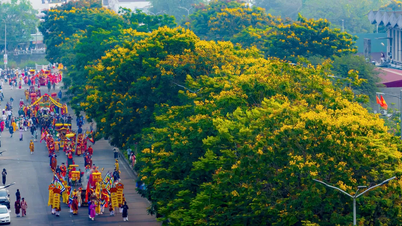
Over the years, in the cultural fields, Nghe An has consistently and regularly promoted development, gradually improving the quality and effectiveness of activities, especially the "All people unite to build a cultured life" movement, mass cultural activities, building cultured families, linking culture with tourism development, performing arts activities, exhibitions, museums, libraries, and participating in major national cultural and artistic events...
However, I personally believe that Nghe An's cultural potential is still very great, but we have only "exploited" the "open-air" aspects. The depth of content, meaning, and cultural value of the heritage sites have not been scientifically studied to create a widespread impact among the public and tourists. Tourism products are still poor, monotonous, and in some places do not reflect the standard cultural characteristics...
Breakthroughs can only begin when they originate from within. Nghe An 's cultural strength lies in its untapped cultural and human potential, some of which remains dormant and unawakened.
Recently, cultural heritage routes have become increasingly common. In Nghe An, there's a particularly significant route, tracing the history from patriotic traditions to revolutionary traditions, and to the great figures of Nghe An and the nation as a whole. These include landmarks such as the Le King's Temple, the Phuong Hoang Trung Do historical site, the Nghe-Tinh Soviet cultural heritage site (Museum), the Km0 National Special Monument - Ho Chi Minh Trail, and the Truong Bon historical site… These include great figures, from Emperor Quang Trung to Phan Boi Chau, from the great President Ho Chi Minh (Ho Chi Minh Memorial Area and Square) to the great revolutionaries Le Hong Phong, Nguyen Thi Minh Khai, Phung Chi Kien, and Ho Tung Mau…
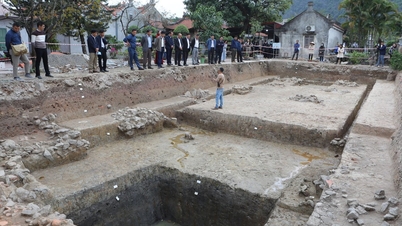
To create such a connection, it is essential to preserve, restore, reconstruct, and illuminate the cultural and historical value of these heritage sites, forming a path to the historical landmarks and shining "stars" of our homeland. From there, we can develop and promote heritage tourism routes in Nghe An, benefiting the people of Nghe An and the entire country, especially the younger generation from now on.
Dr. Nguyen Ngoc Chu - Chairman of the Board of Directors of Dong A University:

Developing cultural center clusters in Nghe An
In cultural development strategies, there must be strategies for developing cultural centers to achieve a certain "height," as well as strategies for broad-based cultural development to raise the overall cultural level.
Based on the Politburo's directive on culture in Resolution No. 39-NQ/TW, and considering the current situation, Nghe An should proceed with the construction of three cultural and tourism centers to serve the cultural life of the people within the province as well as promote cultural tourism from other provinces and internationally: the Kim Lien cultural center cluster, associated with the name and career of President Ho Chi Minh; the Cuong Temple cultural center cluster, associated with the history of An Duong Vuong and the history of Chau Dien; and the Mai Hac De cultural center cluster, associated with the Hoan Chau uprising and the history of Chau Hoan.
How should we understand the term "cultural center cluster" in the three cases mentioned above? The Kim Lien National Historical Site itself already encompasses many cultural sites. However, currently, these sites are only associated with the historical theme of President Ho Chi Minh. When building the "Kim Lien Cultural Center Cluster," the Kim Lien National Historical Site is merely "one member," "one cultural center," because the "Kim Lien Cultural Center Cluster" will contain many other "cultural centers" as well.
Anyone who has traveled abroad many times will understand that a historical site is not necessarily only associated with the history of that place but can also include other cultural structures. For example, the "Jinlian Cultural Center" could include a cultural park similar to the "Window of the World Park" in Shenzhen, which replicates architectural structures and scenic spots from around the world.
The formation of cultural parks combining culinary and ecotourism will boost not only domestic but also international tourism. And the inclusion of member "cultural centers" within the "Cultural Center Cluster" is a project that must be thoroughly and scientifically researched.
Professor, Dr. Bui Quang Thanh – Senior Lecturer, Vietnam National Institute of Culture and Arts:

In-depth research is needed on promoting the value of ethnic minority cultural heritage.
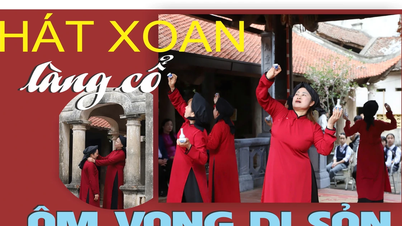
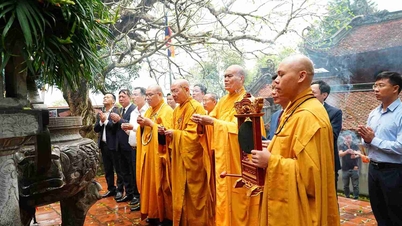
Observing the current state of community cultural life in Nghe An province, it is easy to see that most localities still have limitations in collecting and documenting the history of cultural and religious relics, as well as the process of local traditional festivals. This situation leads to the loss and decline of precious intangible cultural resources that were created and practiced in the past, causing current cultural and religious life to become monotonous, fragmented, and lacking its unique and attractive character.
In reality, over the past decade, authorities at all levels have not been truly proactive and creative in expanding relationships and mobilizing the attention of non-governmental organizations and foreign cities to establish sister city relationships with districts, towns, and provinces in preserving, exploiting, and promoting the value of local cultural heritage. Currently, Nghe An province has nearly 70 foreign administrative units establishing sister city relationships with districts and provinces – one of the highest numbers nationwide.
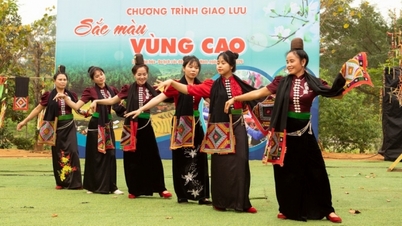
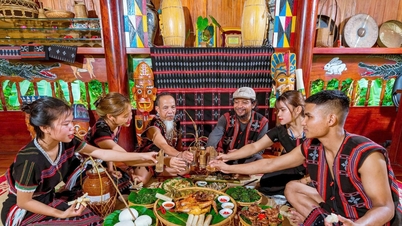
Furthermore, it can be seen that the rich cultural heritage of the ethnic minority communities in Nghe An has not yet been studied and exploited in a thorough and systematic manner to serve the development of tourism and the strategic development of the cultural industry, contributing to economic development.
In recent years, although localities in the mountainous areas of Nghe An province have been implementing the National Action Program for the socio-economic, cultural, and cultural development of ethnic minorities and mountainous regions, with a focus on preserving and promoting the cultural heritage of ethnic groups, meeting the needs of building grassroots cultural life and developing tourism.
However, further in-depth research and national-level scientific conferences are still needed to assess the current situation and develop practical solutions for protecting and promoting the cultural heritage of ethnic groups in the context of contemporary social development in mountainous districts and towns today.
Dr. Le Doan Hop – former Minister of Information and Communications, former Secretary of the Nghe An Provincial Party Committee:

Educating people about innovative and reformist ideas from the prominent figures of Nghe An province.
It can be affirmed that Nghe An has the potential for diverse and rich cultural development, from tangible culture (historical sites, scenic spots) to intangible culture (human resources, traditional culture, revolutionary culture), and is considered to have sufficient internal strength to create major breakthroughs and top-notch cultural products.
However, the development of Nghe An's cultural values has not yet lived up to the province's cultural potential, leaving Nghe An's culture like a beautiful girl without makeup. Therefore, in the province's cultural development goals, it is necessary to clearly adhere to the motto of building Nghe An into a province with a strong economy, rich culture, and a clean environment. Each term of the Provincial Party Congress should have an action program on the province's cultural development, clearly defining specific tasks in the fields of: family culture, corporate culture, workplace culture, literature and art, heritage, etc.
Furthermore, cultural development should be linked with the development of sports, tourism, and traditional education. This should include focusing on educating people about the innovative, reformist, and modernist ideas of prominent figures who were sons of Nghe An province, such as Ho Chi Minh, Phan Boi Chau, and Nguyen Truong To.
In addition, it is necessary to regularly organize competitions for composing and performing folk songs; and to call on businesses inside and outside the province to participate in investing in and organizing cultural activities associated with tourism development...
Source
















































Comment (0)