

What do businesses say about the innovation process in Vietnam's pharmaceutical industry?
Speaking at the seminar "Innovation: A Tonic for Sustainable Development in the Pharmaceutical Industry" organized by Investment Newspaper on September 25th, major pharmaceutical companies highly appreciated the innovation process in the pharmaceutical industry in Vietnam.
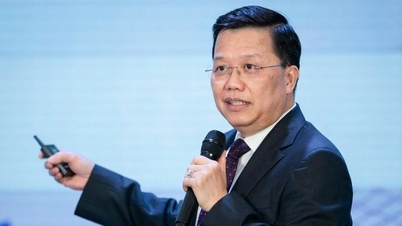
According to Mr. Atul Tandon, General Director of AstraZeneca Vietnam, he highly appreciates the efforts of the Vietnamese pharmaceutical industry in innovation and development over the past period.
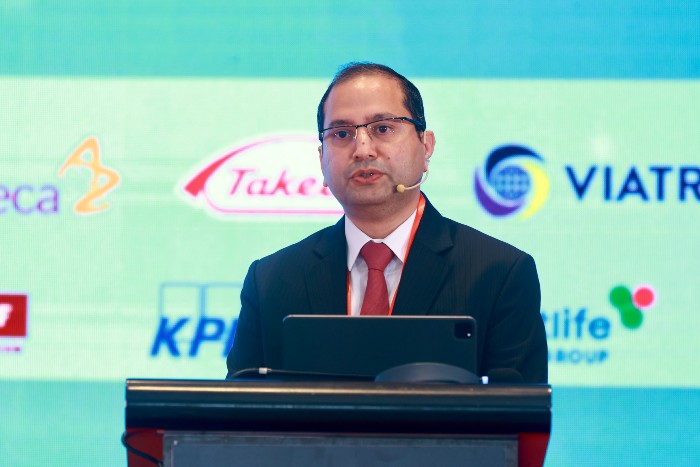 |
| Mr. Atul Tandon, General Director of AstraZeneca Vietnam. |
The General Director of AstraZeneca Vietnam stated that AstraZeneca has witnessed innovations in infrastructure and hospital facilities , further development of private healthcare, improvements in technology application, and advancements in surgery and the medical field.
We have witnessed much progress, and AstraZeneca is positive and optimistic about Vietnam. AstraZeneca's commitment to investing in innovative research and technology is being fulfilled through programs related to youth health, contributing the energy and talent of young people to the development of the healthcare industry.
As a development partner, we proactively contribute to treatment-related activities. We believe that, not only in terms of market access but also in innovation in pharmaceutical products, scientific innovation, and transforming the lives of people, AstraZeneca is optimistic about the work we have been doing. "Comprehensive innovation for the health of people worldwide," emphasized Mr. Atul Tandon, General Director of AstraZeneca Vietnam.
According to Atul Tandon, AstraZeneca is at the forefront of clinical research efforts in the science and drug value chain, contributing to experimental development through collaboration.
To date, AstraZeneca has built numerous laboratories to improve its diagnostic testing capabilities, with initiatives that could be replicated from Vietnam to other countries in the Asian region.
“We are proud of our patient-centered approach, tracking the patient's journey, accompanying them from screening to diagnosis and treatment, supporting the development of healthcare infrastructure at facilities, and promoting understanding of how to ensure sustainability and adaptability to different circumstances in the process of supporting healthcare development,” said the General Director of AstraZeneca Vietnam.
However, Mr. Atul Tandon noted that while Vietnam has achieved great success, it also faces numerous challenges. These include addressing the burden on patients, a growing aging population, chronic diseases, and natural disasters, all of which require continuous and unwavering efforts from the healthcare sector.
Furthermore, Mr. Atul Tandon highly appreciated the efforts of the Vietnamese medical and pharmaceutical industry in recent years in innovation and development, witnessing the modernization of infrastructure and medical facilities, the further development of private healthcare, improvements in technology application, and advances in surgery and the medical field.
Furthermore, the healthcare sector contributes 5% of greenhouse gas emissions, higher than the aviation industry. Therefore, Vietnam's focus should not only be on clinical innovation and making better contributions to combating climate change, but also on resilience and healthcare equity.
According to Dion Warren, General Manager for Southeast Asia and India at Takeda, the company pursues a strategy of providing advanced healthcare solutions to build a healthier future for Vietnamese people, through expanding access to medicines and strengthening cooperation with partners to jointly achieve the common goal of improving public health.
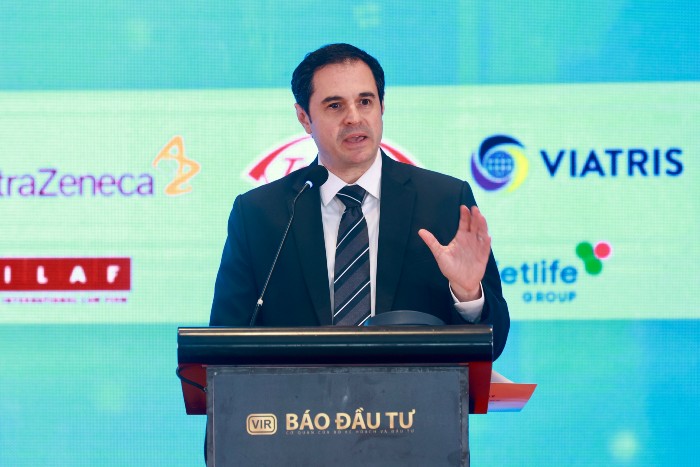 |
| Mr. Dion Warren, Managing Director for Southeast Asia and India at Takeda. |
Mr. Dion Warren highly appreciated Vietnam's innovative development in the pharmaceutical industry and affirmed that businesses have made great efforts to adapt to this process.
“We have spent nearly $5 billion on research and development (R&D). Takeda has achieved many outstanding breakthroughs in the fields of cancer treatment, digestive diseases, rare diseases, plasma-derived treatments, and now vaccines,” added Dion Warren.
Since 2021, Takeda Corporation has collaborated with the Ministry of Health , the National Institute of Hematology and Blood Transfusion, and numerous hospitals and diagnostic centers to effectively manage rare diseases. This includes supporting programs that meet the specific treatment needs of patients with rare diseases, including plasma solutions and new treatments for multiple myeloma and Hodgkin's lymphoma.
In May 2024, we reached a significant new milestone when the Vietnamese Ministry of Health approved Takeda's dengue fever vaccine.
This is the first dengue vaccine approved in Vietnam, adding a proactive and sustainable prevention method to the integrated prevention strategy, in response to the growing public health threat of dengue fever in Vietnam.
Vietnam is one of the countries most affected by dengue fever. In 2022, Vietnam had nearly 370,000 cases and 150 deaths. Dengue fever is more prevalent in the South than in other regions of Vietnam.
Increasing vaccination rates is a top priority in Takeda's infectious disease prevention strategy, especially as dengue fever is placing a significant burden on both the national healthcare system and economy.
To achieve this goal, we will continue to collaborate with health agencies, universities, research institutes, partners, and public and private vaccination centers.
Takeda has over 40 years of experience addressing various healthcare issues in countries, including Vietnam. "From our perspective, the most important thing is collaboration and dialogue to achieve common goals and create meaningful value for the community," said Dion Warren.
Takeda is a Japanese pharmaceutical company with a presence in over 80 countries and regions worldwide, with revenue reaching $28.2 million in 2023 and a workforce of 50,000 people.
On another note, Ms. Radhika Bhalla, General Director of Viatris Vietnam and Asian Union Markets, stated that Viatris has made significant efforts in healthcare for the people, having supplied high-quality medicines to over 1 billion patients worldwide.
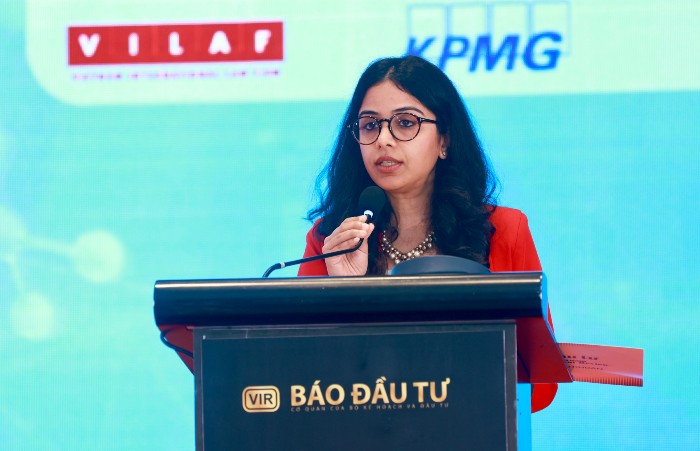 |
| Ms. Radhika Bhalla, General Director of Viatris Vietnam. |
To achieve this, Viatris has operated a convenient supply chain for the public, ensuring they have easy and quick access to medicine. In addition, Viatris has numerous technology transfer projects and investments in infrastructure and human resources to realize its goal of bringing truly high-quality medicines to the market.
In addition, Viatris focuses on sustainability, viability, and global scale in its global supply chain by collaborating with healthcare and pharmaceutical associations to raise awareness among pharmacists and pharmacies about healthcare for the public, while also providing quality, accessible healthcare solutions.
According to Radhika Bhalla, at Viatris, the company strives to build a comprehensive business strategy not only to expand its commercial operations in Vietnam but also to strengthen its commitment to the local healthcare community. To achieve this goal, the company will focus on a sustainable approach on a large scale.
Viatris' mission is to help patients around the world live healthier lives at every stage of life, and Viatris strives to ensure access to healthcare, no matter where they are or what their circumstances.
Viatris Vietnam demonstrates this mission by ensuring our diverse range of medications is readily available and used in various treatment regimens nationwide.
Towards this mission, we will expand our collaboration with local medical associations and healthcare professionals in organizing scientific conferences, training programs, and community health initiatives.
Through these efforts, we aim to raise awareness of various health conditions, promote early detection, and improve treatment outcomes for the people of Vietnam.
In the future, Viatris will continue to contribute to the sustainable development of the healthcare sector by prioritizing the expansion of its product portfolio to meet a wider range of unmet healthcare needs in Vietnam.
By offering a wider range of treatment options, we aim to improve patient treatment outcomes, optimize disease management costs, and enhance the overall health of the Vietnamese people.
Last but not least, as a strategic partner, Viatris has been and continues to work alongside the Ministry of Health and related ministries in the goal of simplifying drug registration and procurement procedures at healthcare facilities, thereby contributing to improved treatment effectiveness and access to essential medicines for patients.
Transferring domestic drug manufacturing technology in the pharmaceutical industry has been identified as a top priority by the government to meet the healthcare needs of the Vietnamese people.
As one of the pioneering companies undertaking contract manufacturing and technology transfer projects for generic drug production in Vietnam, we are delighted to receive much encouragement and support from the Government and the Ministry of Health. However, this activity still faces many difficulties and obstacles regarding registration procedures and investment policies.
Therefore, legal reforms are necessary to create a clearer and more attractive foreign investment environment for the pharmaceutical industry.
In some countries, policymakers are focusing on this technology transfer initiative to promote self-sufficiency in supply chains and help countries address healthcare needs through a combination of global, regional, and local production.
Vietnam can achieve a similar balance while continuing to attract investment by offering preferential tax policies, simplifying the licensing process for technology-transferred drugs, and facilitating their early market circulation.
"Furthermore, reducing the administrative burden associated with technology transfer models could attract more investment in expertise from multinational companies into Vietnam and, in the long term, will promote the robust development of the domestic pharmaceutical manufacturing industry while maintaining the global supply chain," Ms. Viatris said.
Source: https://baodautu.vn/doanh-nghiep-noi-gi-ve-qua-trinh-doi-moi-sang-tao-trong-y-duoc-cua-viet-nam-d225806.html

















































































Comment (0)