

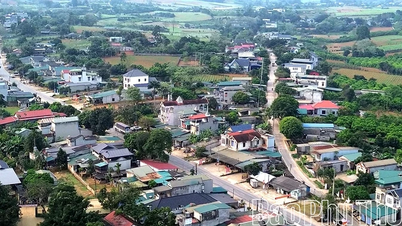
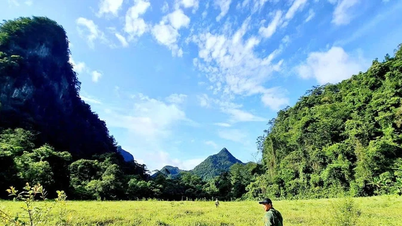
Nam So is the only highland village in Muong Khoa commune, Tan Uyen district (Lai Chau province), with 100% of its population being of Lao ethnicity. In recent years, thanks to the attention of the Party and the State, the economic , cultural, and social life in Nam So has undergone many changes.
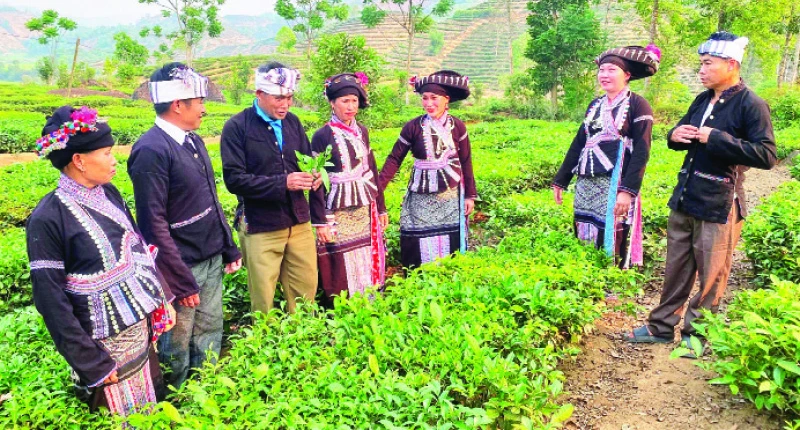
Tea plants provide a stable income for the people of Nam So.
Previously, Nam So was an extremely disadvantaged village in Muong Khoa commune. The road to the village was winding, rough, and slippery when it rained, making travel difficult, and the people's lives were full of hardships. Now, returning to Nam So, one sees a smooth concrete road system and electricity illuminating every house and every street.
People no longer let their livestock and poultry roam freely under their houses as before; every household now has its own livestock area. They have learned to apply science and technology to production and animal husbandry, and they regularly visit the health station for check-ups. Many new ways of thinking and doing things are transforming the lives of the Lao people here.
According to Lo Van Doi, the village head and Party branch secretary of Nam So village, the biggest change for the Lao people in Nam So is the growing sense of community and neighborly solidarity, and the strengthening of unity within the community.
As soon as the village headman of Doi village received our delegation, he made a phone call to the villagers. Just ten minutes later, from the elderly to the women and children, all dressed in their finest clothes, were present at the community center to welcome the guests with bright smiles. The villagers had come because they had heard that officials from the province were coming to study and write an article about the culture and life of the Lao ethnic group.
The cultural center of Nam So village is unique because its stilt house is situated at the edge of the village, amidst a vast rice field. The spacious, airy, and beautiful courtyard, without a roof, is large enough for the entire village to gather, socialize, sing, dance, and play drums and gongs.
This is also where the Party's guidelines and policies, and the State's laws and regulations, reach the people in the most complete and comprehensive way. Before the cultural center was built, all the villagers' activities were usually concentrated at the village head's house. When the plan to build a cultural center was announced, everyone eagerly awaited having a common space for activities.
Therefore, the villagers fully supported the plan to build a cultural center, participating by donating land and contributing labor alongside the contractor to speed up the progress. After nearly a year, the village cultural center was inaugurated, along with a solid system of internal village roads. This achievement was thanks to the efforts of the village and commune leaders, and the unanimous support of the villagers who contributed hundreds of days of labor and donated over 2,000 square meters of land.
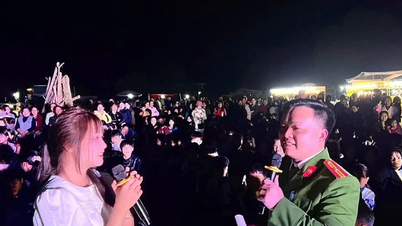
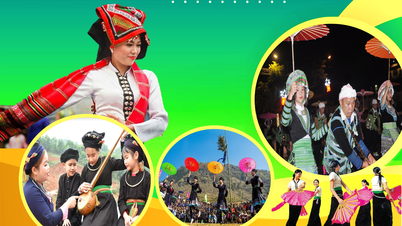
Remarkably, the elderly in Nam So still maintain the custom of blackening their teeth, crafting musical instruments, and performing the gong dance. It has become a tradition that during spring festivals, when the drums and gongs of the men are played, the elderly and children alike excitedly call out to each other, gathering in their brightly colored clothes at the village cultural center to practice.
Ms. Lo Thi Ban, Team Leader of the Nam So Village Arts Troupe, said: “In implementing the resolutions of the province and district, and the orientation of the commune on preserving and promoting the beautiful cultural identity of ethnic groups associated with tourism development in Lai Chau province, the village has established an arts troupe with 15 core members who are the next generation, who love ethnic culture, know how to absorb and learn from previous generations, and daily receive the traditional cultural values of their ethnic group from the village's artisans.”
Mr. Lo Van Keo, over 70 years old, often mentions the famous product of Nam So, Shan Tuyet tea, whenever they gather together. However, it's only in recent years that this "green gold" beverage has officially brought income to the villagers. Previously, people only used the leaves of the Shan Tuyet tea plant to brew tea or boil water for bathing children.
Now that transportation is convenient, people don't have to travel far. When it's time to harvest, people from Than Uyên Tea Joint Stock Company come to buy the tea buds right at the edge of the fields. The supply of tea buds is stable, bringing in a significant monthly income for the villagers.
To date, many households in the village have high incomes from tea cultivation and livestock production. A prime example is the family of Lo Van Mai, whose annual income from fresh tea leaves alone brings in about 150 million VND. This is in addition to their more than 2 hectares of rice paddies, which yield hundreds of bags of rice each harvest, supporting livestock farming and the development of their farm economy.
Recognizing the high economic value of tea cultivation, and not content with just maintaining existing tea plantations, local people have recently planted nearly 60 hectares of the Kim Tuyen tea variety. Locals say this area will continue to expand, and they are aiming to make tea a key crop in poverty reduction and economic development.
Nam So has 138 households and 660 inhabitants, with 65 hectares of land dedicated to double-cropping rice production. With a convenient irrigation system, the villagers choose new rice varieties, invest in fertilizers and care, and apply scientific knowledge, resulting in consistently high rice yields.
In addition to income from tea cultivation and livestock farming, local people receive approximately 350 million VND annually from forest environmental service fees. This significant income helps improve people's lives and strengthens their responsibility to preserve and protect the forest.
The Party Secretary of Muong Khoa commune, Truong Thanh Hieu, shared: “Many programs and projects to help people eradicate hunger and reduce poverty have been implemented, such as: the National Target Program for Sustainable Poverty Reduction giai đoạn 2021-2025; the New Rural Development Program..., the average per capita income of the people of Nam So now reaches nearly 50 million VND/person/year; the commune no longer has any starving households, and the poverty rate decreases year by year with an average reduction of 3-5%. Nam So today no longer worries about food shortages like before. The Lao ethnic people know how to apply science to livestock farming and cultivation, many families have accumulated wealth and risen out of poverty...”
According to Tuan Hung/nhandan.vn
Source: https://baophutho.vn/doi-thay-o-vung-cao-nam-so-222610.htm


![[Image] A brilliant symphony and explosive power in the skies of Da Nang.](https://vphoto.vietnam.vn/thumb/1200x675/vietnam/resource/IMAGE/2026/05/31/1780193150738_anh-bia-copy-jpg.webp)
![[Video] Sunset at Lap An Lagoon – Where the sun sets over the fishing nets](https://vphoto.vietnam.vn/thumb/1200x675/vietnam/resource/IMAGE/2026/05/31/1780192137701_beach-landscape-sea-water-nature-grass-745871-pxhere-com.jpeg)








![[Video] Sunset at Lap An Lagoon – Where the sun sets over the fishing nets](https://vphoto.vietnam.vn/thumb/800x450/vietnam/resource/IMAGE/2026/05/31/1780192137701_beach-landscape-sea-water-nature-grass-745871-pxhere-com.jpeg)



































![[Video] Sunset at Lap An Lagoon – Where the sun sets over the fishing nets](https://vphoto.vietnam.vn/thumb/402x226/vietnam/resource/IMAGE/2026/05/31/1780192137701_beach-landscape-sea-water-nature-grass-745871-pxhere-com.jpeg)
































Comment (0)