

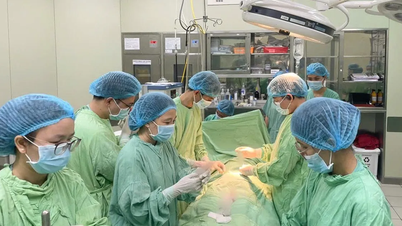
Researchers at the Murdoch Children's Research Institute in Melbourne, Australia, have achieved a breakthrough by creating hematopoietic stem cells cultured in the laboratory that closely resemble cells in the human body (pictured). This is the first study in the world that could help find treatments for certain disorders. These hematopoietic stem cells are transplantable, opening up treatment opportunities for children with leukemia and bone marrow failure disorders.
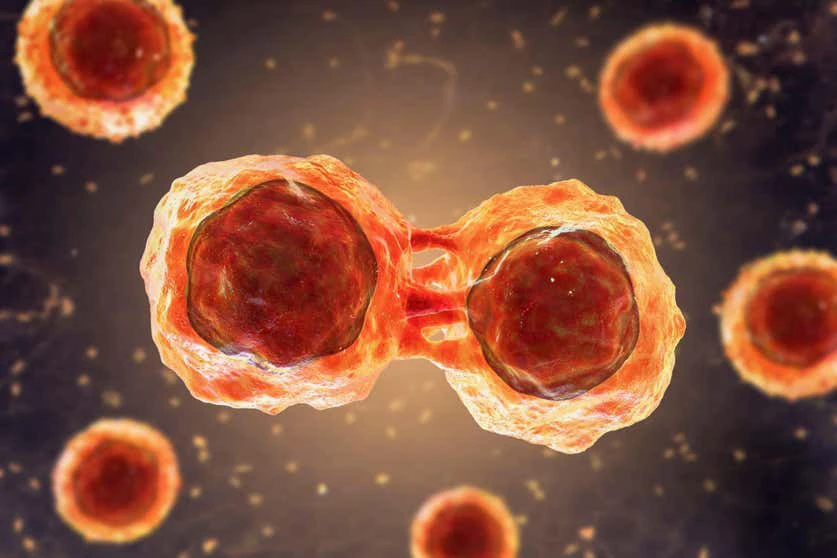
The research team injected lab-grown hematopoietic stem cells into immunocompromised mice. They found that these cells became bone marrow cells functioning at a level similar to that in umbilical cord transplants. They also discovered that lab-grown cells could be frozen before being transplanted into mice, mimicking the process of preserving donor cells before transplantation into patients. According to the Murdoch Children's Research Institute, developing blood cells specifically tailored to each patient would prevent complications associated with donor-to-patient transplants.
SOUTHERN
Source: https://www.sggp.org.vn/dot-pha-trong-phat-trien-te-bao-goc-tao-mau-post757241.html
![[Image] National Assembly discusses the implementation of the socio-economic development plan.](https://vphoto.vietnam.vn/thumb/1200x675/vietnam/resource/IMAGE/2026/04/20/1776696707422_ndo_br_img-20260420-185419-jpg.webp)


![[Photo] General Secretary and President To Lam meets with National Assembly delegates from ethnic minorities.](https://vphoto.vietnam.vn/thumb/1200x675/vietnam/resource/IMAGE/2026/04/20/1776696701056_a1-bnd-8331-3342-jpg.webp)

















































































Comment (0)