

 |
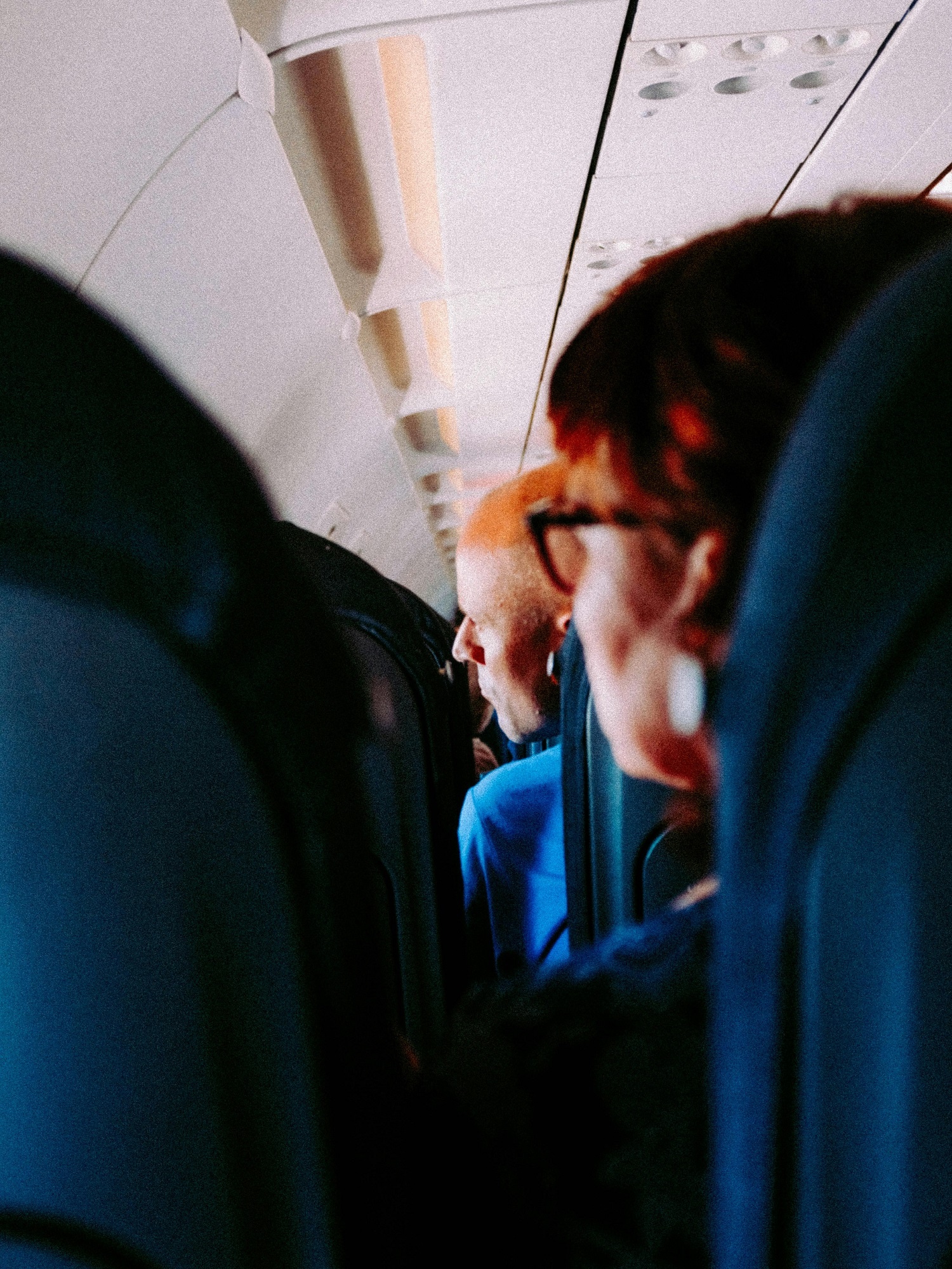
The middle seat is considered the worst seat on an airplane. Photo: Hasan Gulec/Pexels. |
According to Business Insider , the middle seat is often considered "the worst seat on a plane" because it lacks the view of a window seat and the freedom of movement of an aisle seat. The person in the middle seat is squeezed between two passengers, lacks arm space, has difficulty standing up to use the restroom, and often finds themselves in a state of "not knowing where to put their hands."
The tendency to "avoid the middle seat" is further evidenced by the statistics. A survey cited in the New York Post showed that only 1.7% of American travelers prefer sitting in the middle seat. Previously, an analysis of passenger behavior revealed that many people even accept staying overnight at the airport just to switch to an aisle seat, rather than having to sit in the middle on a crowded flight.
Because of this "discrimination," the middle seat is often the last option in the seating allocation system. Popular aircraft like the Airbus A320 or Boeing 737, with their 3-3 seating configuration, often quickly fill up the window and aisle seats, leaving the middle seat for passengers who booked late or purchased lower-class tickets without prior seat selection.
Meanwhile, Business Insider explains that on budget tickets, passengers are often "auto-assigned" to middle seats, which is why these seats are rarely empty, no matter how disliked they are.
 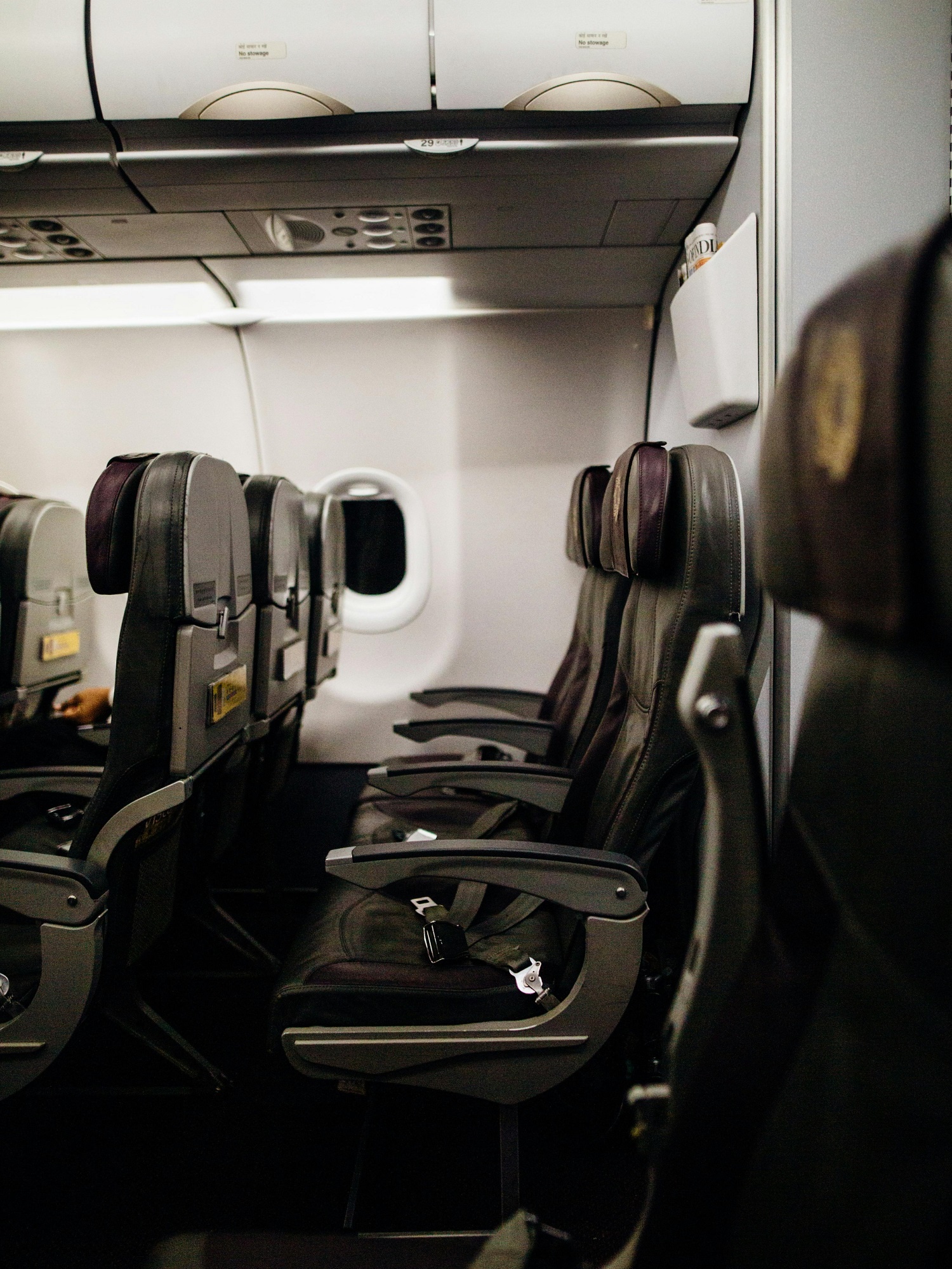 |
The middle seat remains in high demand despite being disliked, thanks to the airline's effective business strategy. Photo: Adrien Olichon, Kelly/Pexels. |
But the reason why middle seats are almost never empty stems from a more important factor: revenue. The airline industry always optimizes the Passenger Load Factor (PLF) – the seat occupancy rate. An analysis of the PLF shows that the higher this factor, the better the airline utilizes its operational capacity; a low PLF means many empty seats, leading to a significant decrease in revenue. Therefore, to achieve economic efficiency, airlines always try to "fill every seat," including the middle seat.
During the pandemic, some airlines left the middle seat empty to maintain social distancing. However, according to an OAG analysis report, if they wanted to keep the middle seat empty long-term while maintaining revenue, ticket prices would have to increase by up to 50%. This increase is unacceptable to most passengers, so as soon as demand recovered, airlines immediately reverted to the "fill every seat" model.
Simultaneously, airlines are turning the practice of "avoiding middle seats" into a secondary revenue stream. Numerous studies on pricing strategies indicate that seat selection is a significant non-ticket revenue component, as passengers are willing to pay extra for window seats, aisle seats, or quieter areas. This transforms the middle seat into a kind of "reference seat," meaning those who don't want to sit there must pay more.
Some airlines even commercialize empty middle seats as separate products. For example, Virgin Australia offers a “neighbour-free seating” service, where passengers can bid to buy the empty seat next to them, essentially paying to buy an unoccupied middle seat. This demonstrates that empty middle seats are not “random,” but rather a product with economic value.
From a behavioral perspective, the fact that most passengers dislike the middle seat inadvertently ensures it's always occupied. Those who book last minute, buy cheap tickets, forget to choose seats, or don't want to pay extra naturally fill the middle seat. A few exceptional cases, such as those who believe the middle seat in the middle row is safer in an accident, are rare exceptions.
In other words, the middle seat is a prime example of the dilemma between balancing passenger experience and economic efficiency. For passengers, it's a cramped, stuffy, and uncomfortable position. But for airlines, the middle seat is an asset that needs to be optimized, and could even be "recycled" into a service to generate additional revenue.
As long as airlines compete for revenue and passengers still prefer cheap tickets, the middle seat will continue to be a "miserable" position, but it's hard to find one empty.
Source: https://znews.vn/ghe-kho-nhat-may-bay-post1607576.html





















































Comment (0)