

Ba Trao singing is a distinctive form of folk performance in the coastal provinces of Central Vietnam, including Quang Ngai . However, this art form is facing the risk of extinction and needs successors to continue and preserve it.
"Reviving" the traditional Vietnamese dish.
Turning the pages of the document "Echoes of a Sea Region," countless memories of the fishing village of Mr. Vu Huy Binh (76 years old, Binh Thanh commune, Binh Son district, Quang Ngai province) come flooding back.
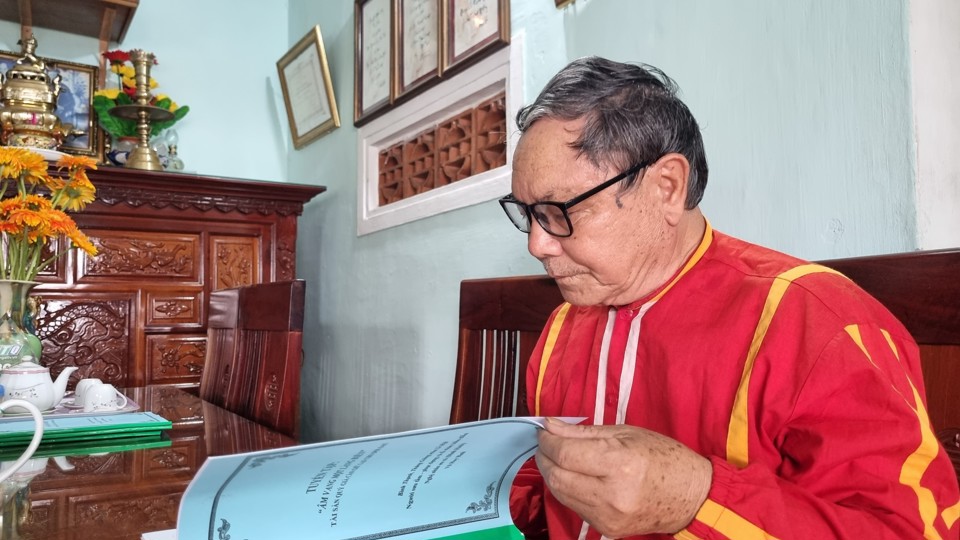
Mr. Vu Huy Binh with the collection of documents "Echoes of a Sea Region".
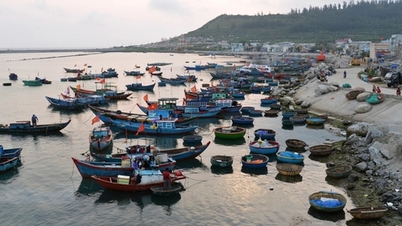
The Hai Ninh fishing village is located at the end of the Tra Bong River, where it flows into the Sa Can estuary. For generations, the inhabitants have lived off fishing. Despite the storms, dangers, and difficulties at sea, the fishermen remain steadfast at their craft. Their daily activities, which began at some point, have evolved into the unique art form of "Ba Trao" singing.
Born in a coastal village, as a child, Mr. Binh often went to Lang Van to watch the ceremony of worshipping the Whale God (Nghinh Ong) and listen to people singing the traditional boat songs. Even as an adult, despite traveling far and wide to make a living, the songs and rhythms of the boat songs from his hometown always resonated in his mind.
The greatest concern in this man's heart was that, as time passed and life changed, the traditional craft gradually faded away, the older generation passed away, and the younger generation remained unaware of it.
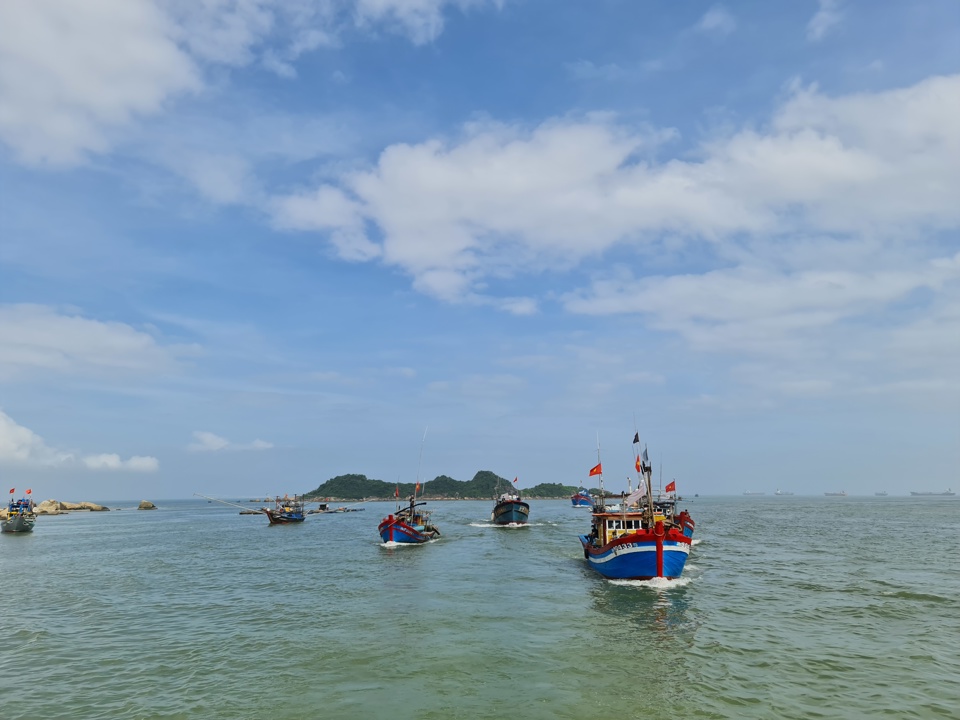
The Hai Ninh fishing village is located at the end of the Tra Bong River, where it flows into the Sa Can estuary.
The biggest opportunity that further connected Mr. Binh to the traditional boat-rowing ritual was his encounter with a film crew from Da Nang Television (VTV Da Nang) while they were filming in the Sa Can estuary area.
“Knowing they wanted to find a fishing village with a shrine to the God of the South Sea and traditional rowing boats, I immediately thought of my hometown and promised to bring them there. That was on the 12th day of the first lunar month in 1995, the anniversary of the God of the South Sea's death for the fishermen. The film crew arrived five days early to coordinate with me in organizing and filming,” Mr. Binh recounted clearly.
Hát bả trạo (also known as chèo cả trạo, chèo đưa linh, hò đưa linh) is a folk performing art form deeply rooted in the rituals of the coastal communities of Central Vietnam , praying for national peace and prosperity, favorable weather, and calm seas. This art form also reflects the unique cultural identity of the coastal region, the solidarity and mutual support among fishermen. Furthermore, it expresses the respect and gratitude of the coastal fishing community towards the Whale God who has helped them overcome storms and misfortunes at sea.
That year, the film crew produced the documentary "The Sea Sings," which was broadcast numerous times on VTV 3 - Vietnam Television. It was also the first time that traditional culture, the culture of the coastal villages, was more accessible to the audience and the local people, quickly spreading and reaching further into the community.
After retiring in 2013, with more free time, Mr. Binh frequently met with village elders to collect and record cheo songs in order to revive the ba trao folk songs.
“Most of the folk songs are passed down orally, so not many original versions remain. The elders only remember a few lines, and they sing whatever they remember so I can transcribe them. After transcribing them, I had to ask a teacher who understood Han Nom script to translate them into Vietnamese, and then I began compiling them over a long period of time,” Mr. Binh recalled.
"Echoes of a Sea Region" was born in this way. Although it is a personal collection of materials, it can summarize many aspects of the rich folk culture of a coastal region.
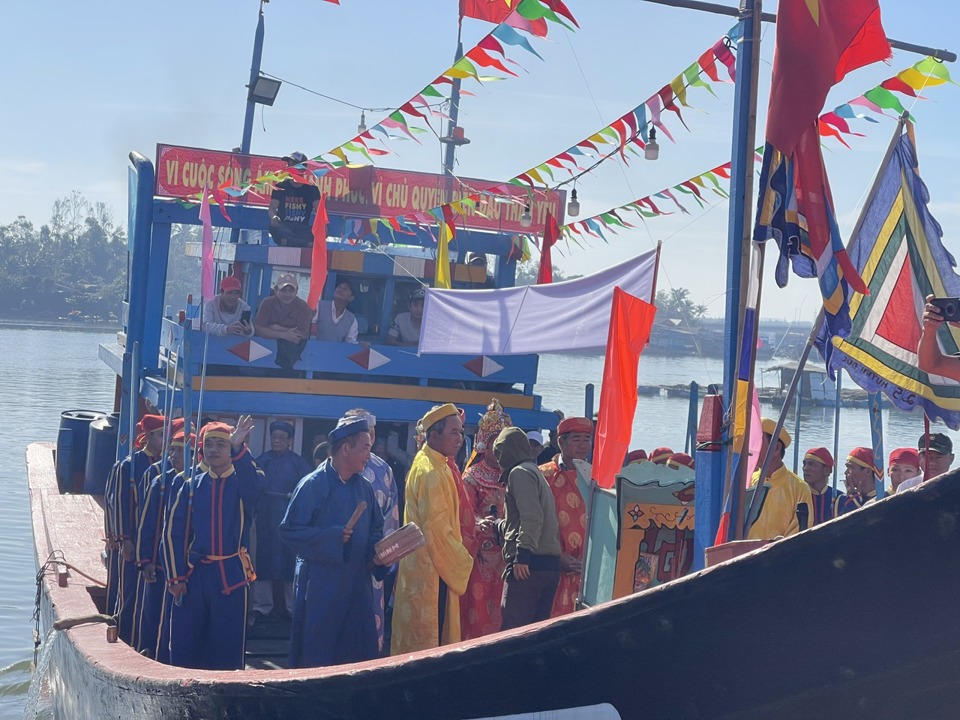
The "Hát bà trạo" folk singing style is deeply rooted in the cultural traditions of coastal communities.
This collection of documents recreates the fishing festival - the commemoration of the God of the South Sea, the traditional boat dance, sword dance, traditional boat racing on the Tra Bong River, the Bài Chòi folk game, along with folk games such as net weaving competition, pouring fish sauce into bottles, lead weight biting competition, tug-of-war... which often take place during village festivals, especially in January every year.
“The 'Ba Trao' folk song is divided into four parts. Part 1 is a song of thanksgiving to the God of the South Sea, Part 2 is about raising anchor and setting sail to fish, Part 3 is about the boat encountering strong waves and winds and having to seek help from the God of the South Sea, and Part 4 is about the God of the South Sea bringing the boat back to shore. Each verse carries a spiritual meaning, depicting the image of fishermen in their labor and production,” Mr. Binh said.
In 2016, Mr. Binh and like-minded individuals established the Binh Thanh Commune Folk Arts Club. In 2019, Mr. Binh was awarded the title of "Outstanding Artisan" by the President of Vietnam for his outstanding contributions to preserving and promoting the nation's intangible cultural heritage.
Successor of the traditional Vietnamese dance
At 56 years old and with approximately 30 years of experience singing "bả trạo" (a traditional Vietnamese folk singing style), Mr. Nguyen Tan Sam (Hai Ninh village, Binh Thanh commune) has a special passion for this art form. The people of Binh Thanh and neighboring coastal communes in Binh Son district are all familiar with Mr. Sam through the annual fishing prayer ceremonies.
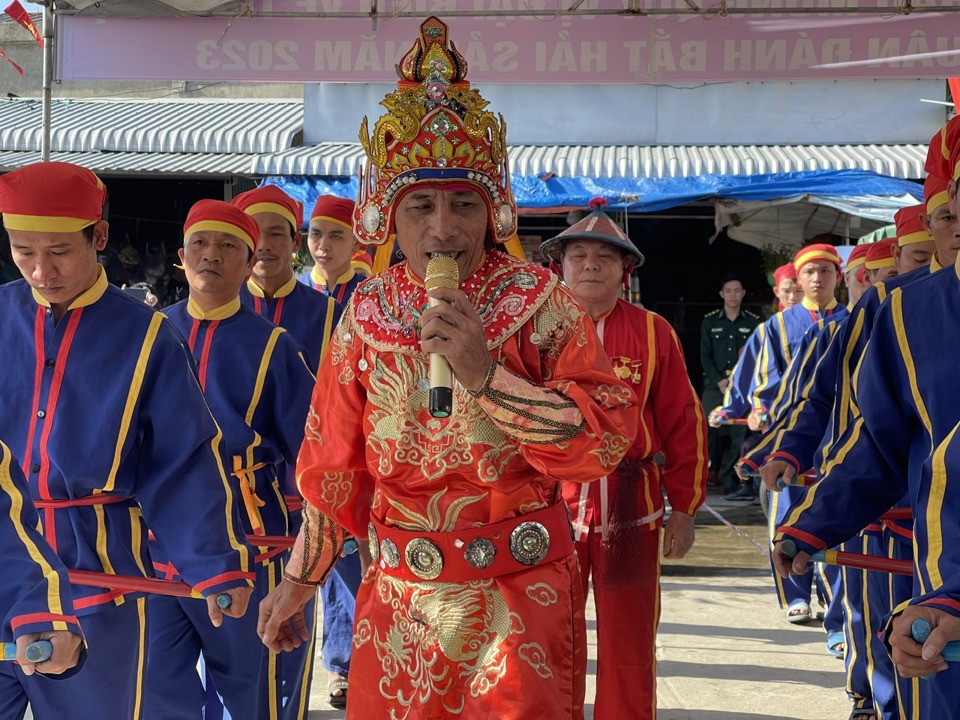
Mr. Nguyen Tan Sam plays the role of the head of the "ba trao" singing troupe.
In the Bả Trạo singing troupe, there are 12 or 16 rowers (boatmen), 3 chiefs (chief of bow, chief of compartment, and chief of stern). Mr. Sâm takes on the role of chief of bow, whose nhiệm vụ is to control the boat and rowers according to the movements of boarding, rowing, and controlling the rowers to rest.
“Singing 'ba trạo' requires dedication, diligent practice, and mastery of the lyrics, dance moves, and melody of the entire song. Because this is a form of folk performing art, it has a ceremonial and sacred nature. Those who sing 'ba trạo' must bring the joy and enthusiasm of a person from the coastal region to fully express it,” Mr. Sam shared.
Besides knowing many traditional folk songs, Mr. Sam is also proficient in playing the eight-instrument musical instrument. In folk singing, music is an indispensable part. The melodies of the two-stringed fiddle, drums, trumpet, and cymbals harmonize with the singing, creating a unique appeal that captivated him.
“I strive to preserve and spread the love for the traditional Bả Trạo art form so that future generations in the Hải Ninh fishing village will understand their cultural roots. That is my belief, my ultimate goal, and the happiness I am aiming for,” Mr. Sâm said.
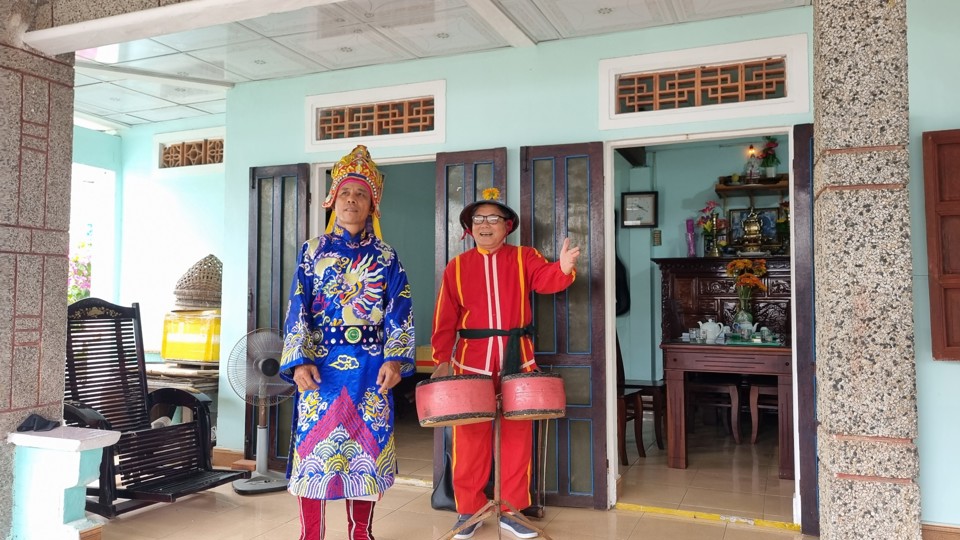
Distinguished Artisan Vu Huy Binh (right) and Mr. Nguyen Tan Sam share a passion for the traditional Vietnamese folk singing style.
According to Nguyen Tien Dung, Director of the Department of Culture, Sports and Tourism of Quang Ngai province, the contributions of Meritorious Artisan Vu Huy Binh and Mr. Nguyen Tan Sam, as well as the Binh Thanh Folk Arts Club, in preserving and conserving the art of Cheo Ba Trao are highly commendable.
“In the coming time, the Department will create more playgrounds, competitions, and performances for clubs to interact and meet. This will foster a passion for art among the people, and at the same time help artists become more determined in pursuing and preserving traditional art in the face of the risk of extinction,” Mr. Dung said.
Ha Phuong
![[Image] National Assembly discusses the implementation of the socio-economic development plan.](https://vphoto.vietnam.vn/thumb/1200x675/vietnam/resource/IMAGE/2026/04/20/1776696707422_ndo_br_img-20260420-185419-jpg.webp)


![[Photo] General Secretary and President To Lam meets with National Assembly delegates from ethnic minorities.](https://vphoto.vietnam.vn/thumb/1200x675/vietnam/resource/IMAGE/2026/04/20/1776696701056_a1-bnd-8331-3342-jpg.webp)


































































Comment (0)