

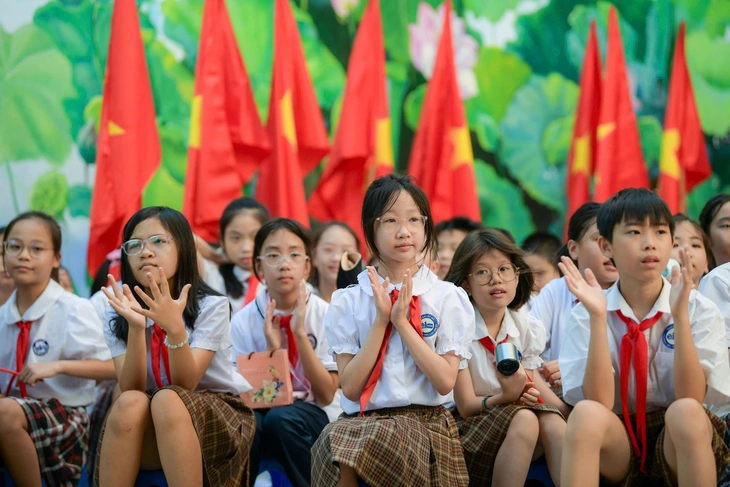
Elementary school students in Hanoi on the first day of school - Photo: NAM TRAN
Immediately after the success of the August Revolution, the Ministry of National Education was established with the task of building an education system of the people, by the people, and for the people. At that time, up to 95% of the population in our country was illiterate.
To date, the entire country has completed universal education from kindergarten (ages 5) to lower secondary school. Furthermore, in recent years, Vietnam has been among the top 10 countries with the best-performing students in international Olympiad competitions.
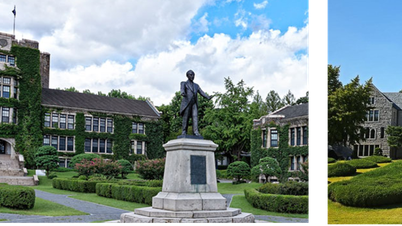
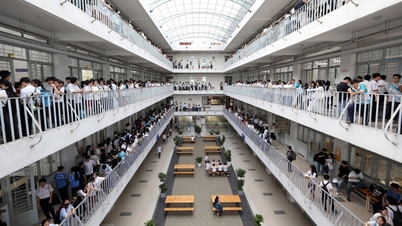
Not to mention the ever-developing infrastructure of schools, from preschool to high school, vocational schools, colleges, and universities, both in quantity and quality.
In addition, a series of progressive and humane policies, demonstrating the special attention of our Party and State to education, will also be implemented starting from the 2025-2026 school year.
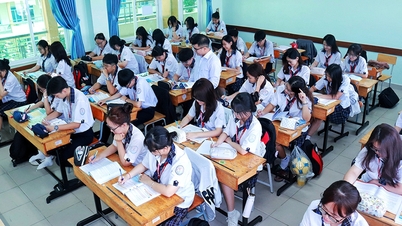
All students in public preschool and primary/secondary schools nationwide are exempt from tuition fees (students in private schools receive partial tuition support).
Some localities also have policies to support students with lunch at school when attending classes for two sessions a day. This ensures equal access to education, raises the general level of literacy, and leaves no child behind.
The Politburo has also reached a conclusion on the policy of investing in the construction of multi-level boarding schools in 248 land border communes.
The Law on Teachers has been passed and will take effect from January 1, 2026, which stipulates that teachers are the highest-paid group in the administrative and public service salary scale...
However, the world today is changing profoundly. In the context of globalization, rapid development of science and technology, and digital transformation, the challenge facing education is no longer "eradicating illiteracy" as it was 80 years ago.
The mission of the education sector is to train high-quality human resources, to cultivate global citizens. These are citizens who are highly skilled in their fields, proficient in foreign languages, adept at technology, and adept at soft skills, while still retaining a strong sense of national cultural identity.
Therefore, spacious and modern school buildings are not enough; schools must be smart schools, happy schools; teachers should not teach in a one-way, knowledge-transmission style but should organize activities for students to discover, apply knowledge, develop critical thinking, and be creative; training generations of citizens who integrate well but are not assimilated is a major challenge for the country's education sector.
Perhaps that is why, in his speech at the opening ceremony of the 2025-2026 school year, Minister of Education and Training Nguyen Kim Son emphasized: "The road ahead is very long, and the burden on our shoulders is very heavy."
I hope that all teachers, educational staff, and students will: we have been creative – and need to be even more creative; we have strived – and need to strive even more; we must act faster and more decisively to overcome our own limitations, seize every opportunity and condition, and fulfill our glorious new mission."
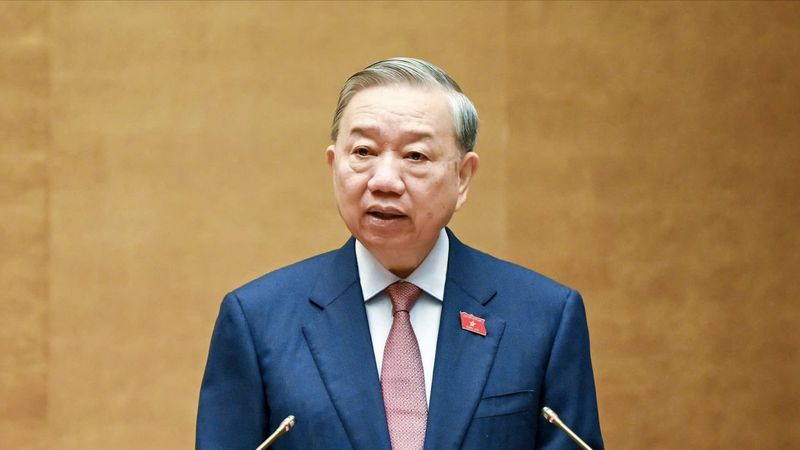
The special school year has begun, and the whole society is looking forward to groundbreaking innovations in the education sector. As General Secretary To Lam hopes: "Education and training must maintain its position as a top national priority, becoming a key driving force for national development."
Source: https://tuoitre.vn/giu-vung-vi-tri-quoc-sach-hang-dau-20250906084043512.htm

![[Photo] Prime Minister Pham Minh Chinh receives the Chinese Ambassador to Vietnam](https://vphoto.vietnam.vn/thumb/1200x675/vietnam/resource/IMAGE/2026/04/05/1775397481797_ndo_br_dsc-5512-jpg.webp)
















































Comment (0)