

After the Malaysian youth teams continuously failed in the qualifying rounds of continental tournaments, the head coach of the Malaysian team, Peter Cklamovski, gave his opinion and analysis through the article: "Malaysian youth football sleepwalking for a decade or more" in the New Straits Times.
In the article, Mr. Cklamovski issued a stern warning about the state of Malaysian youth football, saying the current system is underperforming and risks losing another decade of development.
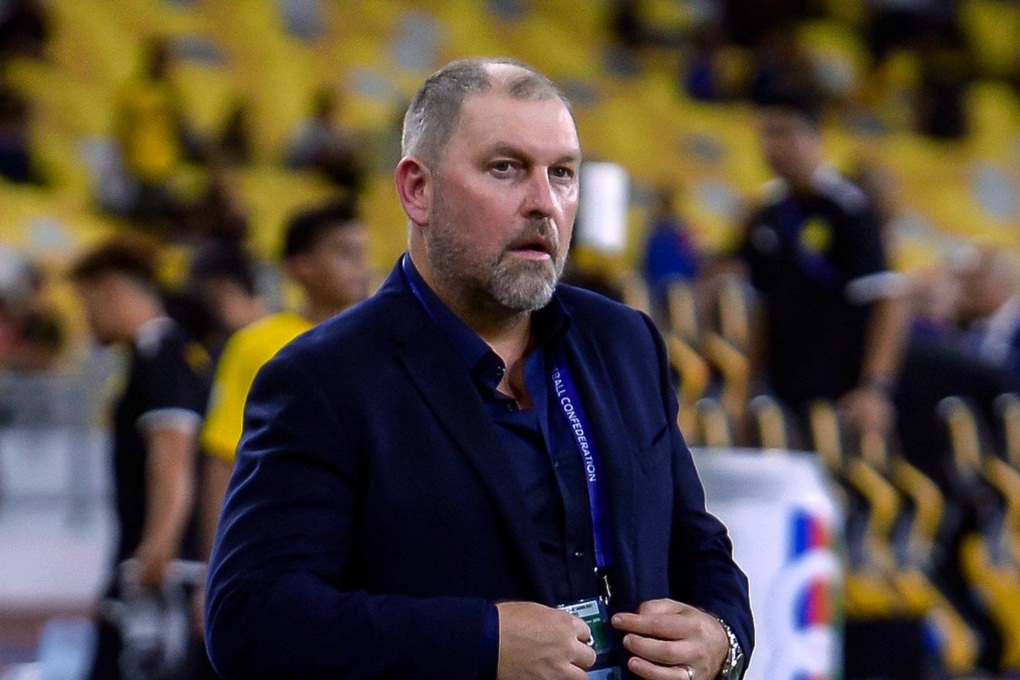
Head coach of the Malaysian team, Peter Cklamovski (Photo: NST).
The Australian strategist has spent the past 10 years building and rebuilding youth football development models in two of Asia's leading footballing nations (Australia and Japan), and commented that Malaysia's "youth training mechanism and grassroots foundation" is "basically broken".
Cklamovski’s experience is a clear testament to his assessment. In the 2024 Japan League, FC Tokyo under his leadership fielded the youngest squad in the club’s history (average age 22.7) and ranked 5th in Asia in terms of total minutes played by U21 players. However, FC Tokyo still finished 7th, among the clubs with the highest intensity of play and set a record for both the team and the league in terms of attendance.
Previously, while in charge of the Australia U17s, Cklamovski overhauled the scouting and talent identification system. His “Top Matches” model, where the best players from all regions compete regularly, remains the national standard in Australia.

U17 Malaysia lost to U17 Vietnam in the decisive match for a ticket to the 2026 AFC U17 finals (Photo: An An).
After Malaysia U17 failed to qualify for the 2026 AFC U17 Championship and the U23 team failed twice in qualifying this year, the New Straits Times asked: “Where does the real problem lie?”.
“That is the question of the day,” Cklamovski replied. “If we look at history, Malaysia’s U23, U20 and U17 teams have never been regular participants in the Asian Cup. The development of youth football is in trouble and needs support. The youth leagues are weak, the structure is chaotic. Each state does things differently. The KPM tournament has only 11 matches, and if we are lucky, we can have 10-11 matches a year for U13 and U14. So what can we expect as a country?”
According to Cklamovski, Malaysia is “waiting for a miracle” from its youth teams despite the “broken” training pipeline.
“As the national team coach, I have to play for immediate results. But I also have to plan for the future. And that is what the team is lacking, because everything is so chaotic,” he said.
Asked what he would do first if he had full powers to reform, Cklamovski said: “I would like to understand the mechanisms to improve youth development. A big opportunity is to upgrade the football education system and connect sports schools. Then hopefully the club academies will develop their systems. Then we will have two lines of schools and clubs heading towards AMD, where the best players are trained.”
He also stressed the importance of the training ecosystem, an area he said Malaysia had neglected for decades. Cklamovski cited Japan as an example, which took 30 years to build a solid foundation and is implementing a 50-year vision plan.
Summarizing the situation of Malaysian football, he did not shy away: “If we do not change now, if we continue to turn our backs and turn a blind eye, Malaysian football will continue to sink into oblivion. We have been sleepwalking for a decade.”
Coach Cklamovski concluded that urgent things to do include strengthening the school system, clubs, training coaches and discovering talent nationwide, if he does not want to continue to witness failures at the youth level.
Source: https://dantri.com.vn/the-thao/hlv-cklamovski-che-bong-da-tre-malaysia-mong-du-ca-thap-ky-20251208080924775.htm

































































Comment (0)