

"Golden bridge" in mass mobilization work
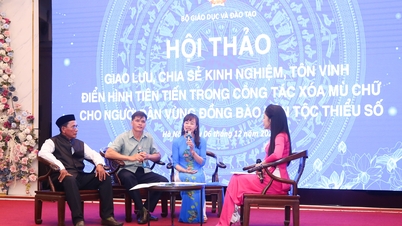
Mr. Dinh Nhu Huy - Vocational Education and Continuing Education Center Region 3 (Hue City) said: Most of the Center's students are elderly people, Co Tu ethnic people with difficult economic circumstances. They have to struggle with daily life, so the night classes are mainly attended by women. Men are often absent due to having to go to the forest for long days or work on distant fields.
In addition, the students are old, have different levels of education, and have limited common language skills, so their ability to absorb lessons is slow, and their listening, visual, and reaction skills are still weak. Inferiority complex, feeling "I'm old, why study?", fear of crowds, and shyness when meeting strangers make many people hesitate to step foot in class.
Faced with this difficulty, Mr. Dinh Nhu Huy said that teachers have proactively consulted the Center's Board of Directors to develop a plan and strategy to open a systematic literacy class that is close to the reality of each locality.
From that policy, the Center will build a specific roadmap, fully prepare human and material resources; at the same time, advise on making the most of financial support policies to create economic incentives and offset opportunity costs for learners.
Along with strengthening coordination with superior agencies, Women's Union, Youth Union, promoting the unique advantages of teachers of the Center for Continuing Education and Vocational Training and the role of prestigious people is given special attention.
Mr. Dinh Nhu Huy shared: We determined that the primary advantage lies in the teaching staff. The teachers working at the Vocational Education and Continuing Education Centers under the Department of Education and Training of Hue City are all people with extensive practical experience and solid expertise in illiteracy eradication. In addition, thanks to the long-term teaching of the high school continuing education program in the locality, the teachers have trained many generations of mature students. Currently, many of them have become key officials in the locality such as commune officials, village chiefs or police officers.
This sacred and strong teacher-student relationship is the "golden bridge" in mass mobilization work. When former teachers, experienced and prestigious people, together with their successful students, come down to mobilize, their words will have great weight and persuasion. This is the most vivid "living proof" for people to believe and follow.
“At the same time, we also take full advantage of the role of the Village Elder and Village Chief to mobilize according to the "slow and steady wins the race" process, deeply impacting people's awareness,” Mr. Dinh Nhu Huy shared.
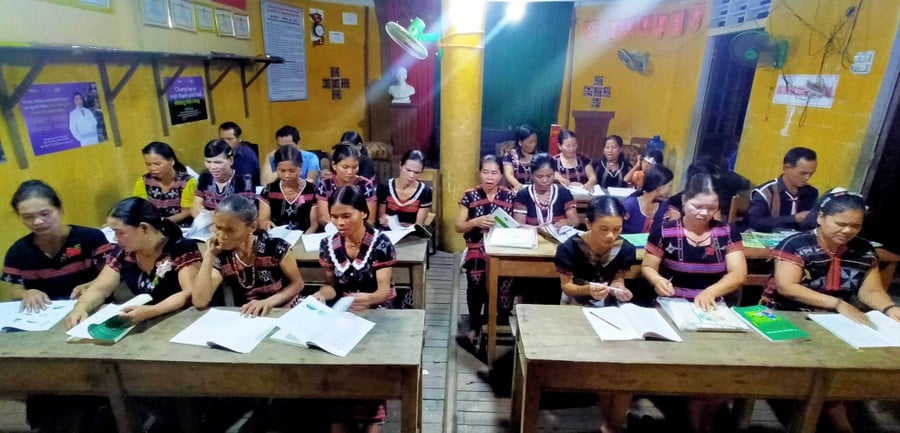
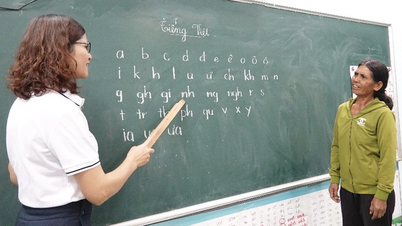
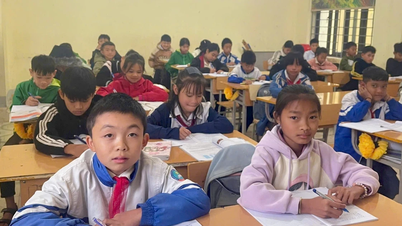
Literacy class for the Co Tu ethnic group in Long Quang commune, Hue city.
Building meaningful classrooms, organizing flexible classrooms
Besides focusing on integrated propaganda through village/hamlet meetings and diversifying communication channels, the effective solution implemented by the Center for Continuing Education and Vocational Training in Region 3 (Hue City) is to organize classes that are flexible in terms of time, location and close to the people.
Classes are held right at village meeting houses, or in borrowed classrooms or spacious houses located near residential areas. This helps students, especially women and the elderly, to travel more conveniently and safely at night.
The study schedule is flexibly adjusted, avoiding peak crop months or rubber tapping hours, forest work, etc. to ensure that people can both take care of their finances and maintain their studies.
In particular, the Center strengthens the work of homeroom teachers through "Skilled Mass Mobilization" and builds "Love Classes".
Teacher Dinh Nhu Huy said: The most important factor to maintain the number of students in literacy classes is the affection and attachment between teachers and students. Literacy teachers not only impart knowledge, but also often have to see students as companions, close, sincere, ready to listen and share the difficulties in each person's life.
Only when teachers are truly dedicated, love their profession and consider students as family, can they create trust and keep them coming back to class after each hard day.
Every time they come to class, in addition to lectures, teachers also bring simple sharing: sometimes just a few guavas, some cakes, or small packages of candy to offer students during break time.
The gifts were not materially significant, but they were invisible emotional bonds that warmed the classroom and erased any distance between teachers and students. These simple things helped students feel respected, cared for, and motivated to persevere in their studies.
To create a warm classroom environment, teachers and the Center proactively mobilize resources (in conjunction with volunteers...) to support items such as raincoats, flashlights, instant noodles, fish sauce... for students in difficult circumstances. A pack of instant noodles on a cold rainy night in the highlands has great spiritual value.
During recess, there is always a glass of water, a potato, or a cassava root. Teachers and students eat and drink together, talk about work, relieve the stress of daily life, and turn the classroom into a true "second home".
On holidays, festivals or year-ends, the class organizes parties, contributes food, and participates in cultural and artistic activities. The center regularly invites the Village Chief, Village Elder and other prestigious people to participate to encourage the spirit and create a close bond between the class and the community.
Emphasizing the effectiveness of active teaching methods and extracurricular activities, teacher Dinh Nhu Huy shared the absolute application of the principle of "no criticism", only encouraging and praising the smallest progress to eliminate students' inferiority complex.
At the same time, promote the model of "two friends progressing together", the literate person sits next to the slow person, the wife sits next to the husband to self-mentor and help each other progress. Organize field trips to local scenic spots or visit good economic models at the end of the course. This is both a visual lesson and a spiritual reward to help students become more interested and attached to learning.
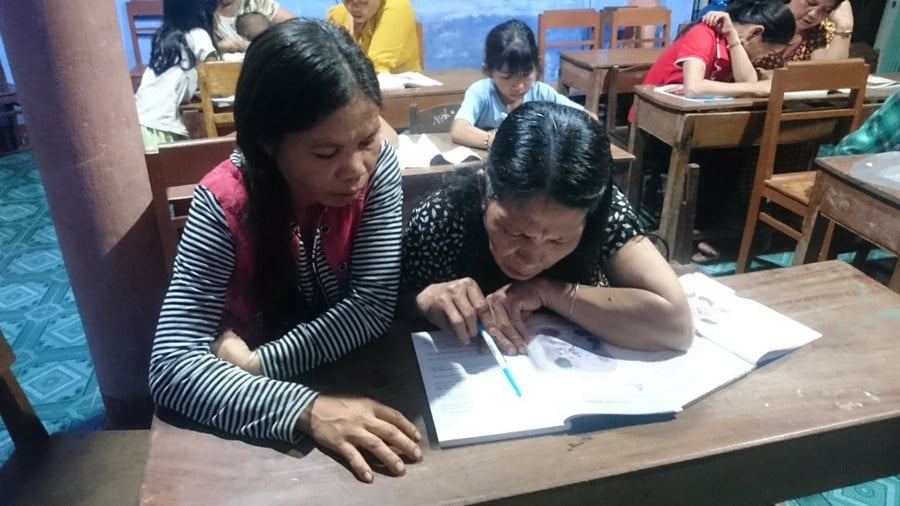
Literacy students support each other in learning.
Illiteracy eradication is a common task of the entire political system.
Thanks to flexible and persistent application of solutions, illiteracy eradication work in the area has achieved substantial and encouraging results for the learners themselves.
To increase the effectiveness of illiteracy eradication work, Mr. Dinh Gia Huy hopes that local authorities will continue to pay attention and give strong direction in reviewing and confirming the list of learners, ensuring the correct subjects according to regulations.
At the same time, strengthen supervision and urge timely payment of support to students; because this is an important factor in creating trust, reducing fear and maintaining stable participation of people.
He also suggested that the commune and village authorities coordinate more closely with the Center in advocacy and communication work, considering illiteracy eradication as a common task of the entire political system, not just the education sector.
Regarding professional work, according to Mr. Dinh Gia Huy, in the long term, it is necessary to develop a set of supplementary documents suitable for the language and culture of the Co Tu people, helping learners to access and remember more easily. Encourage the compilation of content integrated with local livelihood knowledge such as afforestation, animal husbandry, agricultural production, to help learners clearly see the practical benefits of literacy in developing the family economy.
Along with that, increase training for teachers on flexible teaching methods in informal education environments, helping teachers gain more skills to approach, engage and maintain student numbers in mountainous areas.
Source: https://giaoducthoidai.vn/chia-khoa-van-nang-mang-anh-sang-tri-thuc-den-dong-bao-vung-cao-post759657.html




































































Comment (0)